Specific gut bacteria raise risk of severe malaria: Research
June 7, 2026
  • Read Ecopy
  • Circulation
  • Advertise
  • Careers
  • About Us
  • Contact Us
Android AppiPhone AppArattai
Organiser
  • ‌
  • Bharat
    • Assam
    • Bihar
    • Chhattisgarh
    • Jharkhand
    • Maharashtra
    • View All States
  • World
    • Asia
    • Europe
    • North America
    • South America
    • Africa
    • Australia
  • Editorial
  • International
  • Opinion
  • RSS @ 100
  • More
    • Op Sindoor
    • Analysis
    • Sports
    • Defence
    • Politics
    • Business
    • Economy
    • Culture
    • Special Report
    • Sci & Tech
    • Entertainment
    • G20
    • Azadi Ka Amrit Mahotsav
    • Vocal4Local
    • Web Stories
    • Education
    • Employment
    • Books
    • Interviews
    • Travel
    • Law
    • Health
    • Obituary
  • Subscribe
    • Subscribe Print Edition
    • Subscribe Ecopy
    • Read Ecopy
  • ‌
  • Bharat
    • Assam
    • Bihar
    • Chhattisgarh
    • Jharkhand
    • Maharashtra
    • View All States
  • World
    • Asia
    • Europe
    • North America
    • South America
    • Africa
    • Australia
  • Editorial
  • International
  • Opinion
  • RSS @ 100
  • More
    • Op Sindoor
    • Analysis
    • Sports
    • Defence
    • Politics
    • Business
    • Economy
    • Culture
    • Special Report
    • Sci & Tech
    • Entertainment
    • G20
    • Azadi Ka Amrit Mahotsav
    • Vocal4Local
    • Web Stories
    • Education
    • Employment
    • Books
    • Interviews
    • Travel
    • Law
    • Health
    • Obituary
  • Subscribe
    • Subscribe Print Edition
    • Subscribe Ecopy
    • Read Ecopy
Organiser
  • Home
  • Bharat
  • World
  • Operation Sindoor
  • Editorial
  • Analysis
  • Opinion
  • Culture
  • Defence
  • International Edition
  • RSS @ 100
  • Magazine
  • Read Ecopy
Home World

Specific gut bacteria raise risk of severe malaria: Research

The researchers have found, many types of bacteria that, when present in the stomach, are associated with an elevated risk of getting severe malaria in humans and mice

WEBDESKWEBDESK
Oct 31, 2023, 11:00 pm IST
in World, Health
Follow on Google News
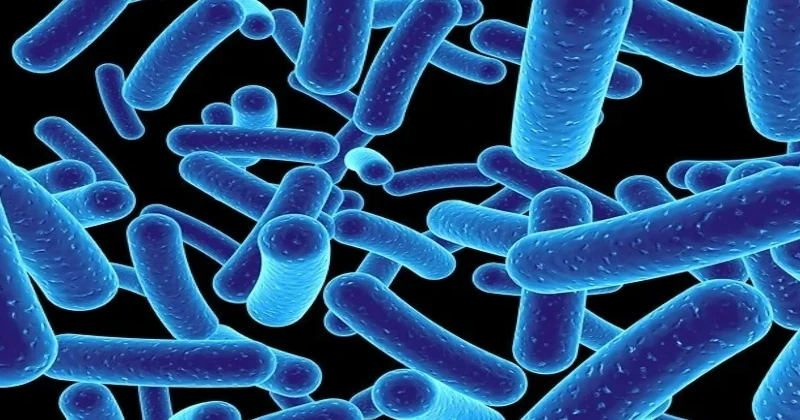
Gut Bacteria (Representative Image)

Gut Bacteria (Representative Image)

FacebookTwitterWhatsAppTelegramEmail

Researchers at Indiana University School of Medicine have found many types of bacteria that, when present in the stomach, are associated with an elevated risk of getting severe malaria in humans and mice. Their findings, which were recently published in Nature Communications, could pave the way for the development of novel methods aimed at gut bacteria in order to prevent severe malaria and its related mortality.

Malaria is a life-threatening infectious disease caused by parasites transmitted through the bite of infected mosquitoes. According to the World Health Organisation’s latest World Malaria Report, an estimated 619,000 people died from malaria globally in 2021, with 76 per cent of those deaths occurring in children age 5 or younger.

IU School of Medicine’s Nathan Schmidt, PhD, an associate professor of pediatrics with the Ryan White Center for Pediatric Infectious Disease and Global Health and the Herman B Wells Center for Pediatric Research, said previous efforts to combat the disease have led to several advancements in malaria treatment and prevention, including new vaccines and antimalarial drugs, insecticides to manage mosquito populations and improved health care processes. However, he said new developments are desperately needed because the gains made in decreasing malaria-related deaths between the early 2000s and late 2010s have plateaued over the last five years.

“This plateau highlights the need for novel approaches to prevent malaria-related fatalities,” said Schmidt, whose research lab is focused on investigating this global health crisis and its critical impact on children. “Presently, there are no approaches that target gut microbiota. Therefore, we believe that our approach represents an exciting opportunity.”

In a pivotal 2016 article published in PNAS, Schmidt and his colleagues made a groundbreaking discovery in their experimental models: the gut microbiota has the capability to influence the severity of malaria. This revelation ignited their determination to pinpoint the precise microorganisms, called “Bacteroides,” within the intestinal tract that orchestrate this effect.

In their latest study, the researchers found mice harboring particular species of Bacteroides were notably associated with an elevated risk of severe malaria. A similar correlation was also observed in the intestinal tracts of children afflicted with severe malaria.

Most of the Schmidt lab’s research has been conducted using mouse models of malaria. Thanks to collaboration with several colleagues in the field, the research team was able to extend its observations by studying approximately 50 children with malaria in Uganda. They plan to continue their clinical observations by working with a cohort of over 500 children with malaria.

This collaboration was made possible by the joint efforts of Chandy John, MD, MS, of IU School of Medicine; Ruth Namazzi, MB ChB, MMEd, of Makerere University; and Robert Opoka, MD, MPH, of Global Health Uganda.

Together, they are evaluating how severe malaria may affect child neurodevelopment by studying children from households with a history of severe malaria. While these children may not display any symptoms of illness, some carry the malaria parasite in their blood, allowing researchers to explore risk factors associated with the development of severe malaria, including variations observed in the microbiome.

“Dr. Namazzi, Dr. Opoka and I aren’t experts in the microbiome, so we collaborated with Nathan [Schmidt] on this part of the study since he is an expert,” said John, who is the Ryan White Professor of Pediatrics at IU School of Medicine. “I believe Nathan’s findings are important because they point to the possibility that certain bacteria or combinations of bacteria in the gut may predispose a child to severe malaria. This opens the way to thinking about how we might alter those combinations in the gut to try to protect children from severe malaria.”

In addition to studying the expanded cohort in Uganda, Schmidt and his team will also collaborate with researchers in Malawi and Mali to get a broader sense of trends present between gut microbiota and malaria across Africa.

“Beyond our efforts to assess the contribution of gut bacteria towards severe malaria in diverse African populations, we have initiated pre-clinical efforts to target gut bacteria that cause susceptibility to severe malaria,” Schmidt said. “Our long-term aspiration is to move a treatment into the clinic.”

(with inputs from ANI)

Topics: WHOHealthWorld Health OrganisationMalariagut bacteriaWorld Malaria ReportSevere Malaria
ShareTweetSendShareSend
✮ Subscribe Organiser YouTube Channel. ✮
✮ Join Organiser's WhatsApp channel for Nationalist views beyond the news. ✮
Previous News

WHO South-East Asia Region commits to prioritising and investing more in primary healthcare

Next News

International Solar Alliance: “Solar is playing a major role in renewable energy capacity addition,” says RK Singh

Related News

Indian surgeon conducts world’s longest cardiac telesurgery; Made-in-India robot echoes indigenous medical prowess

Kwality Walls shifts from palm oil to milk-based ice creams in India; Did the food giant prioritise profit over health?

Kochi International Airport

Keralam: Kochi strengthens Ebola surveillance after WHO global emergency alert

Abrupt shift in the measle vaccine procurement policy by the Yunus regime led to death of hundreds of children

A ‘Man-Made’ Crisis in Bangladesh? How the Yunus Regime’s UNICEF bypass left millions of children vulnerable to measles

A boy inflicted by polio

Pakistan’s polio nightmare continues after fresh cases reappear despite massive vaccination campaign

India finds new molecular mechanism in mycobacterium tuberculosis: A catalyst to realise the vision of TB Mukt Bharat

Load More

Latest News

(Left) Victorious Indian Men-s hockey team who who won Gold in U-18 Asia Cup (Right) U-18 Women's hockey team who won bronze medal in the Asia Cup

U18 Asia Cup 2026: Indian Men’s hockey wins gold, women secure bronze medal; PM Modi & Amit Shah hail the teams

India’s semiconductor roadmap shifts from import dependence to silicon sovereignty, aiming for a self-reliant ecosystem by Viksit Bharat 2047

From Import Dependence to Silicon Sovereignty: India’s bold semiconductor roadmap for Viksit Bharat 2047

Keralam Chief Minister V.D. Satheeshan

Jamaat-e-Islami Hind Team Meets CM Satheeshan, Senior Ministers, fuel debate over influence in UDF government

Singapore acts against China-linked posts targeting Indian community, cites threat to social harmony

Singapore Invokes OCHA: Facebook, YouTube and X ordered to block anti-Indian content originating from China

Editors of the HAF Wikipedia page run propaganda and disinformation campaign against the organisation, India and Hindu cultural ethos

Wikipedia fuels propaganda against Hindu American Foundation: How anonymous writers demonise Hindu rights group?

Israel to Install Statue of Chhatrapati Shivaji Maharaj; Israel’s Consul General in Mumbai, Yaniv Revach, met Maharashtra Chief Minister Devendra Fadnavis and sough his support in this regard

Chhatrapati Shivaji Maharaj’s legacy to reach Israel; Statue to be installed as symbol of India-Israel friendship

IIGH Public Policy Seminar: Women’s dignity, safety & equal opportunity discussed

Representative Image

Decoding Hezbollah: How the terror group built a massive arsenal against Israel

Representative Image

Plastic, Traffic and Landslides: How rising tourist footfall is posing threat to the mountainous region

The Green Realignment: Why the US-India trade pact is a battle for climate and supply chain security

Load More
  • Privacy
  • Terms
  • Cookie Policy
  • Refund and Cancellation
  • Delivery and Shipping

© Bharat Prakashan (Delhi) Limited.
Tech-enabled by Ananthapuri Technologies

  • Home
  • Search Organiser
  • Bharat
    • Assam
    • Bihar
    • Chhattisgarh
    • Jharkhand
    • Maharashtra
    • View All States
  • World
    • Asia
    • Africa
    • North America
    • South America
    • Europe
    • Australia
  • Editorial
  • Operation Sindoor
  • Opinion
  • Analysis
  • Defence
  • Culture
  • Sports
  • Business
  • RSS @ 100
  • Entertainment
  • More ..
    • Sci & Tech
    • Vocal4Local
    • Special Report
    • Education
    • Employment
    • Books
    • Interviews
    • Travel
    • Health
    • Politics
    • Law
    • Economy
    • Obituary
  • Subscribe Magazine
  • Read Ecopy
  • Advertise
  • Circulation
  • Careers
  • About Us
  • Contact Us
  • Policies & Terms
    • Privacy Policy
    • Cookie Policy
    • Refund and Cancellation
    • Terms of Use

© Bharat Prakashan (Delhi) Limited.
Tech-enabled by Ananthapuri Technologies