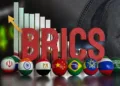
BRICS expansion results from the developing world’s growing aversion to the developed nation-led institutions’ regulatory style. Aid-seeking countries sometimes face punitive regulations from the Bretton Woods institutions, which include human rights and LGBTQ+ rights issues. Such matters are far beyond the economic obligation and contradict many recipient nations’ cultural ethos.
Reform UNSC
BRICS is being progressively considered as the voice of the Global South. Prime Minister Modi is advocating the cause of the Global South on multilateral forums. As the chair of G-20, he called upon the G-20 leaders to invite the 55-country African Union a group member. By inviting 49 heads of African nations to the BRICS summit, the president of South Africa, Cyril Ramaphosa, has also boosted voice of the Global South. India, South Africa and Brazil can lead in representing countries of the Global South in convincing the developed nations to admit the new-fangled global reality of multipolarity and escalate the need for building more inclusive democratic structures in the multilateral arena especially UNSC.
Countries like India, South Africa and Brazil must do a balancing act on the BRICS’ agenda. There is no disagreeing the fact that global multilateral economic infrastructure calls for thoughtful reform. With over 30 per cent share of the worldwide GDP, BRICS nations have at most 15 per cent participation in institutions like the IMF. However, in the reform vs. replace mêlée, India must favour making BRICS a facilitator for reformed multilateralism. Apart from Iran, the other new members—Argentina, Egypt, Ethiopia, Saudi Arabia, and the United Arab Emirates—are not staunchly anti-West. Thus, a Expanded BRICS can barely be labelled as an anti-Western bloc. And half of the new members are close Indian partners: Egypt, Saudi Arabia, and the United Arab Emirates. Finally, most add-ons are in the Middle East, an emergent arena for New Delhi’s engagement because of energy and trade interests and comprehensive geopolitical deliberations.
Expanded BRICS has five of the top 10 oil-producing countries, adding to its financial and economic heft. Saudi and founding members Russia and Brazil are the second, third and eighth biggest oil-producing countries (the U.S. tops the list), while UAE and Iran are ranked seventh and ninth, respectively. The three West Asian countries are key members of OPEC. In July, the two countries reached yet another agreement to deepen production cuts to increase prices, which have remained low due to sluggish demand. The West Asian presence in BRICS puts the OPEC big shots in the same room as big oil consumers.
Role of India
Delhi’s excellent ties with each of the BRICS members, including the new ones, the technology boost of Chandrayaan-3’s moon landing during the summit, India’s demography and its growing economy, all influence in the group potentially to prevent it from turning into an anti-West bloc. But as the most powerful country in BRICS, China dominates the grouping. In the West, India’s membership of BRICS is seen as odd for a country in a deeply and nationally celebrated embrace with the US, But Prime Minister Narendra Modi’s aspiration to be accepted as the leader of the “Global South” and Delhi’s quest for a permanent seat at the United Nations Security Council are better served by multilateralism of the BRICS kind, even if China is the dominant player. The summit declaration contains an unequivocal paragraph supporting the claims of India, South Africa and Brazil for “a greater role in international affairs, in particular in the United Nations, including its Security Council.” India has also used BRICS and the Shanghai Cooperation Organisation to keep lines open to Beijing.
Western annotation on BRICS
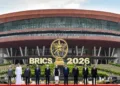
Most annotation on BRICS labels it as an alliance that needs more inward cohesion and transcripts that it will continue to be hobbled by adversarial relations between India and China. The alike could be said of G20, with Russia and China at odds with the Western members of the grouping. At the recent summit in South Africa, BRICS managed its differences to agree on admitting six new members. It also made a communique acceptable to all, including India, that the more powerful and “cohesive” G20 may fail to do.
Of course, the BRICS document skipped the war in Ukraine entirely and instead expressed “concern at “ongoing conflicts in many parts of the world”, a formulation that would not pass muster in most other multilateral fora. But the Johannesburg Declaration does refer to G20 as the “premier multilateral forum in the field of international economic and financial cooperation that comprises both developed and emerging markets and developing countries where major economies jointly seek solutions to global challenges”. In a good augury for India, the BRICS summit said it looked forward to “a successful hosting of the 18th G20 Summit in New Delhi under the Indian G20 Presidency” boosting hopes that there might be consensus on the Delhi Declaration after all. As per Mohamed Ibrahim Hafez- Asia Global Fellow at Hong Kong University- from Egypt, “There are no explicit criteria for joining the bloc. Politics is the driving force behind these decisions.”
The accessibility of affordable financial resources the BRICS Development Bank offers to economically challenged newcomers like Argentina, Egypt, Ethiopia, and Iran would indeed mark a quick win for them. Considering the different trade balances and developmental stages of the bloc’s members, the potential impact of intra-trade using a common currency within the expanded BRICS+ realm should be approached with caution. Although it might result in marginal economic benefits for some member countries, significant short-term transformations are unlikely.
While the combined metrics of GDP, trade balance, oil production, and population size for the expanded BRICS+ present a considerable picture, its member countries’ collective political influence and economic integration capacity remain limited. This raises doubts about the feasibility of de-dollarization efforts. History has shown that such monumental shifts often demand extraordinary circumstances.” BRICS’s consensus-based decision-making process will be a major test as with 11 members instead of five, reaching a consensus will be even more challenging. For now, BRICS expansion could advance Indian interests, giving New Delhi more clout with a set of nations with which it is keen to expand relations. A warm welcome to the Multipolar World Order.