Study finds how cells with an ear for music release insulin
June 5, 2026
  • Read Ecopy
  • Circulation
  • Advertise
  • Careers
  • About Us
  • Contact Us
Android AppiPhone AppArattai
Organiser
  • ‌
  • Bharat
    • Assam
    • Bihar
    • Chhattisgarh
    • Jharkhand
    • Maharashtra
    • View All States
  • World
    • Asia
    • Europe
    • North America
    • South America
    • Africa
    • Australia
  • Editorial
  • International
  • Opinion
  • RSS @ 100
  • More
    • Op Sindoor
    • Analysis
    • Sports
    • Defence
    • Politics
    • Business
    • Economy
    • Culture
    • Special Report
    • Sci & Tech
    • Entertainment
    • G20
    • Azadi Ka Amrit Mahotsav
    • Vocal4Local
    • Web Stories
    • Education
    • Employment
    • Books
    • Interviews
    • Travel
    • Law
    • Health
    • Obituary
  • Subscribe
    • Subscribe Print Edition
    • Subscribe Ecopy
    • Read Ecopy
  • ‌
  • Bharat
    • Assam
    • Bihar
    • Chhattisgarh
    • Jharkhand
    • Maharashtra
    • View All States
  • World
    • Asia
    • Europe
    • North America
    • South America
    • Africa
    • Australia
  • Editorial
  • International
  • Opinion
  • RSS @ 100
  • More
    • Op Sindoor
    • Analysis
    • Sports
    • Defence
    • Politics
    • Business
    • Economy
    • Culture
    • Special Report
    • Sci & Tech
    • Entertainment
    • G20
    • Azadi Ka Amrit Mahotsav
    • Vocal4Local
    • Web Stories
    • Education
    • Employment
    • Books
    • Interviews
    • Travel
    • Law
    • Health
    • Obituary
  • Subscribe
    • Subscribe Print Edition
    • Subscribe Ecopy
    • Read Ecopy
Organiser
  • Home
  • Bharat
  • World
  • Operation Sindoor
  • Editorial
  • Analysis
  • Opinion
  • Culture
  • Defence
  • International Edition
  • RSS @ 100
  • Magazine
  • Read Ecopy
Home World

Study finds how cells with an ear for music release insulin

To make the insulin-producing cells receptive to sound waves, the researchers used a protein from the bacterium E. coli. Such proteins respond to mechanical stimuli and are common in animals and bacteria

WEBDESKWEBDESK
Aug 25, 2023, 11:00 pm IST
in World, Health
Follow on Google News
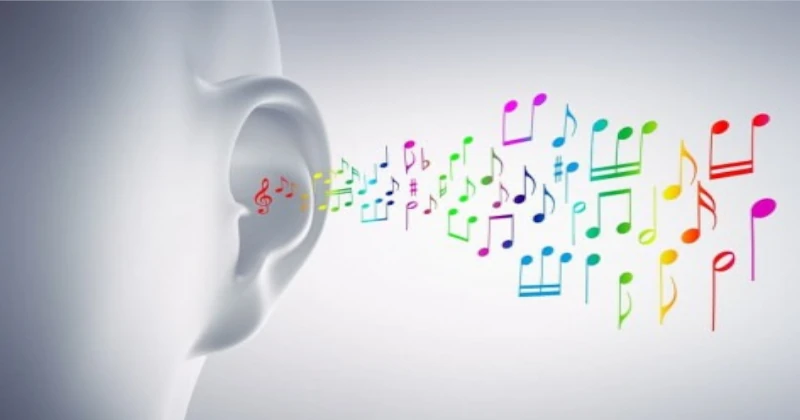
Representative Image

Representative Image

FacebookTwitterWhatsAppTelegramEmail

In diabetes, the body either generates no or very little insulin. Thus, the external injection or pump delivery of this hormone is necessary for diabetics. To improve the lives of these individuals, researchers from the Department of Biosystems Science and Engineering at ETH Zurich in Basel, headed by Martin Fussenegger, are searching for ways to create and deliver insulin directly to the body.

One such approach that researchers are working on involves creating capsules that can be injected into the body and contain designer cells that produce insulin. In recent years, researchers have examined and used various triggers, including light, temperature, and electric fields, to be able to control from the outside when and how much insulin the cells release into the blood.

Fussenegger and his colleagues have now developed another, novel stimulation method: they use music to trigger the cells to release insulin within minutes. This works especially well with “We Will Rock You,” a global hit by British rock band, Queen.

To make the insulin-producing cells receptive to sound waves, the researchers used a protein from the bacterium E. coli. Such proteins respond to mechanical stimuli and are common in animals and bacteria. The protein is located in the membrane of the bacterium and regulates the influx of calcium ions into the cell interior. The researchers have incorporated the blueprint of this bacterial ion channel into human insulin-producing cells. This lets these cells create the ion channel themselves and embed it in their membrane.

As scientists have been able to show, the channel in these cells opens in response to sound, allowing positively charged calcium ions to flow into the cell. This leads to a charge reversal in the cell membrane, which in turn causes the tiny insulin-filled vesicles inside the cell to fuse with the cell membrane and release the insulin to the outside.

In cell cultures, the researchers first determined which frequencies and volume levels activated the ion channels most strongly. They found that volume levels around 60 decibels (dB) and bass frequencies of 50 hertz were the most effective in triggering the ion channels. To trigger maximum insulin release, the sound or the music had to continue for a minimum of three seconds and pause for a maximum of five seconds. If the intervals were too far apart, substantially less insulin was released.

Finally, the researchers looked into which music genres caused the strongest insulin response at a volume of 85 dB. Rock music with booming bass like the song “We Will Rock You”, from Queen, came out on top, followed by the soundtrack to the action movie The Avengers. The insulin response to classical music and guitar music was rather weak by comparison.

“We Will Rock You” triggered roughly 70 percent of the insulin response within 5 minutes, and all of it within 15 minutes. This is comparable to the natural glucose-induced insulin response of healthy individuals, Fussenegger says.

To test the system as a whole, the researchers implanted the insulin-producing cells into mice and placed the animals so that their bellies were directly on the loudspeaker. This was the only way the researchers could observe an insulin response. If, however, the animals were able to move freely in a “mouse disco,” the music failed to trigger insulin release.

“Our designer cells release insulin only when the sound source with the right sound is played directly on the skin above the implant,” Fussenegger explains. The release of the hormone was not triggered by ambient noise such as aircraft noise, lawnmowers, fire brigade sirens or conversations.
As far as he can tell from tests on cell cultures and mice, Fussenegger sees little risk that the implanted cells in humans would release insulin constantly and at the slightest noise.

Another safety buffer is that insulin depots need four hours to fully replenish after they have been depleted. So even if the cells were exposed to sound at hourly intervals, they would not be able to release a full load of insulin each time and thereby cause life-threatening hypoglycaemia. “It could, however, cover the typical needs of a diabetes patient who eats three meals a day,” Fussenegger says. He explains that insulin remains in the vesicles for a long time, even if a person doesn’t eat for more than four hours. “There’s no depletion or unintentional discharge taking place.”

(with inputs from ANI)

Topics: HealthinsulinMusicsound waves
ShareTweetSendShareSend
✮ Subscribe Organiser YouTube Channel. ✮
✮ Join Organiser's WhatsApp channel for Nationalist views beyond the news. ✮
Previous News

Ex-BSP MP Shahid Akhlakh’s son Danish raped woman; victim says he is with multiple Hindu women

Next News

By hoisting Tiranga on Moon, India made world aware of its capabilities: PM Modi in Greece on Chandrayaan-3

Related News

Kwality Walls shifts from palm oil to milk-based ice creams in India; Did the food giant prioritise profit over health?

Abrupt shift in the measle vaccine procurement policy by the Yunus regime led to death of hundreds of children

A ‘Man-Made’ Crisis in Bangladesh? How the Yunus Regime’s UNICEF bypass left millions of children vulnerable to measles

India finds new molecular mechanism in mycobacterium tuberculosis: A catalyst to realise the vision of TB Mukt Bharat

A Decline in Child Mortality in India: A nation moving in the right direction for children’s welfare

Ayush Ministry launches Yoga for Air Travel: An initiative to transform flight journey into a space for rejuvenation

Ayushman Bhava Holistic Healthcare Confluence 2026: Crafting an inclusive ecosystem & advancing Atmanirbharta in health

Load More

Latest News

Representative Image

Karnataka Terror Link Probe: Alla Baksh arrested in Tumakuru over links with foreign terrorists

From the Vedas to modern sustainability (This is an AI Generated image)

World Environment Day: Rediscovering Vedic ecology, ancient wisdom for a green future

K Annamalai Resigns from BJP, Party accepts his resignation

Ex- Tamil Nadu party chief K Annamalai quits from BJP, Nitin Nabin accepts resignation

Tahir Hussain, accused in 2020 Delhi riots case

2020 Delhi Riots Case: Tahir Hussain’s lies exposed; Admits attacking Hindus, raising ‘Kafiro Ko Maaro’ slogans

Kurla resident Huzaifa Ansari held by Delhi police and ATS in alleged ISI-linked terror recruitment case

Delhi Police and Thane ATS arrest Kurla mechanic Huzaifa for alleged role in ISI-linked terror recruitment network

Will Mamata Accept Her Rebel's Help? Humayun Kabir Offers to Send Ex-Boss Back to House

Need a seat, Didi? Ex-TMC rebel Humayun Kabir offers Mamata Banerjee a route back to West Bengal assembly

Wipro Issues First Statement On Religious Conversion Case In Pune

Corporate Jihad Row at Wipro: Company breaks silence, issues first statement, says it is cooperating with police

Imtiyaz Jaleel and Nida Khan named in the SIT Chargesheet in Nashik TCS Corporate Jihad probe

AIMIM leader Imtiaz Jaleel under scanner in TCS Nashik Corporate Jihad case after name surfaces in SIT chargesheet

Hindu victim in the case who was trapped by Islamist senior

After TCS, Wipro, Pune insurance employee accuses Mohammad Sadiq of harassment; Arrested by police

AAP’s New Front? CJP Emerges as Congress’s Biggest Narrative Challenger

Congress Protests, CJP Trends: AAP harvests through CJP on ground tilled by Congress

Load More
  • Privacy
  • Terms
  • Cookie Policy
  • Refund and Cancellation
  • Delivery and Shipping

© Bharat Prakashan (Delhi) Limited.
Tech-enabled by Ananthapuri Technologies

  • Home
  • Search Organiser
  • Bharat
    • Assam
    • Bihar
    • Chhattisgarh
    • Jharkhand
    • Maharashtra
    • View All States
  • World
    • Asia
    • Africa
    • North America
    • South America
    • Europe
    • Australia
  • Editorial
  • Operation Sindoor
  • Opinion
  • Analysis
  • Defence
  • Culture
  • Sports
  • Business
  • RSS @ 100
  • Entertainment
  • More ..
    • Sci & Tech
    • Vocal4Local
    • Special Report
    • Education
    • Employment
    • Books
    • Interviews
    • Travel
    • Health
    • Politics
    • Law
    • Economy
    • Obituary
  • Subscribe Magazine
  • Read Ecopy
  • Advertise
  • Circulation
  • Careers
  • About Us
  • Contact Us
  • Policies & Terms
    • Privacy Policy
    • Cookie Policy
    • Refund and Cancellation
    • Terms of Use

© Bharat Prakashan (Delhi) Limited.
Tech-enabled by Ananthapuri Technologies