





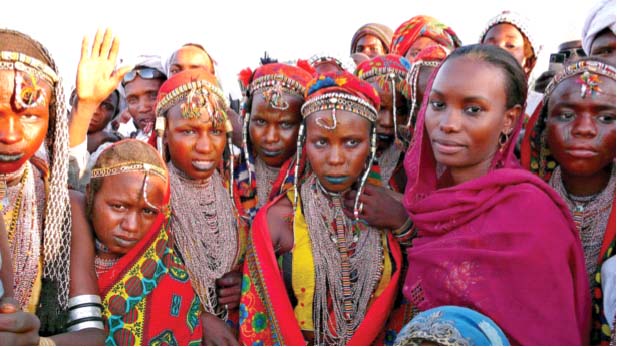
Transcending geographical boundaries, under the grab of commercialisation in the world, made religion an agency to fulfill purposes of evangelical forces. Through this, they could claim legitimacy and monopoly over the newly claimed territories. For the acceptance of this religion, various ways and mechanisms were implanted for the appropriation of their goals. As we celebrate World Indigenous Day on August 9, this is an apt time to cull out the history of evangelical forces and see how they are responsible for the decay and wiping of a vibrant culture which these indigenous populations preserved and practiced since time immemorial. Most importantly, this was a global phenomenon.
Resorting to Religious Discrimination
Starting with the initial wave of European colonisation in the 15th and 16th centuries, European Christian colonists and settlers systematically practiced religious discrimination, persecution, and violence against the native religions of indigenous peoples. The Spanish and Portuguese colonial empires, particularly during the Age of Discovery, were at the forefront of efforts to convert indigenous populations in the Americas to Christianity. Pope Alexander VI’s Inter caetera Bull of 1493 reinforced Spain’s claims to newly discovered lands while demanding the conversion of indigenous people to Catholicism.
In this religious conversion campaign, mendicant orders like the Franciscans and Dominicans played significant roles. They learned indigenous languages, established schools, and aimed to convert indigenous leaders, expecting their communities to follow suit. In regions with established indigenous writing traditions, friars taught indigenous scribes to write in Latin letters. Missions were established to gather dispersed indigenous populations, making it easier to spread the faith. The debate on Christianisation was intensified by the prohibition of slavery between Christians, leading to discussions on the souls and rights of Native Americans. The Valladolid debate involved figures like Bartolomé de Las Casas and Juan Ginés de Sepúlveda, with Las Casas arguing against Native American enslavement based on their possession of souls. In Mexico, the arrival of Franciscans in 1524 led to the destruction of indigenous sacred sites, paralleling the practice of burning temples after the conquest. Indigenous groups were expected to incorporate new Gods alongside their existing ones. However, they were unaware that conversion to Christianity required abandoning their ancestral beliefs. The Catholic Church’s actions affected indigenous converts, limiting their prospects of becoming Christian priests. The Jesuits also played a significant role in conversion efforts across the Americas, achieving success in New France and Portuguese Brazil, and creating almost autonomous states within states, such as in Paraguay.
The pressure on the missionaries for quick conversions depended on the crown for patronage. The appearance of new Christian communities was a part of the king’s overseas policy because converted groups were expected to become allies of the Portuguese Empire. So, the missionaries tried to use every possible measure to convert people. Andrew F. Walls says in his book, The Missionary Movement in Christian History, that throughout Christian history, a force was working to locchurch’s vision and universalise it. One can easily say that methods of deception were also used to convert the Indigenous people. The evangels across the globe adopted the same tactics. Britain’s initial colonial expansion began in Ireland, and its methods were refined during its expanded colonisation of other parts of the world, including Canada, Ceylon, India, Australia and later North America. Control over land and resources and the forced assimilation of indigenous peoples are recurrent characteristics. Australia is the most prominent example of ethnic cleansing, or one can also call it colonial genocide of the indigenous population by the missionaries under the British crown.
Aboriginal elders in a rural town in Western Australia want to forbid Christians from travelling there because of fear that they may convert large numbers of people to Christianity. The indigenous people expressed concern over religious conversions, claiming that the religious group attempted to convert them to Christianity and sever them from their traditional culture. The near-extinction of Aboriginal Tasmanians is widely considered a case of near genocide by prominent figures like Lemkin, Robert Hughes, Ward Churchill, Leo Kuper, and Jared Diamond. In Queensland, between 1824 and 1908, White settlers and Native Mounted Police were responsible for the deaths of over 10,000 Aboriginal people, often viewing them as pests or even hunting them for sport. The Aboriginal population in Australia, estimated at around 500,000 before British colonisation in 1788, drastically declined to under 50,000 by 1900. While infectious diseases brought by colonisation caused many deaths, up to 20,000 were killed during the Australian frontier wars through massacres, poisonings, and other violent actions by British settlers. Historian Ben Kiernan and the 1997 report “Bringing Them Home” consider Australia’s policies of removing Aboriginal children from their families as genocidal. Allegations also include forced contraception and adoption, which some scholars reject as genocidal policies.
The French colonisation of Africa, particularly in Algeria, Congo Free State, and German colonial territories, resulted in significant demographic and humanitarian crises. In Algeria, from 1830 to 1871, a series of catastrophes led to a sharp decline in the native population due to famines, diseases, emigration, and violent actions by the French army during the Pacification of Algeria. This decline was followed by a gradual increase in population by 1890.
Under Leopold II’s rule in the Congo Free State, up to 15 million people, sixty per cent of the population, were estimated to have been killed due to diseases like sleeping sickness, smallpox, and other atrocities. The German colonial empire also perpetrated genocidal acts. In German South-West Africa, the Herero and Nama peoples suffered a genocide, with General Lothar von Trotha deliberately pushing them into the desert, causing their death. The German Empire acknowledged this genocide in 2004. Similar human rights abuses were reported in Togo, German East Africa, and the Cameroons. Though debate surrounds the characterisation of the military campaign against the Maji Maji Rebellion in German East Africa as genocide, evidence indicates that scorched earth tactics and forced relocation caused famine and the death of around 200,000 Africans. In all these instances, European colonial powers inflicted severe harm on indigenous populations through violence, diseases, and deliberate policies, leading to significant demographic losses and lasting repercussions.
The Russian conquest of Siberia involved violent massacres of indigenous populations due to their resistance to colonisation by Russian Cossacks.
Targeting Tribals of Bharat
In the contemporary example, the attack on Janjati in Bharat fits the bill. For example, approximately one-sixth of India’s Christian population comprises Janjati individuals. The primary concentration of Janjati Christians is in the North-East Himalayan region. The proportion of Mizo, Garo, and Naga Janjati Christians varies from negligible to a substantial portion of the total population in certain areas. One-tenth of the Janjati population has embraced Christianity in States like Madhya Pradesh and Bihar. Among specific tribes like Khariya, Munda, Urano, and others, many have adopted Christianity. In Madhya Pradesh and Odisha, smaller clusters of Janjati communities adhere to Christianity. While the impact of religious conversion to Christianity among Rajasthan, Gujarat, and Maharashtra’s Janjati population is modest, it holds a more significant sway in South India.













Comments