Indian, Japanese scientists discover 600-million-year-old ocean water in the Himalayas
July 1, 2026
  • Read Ecopy
  • Circulation
  • Advertise
  • Careers
  • About Us
  • Contact Us
Android AppiPhone AppArattai
Organiser
  • ‌
  • Bharat
    • Assam
    • Bihar
    • Chhattisgarh
    • Jharkhand
    • Maharashtra
    • View All States
  • World
    • Asia
    • Europe
    • North America
    • South America
    • Africa
    • Australia
  • Editorial
  • International
  • Opinion
  • RSS @ 100
  • More
    • Op Sindoor
    • Analysis
    • Sports
    • Defence
    • Politics
    • Business
    • Economy
    • Culture
    • Special Report
    • Sci & Tech
    • Entertainment
    • G20
    • Azadi Ka Amrit Mahotsav
    • Vocal4Local
    • Web Stories
    • Education
    • Employment
    • Books
    • Interviews
    • Travel
    • Law
    • Health
    • Obituary
  • Subscribe
    • Subscribe Print Edition
    • Subscribe Ecopy
    • Read Ecopy
  • ‌
  • Bharat
    • Assam
    • Bihar
    • Chhattisgarh
    • Jharkhand
    • Maharashtra
    • View All States
  • World
    • Asia
    • Europe
    • North America
    • South America
    • Africa
    • Australia
  • Editorial
  • International
  • Opinion
  • RSS @ 100
  • More
    • Op Sindoor
    • Analysis
    • Sports
    • Defence
    • Politics
    • Business
    • Economy
    • Culture
    • Special Report
    • Sci & Tech
    • Entertainment
    • G20
    • Azadi Ka Amrit Mahotsav
    • Vocal4Local
    • Web Stories
    • Education
    • Employment
    • Books
    • Interviews
    • Travel
    • Law
    • Health
    • Obituary
  • Subscribe
    • Subscribe Print Edition
    • Subscribe Ecopy
    • Read Ecopy
Organiser
  • Home
  • Bharat
  • World
  • Operation Sindoor
  • Editorial
  • Analysis
  • Opinion
  • Culture
  • Defence
  • International Edition
  • RSS @ 100
  • Magazine
  • Read Ecopy
Home Bharat

Indian, Japanese scientists discover 600-million-year-old ocean water in the Himalayas

In a significant discovery, Indian and Japanese academics, scientists, and researchers have found out about the presence of marine rocks and water droplets in the Himalayas, which indicate the existence of great ocean millions of years ago in the history of the Earth

WEBDESKWEBDESK
Jul 29, 2023, 09:30 pm IST
in Bharat
Follow on Google News
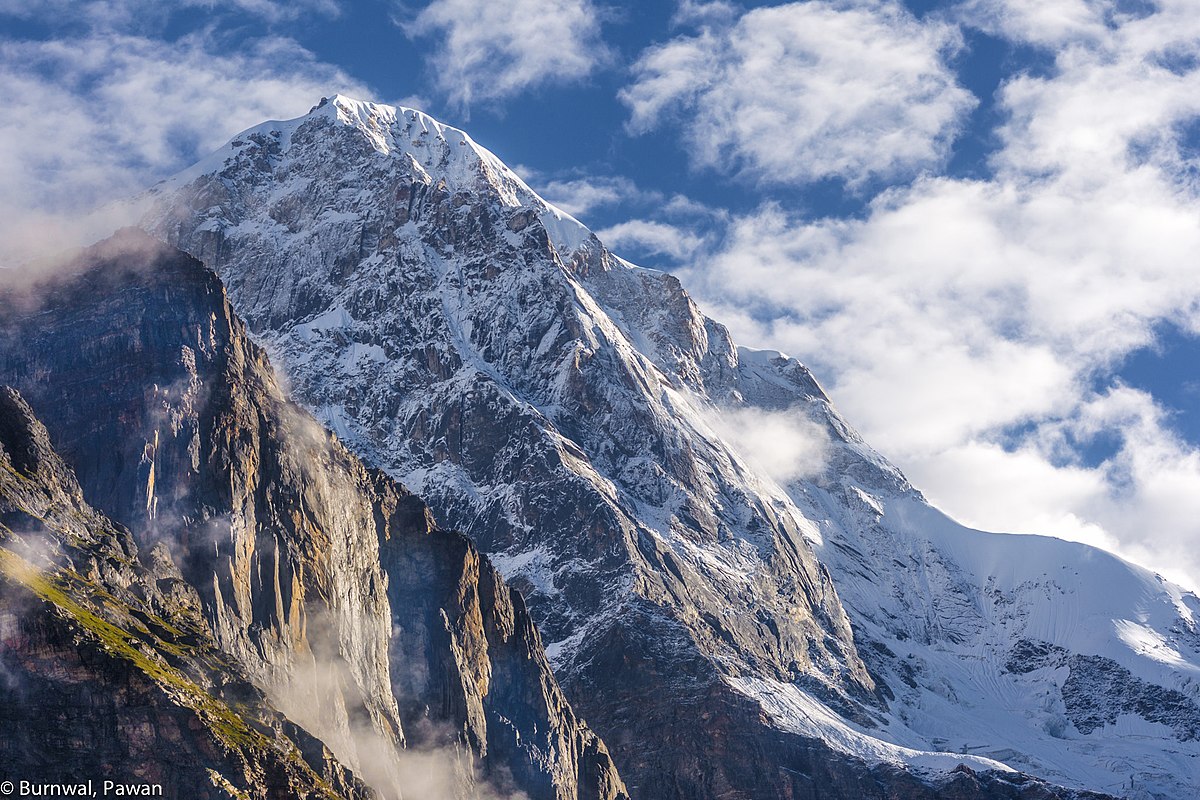
The Himalayas: Representative Image

The Himalayas: Representative Image

FacebookTwitterWhatsAppTelegramEmail

As per a release on July 27, 2023, researchers, and scientists from the Indian Institute of Science (India) and Niigata University (Japan) have jointly found and discovered droplets of water trapped in mineral deposits that were likely left behind from an ancient ocean that existed 600 million years ago.

The Discovery

According to Sajeev Krishnan, the professor at the Center of Earth Sciences and a corresponding author of the study mentioned that “The joint research team from the IISc and Niigata University have been working on a study on the tectonic evolution of the Himalayan and Nagaland Belt for the last five years.”  The team included three researchers from IISC, including Sanjeev and two students and a professor and student from Japan

During this study, the team made the discovery and gained knowledge about these rocks. So far, scientists have not fully understood how these events were connected due to the lack of well-preserved fossils and the disappearance of all past oceans that existed in the earth’s history. The exposure of marine rocks in the Himalayas can provide some answers.

The team hunted for these deposits across a long stretch of the Western Kumaon Himalayas extending from Amritpur to Milam Glacier and Dehradun to Gangotri Glacier and found the droplets of water in the rocks

Results

After analyzing these water droplets through extensive laboratory analysis, it was revealed that the deposits are a product of precipitation from ancient ocean water and not from other places such as the Earth’s interior (Volcanic activity). These deposits contained calcium and magnesium carbonates as well.

Time Capsule

“We have found a time capsule for paleo oceans,” Prakash Chandra Arya, a PhD (doctoral) student at the Center of Earth Science in IISc, and first author of the study published in Precambrian Research, said. “We don’t know much about past oceans,” Prakash said. “How different or similar were they compared to present-day oceans? Were they much more acidic or basic, nutrient-rich or deficient, warm or cold, and what was their chemical and isotopic composition?” Such insights can also provide more clues about the Earth’s past climate, and this information can be useful for climate modelling, he added.

Causes and Explanations

Scientists believe that between 700 to 500 million years ago, thick sheets of ice covered the Earth for an extended period called the Snowball Earth Glaciation (this refers to one of the major glacial events in Earth’s history). It was followed by an increase in the amount of oxygen in the Earth’s atmosphere called the Second Great Oxygenation Event, which led to the formation and evolution of new life forms.

The deposits found by the team date back to around the time of Snowball Earth Glaciation and revealed that sedimentary basins were deprived of calcium for an extended period, probably due to low riverine input. “

During this time, there was no flow in the oceans and hence no calcium input. When there is no flow or calcium inputs, more calcium precipitates, and the amount of magnesium goes up,” explains Sanjeev Krishnan.  The calcium deprivation also led to a nutrient deficiency, making it conducive for slow-moving photosynthetic cyanobacteria, which could have started spewing out more oxygen into the atmosphere. “Whenever there is an increase in the oxygen level in the atmosphere, you will have biological radiation or evolution,”

The magnesium deposits formed at this time were able to trap paleo ocean water in the pore space as they crystallized, then researchers suggest.


Topics: magnesiumHimalayasNiigata UniversitySnowball Earth GlaciationSecond Great Oxygenation EventCyanobacteriaGangotri glacierMilam GlacierSanjeev KrishnanPrakash Chandra AryaIISCcalciumEarth
Share30TweetSendShareSend
✮ Subscribe Organiser YouTube Channel. ✮
✮ Join Organiser's WhatsApp channel for Nationalist views beyond the news. ✮
Previous News

Muharram: Islamist Hypocrisy on Band, DJ Music -Haram on Ramnavami & Kanwar Yatra, Halal on Islamic Festivals

Next News

Myanmar: Former leader Aung San Suu Kyi transferred to ‘state-owned residence’

Related News

World Environment Day: A green future demands more than planting trees

Mountaineer Arun Kumar Tiwari’s tragic death on Everest; Family says he reunited with Bhagwan Shiva in Himalayas

Kedarnath Dhaam opens from April 22, Wednesday

Kedarnath Opens: A sacred journey into India’s timeless spiritual consciousness

Alluring Almora: The Meditative Himalayan Walks

Representative Image

Katarmal-Sunshine Yoga, Sunkissed Himalayas: A deep dive into the contours of Himalayan spiritual aura

Bharat – A Puranic Legacy We Uphold

Load More

Latest News

Arrested Bangladeshi nationals: Mohammed Woola, Mohammed Mafdi Hassan and Mohammed Hassan Ali

Keralam: Three more Bangladeshis arrested in Kozhikode; IB probes fake Aadhaar, SIM links

The "China Plus One" strategy is reshaping the global manufacturing map

The China Plus One Era: Why global manufacturing is shifting from Beijing to new strategic hubs

Tamil Nadu’s Growth and Employment Agenda on the Journey towards Viksit Bharat@2047 Seminar at Lok Bhavan, Chennai, On June 29, 2026.

Seminar at Lok Bhavan highlights Tamil Nadu’s strategic role in India’s journey towards Viksit Bharat@2047

Alang's Comeback: How Modi Government Strengthened India's Maritime Economy

Congress’ assault on Alang China sponsored? How Modi’s vision saved India’s maritime lifeline

Ancient Hindu temples break through watery graves to reclaim Sanatan Dharma’s indestructible legacy

Representative Image

Radical Islamist drivers weaponise public transit to target and exploit Hindu women

Central Sanskrit University launches India's First AI engineering Programme

Central Sanskrit University launches India’s 1st AICTE-approved AI engineering programme with Indian knowledge systems

General Dhiraj Seth assumes charge as the 31st Chief of the Indian Army; Succeeds General Upendra Dwivedi

Representative Image

From Aadhaar to UPI: How Digital India’s 11 year journey rewired governance, welfare and economy

Delhi-NCR Fight Against Vehicular Pollution: How Rs. 9,585cr central govt. scheme aims to improve city’s air quality

Load More
  • Privacy
  • Terms
  • Cookie Policy
  • Refund and Cancellation
  • Delivery and Shipping

© Bharat Prakashan (Delhi) Limited.
Tech-enabled by Ananthapuri Technologies

  • Home
  • Search Organiser
  • Bharat
    • Assam
    • Bihar
    • Chhattisgarh
    • Jharkhand
    • Maharashtra
    • View All States
  • World
    • Asia
    • Africa
    • North America
    • South America
    • Europe
    • Australia
  • Editorial
  • Operation Sindoor
  • Opinion
  • Analysis
  • Defence
  • Culture
  • Sports
  • Business
  • RSS @ 100
  • Entertainment
  • More ..
    • Sci & Tech
    • Vocal4Local
    • Special Report
    • Education
    • Employment
    • Books
    • Interviews
    • Travel
    • Health
    • Politics
    • Law
    • Economy
    • Obituary
  • Subscribe Magazine
  • Read Ecopy
  • Advertise
  • Circulation
  • Careers
  • About Us
  • Contact Us
  • Policies & Terms
    • Privacy Policy
    • Cookie Policy
    • Refund and Cancellation
    • Terms of Use

© Bharat Prakashan (Delhi) Limited.
Tech-enabled by Ananthapuri Technologies