
Syama Prasad Mukherjee: The man who defined Nationalism in post-colonial India
June 23, 2026
  • Read Ecopy
  • Circulation
  • Advertise
  • Careers
  • About Us
  • Contact Us
Android AppiPhone AppArattai
Organiser
  • ‌
  • Bharat
    • Assam
    • Bihar
    • Chhattisgarh
    • Jharkhand
    • Maharashtra
    • View All States
  • World
    • Asia
    • Europe
    • North America
    • South America
    • Africa
    • Australia
  • Editorial
  • International
  • Opinion
  • RSS @ 100
  • More
    • Op Sindoor
    • Analysis
    • Sports
    • Defence
    • Politics
    • Business
    • Economy
    • Culture
    • Special Report
    • Sci & Tech
    • Entertainment
    • G20
    • Azadi Ka Amrit Mahotsav
    • Vocal4Local
    • Web Stories
    • Education
    • Employment
    • Books
    • Interviews
    • Travel
    • Law
    • Health
    • Obituary
  • Subscribe
    • Subscribe Print Edition
    • Subscribe Ecopy
    • Read Ecopy
  • ‌
  • Bharat
    • Assam
    • Bihar
    • Chhattisgarh
    • Jharkhand
    • Maharashtra
    • View All States
  • World
    • Asia
    • Europe
    • North America
    • South America
    • Africa
    • Australia
  • Editorial
  • International
  • Opinion
  • RSS @ 100
  • More
    • Op Sindoor
    • Analysis
    • Sports
    • Defence
    • Politics
    • Business
    • Economy
    • Culture
    • Special Report
    • Sci & Tech
    • Entertainment
    • G20
    • Azadi Ka Amrit Mahotsav
    • Vocal4Local
    • Web Stories
    • Education
    • Employment
    • Books
    • Interviews
    • Travel
    • Law
    • Health
    • Obituary
  • Subscribe
    • Subscribe Print Edition
    • Subscribe Ecopy
    • Read Ecopy
Organiser
  • Home
  • Bharat
  • World
  • Operation Sindoor
  • Editorial
  • Analysis
  • Opinion
  • Culture
  • Defence
  • International Edition
  • RSS @ 100
  • Magazine
  • Read Ecopy
Home Bharat

Syama Prasad Mukherjee: The man who defined Nationalism in post-colonial India

Dr. Swadesh SinghDr. Swadesh Singh
Jul 6, 2023, 10:00 am IST
in Bharat, Opinion
Follow on Google News
FacebookTwitterWhatsAppTelegramEmail

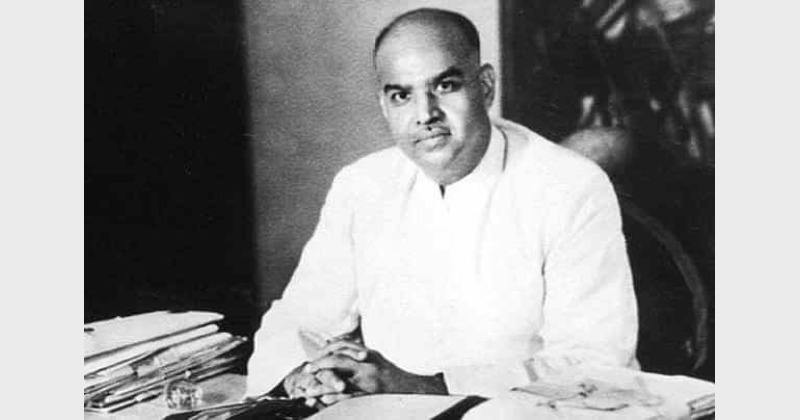
Syama Prasad Mukherjee was an unequivocal supporter of the idea that the civilisational identity of India has a continuity which can be best defined in terms of being Hindu.

There are broadly four approaches to understand the idea of Indian nationalism – Cambridge, Marxist, Subaltern and Nationalist. The Cambridge or Imperialist approach rejects the idea of Indian nationalism. They relegate it as a competition among Indian leadership for power and a movement of western educated elites. The Marxist school studies Indian nationalism and national movement as a class struggle where bourgeois led the movement and took the support of masses for their vested interests. The Subaltern school studies Indian nationalism from the point of view of marginalised sections of society. The Nationalist approach talks about the dominance of nationalist ideology and national unity where common consciousness grew because of shared antagonism towards the British rule in India, and which encouraged people to take pride in ancient Indian tradition.

Dr Syama Prasad Mukherjee was a leading voice of the Nationalist approach. He created a new understanding of Indian nationalism not only through his writings but also as a front leader who understood the importance of territorial and cultural nationalism simultaneously in a post-colonial nation-state.

Before 1947, independence of India was considered as the only worthy national cause. Participation in it was seen as the greatest service to the nation and the true badge of a nationalist.

After the demise of Mahatma Gandhi, the mantle came to Jawaharlal Nehru who positioned himself as an internationalist and humanitarian. When the simplest route to resolve the Kashmir issue could have been either use of force or bilateral talks, he dragged the issue to the United Nations which at that point was still in an early phase and building legitimacy. Nehru remained the External Affairs Minister for 18 years during which period India witnessed several diplomatic fiascos and lost territories.

At the same time during the 1950s, the Communists who were the second major party in the Parliament cozied up with the Soviet Union and toed its line. The Socialist Party formed after the death of Gandhi, also fragmented before it could take any formidable shape. Later, the socialist politics was reduced to the politics of backward castes and a national vision could not have been expected out of it. Dalit politics was in a nascent stage when Dr BR Ambedkar died.

In this backdrop, a look at the life and politics of Syama Prasad Mukherjee throws up some interesting observations. Mukherjee had gained prominence at the national level in the late 1930s when he associated himself with HIndu Mahasabha and later became its National President. He remained on the national political scene till his mysterious death on 23 June 1953 in Srinagar. During this period, he defined and shaped the idea of nationalism for a safe, secure and prosperous India.

To begin with, he managed to salvage a large territory for India through his efforts. Today, the state of Bengal is an integral part of India. When the division of India became imminent, he campaigned for the division of Bengal. He demanded West Bengal for Hindu Bengalis.

Mukherjee was the Industry Minister in Nehru’s interim government and took many initiatives but he took no time to resign when he found that Nehru and Liyaqat Ali signed a Pact which guaranteed minority rights in both the countries. Mukherjee wanted to hold Pakistan accountable for the huge influx of millions of Hindu refugees from East Pakistan, who were fleeing due to communal violence who were looted, raped and killed by Muslims there.

Syama Prasad Mukherjee was a towering leader and intellectual par excellence but he did not have much by way of organisational support. After his consultation with RSS chief MS Golwalkar, he founded a political party named Bhartiya Jana Sangh (BJS). He had the choice to form a party with ‘Hindu’ in its title or even to simply continue with Hindu Mahasabha, but he chose to form a party with a nationalist vision. He was an unequivocal supporter of the idea that the civilisational identity of India has a continuity which can be best defined in terms of being Hindu. He was clear that there should be no compromise with Hindu interests and Hindu population should not be treated as secondary subjects as done for more than 700 years by different foreign rulers.

The understanding of the RSS and its leaders like Deen Dayal Upadhyay, Atal Bihari Vajpayee, and Balraj Madhok, added to this post-Independence discourse on nationalism. This discourse was clearly inspired by the ideas of freedom fighters like Tilak, Lajpat Rai, Bipin Chandra Pal, Aurobindo, Savarkar, as well as spiritual gurus like Dayanand, Ram Krishna and Vivekanand. The idea of cultural nationalism propagated by BJS and BJP leaders like Vajpayee and Advani appeared in continuation to the ideas practiced and propagated by Mukherjee who believed in the age-old civilisational ethos of India.

Mukherjee knew that territorial integrity is an essential part of the nation-state building process. He moved a resolution at the first national convention of BJS and campaigned across the country for total integration of Jammu and Kashmir with the rest of India. He opposed the permit system that created bureaucratic barriers to enter Jammu and Kashmir. He tried to enter the state without a permit. For this, he was arrested, and later mysteriously died at a Srinagar jail. Nehru did not form an enquiry committee to investigate the causes of his death even after repeated pleas from his mother Jogmaya Devi.

Syama Prasad Mukherjee was a modern, conservative, nationalist who not only worked for the idea of ‘territorial nationalism’ but also played an important role in popularising the idea of ‘cultural nationalism’ which later become the bedrock for BJS and BJP and showed a new path to the youth in post-independence India. The little stream of nationalism so painstakingly nurtured by Mukherjee is a roaring mahasagar today.

Courtesy: Chintan

Topics: IndiaBJPSyama Prasad Mukherjeeindian nationalismcultural nationalismPost- colonial Indiacivilisational identity of IndiaNation State building
Dr. Swadesh Singh
Dr. Swadesh Singh
Assistant Professor, Political Science, Satyawati College, Delhi University, Delhi [Read more]
Share11TweetSendShareSend
✮ Subscribe Organiser YouTube Channel. ✮
✮ Join Organiser's WhatsApp channel for Nationalist views beyond the news. ✮
Previous News

“Rise of Indian football has been remarkable”: AIFF Chief Kalyan Chabey on SAFF title win

Next News

J&K: Over 67,000 devotees visit Amarnath cave shrine in first 5 days of pilgrimage

Related News

Dr Syama Prasad Mookerjee: A Life That Still Guides Bharat’s National Resolve

Delhi Chief Minister Rekha Gupta paid tribute to Bharatiya Jana Sangh founder Syama Prasad Mookerjee on his death anniversary

Article 370 abrogation was the greatest tribute to Syama Prasad Mookerjee: Delhi CM Rekha Gupta

Prime Minister Narendra Modi

Viksit Bharat: PM Modi slams Congress — ‘Blocks development, claims credit’

PM Modi Pays Homage to Jan Sangh Founder Syama Prasad Mookerjee

Balidan Diwas: PM Modi pays tribute to Jan Sangh founder Syama Prasad Mookerjee, hails his nationalist legacy

Odisha Legislative Assembly Speaker Surama Padhy conducting proceedings of the State Assembly in Bhubaneswar. (File Photo)

Odisha Speaker rejects BJD and Congress petitions seeking disqualification of 11 MLAs over Rajya Sabha cross-voting

UAE President Sheikh Mohamed bin Zayed Al Nahyan and Prime Minister Narendra Modi(File Photo)

UAE to buy BrahMos & Akashteer: Big win for India’s defence ecosystem to seal regional security amid West Asia crisis

Load More

Latest News

Pratiraksha is Gujarat Police's Aadhaar-based verification platform designed to identify illegal workers and prevent identity fraud in industrial sectors

Pratiraksha: How Gujarat police uses Aadhaar verification to secure industrial workforce against identity fraud

Israel-Iran crisis has highlighted not only shifting dynamics of West Asia but also growing confidence of India's foreign policy

India, Israel and the rise of strategic autonomy in an era of global geopolitical realignment

Saleem and Jaleel arrested in forced religious conversion case

Karnataka Conversion Case: Forced conversion of Hindu woman and minor son sparks outrage; Saleem and Jaleel arrested

Bareilly Cantonment Emerges as Model for Sustainable Urban Development in India (Image Source X)

Uttar Pradesh: Bareilly Cantonment becomes India’s first carbon-negative cantonment

CM Yogi Adityanath making industry, investment and the connectivity revolution in Eastern Uttar Pradesh

The Purvanchal Growth Story: How industry, infrastructure, tourism & exports are fueling development in eastern UP

(Left) Fire at the coaching centre in Lucknow (Right) Members of ABVP extending all possible help

Lucknow Coaching Centre Fire tragedy is heartbreaking and deeply unfortunate: ABVP seeks action against culprits

Andhra Pradesh Minister and TDP National General Secretary Nara Lokesh

Nara Lokesh dismisses rumours of TDP sabotaging Modi government, reaffirms unconditional NDA support

With new military deployments, export opportunities and potential Russian production, BrahMos is entering a new era of strategic relevance

BrahMos enters high-volume production as military demand and global export orders surge

Dr Mahrang Baloch

Pakistan: Mahrang Baloch gets life sentence, Balochistan erupts in protest; BYC calls for shutdown

Prime Minister Narendra Modi

‘Maoism is breathing its last’: PM Modi highlights crackdown on red terror in last 12 years and growth in tribal areas

Load More
  • Privacy
  • Terms
  • Cookie Policy
  • Refund and Cancellation
  • Delivery and Shipping

© Bharat Prakashan (Delhi) Limited.
Tech-enabled by Ananthapuri Technologies

  • Home
  • Search Organiser
  • Bharat
    • Assam
    • Bihar
    • Chhattisgarh
    • Jharkhand
    • Maharashtra
    • View All States
  • World
    • Asia
    • Africa
    • North America
    • South America
    • Europe
    • Australia
  • Editorial
  • Operation Sindoor
  • Opinion
  • Analysis
  • Defence
  • Culture
  • Sports
  • Business
  • RSS @ 100
  • Entertainment
  • More ..
    • Sci & Tech
    • Vocal4Local
    • Special Report
    • Education
    • Employment
    • Books
    • Interviews
    • Travel
    • Health
    • Politics
    • Law
    • Economy
    • Obituary
  • Subscribe Magazine
  • Read Ecopy
  • Advertise
  • Circulation
  • Careers
  • About Us
  • Contact Us
  • Policies & Terms
    • Privacy Policy
    • Cookie Policy
    • Refund and Cancellation
    • Terms of Use

© Bharat Prakashan (Delhi) Limited.
Tech-enabled by Ananthapuri Technologies