
UAPA Judgement: New Beginning in Indigenising Jurisprudence
September 14, 2026
  • Read Ecopy
  • Circulation
  • Advertise
  • Careers
  • About Us
  • Contact Us
Android AppiPhone AppArattai
Organiser
  • ‌
  • Bharat
    • Assam
    • Bihar
    • Chhattisgarh
    • Jharkhand
    • Maharashtra
    • View All States
  • World
    • Asia
    • Europe
    • North America
    • South America
    • Africa
    • Australia
  • Editorial
  • International
  • Opinion
  • RSS @ 100
  • More
    • World Hindu Congress 2026
    • Op Sindoor
    • Analysis
    • Sports
    • Defence
    • Politics
    • Business
    • Economy
    • Culture
    • Special Report
    • Sci & Tech
    • Entertainment
    • G20
    • Azadi Ka Amrit Mahotsav
    • Vocal4Local
    • Web Stories
    • Education
    • Employment
    • Books
    • Interviews
    • Travel
    • Law
    • Health
    • Obituary
  • Subscribe
    • Subscribe Print Edition
    • Subscribe Ecopy
    • Read Ecopy
  • ‌
  • Bharat
    • Assam
    • Bihar
    • Chhattisgarh
    • Jharkhand
    • Maharashtra
    • View All States
  • World
    • Asia
    • Europe
    • North America
    • South America
    • Africa
    • Australia
  • Editorial
  • International
  • Opinion
  • RSS @ 100
  • More
    • World Hindu Congress 2026
    • Op Sindoor
    • Analysis
    • Sports
    • Defence
    • Politics
    • Business
    • Economy
    • Culture
    • Special Report
    • Sci & Tech
    • Entertainment
    • G20
    • Azadi Ka Amrit Mahotsav
    • Vocal4Local
    • Web Stories
    • Education
    • Employment
    • Books
    • Interviews
    • Travel
    • Law
    • Health
    • Obituary
  • Subscribe
    • Subscribe Print Edition
    • Subscribe Ecopy
    • Read Ecopy
Organiser
  • Home
  • Bharat
  • World
  • Operation Sindoor
  • Editorial
  • Analysis
  • Opinion
  • Culture
  • Defence
  • International Edition
  • RSS @ 100
  • Magazine
  • Read Ecopy
Home Bharat

UAPA Judgement: New Beginning in Indigenising Jurisprudence

Prafulla KetkarPrafulla Ketkar
Apr 3, 2023, 02:56 pm IST
inBharat, Editorial
Follow on Google News
Facebook
Twitter
WhatsAppTelegramEmail

“Personally, I do not attach any importance to the label which may be attached to it – whether you call it Federal Constitution or Unitary Constitution or by any other name. It makes no difference so long as the Constitution serves our purpose. We are not bound to have a constitution which completely and fully falls in line with known categories of Constitutions in the world. We have to take certain facts of history in our own country and the Constitution has not to an inconsiderable extent been influenced by such realities as facts of history”. – Dr Rajendra Prasad, Constituent Assembly Debates,
Vol 11, November 26, 2023

On March 24, 2023, a Supreme Court bench reversed its 2011 ruling in the Arup Bhuyan versus State of ­­Assam case and revived the doctrine of guilt-by-association and upheld Section 10 (a) (i) of the Unlawful Activities Prevention Act (UAPA), 1967. In another significant event, former judges issued a statement against legalising same-sex marriages in the country. Both these events involving the judicial proceedings may look unrelated, but they have a strong connection to the fundamentals of jurisprudence in Bharat saving it from the excess ‘Americanism’ in interpretation.

The UAPA case is historic, especially after the amendment made in the 1967 Act to make it possible for the Union Government to designate an individual as a terrorist if one is found associated with the banned organisation. This provision was toothless because of the 2011 judgement, which pronounced that mere membership of a banned organisation would not make a person a criminal unless he resorts to violence or incites people to violence. Many Maoists and Islamists harbouring anti-Bharat activities through banned organisations like the Communist Party of India (Maoist) and Popular Front of India (PFI) got relief from the Courts based on this interpretation. The Government could ban organisations for threatening the integrity and sovereignty of the nation. Still, it could not catch the individuals vouching for and openly propagating violent ideas due to the judicial interpretation of the law. Hereafter, investigation agencies will find it easier to deal with terrorist activities by organisations and individuals.

It is not just the implications of this judgement but also the basis of reversal in the Court ruling that is critical. The vociferous argument made by Solicitor General Tushar Mehta on behalf of the Union Government questioned the very foundation of the interpretation of ‘freedom’ used by the then bench led by Justice Markandey Katju. Justices Shah, Ravi Kumar and Karol were unanimous that the Justice Katju-led bench committed a serious error by “straightaway and directly following the US Supreme Court decisions and that too without adverting to the differences and the position of laws in India to arrive at the ruling”. While interpreting our Constitutional laws, this very problem of ‘Americanism’ has created confusion in many other cases, such as the right to privacy, same-sex marriages and the sanctity of temple traditions.

Here, the statement issued by former judges led by Justice SN Dhingra becomes important. The issue of same-sex marriage is pending before the Court, and many groups and individuals are pursuing the same before the apex court. Former judges, in their statement, urged “the conscious members of the society including those who are pursuing the issue of same-sex marriage in Supreme Court to refrain from doing so in the best interest of Bharatiya society and culture”. They called it ‘a cancerous problems that the West is facing and are sought to be imported into Bharat by vested interest groups through the misuse of judiciary’. Article 377, which declared same-sex relations a crime based on Victorian morality, is already nullified. But, equating same-sex relations to the institution of marriage is going to the other extreme. In the Bharatiya tradition and laws, marriage as an institution is beyond a contract or legal registration. While pursuing and deliberating on marital issues, this Indic perspective should be central.

The Constitution of Bharat is meant for ‘We, the people’, as it is adopted and enacted by and for the people of Bharat. The American or European wisdom on legal jurisprudence cannot become the basis for interpreting our laws. Our Constitution makers also envisaged the fundamentals in the same way. As many judges advocate indigenising the legal system, rejecting this trend of importing American decisions to the Bharatiya condition is a welcome step forward. It should not be the end but a beginning in indigenising jurisprudence.


Topics: Supreme Courtfundamentals of jurisprudenceUAPA JudgementAmerican or EuropeanAmerican decisionsConstitution of Bharat
Prafulla Ketkar
Prafulla Ketkar
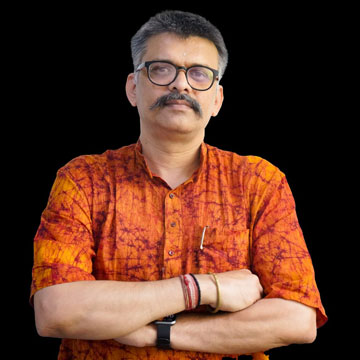
Prafulla Ketkar, is the Editor, Organiser (Weekly) since 2013. He has a experience of over 20 years in the fields of research, media and academics. He is also Advisory Committee School of Journalism, Delhi University. He has been writing on issues related to International politics and foreign policy, with special reference to China and Democracy, Hindutva, and Bharatiya Civilisation. He was also a member of the Editorial team of the recently published Complete Works of Pt Deendayal Ji in 15 Volumes. He has 2 books, 29 academic articles, 2 entries in Encyclopedia of India and numerous articles to his credit. [Read more]
Share1
Tweet
SendShareSend
✮ Subscribe Organiser YouTube Channel. ✮
✮ Join Organiser's WhatsApp channel for Nationalist views beyond the news. ✮
Previous News

Rahul Gandhi to challenge conviction in ‘Modi’ surname case, Sambit Patra takes a dig saying two R’s can’t go together

Next News

‘Abuse’ of CM’s Disaster Relief Fund: Kerala Lokayukta refers case against Pinarayi & team to three-member bench

Related News

Registrar of Copyrights in India has rejected an application of computer scientist to make AI as an Author

DABUS loses copyright battle in India: Human author must be named; The tradition of Apūrvatā to Maulikatā

1993 Blasts Case: SC Rejects Abu Salem’s Release Plea

From 1993 Mumbai blasts to Portugal extradition: SC rejects Abu Salem’s bid for early release

Two Supreme Court cases have put India’s constitutional safeguards for tribal land, representation and self-governance under renewed scrutiny

Demography as a Weapon: The Supreme Court’s twin test on tribal protections

SC Backs Eviction from Tamil Nadu Temple Land

SC backs eviction from Tamil Nadu Temple land: Muslim occupants cannot claim rights through illegal sale

Jaipur Terror Case: Supreme Court Refuses to Release Sarwar Azmi

Jaipur Terror Case: Supreme Court refuses to release Sarwar Azmi, cites national security

CJP’s agenda behind “school thik karo campaign” exposed; SC refuses PIL against curbs on filming inside govt schools

Load More

Latest News

RSS Akhil Bharatiya Sah-Bauddhik Shikshan Pramukh Deepak Vispute addressing the gathering

‘Nation First’ should be the guiding principle for every individual, regardless of their Field: Deepak Vispute

‘India was not poor; it was made poor’: The truth re-emerges through Jema Ferrer’s perspective

Six years after talent manager Disha Salian was found dead, her father Satish Salian on September 11 recorded a detailed statement with the Central Bureau of Investigation (CBI), naming Shiv Sena (UBT) leader Aaditya Thackeray, actors Dino Morea and Sooraj Pancholi, and others.

Disha Salian Murder Case: Father names Aaditya Thackeray in CBI statement; Lawyer claims gang rape, murder cover-up

Release of a book at Vishwa Bandhutva Diwas programme that was organised in Ujjain

Bharat’s youth rooted in sacrifice, service & discipline can give new direction to World: Parag Abhyankar

AI Generated Representative Image

“Let Go” — But only when it suits you? Exposing the double standards of Kashmir’s political leadership

Bharatiya Kisan Sangh distributed free school uniforms, notebooks, pen bundles, bags to 7,000 students in flood-affected areas of Assam

Assam: Bharatiya Kisan Sangh distributes free school uniforms, notebooks & bags to 7,000 flood-affected students

Chinmoy Prabhu

When a Bengali Hindu suffers in Bangladesh, where does ‘Bangali-Prem’ go?

AI Generated Representative Image

BRICS Summit: Not de-dollarisation, but derisking from dollar; India scripts pragmatic shield against external shocks

RSS Sarsanghchalak Dr Mohan Bhagwat, attended the 37th annual prize distribution ceremony ‘Swaraj’ at L.K. Singhania Education Centre

Education must go beyond livelihood and focus on holistic human development: Dr Mohan Bhagwat

(Left) Prime Minister Narendra Modi and Russian President Vladimir Putin (Right) Prime Minister Narendra Modi and Chinese President Xi Jinping in the backdrop of the Rameshwaram temple corridor in the backdrop of the BRICS 2026 summit

Bharat’s civilisational pride at BRICS 2026: Rameswaram temple corridor frames world leaders

Load More
  • Privacy
  • Terms
  • Cookie Policy
  • Refund and Cancellation
  • Delivery and Shipping

© Bharat Prakashan (Delhi) Limited.
Tech-enabled by Ananthapuri Technologies

  • Home
  • Search Organiser
  • Bharat
    • Assam
    • Bihar
    • Chhattisgarh
    • Jharkhand
    • Maharashtra
    • View All States
  • World
    • Asia
    • Africa
    • North America
    • South America
    • Europe
    • Australia
  • Editorial
  • Operation Sindoor
  • Opinion
  • Analysis
  • Defence
  • Culture
  • Sports
  • Business
  • RSS @ 100
  • Entertainment
  • More ..
    • Sci & Tech
    • Vocal4Local
    • Special Report
    • Education
    • Employment
    • Books
    • Interviews
    • Travel
    • Health
    • Politics
    • Law
    • Economy
    • Obituary
  • Subscribe Magazine
  • Read Ecopy
  • Advertise
  • Circulation
  • Careers
  • About Us
  • Contact Us
  • Policies & Terms
    • Privacy Policy
    • Cookie Policy
    • Refund and Cancellation
    • Terms of Use

© Bharat Prakashan (Delhi) Limited.
Tech-enabled by Ananthapuri Technologies