
Decolonisation: Need for another National Movement
June 4, 2026
  • Read Ecopy
  • Circulation
  • Advertise
  • Careers
  • About Us
  • Contact Us
Android AppiPhone AppArattai
Organiser
  • ‌
  • Bharat
    • Assam
    • Bihar
    • Chhattisgarh
    • Jharkhand
    • Maharashtra
    • View All States
  • World
    • Asia
    • Europe
    • North America
    • South America
    • Africa
    • Australia
  • Editorial
  • International
  • Opinion
  • RSS @ 100
  • More
    • Op Sindoor
    • Analysis
    • Sports
    • Defence
    • Politics
    • Business
    • Economy
    • Culture
    • Special Report
    • Sci & Tech
    • Entertainment
    • G20
    • Azadi Ka Amrit Mahotsav
    • Vocal4Local
    • Web Stories
    • Education
    • Employment
    • Books
    • Interviews
    • Travel
    • Law
    • Health
    • Obituary
  • Subscribe
    • Subscribe Print Edition
    • Subscribe Ecopy
    • Read Ecopy
  • ‌
  • Bharat
    • Assam
    • Bihar
    • Chhattisgarh
    • Jharkhand
    • Maharashtra
    • View All States
  • World
    • Asia
    • Europe
    • North America
    • South America
    • Africa
    • Australia
  • Editorial
  • International
  • Opinion
  • RSS @ 100
  • More
    • Op Sindoor
    • Analysis
    • Sports
    • Defence
    • Politics
    • Business
    • Economy
    • Culture
    • Special Report
    • Sci & Tech
    • Entertainment
    • G20
    • Azadi Ka Amrit Mahotsav
    • Vocal4Local
    • Web Stories
    • Education
    • Employment
    • Books
    • Interviews
    • Travel
    • Law
    • Health
    • Obituary
  • Subscribe
    • Subscribe Print Edition
    • Subscribe Ecopy
    • Read Ecopy
Organiser
  • Home
  • Bharat
  • World
  • Operation Sindoor
  • Editorial
  • Analysis
  • Opinion
  • Culture
  • Defence
  • International Edition
  • RSS @ 100
  • Magazine
  • Read Ecopy
Home Editorial

Decolonisation: Need for another National Movement

Prafulla KetkarPrafulla Ketkar
Sep 12, 2022, 12:17 pm IST
in Editorial
Follow on Google News
FacebookTwitterWhatsAppTelegramEmail

“IT is essential that we think about our national identity. Without this identity there is no meaning of independence, nor can Independence become the instrument of progress and happiness. As long as we are unaware of our national identity, we cannot recognise or develop all our potentialities. Under alien rule this identity is suppressed. That is why nations wish to remain independent so that they can progress according to their natural bent and can experience happiness in their endeavour. …The Nation too, like the individual, falls a prey to numerous ills when its natural instincts are disregarded. The basic cause of the problems facing Bharat is the neglect of its national identity”.
— Pandit Deendayal Upadhyaya, ‘Our Direction’, Integral Humanism, Jagriti Prakashan, NOIDA, 1995 pp. 12-13

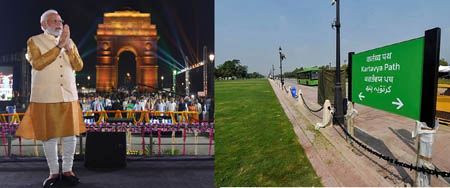
Whenever the question ‘what is there in a name?’ is asked, the name of Shakespeare invariably crops up in the same breath. It is ironic that without mention of the celebrated playwright, one cannot raise a question on the importance of the name. Similar  questions have been raised about the symbolism involved in changing the nomenclature of the places; a recent one is the renaming of Rajpath to Kartavya Path. The approach of ruling the illiterate, uneducated, to be civilised is reflected in the same.In national life, especially for a country like Bharat, with centuries of colonial past, such exercise acquires more significance in decolonising our minds.

While elaborating on the five resolutions for the Amrit Kaal in his Independence Day speech, Prime Minister Modi called to remove any trace of the colonial mindset. Rajpath turning into Kartavya Path should be seen as the action programme for the same.

The colonisation process is excruciating and brutal. Along with the political subjugation, it also leads to social, psychological, economic and cultural tormenting. The earlier invaders desecrated and destroyed the places of pilgrimage with the intent of attacking the dignity, unity, soul and sacredness of Mother Bharat. The British continued that process more clinically through the laws, education and other instruments of servitude. This long and systematic process ingrained the divisive and degraded self-perception. We gained Independence politically, but the colonisation of intellectual space continued.

After Independence, the political leadership changed a few colonial symbols. Still, the fundamental thinking behind the State functioning and the character of Lutyens’ Delhi did not change. The reconstruction of sacred places at Somnath and Ayodhya was seen as ‘communal’ initiatives instead of decolonisation. The education system, the influence of English in the bureaucratic and judicial proceedings and the thought progression behind implementing the Government schemes by and large remained colonial. The inspiration behind our freedom struggle was the spirit of Swadeshi and Vande Mataram. Suddenly, they became a sign of regression and saffronisation. The critical ingredients of nationhood, namely, glorious history, bravery and continuous struggle, scientific achievements, economic and commercial prosperity and civilisational heritage, have been  systematically refuted. In other words, the colonial mindset persisted by the elites.

Few Governments took important steps in nationalising the state apparatus. Removing the statues of British officers, engraving Sanskrit verses in the Parliament, and delinking the budget presentation from the British timings are a few significant steps. The present dispensation has expedited that process by removing redundant laws, introducing the National Education Policy (NEP) with a focus on Bharatiya languages and flexibility in course options and creating a new cultural infrastructure. Restoration of Dharmic thinking for addressing the present problems and building the future Bharat that will guide the world with righteous power are critical ingredients for reshaping the intellectual space. To truly nationalise the intellectual space, we must develop our own parameters and objectives. Technological advancement and data sovereignty are fundamental to future solutions. We must encourage our youth to undertake research in these areas. World-class infrastructure and institutions also are the need of the hour. While doing so, we should keep the soul or chitti of Bharat, as explained by Deendayalji, in mind. The Government can be a facilitator, and leadership can be inspirational towards the path of decolonisation. But ultimately, society, including academia, think tanks and community leaders, has to reconnect with the roots and initiate another freedom movement to intellectually and culturally decolonise ourselves.

Topics: National Education PolicyAmrit KaalKartavya PathDeendayaljiSomnath and Ayodhya
Prafulla Ketkar
Prafulla Ketkar
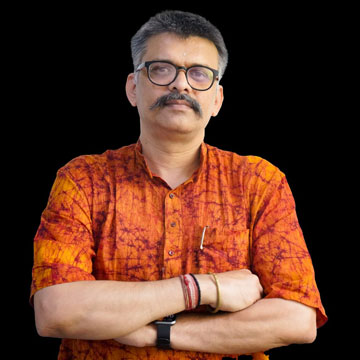
Prafulla Ketkar, is the Editor, Organiser (Weekly) since 2013. He has a experience of over 20 years in the fields of research, media and academics. He is also Advisory Committee School of Journalism, Delhi University. He has been writing on issues related to International politics and foreign policy, with special reference to China and Democracy, Hindutva, and Bharatiya Civilisation. He was also a member of the Editorial team of the recently published Complete Works of Pt Deendayal Ji in 15 Volumes. He has 2 books, 29 academic articles, 2 entries in Encyclopedia of India and numerous articles to his credit. [Read more]
Share1TweetSendShareSend
✮ Subscribe Organiser YouTube Channel. ✮
✮ Join Organiser's WhatsApp channel for Nationalist views beyond the news. ✮
Previous News

Sonali Phogat’s last film ‘Prerna’ that talks about ‘hope in life’ to be released soon

Next News

Ajit Pawar walks off in front of Sharad Pawar at NCP national convention, sparks rift rumours

Related News

ABVP’s National Executive Council Meeting began in Bhubaneswar with Prof. Raghuraj Kishore Tiwari, Dr Virendra Singh Solanki and Shri Ashish Chauhan inaugurating the event

ABVP National Executive Council Meet: “Three-language policy to strengthen Indian languages,” says Dr Virendra Singh

Dr Krishna Gopal, RSS Sah Sarkaryavah, Ravindra Kanhere, Akhil Bharatiya Adhyaksh, Vidya Bharati, Deshraj Sharma, General Secretary, Vidya Bharati, and Govind Mahant, Organising Secretary, offering floral tributes to Maa Bharti and Maa Saraswati on the inaugural day of AGM 2026

Vidya Bharati AGM 2026: Harmonising education

“Vidya Bharati aims to nurture future generations who are culturally grounded and globally competent”: Deshraj Sharma

Representative image

Union Budget 2026-27: India to form ‘Education to Employment and Enterprise’ Committee

Republic Day 2026: Bharat celebrates 150 years of ‘Vande Mataram’ amid spectacular display of joint military might

2500 artists performed on Vande Mataram during the Republic Day Parade

Republic Day 2026: 2,500 artists showcase 150 years of ‘Vande Mataram’ at the parade

Load More

Latest News

After TCS Controversy, Wipro Faces Fresh 'Corporate Jihad' Allegations as Former Employee Details Harassment, Religious Pressure and Forced Resignation

Exclusive | Corporate Jihad at Wipro? Hindu employee says Shahina told her, ‘Accept Islam, I’ll marry you to a Sheikh’

Mizoram CM Lalduhoma says Myanmar refugee influx has become a burden

Myanmar refugee influx has become a burden on Mizoram: CM Lalduhoma calls it a “Burden”

Prime Minister Narendra Modi

PM Modi to launch Rs 21,770 cr mega projects in Surat & Daman; Infrastructure, healthcare among key projects

Ebola medical countermeasures that were sent by Bharat arrived at Africa’s Ebola Continental Supply Chain mechanism in Entebbe, Uganda bringing the total to just under 50MT

Ebola Crisis in Uganda: India delivers life-saving medical supplies to African nation

Cabinet approves Rs 9,585 crore scheme to replace old trucks and buses in Delhi-NCR

Delhi-NCR gets major pollution relief push as centre clears Rs 9,585 cr vehicle replacement scheme for trucks and buses

A representative image generated using AI

BHAVYA Scheme to transform India’s Manufacturing Landscape: DPIIT secretary calls for investment-ready industrial parks

Keralam: Madrasa Ustad Shemeer Asari sends Obscene video to Girls in WhatsApp Group, asks if they can do the same

Keralam: Madrasa Ustad Shemeer Asari sends Obscene video to Girls in WhatsApp Group, asks if they can do the same

Board outside the office of Karnataka Lokayukta

Karnataka government accused of shielding tainted officials as Lokayukta probes remain stalled

Ritabrata Banerjee Claims LoP Post as Revolt Rocks Mamata Banerjee's Party

TMC vs TMC in Bengal: Expelled leader Ritabrata Banerjee stakes claim to LoP post, deepening crisis in Mamata’s party

DRDO, IAF successfully flight-test indigenous RudraM-II air-to-surface missile

DRDO, IAF conduct successful RudraM-II Missile trials under extreme conditions, boosting India’s defence self-reliance

Load More
  • Privacy
  • Terms
  • Cookie Policy
  • Refund and Cancellation
  • Delivery and Shipping

© Bharat Prakashan (Delhi) Limited.
Tech-enabled by Ananthapuri Technologies

  • Home
  • Search Organiser
  • Bharat
    • Assam
    • Bihar
    • Chhattisgarh
    • Jharkhand
    • Maharashtra
    • View All States
  • World
    • Asia
    • Africa
    • North America
    • South America
    • Europe
    • Australia
  • Editorial
  • Operation Sindoor
  • Opinion
  • Analysis
  • Defence
  • Culture
  • Sports
  • Business
  • RSS @ 100
  • Entertainment
  • More ..
    • Sci & Tech
    • Vocal4Local
    • Special Report
    • Education
    • Employment
    • Books
    • Interviews
    • Travel
    • Health
    • Politics
    • Law
    • Economy
    • Obituary
  • Subscribe Magazine
  • Read Ecopy
  • Advertise
  • Circulation
  • Careers
  • About Us
  • Contact Us
  • Policies & Terms
    • Privacy Policy
    • Cookie Policy
    • Refund and Cancellation
    • Terms of Use

© Bharat Prakashan (Delhi) Limited.
Tech-enabled by Ananthapuri Technologies