Education: Opening New Vistas
September 12, 2026
  • Read Ecopy
  • Circulation
  • Advertise
  • Careers
  • About Us
  • Contact Us
Android AppiPhone AppArattai
Organiser
  • ‌
  • Bharat
    • Assam
    • Bihar
    • Chhattisgarh
    • Jharkhand
    • Maharashtra
    • View All States
  • World
    • Asia
    • Europe
    • North America
    • South America
    • Africa
    • Australia
  • Editorial
  • International
  • Opinion
  • RSS @ 100
  • More
    • World Hindu Congress 2026
    • Op Sindoor
    • Analysis
    • Sports
    • Defence
    • Politics
    • Business
    • Economy
    • Culture
    • Special Report
    • Sci & Tech
    • Entertainment
    • G20
    • Azadi Ka Amrit Mahotsav
    • Vocal4Local
    • Web Stories
    • Education
    • Employment
    • Books
    • Interviews
    • Travel
    • Law
    • Health
    • Obituary
  • Subscribe
    • Subscribe Print Edition
    • Subscribe Ecopy
    • Read Ecopy
  • ‌
  • Bharat
    • Assam
    • Bihar
    • Chhattisgarh
    • Jharkhand
    • Maharashtra
    • View All States
  • World
    • Asia
    • Europe
    • North America
    • South America
    • Africa
    • Australia
  • Editorial
  • International
  • Opinion
  • RSS @ 100
  • More
    • World Hindu Congress 2026
    • Op Sindoor
    • Analysis
    • Sports
    • Defence
    • Politics
    • Business
    • Economy
    • Culture
    • Special Report
    • Sci & Tech
    • Entertainment
    • G20
    • Azadi Ka Amrit Mahotsav
    • Vocal4Local
    • Web Stories
    • Education
    • Employment
    • Books
    • Interviews
    • Travel
    • Law
    • Health
    • Obituary
  • Subscribe
    • Subscribe Print Edition
    • Subscribe Ecopy
    • Read Ecopy
Organiser
  • Home
  • Bharat
  • World
  • Operation Sindoor
  • Editorial
  • Analysis
  • Opinion
  • Culture
  • Defence
  • International Edition
  • RSS @ 100
  • Magazine
  • Read Ecopy
Home Bharat

Education: Opening New Vistas

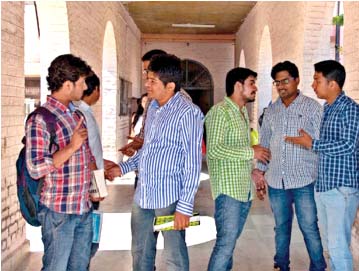
National Education Policy envisions an education system rooted in indigenous customs and beliefs, further contributing in a direct manner to transform India

Dr Neha SinhaDr Neha Sinha
Jul 24, 2022, 04:31 pm IST
inBharat, Analysis
Follow on Google News
Facebook
Twitter
WhatsAppTelegramEmail

The New Education Policy (NEP) is a detailed document that covers all aspects of education —from early childhood education to higher education, including vocational training as well. It is an ambitious policy that seeks to transform the system of education in India, in order to make it a world-class system. It is rightly said that; the policy is based on the pillars of “Access, Equity, Quality, Affordability, Accountability” and will transform India into a vibrant knowledge hub.”

Respect Towards Fundamental Duties and Constitutional Values

The National Education Policy envisions an education system, which is rooted in Indian customs and beliefs, further contributing in a direct manner to transform India. The purpose of the policy is to change the system sustainably into an equitable-vibrant society endowed with knowledge. The motive is to provide good quality education to all, making India into a superpower with knowledge in all fields. The National Education Policy seeks to enlighten the students with deep-rooted pride of being knowledgeable only in thought, but also in spirit, intellect, and deeds. It ensures that the curriculum of all the institutions “develop a deep sense of respect towards the Fundamental Duties and Constitutional values, bonding with one’s country, and a conscious awareness of one’s roles and responsibilities in a changing world.”

Explore Multiple Areas

Not only this, National Education Policy has also given students an opportunity to explore several areas to recognise their interest area. So that they can excel in that particular field; which is the aim of this holistic and multidisciplinary education. The goal finally is to develop and transform students in their different capacities like intellect, aesthetic, and integrate them into social, physical, emotional, and moral ways. The introduction of new courses with new nomenclatures in the education pattern is also designed in a manner to develop well-rounded individuals – “possessing critical 21st century capacities in fields across the arts, humanities, languages, sciences, social sciences, and professional, technical, and vocational fields; an ethic of social engagement; soft skills, such as communication, discussion and debate; and rigorous specialisation in a chosen field or fields.” Such a holistic approach towards education in the long term is seen as an pragmatic approach for students in higher studies and programmes from all the fields and disciplines like professional, technical, and vocational field. Therefore, introducing new courses by the institutions by updating their curriculum, pedagogy, assessment plans – it leads to students’ quality learning.

The National Education Policy seeks to enlighten the students with deep-rooted pride of being knowledgeable only in thought, but also in spirit, intellect, and deeds. It ensures that the curriculum of all the institutions “develop a deep sense of respect towards the Fundamental Duties and Constitutional values, bonding with one’s country, and a conscious awareness of one’s roles and responsibilities in a changing world”

Out-Of-The-Box Thinking In Creating Comprehensive Education

The New Education Policy will play a vital role, not only in conducting research on disruptive technologies, but also in creating initial versions of instructional materials and courses including online courses in cutting-edge domains, and assessing their impact on specific areas such as professional education. Not only do the new courses lead to creating new opportunities among learners, but it also provides confidence among students to do well in life. Here, it becomes important to also understand the infrastructural development of a particular institution.

Reducing Dropout Rates

According to the New Education Policy, which is holistic and multidisciplinary in its approach, the importance of suitable resources such as updated libraries, classrooms, quality labs, technology, sports/recreation areas, student discussion spaces, hostels and canteens also play a significant role. These are among some of the initiatives that will be required to ensure that learning environments are engaging and supportive, and engaging for all students to become successful. Moreover, the education system aims to reduce the rate of dropouts among students. Therefore, without any shade of doubt the implications are set to have positive change in India’s educational scenario. This means hand in gloves – with the provision of equitable and inclusive education. Policy Is Global and Local It’s also important to note how the policy of introducing new courses is benefiting the students individually. The students can pursue education with more flexibility as they can enter, exit and re-enter as per their interest, convenience and career options. Very rightly the former President APJ Abdul Kalam had stated during an IIT-Guwahati convocation programme —“that education should create jobs and entrepreneurs, the NEP is aimed at doing the same thing. It will help create jobs and entrepreneurs in our society,” . We can therefore conclude by saying that policy is both global and local in its outlook. The intent makes a significant headway from earlier policies by putting emphasis on quality education as the topmost agenda of educational reforms— by strengthening the foundations of education, catering to the educational needs of the most disadvantaged, and making India a global leader in education.
Topics: National Education PolicyEducationCreating Comprehensive EducationFundamental Duties and Constitutional Values
Share12
Tweet
SendShareSend
✮ Subscribe Organiser YouTube Channel. ✮
✮ Join Organiser's WhatsApp channel for Nationalist views beyond the news. ✮
Previous News

PIL in Delhi HC seeks direction to prohibit forcible religious conversion

Next News

INDIGENOUS AIRCRAFT CARRIER VIKRANT COMPLETES 4TH PHASE OF SEA TRIALS

Related News

RSS Sarkaryavah Dattatreya Hosabale

RSS Sarkaryavah Dattatreya ji visits Pragjyotishpur University; Hails NEP-aligned value education for nation’s growth

PM Modi interacted with National Teachers’ Award winners on screen addiction, drug abuse and keeping childhood alive

From “Aura” banter to screen addiction and drug abuse: PM Modi’s candid chat with National Teachers’ Award winners

Nagaland Janjati Vikas Samiti: Spreading knowledge, preserving indigenous heritage & empowering tribal youth

From Village Schools to Colonial Classrooms: The Systematic Disruption of India’s Traditional Education(AI Generated Image)

How British colonialism & Macaulay’s minute systematically dismantled Indian indigenous education system!

Representative Image

Indian Application to US Universities Fall: H-1B hiccup, rising costs, Trump policies hit demand; A risk to US economy?

PM Modi’s Free Online Coaching Mission: A tool for digital inclusion and social mobility

Load More

Latest News

BRICS Summit 2026: Troika, seafarers support network & UNSC reforms; PM Modi pitches Global South as “rule shaper”

The Quiet Part of BRICS 2026: “The Plumbing, Not the Currency” — What You Need to Know About the BRICS Currency (AI generated image)

The Quiet Part of BRICS 2026: “The Plumbing, Not the Currency” — What You Need to Know About the BRICS Currency

AI Generated Representative Image

BRICS Summit 2026 | Bajra, Ragi & Rajma: Food served to leaders reflect India’s millets, spices & culinary heritage

Andhra Pradesh: Sadiq Khan admits cyanide killing of Sowjanya’s husband; property motive eclipses Islam conversion

BRICS Summit 2026: New Delhi Declaration to be issued today; India seals diplomatic win amid West Asia crisis

Deoria Horror: Hindu Youth Manish ‘Monu’ Singh allegedly lured to death by Islamist China Ansari

PM Modi holds series of bilateral meetings;(From Left to Right): Malaysia PM Anwar Ibrahim, Ethiopian PM Abiy Ahmed Ali and Iran President Masoud Pezeshkian

BRICS Summit: PM Modi flags maritime security, seafarers safety with Iran President; Holds series of bilateral talks

The shifting economic weight of G7 and BRICS reflects the emergence of a more multipolar global order.

G7 and BRICS: How the global economic balance is shifting from western world to a rising global south

Mukul Kanitkar, senior RSS Functionary at Makhanlal Chaturvedi National University of Journalism and Communication on the occasion of a special lecture to commemorate Swami Vivekananda’s historic Chicago address

Modernity belongs to tools and technology, not culture; culture moves through continuity: Mukul Kanitkar

Ganeshotsav 2026: Majestic Lalbaugcha Raja unveiled, setting Mumbai aflutter with devotion

Load More
  • Privacy
  • Terms
  • Cookie Policy
  • Refund and Cancellation
  • Delivery and Shipping

© Bharat Prakashan (Delhi) Limited.
Tech-enabled by Ananthapuri Technologies

  • Home
  • Search Organiser
  • Bharat
    • Assam
    • Bihar
    • Chhattisgarh
    • Jharkhand
    • Maharashtra
    • View All States
  • World
    • Asia
    • Africa
    • North America
    • South America
    • Europe
    • Australia
  • Editorial
  • Operation Sindoor
  • Opinion
  • Analysis
  • Defence
  • Culture
  • Sports
  • Business
  • RSS @ 100
  • Entertainment
  • More ..
    • Sci & Tech
    • Vocal4Local
    • Special Report
    • Education
    • Employment
    • Books
    • Interviews
    • Travel
    • Health
    • Politics
    • Law
    • Economy
    • Obituary
  • Subscribe Magazine
  • Read Ecopy
  • Advertise
  • Circulation
  • Careers
  • About Us
  • Contact Us
  • Policies & Terms
    • Privacy Policy
    • Cookie Policy
    • Refund and Cancellation
    • Terms of Use

© Bharat Prakashan (Delhi) Limited.
Tech-enabled by Ananthapuri Technologies