

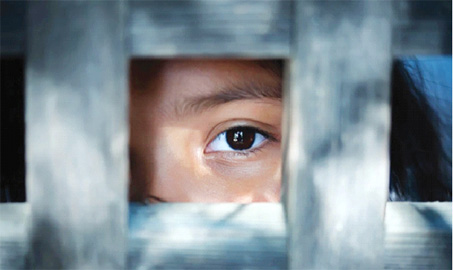
Human trafficking is the worst kind of crime against mankind in which a person is sold and used like a commodity. The crime is increasing worldwide and women and children constitute around 80 per cent of the victims. Human trafficking is rampant in the districts of Darjeeling, Jalpaiguri and Alipurduar in North Bengal which share international borders with Nepal, Bhutan and Bangladesh, and with Assam and Bihar domestically. There are several factors that play significant role in pushing young girls and women into the hands of the traffickers. Poverty and lack of decent opportunity to earn a living are two of the most important factors contributing in increasing the vulnerability. West Bengal, called “Sonar Bangla”, considered to be a hub of culture and art has unfortunately now become a capital of human trafficking. Women and children lured on the pretext of employment are trafficked to different parts of the country and abroad for the purpose of exploitation in prostitution, slavery, surrogacy, etc., to name a few.
Whether it is South Bengal or North Bengal both have their own problems which are getting serious and exploitative because of the total apathy of the State Government. The State Government is in a denial mode. Either they are unable to comprehend the existence of the problem of human trafficking or they are willingly choosing to remain silent for the reasons better known to them. The latter seems to be the plausible possibility because West Bengal is infamous across the country for being place of origin, transit and destination. The police and administration turn a blind eye towards the atrocities being faced by downtrodden children and women. The lackadaisical attitude of police and negligible reporting of complaints due to trust deficit in the system have made the State haven for traffickers. The law and order being a State subject, it is the sole responsibility of the State police and the State Government needs to take the lead to combat trafficking. However, the Bengal Police is toothless and ineffective because it cannot move an inch without political instructions.
During my visit to the State I have come across many instances wherein Police registered FIRs under the bailable provisions of the Indian Penal Code, with the intention to protect the criminals having association with the Government. The human trafficking syndicates need to be strongly countered by an impartial, effective and robust system and all sorts of governmental complicity have to be plugged. But unfortunately, since many of the existing mafias of West Bengal are directly or indirectly flourishing under political patronage, the system has become lethargic, uninterested and listless.
Exploitation of Women Workers
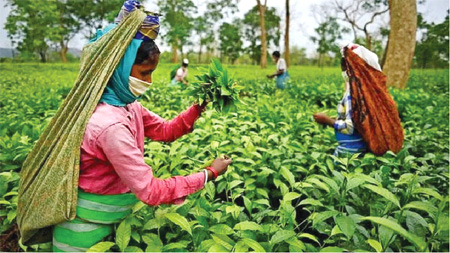
Having done an in-depth study about the life of women in closed tea gardens of North Bengal, I can say with conviction that we fail to fathom the extreme exploitation that the women workers have to go through in tea gardens. North Bengal had 273 tea gardens and many Terai and Dooars tea gardens were bleeding profusely because of its exploitative management. The workers and families were thrown into situation of extreme poverty, making women and children highly vulnerable. Lack of basic infrastructure like water, electricity, education, transport, medical, petty wages or no wages, apathy by management had adversely affected the overall health and well-being of women and children. The tea gardens which had shut owing to financial and operational constraints, had in turn become a fertile ground for human trafficking. The vulnerable community have pointed out that the traffickers, who worked in close association with the political persons, share the benefits of exploitation with them. It is a heart-wrenching truth that human trafficking in North Bengal is the biggest source of income for the traffickers and their allies. The tea industry which is proclaimed to be the country’s second largest employer, is also an industry that undermines labour rights, and denies basic needs to the families of employees at lower echelons. I visited eight of the closed tea gardens namely Trihana Tea Estate, Dharnipur, Red Bank, Sunder Nagar, Bandapani, Panighata and 2 other Tea Estates, as Member of NCW 5 years ago in 2017 and witnessed workers and women in particular, living in abhorrent and inhuman conditions. I was continuously dissuaded to go there by Government and the Nodal Officer that was provided to me. The security that I was given during my visit was removed along with nodal officer. However, with the help of the local people, I managed to finish my inquiry and closely observed the problems and anguish of the women. Closing the Tea Estates for four months in winter without paying the labour was the prevalent practice in most of the tea gardens.
Poverty and lack of decent opportunity to earn a living are two of the most important factors contributing in increasing the vulnerability. West Bengal, called “Sonar Bangla”, considered to be a hub of culture and Art has unfortunately now become a capital of human trafficking
Let’s discuss about Bundapani Tea Estate which I found to be the worst of all. In comparison to other tea gardens it had a large granted area which measured 1269.12. hectares with a tea plantation area admeasuring 529.56 hectares. It had 800 families with a population of 7,000 and 1,040 permanent workers who were living inside this tea estate which had been closed since 2013. There was no public transport, banks, water connection and other basic amenities. People had to buy water from across the border from Bhutan and that too got disrupted when the pipelines were damaged by wild elephants. Basic entitlements like Aadhar card and BPL cards were given based on political affiliations to ruling party, rather than to deserving persons. Even to access the rights under the schemes women and families had to grease the palm of the middlemen claiming to be ruling party workers. None of the administrative body had visited the area since the last one year. Nearest ATM booth was 12 km away and there were no schools and colleges. The ration received through PDS was of inferior quality. The basic right of the people to live with dignity was compromised in the tea estate.
Situation in other tea gardens was no much better. More than 60 per cent workers were women and most of them suffered from anaemia and the Government hospitals were far and few. I found in mental hospitals that many women suffered from stress-related mental health issues, and there was lack in preventive and treatment healthcare. Most of the psychiatric hospitals were accommodating patients over and above the allotted capacity leading to unhygienic and chaotic situation. I have also been to the shelters homes of Mathura and Vrindavan and most of residents in these shelter homes belonged to West Bengal.
Targeting Young Girls
It is important to bring forth this argument of poor social support system because that would help us understand the factors augmenting vulnerability. The women and children living in shelter homes or mental hospitals are easy targets for the traffickers because of their vulnerability. Individuals who are vulnerable are easy prey to being trafficked because they are easily enticed by the promise of greener pastures like better employment opportunity, reliable and better income, respectable lifestyle and better living conditions. Young girls are easy target and lured by the traffickers on the pretext of a dream life. Things like a make-up kit or a mobile phone is sometimes enough to sway these young girls into the clutches of traffickers. Some families are so downtrodden, poor and illiterate that they are easily manipulated by the traffickers to send their children to work and support them.
The State Government is in a denial mode. Either they are unable to comprehend the existence of the problem of human trafficking or they are willingly choosing to remain silent for the reasons better known to them. The latter seems to be the plausible possibility because West Bengal is infamous across the country for being place of origin, transit and destination
Initially, the families receive small amount of money as remittance for few months and then it stops. The families then lose connection with their girls/children. They are oblivious of their rights and legal redressal mechanism available. Police refuses to register their complaints in such matters, denying justice to them. Women who were plucking tea leaves once are now breaking boulders on the river bank and that too on meagre emoluments.
The children are getting lost, women are exploited and trafficked outside Bengal, but the State Government deliberately undermines the seriousness of the situation and refutes the blatant facts. Sweeping the issue under carpet is not going to solve these problems. State should acknowledge the reality and gear up to address the problems. Families, society, civil society, social justice system and criminal justice system all need to come together to fight this tough battle against organised traffickers who are well equipped and well networked. Unless, all the resources are put together in this war every day we will lose women and children to the traffickers.