Iran Facing Population Decline: The Implications of the Islamic Republic’s Changing Demographics
June 7, 2026
  • Read Ecopy
  • Circulation
  • Advertise
  • Careers
  • About Us
  • Contact Us
Android AppiPhone AppArattai
Organiser
  • ‌
  • Bharat
    • Assam
    • Bihar
    • Chhattisgarh
    • Jharkhand
    • Maharashtra
    • View All States
  • World
    • Asia
    • Europe
    • North America
    • South America
    • Africa
    • Australia
  • Editorial
  • International
  • Opinion
  • RSS @ 100
  • More
    • Op Sindoor
    • Analysis
    • Sports
    • Defence
    • Politics
    • Business
    • Economy
    • Culture
    • Special Report
    • Sci & Tech
    • Entertainment
    • G20
    • Azadi Ka Amrit Mahotsav
    • Vocal4Local
    • Web Stories
    • Education
    • Employment
    • Books
    • Interviews
    • Travel
    • Law
    • Health
    • Obituary
  • Subscribe
    • Subscribe Print Edition
    • Subscribe Ecopy
    • Read Ecopy
  • ‌
  • Bharat
    • Assam
    • Bihar
    • Chhattisgarh
    • Jharkhand
    • Maharashtra
    • View All States
  • World
    • Asia
    • Europe
    • North America
    • South America
    • Africa
    • Australia
  • Editorial
  • International
  • Opinion
  • RSS @ 100
  • More
    • Op Sindoor
    • Analysis
    • Sports
    • Defence
    • Politics
    • Business
    • Economy
    • Culture
    • Special Report
    • Sci & Tech
    • Entertainment
    • G20
    • Azadi Ka Amrit Mahotsav
    • Vocal4Local
    • Web Stories
    • Education
    • Employment
    • Books
    • Interviews
    • Travel
    • Law
    • Health
    • Obituary
  • Subscribe
    • Subscribe Print Edition
    • Subscribe Ecopy
    • Read Ecopy
Organiser
  • Home
  • Bharat
  • World
  • Operation Sindoor
  • Editorial
  • Analysis
  • Opinion
  • Culture
  • Defence
  • International Edition
  • RSS @ 100
  • Magazine
  • Read Ecopy
Home World

Iran Facing Population Decline: The Implications of the Islamic Republic’s Changing Demographics

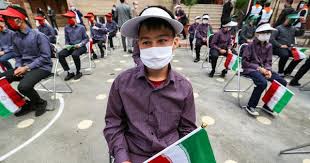
From a high of six children per woman to an average of 1.7 birth per woman, the rate has declined sharply. Because of poor economic condition, people are also finding it difficult to raise more children.

WEBDESKWEBDESK
Jun 4, 2022, 02:03 pm IST
in World
Follow on Google News
Representative Image

Representative Image

FacebookTwitterWhatsAppTelegramEmail

Sharp decline in the Iranian population has posed a new challenge for the Islamic Republic: aging population and a severe shortage of labour. The declining population has created a severe shortage of labour and working population who is supposed to take care of the elderly.

In the 1980s, Iran had six children per woman, which has now come down to 1.7 children per woman. Before Shah Mohammad Reza Pahlavi was thrown out in the Iranian Revolution in 1979, he had promoted a US-backed population control policy, but it had little impact on the reproductive behaviour of people.

Pahlavi’s programmes were such a failure that by the time his reign ended in 1979, Iran had six children per woman. Ayatollah Ruhollah Khomeini, who led a faction of the Revolution and established new Republic, had a very different opinion about population growth.

He wished for massive growth in the population of Shias to balance the power structure in the Middle East. The new regime believed that having more Shias will give them an upper hand in the region.

The new government started promoting the birth of more children. Incentives were provided to women for producing more children.

Even before the new regime could get shape, war with neighbouring Iraq started. Although it furthered the belief that Iran needs more Shias, the economy was in bad shape because of the war. It became difficult for Iran to sustain the incentives.

The more war elongated, the more difficult it became. President Akbar Hashemi Rafsanjani, who assumed office in 1989, changed course and started promoting the two-child norm. The next president, Mohammad Khatami, continued the policy of promoting two children per family.

It helped President Hashemi that the Supreme Court ruled in 1988 that contraceptive measures were fully compatible with Islamic beliefs. After the Iranian Revolution, the government in Iran started promoting that the contraceptive measures were un-Islamic.

The policy was dramatically overturned when Mahmoud Ahmadinejad assumed office in 2005. For the next eight years, till 2013, Iran continued the policy of incentivising more children.

Iran’s Supreme Leader Ali Khamenei has been criticising the population control measures, saying it’ll put Iran in big trouble. Taking a cue, the government has started incentivising more children.

Iran, which is perennially in conflict with Saudi Arabia for dominance in the region, believes that a fewer number of Shias in the Islamic Republic means a weaker Iran. Ali Khamenei, who is the Supreme Leader of Iran, has appealed to the people to produce more children.

Topics: IranSaudi ArabiaAyatollah Ali KhomeiniShah Mohammad Reza PahlaviIranian RevolutionMohammad KhatamiAkbar Hashemi Rafsanjani
Share4TweetSendShareSend
✮ Subscribe Organiser YouTube Channel. ✮
✮ Join Organiser's WhatsApp channel for Nationalist views beyond the news. ✮
Previous News

Telangana BJP chief demands CBI probe into Hyderabad gang-rape case

Next News

Amit Shah to lay foundation stones for various development projects in Panchkula

Related News

Iran President Masoud Pezeshkian and Supreme Leader Mojtaba Khamenei

West Asia Conflict: Did Iran President Masoud Pezeshkian offer resignation owing to the iron fist of IRGC & theocracy?

Representative image

US-Iran-China-Taiwan: The paradox of conflicts

School districts across the United States are cutting costs and tapping emergency reserves as soaring diesel prices driven by the Iran war strain transportation budgets

Iran war triggers diesel shock across US schools, forcing budget cuts and threatening student transport

Clash of Narratives: Cultural dimensions of the Israel–Iran rivalry

India-linked LPG tanker Sarv Shakti transits the Strait of Hormuz amid US blockade tensions, marking a rare passage during the ongoing tensions.

India-linked tanker ‘Sarv Shakti’ successfully navigates US blockade in Strait of Hormuz

Popular Mobilization Forces (PMF) of Iraq who favours Tehran: An obstacle to West Asia strategy of the US

Load More

Latest News

(Left) Victorious Indian Men-s hockey team who who won Gold in U-18 Asia Cup (Right) U-18 Women's hockey team who won bronze medal in the Asia Cup

U18 Asia Cup 2026: Indian Men’s hockey wins gold, women secure bronze medal; PM Modi & Amit Shah hail the teams

India’s semiconductor roadmap shifts from import dependence to silicon sovereignty, aiming for a self-reliant ecosystem by Viksit Bharat 2047

From Import Dependence to Silicon Sovereignty: India’s bold semiconductor roadmap for Viksit Bharat 2047

Keralam Chief Minister V.D. Satheeshan

Jamaat-e-Islami Hind Team Meets CM Satheeshan, Senior Ministers, fuel debate over influence in UDF government

Singapore acts against China-linked posts targeting Indian community, cites threat to social harmony

Singapore Invokes OCHA: Facebook, YouTube and X ordered to block anti-Indian content originating from China

Editors of the HAF Wikipedia page run propaganda and disinformation campaign against the organisation, India and Hindu cultural ethos

Wikipedia fuels propaganda against Hindu American Foundation: How anonymous writers demonise Hindu rights group?

Israel to Install Statue of Chhatrapati Shivaji Maharaj; Israel’s Consul General in Mumbai, Yaniv Revach, met Maharashtra Chief Minister Devendra Fadnavis and sough his support in this regard

Chhatrapati Shivaji Maharaj’s legacy to reach Israel; Statue to be installed as symbol of India-Israel friendship

IIGH Public Policy Seminar: Women’s dignity, safety & equal opportunity discussed

Representative Image

Decoding Hezbollah: How the terror group built a massive arsenal against Israel

Representative Image

Plastic, Traffic and Landslides: How rising tourist footfall is posing threat to the mountainous region

The Green Realignment: Why the US-India trade pact is a battle for climate and supply chain security

Load More
  • Privacy
  • Terms
  • Cookie Policy
  • Refund and Cancellation
  • Delivery and Shipping

© Bharat Prakashan (Delhi) Limited.
Tech-enabled by Ananthapuri Technologies

  • Home
  • Search Organiser
  • Bharat
    • Assam
    • Bihar
    • Chhattisgarh
    • Jharkhand
    • Maharashtra
    • View All States
  • World
    • Asia
    • Africa
    • North America
    • South America
    • Europe
    • Australia
  • Editorial
  • Operation Sindoor
  • Opinion
  • Analysis
  • Defence
  • Culture
  • Sports
  • Business
  • RSS @ 100
  • Entertainment
  • More ..
    • Sci & Tech
    • Vocal4Local
    • Special Report
    • Education
    • Employment
    • Books
    • Interviews
    • Travel
    • Health
    • Politics
    • Law
    • Economy
    • Obituary
  • Subscribe Magazine
  • Read Ecopy
  • Advertise
  • Circulation
  • Careers
  • About Us
  • Contact Us
  • Policies & Terms
    • Privacy Policy
    • Cookie Policy
    • Refund and Cancellation
    • Terms of Use

© Bharat Prakashan (Delhi) Limited.
Tech-enabled by Ananthapuri Technologies