WHO Global Centre for Traditional Medicine: A shot in the arm for India’s traditional medicine system
July 15, 2026
  • Read Ecopy
  • Circulation
  • Advertise
  • Careers
  • About Us
  • Contact Us
Android AppiPhone AppArattai
Organiser
  • ‌
  • Bharat
    • Assam
    • Bihar
    • Chhattisgarh
    • Jharkhand
    • Maharashtra
    • View All States
  • World
    • Asia
    • Europe
    • North America
    • South America
    • Africa
    • Australia
  • Editorial
  • International
  • Opinion
  • RSS @ 100
  • More
    • Op Sindoor
    • Analysis
    • Sports
    • Defence
    • Politics
    • Business
    • Economy
    • Culture
    • Special Report
    • Sci & Tech
    • Entertainment
    • G20
    • Azadi Ka Amrit Mahotsav
    • Vocal4Local
    • Web Stories
    • Education
    • Employment
    • Books
    • Interviews
    • Travel
    • Law
    • Health
    • Obituary
  • Subscribe
    • Subscribe Print Edition
    • Subscribe Ecopy
    • Read Ecopy
  • ‌
  • Bharat
    • Assam
    • Bihar
    • Chhattisgarh
    • Jharkhand
    • Maharashtra
    • View All States
  • World
    • Asia
    • Europe
    • North America
    • South America
    • Africa
    • Australia
  • Editorial
  • International
  • Opinion
  • RSS @ 100
  • More
    • Op Sindoor
    • Analysis
    • Sports
    • Defence
    • Politics
    • Business
    • Economy
    • Culture
    • Special Report
    • Sci & Tech
    • Entertainment
    • G20
    • Azadi Ka Amrit Mahotsav
    • Vocal4Local
    • Web Stories
    • Education
    • Employment
    • Books
    • Interviews
    • Travel
    • Law
    • Health
    • Obituary
  • Subscribe
    • Subscribe Print Edition
    • Subscribe Ecopy
    • Read Ecopy
Organiser
  • Home
  • Bharat
  • World
  • Operation Sindoor
  • Editorial
  • Analysis
  • Opinion
  • Culture
  • Defence
  • International Edition
  • RSS @ 100
  • Magazine
  • Read Ecopy
Home Bharat

WHO Global Centre for Traditional Medicine: A shot in the arm for India’s traditional medicine system

In March 2022, the WHO and the Government of India signed an agreement to establish the WHO Global Centre for Traditional Medicine (GCTM) in Gujarat, India.

WEBDESKWEBDESK
Jun 3, 2022, 07:41 pm IST
in Bharat
Follow on Google News
FacebookTwitterWhatsAppTelegramEmail

New Delhi, June 03 (India Science Wire): Since December 2019, the world has been recuperating from a significant unexpected challenge of novel Coronavirus disease (COVID-19), caused by the SARS-CoV-2 virus. Declared a pandemic by World Health Organisation (WHO) in March 2020, it led to unimaginable shocks and imbalances in global health care systems putting humanity in peril. The highly transmissible virus imposed social exigencies and resulted in a catastrophic outbreak with a massive number of morbidity and mortality across the globe. Perhaps, it was this time, in the era of globalization with enhanced global healthcare systems, that the countries were tested for their competence, preparation, and readiness to combat an unforeseen and unprecedented situation like this.

It is remarkable how vaccines were developed in record time by scientists and different manufacturing industries to fight against the infection. However, still, the pharmacological cure for the SARS-CoV-2 is unknown. Scientific communities are working painstakingly on viral pathogenesis to provide more insights into the disease and its possible mutations and unravel the appropriate treatments and cures.

Initially, due to the lack of evidence-based treatment against SARS-CoV-2, there was a considerable dependence on therapeutic and natural product-based treatments and modern medical science. During this time, a significant shift in healthcare practices was noticed. A growing interest in using traditional and herbal medicines to alleviate the COVID-19 symptoms and gain immunity to fight against the virus was widely observed. People were seeking this as an alternative treatment option and as a preventive measure due to its diverse therapeutic, anti-microbial, anti-bacterial, anti-viral, and immunity enhancing properties.

As defined by WHO, Traditional medicine (TM) is “the sum total of the knowledge, skills and practices on the basis of the theories, beliefs and experiences indigenous to different cultures, whether explicable or not, used in the maintenance of health, as well as in the prevention, diagnosis, improvement or treatment of physical and mental illnesses” (WHO Traditional Medicine Strategy 2014-2023).

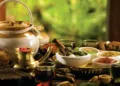
India is a hub of rich and diverse knowledge and practice of classical medical philosophy, one of the oldest medical sciences in the world. The traditional Indian medicine system is categorized into Ayurveda, Siddha, Unani and Yoga, Naturopathy, and Homoeopathy. Based on a holistic approach, these medical systems represent the co-existence of humanity with nature and promote a holistic way of healthy living.

In December 2020, the Ministry of AYUSH, Government of India, made efforts to integrate modern with traditional medicine systems, strengthen and promote a holistic healthcare strategy and facilitate cross-sectoral collaborations. The enactment of the National Commission for Indian System of Medicine (NCIM) Act, 2020, and the National Commission for Homoeopathy (NCH) Act, 2020; recognition of the Institute of Teaching and Research in Ayurveda (ITRA),Jamnagar, Gujarat, as the Institute of National Importance Institute (INI); inclusion of AYUSH practitioners in WHO Doctors population ratio; developing Indian Standards as well as International Standards (ISO) in collaboration with Bureau of Indian Standards (BIS) to augment products and services under AYUSH, were some of the other important initiatives taken by the Government.

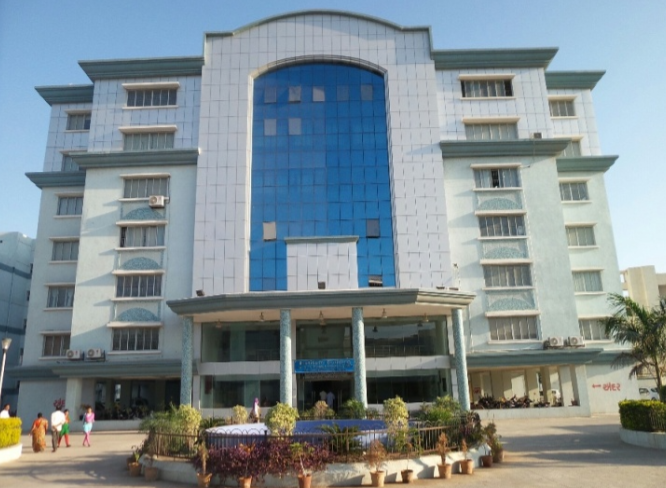
In March 2022, the WHO and the Government of India signed an agreement to establish the WHO Global Centre for Traditional Medicine (GCTM) in Gujarat, India. The Centre embodies a comprehensive health approach, integrating traditional medicines with modern science and technology. The GCTM would set norms, guidelines, and standards for the use of conventional drugs, besides promoting innovation and technology-aided improvements. It also strives to ensure sustainability, equity, affordability, and accessibility to traditional medicines.

The Government of India is investing USD 250 million in its establishment and operations. In April 2022, Prime Minister Narendra Modi laid the foundation stone of the Centre in Jamnagar, Gujarat, in the presence of the Prime Minister of Mauritius, Pravind Kumar Jugnauth and Dr Tedros Ghebreyesus, Director-General, WHO. The Centre aims to foster synergistic alliances and cooperation among the countries in traditional, conventional, and integrative medicines. Taking the initiative forward, the WHO has recently published benchmarks on the training and practice of Unani and Ayurveda.

New healthcare-related challenges have emerged before humanity in the recent past, but traditional medicines based on indigenous knowledge have been under practice since time immemorial. The overwhelming impact of COVID-19 has made the strengthening of the healthcare systems an utmost important goal. It can be achieved by reviving, strengthening, and aligning the traditional medicinal practices and indigenous knowledge from across the world and integrating them with modern science. With the establishment of WHO Global Centre for Traditional Medicine, India is poised to play a crucial role in positioning traditional medicine across the globe. (India Science Wire)

Topics: AyurvedaCovidWHOTraditional medicine
ShareTweetSendShareSend
✮ Subscribe Organiser YouTube Channel. ✮
✮ Join Organiser's WhatsApp channel for Nationalist views beyond the news. ✮
Previous News

Violence erupts in Kanpur after Islamists pelted stones at Police after Friday Namaz

Next News

ABVP held JUSTICE MARCH, demanding justice for survivors in recent cases of sexual assault.

Related News

German Bundestag hosted its first-ever Yoga and Meditation session, marking a milestone in global celebration of the International Day of Yoga

German Parliament hosts first-ever Yoga and Meditation session to mark International Day of Yoga

Government introduces AIR SUVIDHA portal following WHO Ebola emergency for international travellers

Five Ayush hospitals cum medical colleges to come up in Uttar Pradesh (This is an AI generated image)

Uttar Pradesh plans five integrated AYUSH Colleges and Hospitals to expand traditional healthcare and medical education

UP CM Yogi Adityanath chaired a high-level AYUSH Department review in Lucknow

Uttar Pradesh’s AYUSH Push: Yogi govt unveils mega plan to make UP global hub for wellness and healing

Kochi International Airport

Keralam: Kochi strengthens Ebola surveillance after WHO global emergency alert

Representative Image

How Namami Gange is reviving India’s lost botanical inheritance

Load More

Latest News

Rudram-1

Rudram-1 in Action: Bharat’s first indigenous missile to hunt and destroy enemy radars

Indian Railways is facing a growing encroachment challenge, with over 1,068 hectares of land under encroachment

RTI Exposes Massive Rail Land Grab: Over 1,068 hectares of Indian Railways land encroached

Madhya Pradesh's Uniform Civil Code draft proposes mandatory registration of live-in relationships

Madhya Pradesh: UCC draft proposes mandatory registration of live-in relationships, divorce & inheritance laws

Devotees gather in large numbers in Puri for Mahaprabhu Jagannath's Nabajaubana Darshan

Odisha: Mahaprabhu Jagannath appears in divine Nabajaubana form after 15-day anasara, thousands gather in Puri

India's Udyam Registration and Udyam Assist platforms are formalising MSMEs and driving inclusive entrepreneurial growth

How Udyam Registration and Udyam Assist are transforming India’s MSME and entrepreneurial ecosystem

Maoist Ravindra Ganjhu (Source: OpIndia)

Jharkhand: Maoist commander Ravindra Ganjhu with bounty of Rs 20 lakh arrested after 16 years

Gyanvapi Complex

Gyanvapi Row: Hindu side demands Mosque premises be vacated, Muslim side rejects mediation; Both seek court verdict

Union Minister Piyush Goyal (Left) and European Commissioner for Agriculture and Food, Christophe Hansen (Right)

India-EU FTA legal scrubbing nears completion; Trade pact set to become operational in early 2027

World Youth Skills Day 2026

World Youth Skills Day 2026: Equipping young people for a shared future in an AI-driven world

Kalyan Banerjee Blames Abhishek Banerjee’s ‘Camac Street Ecosystem’, I-PAC for TMC’s 2026 Poll Defeat

‘Camac street finished TMC’: Kalyan Banerjee blames Abhishek Banerjee, I-PAC for Bengal poll debacle and party split

Load More
  • Privacy
  • Terms
  • Cookie Policy
  • Refund and Cancellation
  • Delivery and Shipping

© Bharat Prakashan (Delhi) Limited.
Tech-enabled by Ananthapuri Technologies

  • Home
  • Search Organiser
  • Bharat
    • Assam
    • Bihar
    • Chhattisgarh
    • Jharkhand
    • Maharashtra
    • View All States
  • World
    • Asia
    • Africa
    • North America
    • South America
    • Europe
    • Australia
  • Editorial
  • Operation Sindoor
  • Opinion
  • Analysis
  • Defence
  • Culture
  • Sports
  • Business
  • RSS @ 100
  • Entertainment
  • More ..
    • Sci & Tech
    • Vocal4Local
    • Special Report
    • Education
    • Employment
    • Books
    • Interviews
    • Travel
    • Health
    • Politics
    • Law
    • Economy
    • Obituary
  • Subscribe Magazine
  • Read Ecopy
  • Advertise
  • Circulation
  • Careers
  • About Us
  • Contact Us
  • Policies & Terms
    • Privacy Policy
    • Cookie Policy
    • Refund and Cancellation
    • Terms of Use

© Bharat Prakashan (Delhi) Limited.
Tech-enabled by Ananthapuri Technologies