
Swaraj@75: What to celebrate?
June 6, 2026
  • Read Ecopy
  • Circulation
  • Advertise
  • Careers
  • About Us
  • Contact Us
Android AppiPhone AppArattai
Organiser
  • ‌
  • Bharat
    • Assam
    • Bihar
    • Chhattisgarh
    • Jharkhand
    • Maharashtra
    • View All States
  • World
    • Asia
    • Europe
    • North America
    • South America
    • Africa
    • Australia
  • Editorial
  • International
  • Opinion
  • RSS @ 100
  • More
    • Op Sindoor
    • Analysis
    • Sports
    • Defence
    • Politics
    • Business
    • Economy
    • Culture
    • Special Report
    • Sci & Tech
    • Entertainment
    • G20
    • Azadi Ka Amrit Mahotsav
    • Vocal4Local
    • Web Stories
    • Education
    • Employment
    • Books
    • Interviews
    • Travel
    • Law
    • Health
    • Obituary
  • Subscribe
    • Subscribe Print Edition
    • Subscribe Ecopy
    • Read Ecopy
  • ‌
  • Bharat
    • Assam
    • Bihar
    • Chhattisgarh
    • Jharkhand
    • Maharashtra
    • View All States
  • World
    • Asia
    • Europe
    • North America
    • South America
    • Africa
    • Australia
  • Editorial
  • International
  • Opinion
  • RSS @ 100
  • More
    • Op Sindoor
    • Analysis
    • Sports
    • Defence
    • Politics
    • Business
    • Economy
    • Culture
    • Special Report
    • Sci & Tech
    • Entertainment
    • G20
    • Azadi Ka Amrit Mahotsav
    • Vocal4Local
    • Web Stories
    • Education
    • Employment
    • Books
    • Interviews
    • Travel
    • Law
    • Health
    • Obituary
  • Subscribe
    • Subscribe Print Edition
    • Subscribe Ecopy
    • Read Ecopy
Organiser
  • Home
  • Bharat
  • World
  • Operation Sindoor
  • Editorial
  • Analysis
  • Opinion
  • Culture
  • Defence
  • International Edition
  • RSS @ 100
  • Magazine
  • Read Ecopy
Home Editorial

Swaraj@75: What to celebrate?

Prafulla KetkarPrafulla Ketkar
Sep 1, 2021, 03:04 pm IST
in Editorial
Follow on Google News
FacebookTwitterWhatsAppTelegramEmail


"August 15th, 1947 is the birthday of free India. It marks for her the end of an old era, the beginning of a new age. But we can also make it by our life and acts as a free nation an important date in a new age opening for the whole world, for the political, social, cultural and spiritual future of humanity”.
– The August 15, 1947 Message by Sri Aurobindo, [Sri Aurobindo wrote this message at the request of All India Radio, Tiruchirapalli, India, for broadcast on the eve of India’s independence)


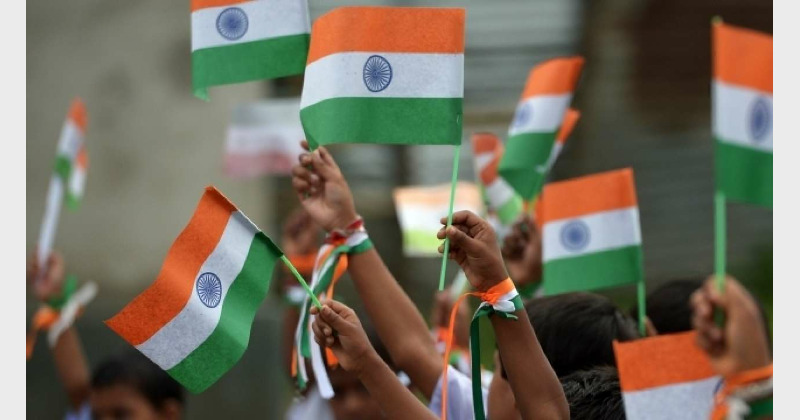
 A period of seventy-five years is not supposed to be a significant one for a civilisational Rashtra like Bharat with thousands of years of history. Still, we are going to celebrate seventy-five years of Independence as a festival. What to celebrate and why to celebrate this year-long event are the natural questions that would crop in the minds, especially millennials.  

The Independence of Bharat was a momentous occasion in many ways. On the one hand, it was a long struggle of colonial onslaught and resurrection of the Old Civilisation in a new form after a struggle for centuries. The nature of colonial aggressions changed over the period from Greeks to Huns to Islamic to European powers. Greeks were defeated, but some damage was done. Huns were accommodated in the Bharatiya milieu. Islamic aggression was violent, brutal and more ‘religious’ in nature and ultimately led to the partitions of Bharat on religious lines. It was challenging for Bharatiya society to understand the nature of this threat, and persecution on the way of worship was alien to us. Still, we eventually tried to address it through both military and spiritual means.

The European colonisation was comparatively subtle and more damaging. In the name of the trade, they not just executed the political subjugation but also systematically carried out cultural and intellectual colonisation. Right from the Portuguese time agenda of spreading Christianity was clear; the British played it very shrewdly. As the weapons of colonisation changed, whether military, intellectual, political, legal or economic etc., our response also became multidimensional. But the crux of this historical struggle was reestablishing ‘Swa’ (selfhood) while renegotiating with the colonial and imposed modernity. Swa-Dharma, Swa-deshi, Swa-Bhasha and Swa-Raj were different expressions of the same urge. The struggle was not certainly for just political Independence but much more than that.   While celebrating the Amrit Mahotsav of Independence, this is the opportune time to revisit the content of ‘Swa’ and evaluate how far that selfhood has been realised in the last seventy-five years.  

The colonial rule, structures and processes are entrenched, and our intellectual colonisation still persists. There are many myths perpetuated about the nature of our freedom struggle and most of them were created by the colonisers. As Acharya Dharmapala tried to understand Bharatiya social institutions in the late eighteenth and nineteenth centuries, we should research what sustained us for centuries of the onslaught.  Unfortunately, we have eventually lost those institutional structures. What can be done to revive the spirit behind those structures is another challenge that we should take up. It is not about going backwards but learning from the past that enabled us to be the longest surviving civilisation.  

The tragedy of partition divided the great ancient land and people based on religion. Though we had different systems of Governance, the geo-cultural entity was one for all. People were never divided because of who ruled the state or the religion of the ruler. What went wrong with this age-old Rashtra and what can be done to undo those mistakes is also a critical question.

After seventy-five, Bharat is again trying to regain its position on the world stage. The whole world is also turning towards this spiritual land to solve the imminent contemporary challenges to humanity. To realise that deserved stature, the sons and daughters of Bharat would have to take a pledge of ‘Nothing Is Dearer than Her Service’, as Sri Aurobindo expected. Many sages, satyagrahis, revolutionaries, literary figures, educationists, lawyers, scientists etc. did the same through different means during the freedom struggle. Celebration of the Amrit Mahotsav of Independence is to resolve to fulfil their dreams. Revisiting their contributions and recontextualising their vision for the present circumstances can be the best tribute on the occasion of the seventy-five years  of Independence. 


Prafulla Ketkar
Prafulla Ketkar
Prafulla Ketkar, is the Editor, Organiser (Weekly) since 2013. He has a experience of over 20 years in the fields of research, media and academics. He is also Advisory Committee School of Journalism, Delhi University. He has been writing on issues related to International politics and foreign policy, with special reference to China and Democracy, Hindutva, and Bharatiya Civilisation. He was also a member of the Editorial team of the recently published Complete Works of Pt Deendayal Ji in 15 Volumes. He has 2 books, 29 academic articles, 2 entries in Encyclopedia of India and numerous articles to his credit. [Read more]
ShareTweetSendShareSend
✮ Subscribe Organiser YouTube Channel. ✮
✮ Join Organiser's WhatsApp channel for Nationalist views beyond the news. ✮
Previous News

Taliban Takeover Pulls Off Many Masks

Next News

Al Qaeda praises Taliban’s ‘historic victory’ in Afghanistan

Related News

A representative image

The Middle Class Story: How governance reforms are powering India’s next growth engine

From Armenia and Greece to Cyprus, India's defence diplomacy is creating new pressure points for Turkey

How India’s Mediterranean Push and Indo-Pacific rise unsettle Turkey’s strategic calculus

Gadag seer enters 33-day Shiva Yoga Samadhi for world peace and welfare

Karnataka: Sri Rachoteshwara Shivacharya Mahaswamiji begins rare 33-day sealed Shiva Yoga Samadhi in Gadag

Indian surgeon conducts world’s longest cardiac telesurgery; Made-in-India robot echoes indigenous medical prowess

Pro-Khalistan slogans raised, Bhindranwale posters displayed at Sri Akal Takht Sahib

Operation Blue Star Anniversary: Pro-Khalistan slogans raised, Bhindranwale posters displayed at Sri Akal Takht Sahib

Inspired by Bhagwan Shiva's teachings, this ancient breathing practice helps calm the mind and reduce stress

Ancient Yogic Breathing for Modern Stress: How the Shiva method cultivates peace & self-awareness

Load More

Latest News

A representative image

The Middle Class Story: How governance reforms are powering India’s next growth engine

From Armenia and Greece to Cyprus, India's defence diplomacy is creating new pressure points for Turkey

How India’s Mediterranean Push and Indo-Pacific rise unsettle Turkey’s strategic calculus

Gadag seer enters 33-day Shiva Yoga Samadhi for world peace and welfare

Karnataka: Sri Rachoteshwara Shivacharya Mahaswamiji begins rare 33-day sealed Shiva Yoga Samadhi in Gadag

Indian surgeon conducts world’s longest cardiac telesurgery; Made-in-India robot echoes indigenous medical prowess

Pro-Khalistan slogans raised, Bhindranwale posters displayed at Sri Akal Takht Sahib

Operation Blue Star Anniversary: Pro-Khalistan slogans raised, Bhindranwale posters displayed at Sri Akal Takht Sahib

Inspired by Bhagwan Shiva's teachings, this ancient breathing practice helps calm the mind and reduce stress

Ancient Yogic Breathing for Modern Stress: How the Shiva method cultivates peace & self-awareness

The Vedic age saw remarkable women sages, known as Rishikas, who composed hymns and shaped India's spiritual and philosophical heritage

Rishikas of Vedic Age: How Gargi, Maitreyi & other women shaped ancient India’s spiritual and philosophical tradition

Police in AAP-Ruled state of Punjab lathi charge sit-in protesters

Punjab: ITI candidates seeking jobs lathi-charged outside PSPCL HQ; opposition slams AAP Govt over police action

From constables to DGP, India's police system follows a structured chain of command that governs law enforcement across the country

From Constable to DGP: Understanding India’s police hierarchy, powers & recruitment system

The terracotta dice that challenges historical assumptions and highlights India's millennia-old civilisational heritage

How a 4,500-year-old terracotta dice is reviving the debate on India’s civilisational continuity & Vedic heritage

Load More
  • Privacy
  • Terms
  • Cookie Policy
  • Refund and Cancellation
  • Delivery and Shipping

© Bharat Prakashan (Delhi) Limited.
Tech-enabled by Ananthapuri Technologies

  • Home
  • Search Organiser
  • Bharat
    • Assam
    • Bihar
    • Chhattisgarh
    • Jharkhand
    • Maharashtra
    • View All States
  • World
    • Asia
    • Africa
    • North America
    • South America
    • Europe
    • Australia
  • Editorial
  • Operation Sindoor
  • Opinion
  • Analysis
  • Defence
  • Culture
  • Sports
  • Business
  • RSS @ 100
  • Entertainment
  • More ..
    • Sci & Tech
    • Vocal4Local
    • Special Report
    • Education
    • Employment
    • Books
    • Interviews
    • Travel
    • Health
    • Politics
    • Law
    • Economy
    • Obituary
  • Subscribe Magazine
  • Read Ecopy
  • Advertise
  • Circulation
  • Careers
  • About Us
  • Contact Us
  • Policies & Terms
    • Privacy Policy
    • Cookie Policy
    • Refund and Cancellation
    • Terms of Use

© Bharat Prakashan (Delhi) Limited.
Tech-enabled by Ananthapuri Technologies