Silkworm missiles, huge money and how China exploited Iran-Iraq War?
July 24, 2026
  • Read Ecopy
  • Circulation
  • Advertise
  • Careers
  • About Us
  • Contact Us
Android AppiPhone AppArattai
Organiser
  • ‌
  • Bharat
    • Assam
    • Bihar
    • Chhattisgarh
    • Jharkhand
    • Maharashtra
    • View All States
  • World
    • Asia
    • Europe
    • North America
    • South America
    • Africa
    • Australia
  • Editorial
  • International
  • Opinion
  • RSS @ 100
  • More
    • Op Sindoor
    • Analysis
    • Sports
    • Defence
    • Politics
    • Business
    • Economy
    • Culture
    • Special Report
    • Sci & Tech
    • Entertainment
    • G20
    • Azadi Ka Amrit Mahotsav
    • Vocal4Local
    • Web Stories
    • Education
    • Employment
    • Books
    • Interviews
    • Travel
    • Law
    • Health
    • Obituary
  • Subscribe
    • Subscribe Print Edition
    • Subscribe Ecopy
    • Read Ecopy
  • ‌
  • Bharat
    • Assam
    • Bihar
    • Chhattisgarh
    • Jharkhand
    • Maharashtra
    • View All States
  • World
    • Asia
    • Europe
    • North America
    • South America
    • Africa
    • Australia
  • Editorial
  • International
  • Opinion
  • RSS @ 100
  • More
    • Op Sindoor
    • Analysis
    • Sports
    • Defence
    • Politics
    • Business
    • Economy
    • Culture
    • Special Report
    • Sci & Tech
    • Entertainment
    • G20
    • Azadi Ka Amrit Mahotsav
    • Vocal4Local
    • Web Stories
    • Education
    • Employment
    • Books
    • Interviews
    • Travel
    • Law
    • Health
    • Obituary
  • Subscribe
    • Subscribe Print Edition
    • Subscribe Ecopy
    • Read Ecopy
Organiser
  • Home
  • Bharat
  • World
  • Operation Sindoor
  • Editorial
  • Analysis
  • Opinion
  • Culture
  • Defence
  • International Edition
  • RSS @ 100
  • Magazine
  • Read Ecopy
Home Bharat

Silkworm missiles, huge money and how China exploited Iran-Iraq War?

In Chinese power games, ?money' does matter. A 2012 Bloomberg investigation estimated President Xi Jinping's close relatives owned assets worth billions of yuan. Politically it is given out that CCP members contribute up to 2per cent of their income to party coffers

Archive ManagerArchive Manager
Jul 4, 2021, 09:55 am IST
in Bharat
Follow on Google News
FacebookTwitterWhatsAppTelegramEmail
s_1  H x W: 0 x
 
New Delhi: Do not limit yourself. You can go as far as your mind lets you. What you believe, remember, you can achieve. – Mary Kay Ash, American businesswoman and cosmetic giant
 
The history of the past 100 years of the Chinese Communist Party has many facets. A key aspect of Chinese foreign policy has been the so-called ‘enemy concept’. This has been profitably utilised by Beijing to strengthen its grip in world affairs.
 
The Iran-Iraq war was one such episode. Experts and old-timers would recall that with the beginning of the Iran-Iraq War I in 1980, China befriended Iran especially in terms of helping it in its military warfare with Iraq. This gave the Chinese a strategic advantage and considerable money.
In Chinese power games, ‘money’ does matter. A 2012 Bloomberg investigation estimated President Xi Jinping’s
close relatives owned assets worth billions of yuan. Politically it is given out that CCP members contribute up to 2
per cent of their income to party coffers.
 
In 2016, an official journal reported that about 7.08 billion yuan (US$1 billion) came from party leaders. In China, it is the party that does business directly managing hotels and factories and companies, said Jean-Pierre Cabestan of Hong Kong Baptist University, according to media reports.
 
Illicit fortunes made by China’s leaders and their families through lucrative investments are true but seldom reported.
 
During Iran-Iraq War, in fact there were various factors that led Chinese leadership to open up diplomatic channels with Iran. One reason was Beijing ‘increasingly found’ Iran as a bulwark against Soviet Union’s expansionist designs towards Persian Gulf.
 
The Sino-Soviet relationship had already collapsed in the sixties and there was also increased American presence on China’s border. Beijing by then believed ‘China comes first; and nothing else matters as much’.
 
In fact, therefore even after 1988 when Iran-Iraq conflicts had ended; Chinese arms exports to Iran continued and went beyond basic conventional weaponry.
 
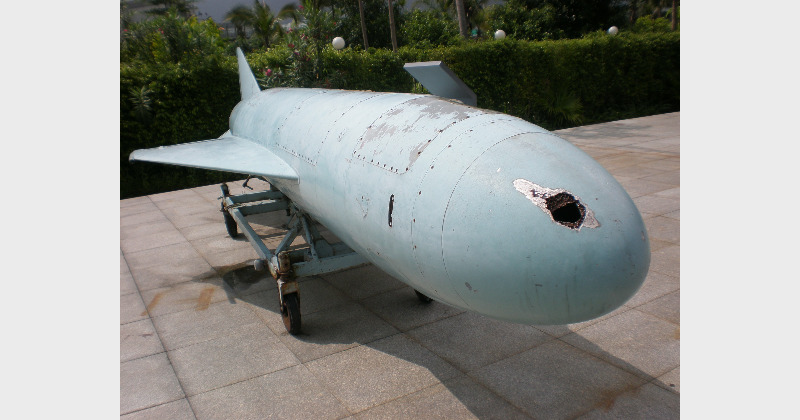
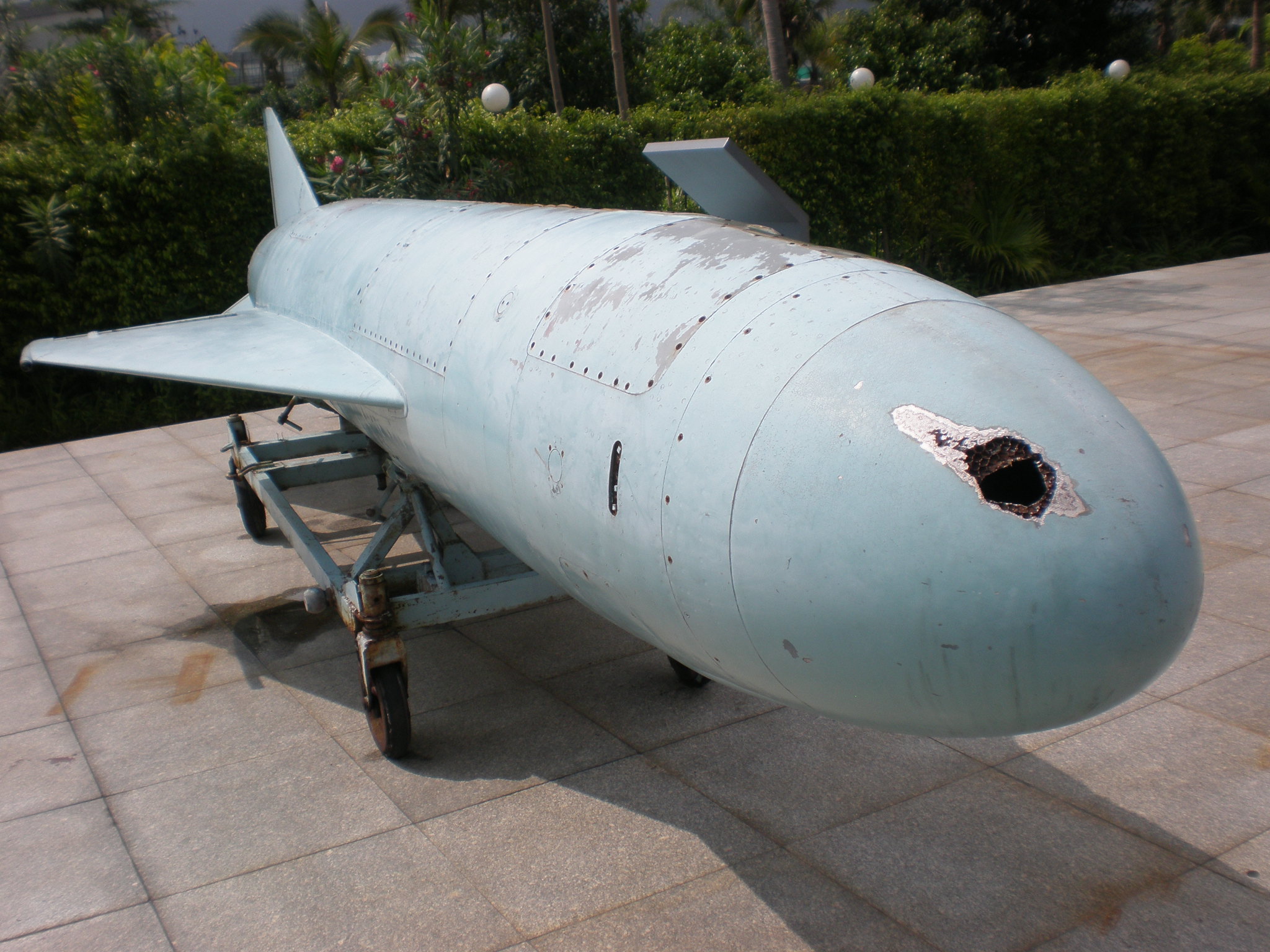
In retrospective effect, one of the most controversial ‘arms transfers’ during Iran-Iraq War was Silkworm Missiles.
This was HY-2 anti-ship missile and a number of variations including air-launched, coastal and in water ship missiles.
 
Experts say this version of missile used liquid fuel and had coverage of approximate 95-100 km at a speed up to 475 miles per hour.
 
In addition, China also exported C-801 anti-ship cruise missile. It was later revealed that Iran had imported 100 C-801 missiles and 10 launchers by 1987.
 
Some US experts later claimed Iran even managed technical support and other assistance from China for improving its indigenous missile production.
 
The US administration also claimed in 1991 that the Iranian missile production facility was set up in Isfahaan, and that the new centre could produce HY-2 among other missiles.
 
China has a typical history of playing different games with different countries including India, and quite often New Delhi had fallen into their trappings.
 
The gory end of ‘Hindi-Chini bhai bhai’ came in the form of 1962 war. Of course, this left Jawaharlal Nehru exposed and personally shattered. Later in 1990s, China enhanced cooperation with India and made use liberalisation policy kicked off in 1991 and exploited India’s huge market.
 
Beijing gave New Delhi an impression that it would work together for a multi-nation world. The truth of the matter it used post-2008 economic recession world to emerge itself as Numero Uno and also harm India more ways than one. It is often argued that a specific ratio of Positives and Negativity is at play to make bilateral diplomacy between two countries work to make it satisfying to both sides.
 
But to make such theories work, a starting point is simple self-awareness. While China had the qualities and was aware of its intention and potentials in the past India’s foreign policy hardly worked with a futuristic vision and according to its potentials.
 
One major lacuna was while India cooperated and gave away its share of the cake including recognising Taiwan as part of China in 1950, it never sought diplomatic reciprocity for Sikkim and Arunachal Pradesh.
Look at Beijing’s double standards in contrast, even while ensuring enhanced relationship with Iran, China was always cautious with regard Iraq. John Calabrese, a globally credited American foreign policy expert, once said, “China has scrupulously avoided personalising the Iraq problem and had maintained a dialogue with the Iraqi regime. Chinese statements critical of Iraq focused on specific behaviour, rather than on Saddam Hussein or members of his inner circle”.
 
In terms of civil liberty, a prominent Catholic leader John Lee even had to deliver a speech on July 2 at Kong Kong praising China’s imposition of a sweeping national security law in Hong Kong which came into effect last year.
ShareTweetSendShareSend
✮ Subscribe Organiser YouTube Channel. ✮
✮ Join Organiser's WhatsApp channel for Nationalist views beyond the news. ✮
Previous News

Rohingyas pose a serious threat to Bangladesh and India

Next News

‘To the Fourth of July’: A poem written by Swami Vivekananda 4 years before his Mahasamadhi!

Related News

Dr Vrushali Joshi, All India Organising Secretary of Vishvamangalya Sabha

Interview| ‘Motherhood is central to nation-building’: Dr Vrushali Joshi explains Yuganukul Matrutva

Representative Image

Zohran Mamdani and the Politics of the Ummah: From Anti-India rhetoric to the demand for Netanyahu’s arrest

Representative Image

Why loan planning should be part of your annual financial goals

India has risen from a negligible solar player to the world's third-largest solar market, driven by rapid clean energy growth

From Zero to Third: How India emerged as the world’s third-largest solar power nation in just two decades

India diversifies its rare earth sourcing through deeper cooperation with Myanmar

India–Myanmar bilateral collaboration on rare earth gains momentum amid China’s export controls

Tarun Vijay presents copy of his book 'Saffron Surge' to RSS Sarsanghchalak Dr Mohan Bhagwat

Tarun Vijay Presents his Book ‘Saffron Surge’ to RSS Sarsanghchalak Dr Mohan Bhagwat in Delhi

Load More

Latest News

Dr Vrushali Joshi, All India Organising Secretary of Vishvamangalya Sabha

Interview| ‘Motherhood is central to nation-building’: Dr Vrushali Joshi explains Yuganukul Matrutva

Representative Image

Zohran Mamdani and the Politics of the Ummah: From Anti-India rhetoric to the demand for Netanyahu’s arrest

Representative Image

Why loan planning should be part of your annual financial goals

India has risen from a negligible solar player to the world's third-largest solar market, driven by rapid clean energy growth

From Zero to Third: How India emerged as the world’s third-largest solar power nation in just two decades

India diversifies its rare earth sourcing through deeper cooperation with Myanmar

India–Myanmar bilateral collaboration on rare earth gains momentum amid China’s export controls

Tarun Vijay presents copy of his book 'Saffron Surge' to RSS Sarsanghchalak Dr Mohan Bhagwat

Tarun Vijay Presents his Book ‘Saffron Surge’ to RSS Sarsanghchalak Dr Mohan Bhagwat in Delhi

Prajna Pravah Akhil Bharatiya Sah Sanyojak Chandrakant Ji at a lecture at Mohanlal Sukhadia University

“Bharatiya perspective is essential in research for Bharat’s resurgence”: Chandrakant Ji, Prajna Pravah Sah Sanyojak

Free Wi-Fi is being set up at Delhi’s Jantar Mantar protest site, allowing protesters to stay connected amid mobile internet restrictions

CJP Protest Gets ‘VIP’ Internet? Free Wi-Fi at Jantar Mantar as Delhi mobile services stay suspended amid violence

Ashok Gehlot (Left), CPI(M)) leader, Balwan Poonia (Right)

CPIM leader’s shameless flip-flop: Defended Congress Ministers on paper leaks then, now attacks Dharmendra Pradhan

Mukesh Bansal & Skyroot: Investor who weaved wings to startup with Rs 12cr & fuelled India’s private space revolution

Load More
  • Privacy
  • Terms
  • Cookie Policy
  • Refund and Cancellation
  • Delivery and Shipping

© Bharat Prakashan (Delhi) Limited.
Tech-enabled by Ananthapuri Technologies

  • Home
  • Search Organiser
  • Bharat
    • Assam
    • Bihar
    • Chhattisgarh
    • Jharkhand
    • Maharashtra
    • View All States
  • World
    • Asia
    • Africa
    • North America
    • South America
    • Europe
    • Australia
  • Editorial
  • Operation Sindoor
  • Opinion
  • Analysis
  • Defence
  • Culture
  • Sports
  • Business
  • RSS @ 100
  • Entertainment
  • More ..
    • Sci & Tech
    • Vocal4Local
    • Special Report
    • Education
    • Employment
    • Books
    • Interviews
    • Travel
    • Health
    • Politics
    • Law
    • Economy
    • Obituary
  • Subscribe Magazine
  • Read Ecopy
  • Advertise
  • Circulation
  • Careers
  • About Us
  • Contact Us
  • Policies & Terms
    • Privacy Policy
    • Cookie Policy
    • Refund and Cancellation
    • Terms of Use

© Bharat Prakashan (Delhi) Limited.
Tech-enabled by Ananthapuri Technologies