Decelerating Global Economy
July 10, 2026
  • Read Ecopy
  • Circulation
  • Advertise
  • Careers
  • About Us
  • Contact Us
Android AppiPhone AppArattai
Organiser
  • ‌
  • Bharat
    • Assam
    • Bihar
    • Chhattisgarh
    • Jharkhand
    • Maharashtra
    • View All States
  • World
    • Asia
    • Europe
    • North America
    • South America
    • Africa
    • Australia
  • Editorial
  • International
  • Opinion
  • RSS @ 100
  • More
    • Op Sindoor
    • Analysis
    • Sports
    • Defence
    • Politics
    • Business
    • Economy
    • Culture
    • Special Report
    • Sci & Tech
    • Entertainment
    • G20
    • Azadi Ka Amrit Mahotsav
    • Vocal4Local
    • Web Stories
    • Education
    • Employment
    • Books
    • Interviews
    • Travel
    • Law
    • Health
    • Obituary
  • Subscribe
    • Subscribe Print Edition
    • Subscribe Ecopy
    • Read Ecopy
  • ‌
  • Bharat
    • Assam
    • Bihar
    • Chhattisgarh
    • Jharkhand
    • Maharashtra
    • View All States
  • World
    • Asia
    • Europe
    • North America
    • South America
    • Africa
    • Australia
  • Editorial
  • International
  • Opinion
  • RSS @ 100
  • More
    • Op Sindoor
    • Analysis
    • Sports
    • Defence
    • Politics
    • Business
    • Economy
    • Culture
    • Special Report
    • Sci & Tech
    • Entertainment
    • G20
    • Azadi Ka Amrit Mahotsav
    • Vocal4Local
    • Web Stories
    • Education
    • Employment
    • Books
    • Interviews
    • Travel
    • Law
    • Health
    • Obituary
  • Subscribe
    • Subscribe Print Edition
    • Subscribe Ecopy
    • Read Ecopy
Organiser
  • Home
  • Bharat
  • World
  • Operation Sindoor
  • Editorial
  • Analysis
  • Opinion
  • Culture
  • Defence
  • International Edition
  • RSS @ 100
  • Magazine
  • Read Ecopy
Home Bharat

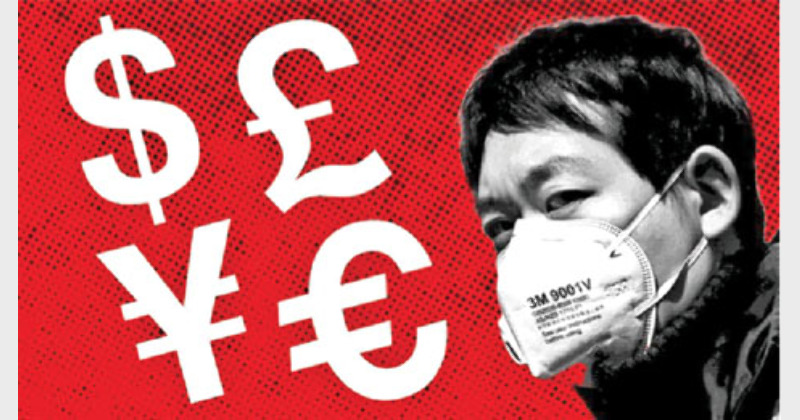
Decelerating Global Economy

Panic spreads faster than the virus, and its impact on the economy is far-reaching than the impact of the virus

Archive ManagerArchive Manager
Mar 27, 2020, 11:42 am IST
in Bharat
Follow on Google News
FacebookTwitterWhatsAppTelegramEmail
 
 
a_1  H x W: 0 x 


Panic spreads faster than the virus, and its impact on the economy is far-reaching than the impact of the virus


S Kaushik


The year 2020, according to the Chinese Zodiac calendar, is considered the Year of the metal Rat. A rat year marks the beginning of a new zodiac cycle in Chinese calendar. The rat in Chinese culture is associated with wealth, supplenesss and prosperity. Hence, the coming of a Rat Year is believed to bring in good fortunes for all people. However, the year so far has been a disaster. The dawn of the Chinese New Year saw an outbreak of pneumonia cases reported in Wuhan, China. A virus, SARS-CoV-2, tracing its origin to a bat or pangolin found its way to the humans in a bustling wet market and has sent the world into a tizzy. It’s been more than two months since the outbreak of COVID-19 and the situation doesn’t seem to ease anytime soon. So far, a total of 1,82,609 cases have been reported worldwide and the death toll has touched 7164 (as of March 17 2020). India has reported 147 confirmed cases with only three deaths. The WHO on March 11 declared the disease a pandemic.
 
 
The spread of Coronavirus across the world comes in the backdrop of an already decelerating global economy. With things looking gloomy, economies across the world find themselves in doldrums. Will India be able to tide over this crisis? What is the impact on humans and the e­­conomy? Are we headed to a recession? How long will it take to recover? These are questions that linger on in our minds.


The impact on the Economy


The virus has already brought Chinese economy to a halt. Exports have contracted by 17.2% in dollar terms in January and February. (Financial Times, March 7). In India, sectors that are over-dependent on Chinese imports like the pharmaceuticals and consumer electronics are feeling the pinch. Mobile phones and other electronic items are set to turn dearer in the coming months. With summer setting in, the next two months are critical for items like air conditioners and refrigerators. Industry observers expect that a price hike of 3-4% will not impact demand.
 
 
The pharmaceutical sector that imports 80-85% of Active Pharmaceutical Ingredients from China is now facing volatility due to supply disruption. Input costs have gone up by 50%. However, this is less likely to impact the poor in India as with the Jan Aushadhi stores absorbing any increase in price. The fertilisers industry that imports non-Urea and phosphate fertilisers could face price volatility due to fall in supply. Currently, the stock levels are adequate, and there is nothing to fear now. Even if the prices of fertilisers and pesticides increase, it is likely to be absorbed by the government through its subsidy component to protect farmers.
 
 
But some of the key service sectors are bound to face the brunt. Transport, logistics, tourism and entertainment will be hit due to restrictions in travel and temporary lockdowns. According to media reports, most airlines might go bankrupt by May end if the situation persists. It is important that the government pitches in and insulates the sector from losses. SpiceJet head Ajay Singh has applauded the government’s efforts to address the situation and likened the current crisis to a ‘turbulence’. (Economic Times, March 12). It is expected that when normalcy returns, these sectors will rebound.


The Silver Lining


Any crisis is a challenge for some and opportunity for others. The pandemic coupled with the free fall of crude oil prices has come as a boon to oil companies. Amidst a plummeting stock market, shares of oil companies and fast-moving consumer goods companies have been on the uptick. Demand for biscuits, ready-to-cook food items, soaps, etc., will boost small and medium scale local industries involved in their production. Companies producing medical supplies also stand to benefit. While e-commerce companies may gain from a spurt in online sales as people avoid malls and shopping, street vendors doing business on the streets will be hit in the short run.
 
 
It is to be noted that Coronavirus impact will be largely felt in metros and other Tier I cities. Tier II cities where industries are located will be affected due to a slump in demand. Tier III cities and villages will be least affected where the majority of Indians live. All this will stand true if the government and the people manage to prevent the further spread of the virus.


Headed for a Recession


Economy is said to enter a Recession, if it shows two successive quarters of contraction (6 months or longer). If within the next six months, the COVID impact doesn’t subside, things will get difficult for governments across the world. There is uncertainty about how long the impact of the virus will stay, and businesses hate uncertainty. This is where the role of the Government and the Central bank comes into play.
 
 
RBI Governor Shaktikanta Das has assured that the Central Bank has all the necessary firepower to fight the economic threat arising out of Coronavirus and said that various policy instruments would be used from time to time depending on requirements. The US and the UK have slashed interest rates to spur economic activity. However, it is not easy for India to slash interest rates. The CPI inflation stood for February 2020 at 6.58%. A steep rate cut could lead to rising inflation, trigger foreign outflows and lead to the weakening of the rupee. The challenge is to effect a rate cut just enough to shore up positive sentiments. The RBI also has the options of slashing SLR and buying government securities to infuse money into the system. The next Monetary Policy Committee review meeting scheduled from March 31-April 3 will be watched closely.
 
 
Apart from monetary policy tools, the government might resort to sector specific sops instead of outright government spending to cushion industries from the negative impact and give a fillip to the economy.
 
 
It is hoped that India being a consumption-driven economy unlike China, which is export-driven, will be able to tide over the crisis. R.C. Bhargava, Chairman of Maruti Suzuki, echoed similar sentiments and said that despite the global impact of the coronavirus being much greater, India would not be affected much as it does not rely heavily on international exports.


What can we do now?


Given that the central government and state governments are working on a war footing to contain the outbreak, all one can do is to remain optimistic, follow the government guidelines and refrain from spreading panic. Panic spreads faster than the virus, and its impact on the economy is far-reaching than the impact of the virus.
 
 
The rat in Chinese culture is also associated with midnight hours and cold winter. What does nature do in these wee hours? Seeds ready themselves to germinate and buds wait to blossom. Hence, this is a time of waiting and planning. We should take this time to pause and think about what we are doing to nature and prepare ourselves for the future.
 
 
(The writer is Deputy Director, Tamilagam Research Foundation)

 

ShareTweetSendShareSend
✮ Subscribe Organiser YouTube Channel. ✮
✮ Join Organiser's WhatsApp channel for Nationalist views beyond the news. ✮
Previous News

Prime Minister Narendra Modi calls upon G20 countries to come out with a concrete action plan to fight COVID 19

Next News

Swadeshi companies rise to the occasion: Parle G to distribute 30 million packets of biscuits to needy affected by the Lock down

Related News

Australia has volunteered to repatriate three temple artefacts to India, following Prime Minister Narendra Modi's participation in the 3rd India–Australia Annual Summit.
These artefacts of Tamil Nadu origin include a stone sculpture of sacred Nandi, a metal Trident with the image of Bhadrakali, and a six-headed Karthikeya statue in stone

Australia repatriates ancient Murugan, Nandi and Bhadrakali Temple artefacts to India during PM Modi’s visit

Vice President C.P. Radhakrishnan launches the national Letter of Authorisation (LoA) programme for sustainable high seas fishing at OUAT, Bhubaneswar, in the presence of other dignitaries

Odisha: Vice President launches National High Seas Fishing Authorisation Programme; Unveils deep-sea fisheries mission

Maharashtra Chief Minister Devendra Fadnavis

Maharashtra takes major step towards Uniform Civil Code: CM Fadnavis announces setting up of 7 member expert committee

Group photo after trilateral cooperation agreements between CSIR, Manas Academy and prestigious rectors of the seven universities of Kyrgyzstan

India, Kyrgyzstan launch Manas-Mahabharata Civilisational Studies Centre; Kyrgyz Epic ‘Manas’ translated in Hindi

Kurdistan region - Courtesy: Britannica

Kurds remain strategic ally of USA despite being neglected

Central Sanskrit University paves way for Sanskrit students get admission in BAMS

Central Sanskrit University launches NEET-PA, opening BAMS path for Sanskrit students

Load More

Latest News

Australia has volunteered to repatriate three temple artefacts to India, following Prime Minister Narendra Modi's participation in the 3rd India–Australia Annual Summit.
These artefacts of Tamil Nadu origin include a stone sculpture of sacred Nandi, a metal Trident with the image of Bhadrakali, and a six-headed Karthikeya statue in stone

Australia repatriates ancient Murugan, Nandi and Bhadrakali Temple artefacts to India during PM Modi’s visit

Vice President C.P. Radhakrishnan launches the national Letter of Authorisation (LoA) programme for sustainable high seas fishing at OUAT, Bhubaneswar, in the presence of other dignitaries

Odisha: Vice President launches National High Seas Fishing Authorisation Programme; Unveils deep-sea fisheries mission

Maharashtra Chief Minister Devendra Fadnavis

Maharashtra takes major step towards Uniform Civil Code: CM Fadnavis announces setting up of 7 member expert committee

Group photo after trilateral cooperation agreements between CSIR, Manas Academy and prestigious rectors of the seven universities of Kyrgyzstan

India, Kyrgyzstan launch Manas-Mahabharata Civilisational Studies Centre; Kyrgyz Epic ‘Manas’ translated in Hindi

Kurdistan region - Courtesy: Britannica

Kurds remain strategic ally of USA despite being neglected

Central Sanskrit University paves way for Sanskrit students get admission in BAMS

Central Sanskrit University launches NEET-PA, opening BAMS path for Sanskrit students

New Zealand MP Parmjeet Kaur Parmar

New Zealand MP Parmjeet Kaur Parmar hails proposed FTA as ‘historic achievement’ ahead of PM visit

Uttarakhand Nihang Sikh Row: Mediator Jasdeep Singh Faces Fresh Allegations

Uttarakhand Nihang Sikh Controversy: Mediator Jasdeep Singh faces allegations after objectionable photo leak

An ASSOCHAM report says India is emerging as the biggest beneficiary of global supply chain shifts amid the China+1 strategy

ASSOCHAM Report: How India is emerging as the biggest beneficiary amidst shifts in global supply chains!

former VHP Keralam State General Secretary R Raveendran

Keralam: Senior Sangh Karyakartha and former VHP Keralam State General Secretary R Raveendran passes away

Load More
  • Privacy
  • Terms
  • Cookie Policy
  • Refund and Cancellation
  • Delivery and Shipping

© Bharat Prakashan (Delhi) Limited.
Tech-enabled by Ananthapuri Technologies

  • Home
  • Search Organiser
  • Bharat
    • Assam
    • Bihar
    • Chhattisgarh
    • Jharkhand
    • Maharashtra
    • View All States
  • World
    • Asia
    • Africa
    • North America
    • South America
    • Europe
    • Australia
  • Editorial
  • Operation Sindoor
  • Opinion
  • Analysis
  • Defence
  • Culture
  • Sports
  • Business
  • RSS @ 100
  • Entertainment
  • More ..
    • Sci & Tech
    • Vocal4Local
    • Special Report
    • Education
    • Employment
    • Books
    • Interviews
    • Travel
    • Health
    • Politics
    • Law
    • Economy
    • Obituary
  • Subscribe Magazine
  • Read Ecopy
  • Advertise
  • Circulation
  • Careers
  • About Us
  • Contact Us
  • Policies & Terms
    • Privacy Policy
    • Cookie Policy
    • Refund and Cancellation
    • Terms of Use

© Bharat Prakashan (Delhi) Limited.
Tech-enabled by Ananthapuri Technologies