Ashwani Mahajan
Public Sector Banks (PSBS) have been going through a serious NPA crisis for a long time. Although the PSBs hold 63 per cent of the country’s banking deposits, people never felt that the money lying in these banks could be lost. The reason for this is the belief of the people that their money is completely safe in these banks as they are owned by the government. The situation has started to change after the bailout packages and various other measures by the government, and it seems that in the very near future, these PSBs will be out of the NPA crisis.
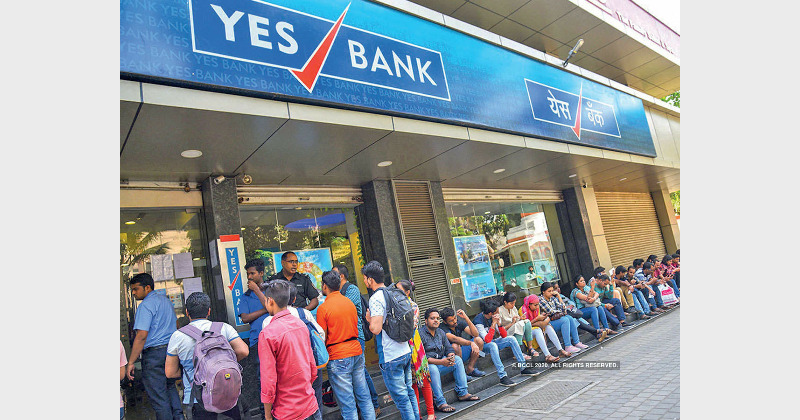
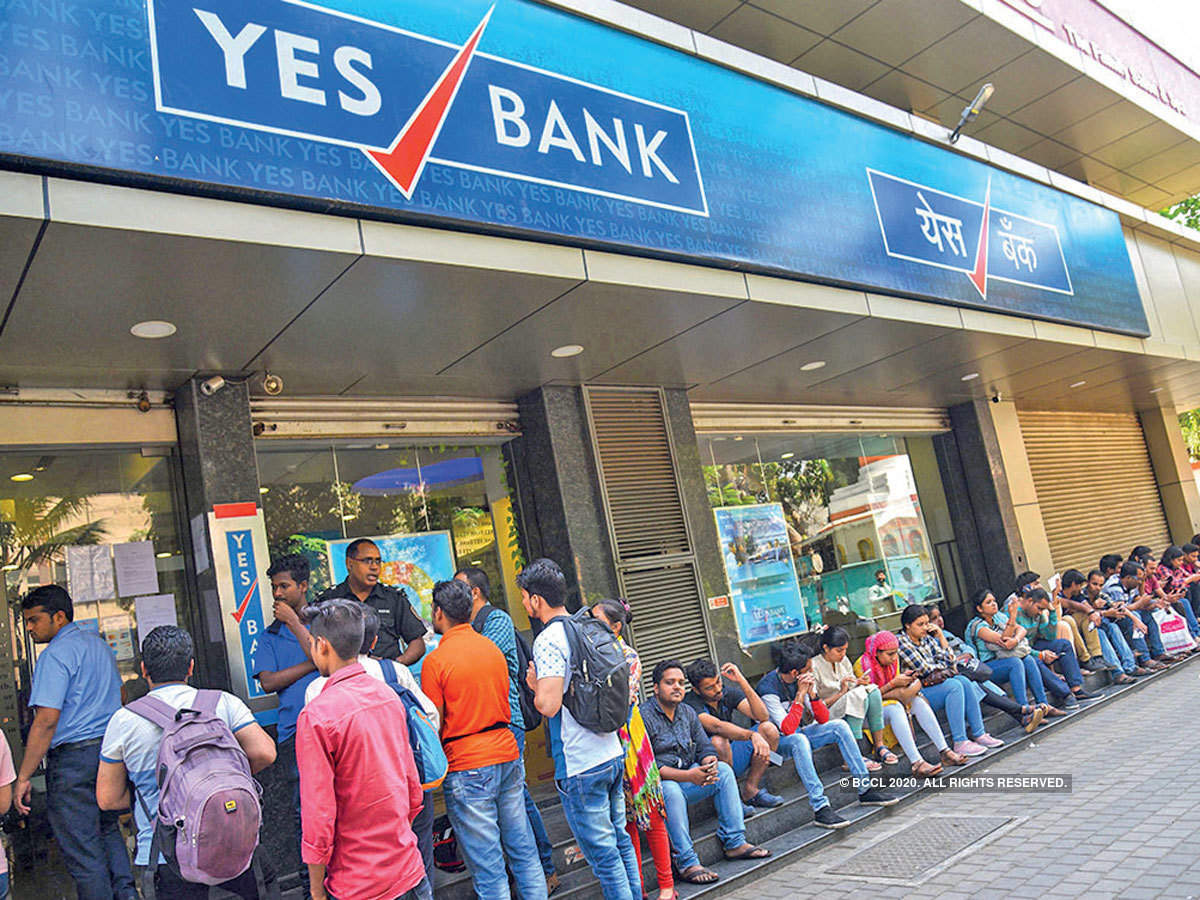
Today, when the NPA crisis of public sector banks is likely to end soon, one of the important private sector banks (Yes Bank), which is the seventh-largest bank in the country, is undergoing worst crisis. Although the speculations have been there for a long time, about the health of this bank, however, in the last few days this crisis has deepened considerably. Though, in the past some private banks have been in red, and people were worried; however, their crisis was somehow solved. In the last nearly three decades of liberalization, many private banks came into existence and there was a considerable expansion of private sector banking. HDFC Bank became the first and ICICI Bank became the third largest bank in India, with many private sector banks including Axis Bank and Kotak Mahindra Bank gaining positions of prominence.
In order to overcome the present crisis of Yes Bank, Reserve Bank has put a cap on the withdrawals by its depositors, that they will not be able to withdraw more than fifty thousand rupees in a month (and more than Rs 5 lakh under special circumstances like illness, marriage etc). We must understand that these restrictions are primarily due to crisis in Yes Bank, but it doesn’t cause for any panic, as the same has been done to avert eminent failure of the bank. Significantly, any bank runs on the trust of the public. Depositors deposit their money in banks and banks give that money in the form of loans to those who need it. The bank gets interest on these loans and from that interest the depositors get interest on their deposits. Generally, due to trust, people keep most of their deposits with the banks, and banks therefore generally do not face liquidity crisis. But when the depositors’ trust in the bank is shaken, and they start withdrawing money, they may face a liquidity crisis and the bank may fail in the event of non-refund of the deposit.
Therefore, when the Reserve Bank has put curbs on the withdrawal of deposits, it should not be seen as failure of the bank, rather, this need to be understood that this is being done to prevent the bank from failing. India is a country of strong savings culture. Households invest their savings in many ways; and bank deposits are the most popular destination. It is worth noting that till March 31, 2019, a total of 126 lakh crore rupees were deposited in banks, including private and public sector banks. Whether the bank is small or big, its failure under any circumstances is extremely unfortunate. This is the reason why government and the Reserve Bank of India (RBI) decided to intervene immediately in Yes Bank crisis and measures have been initiated to resolve the same. The board of Yes Bank has been superseded by the Reserve Bank. State Bank of India has been asked to buy YES Bank shares. Top officials of some public sector banks have been given the responsibility to deal with this crisis.
For a long time, in order to improve the confidence of people in the banking system, proposals were being made to raise the amount for Deposit Insurance for deposits in banks from rupees one lakh in the past. In the Budget (2020-21) this year, the Finance Minister has announced that this insurance amount will be increased to rupees five lakh. The Reserve Bank has also said that there is no need to panic and interests of depositors will be safeguarded. It has also been said that, up to five lakh rupees deposited in banks are completely safe. As far as public sector banks are concerned, there is no question of depositors losing their money, because these deposits are guaranteed by the Government of India.
This is not the first time that the Reserve Bank has attempted to save a private bank, even earlier the board of Global Trust Bank was acquired by the Reserve Bank in 2004.
Need to learn a lesson
Thanks to several measures of the government and the Reserve Bank, the crisis at Yes Bank may be averted soon, however, in this era of privatization; we need to learn lessons from this crisis. Yes Bank’s financial condition worsened from bad to worse due to the ever-increasing NPAs or, say, drowning of loans. The Reserve Bank says that its first choice was market-based solutions; but it did not succeed, as additional capital could not be raised despite various efforts by the management of Yes Bank. Therefore, the Reserve Bank was forced to restructure the board of Yes Bank and impose 30-day curbs on Yes Bank deposits with the permission of the Government of India. Reserve Bank has blamed the lax in governance of the Yes Bank.
However, it has to be seen that at present, the Reserve Bank is also no less responsible for the rising bad debt in private banks. When the public sector banks were struggling with the NPA problem, the then Governor of the Reserve Bank had said that the Reserve Bank’s has very limited control over the management of public sector banks; while private banks are better amenable to regulation by RBI. But today the Reserve Bank is blaming the management of Yes Bank for its crisis. In fact, the policy of the Reserve Bank is also responsible for the management faults of private banks according to which the promoters of private banks were asked to reduce their shareholding in these banks within a specified time frame. In this sequence, the shareholding of Yes Bank’s promoter Rana Kapoor was forced to be reduced gradually and today the situation is that those who are under the management of Yes Bank do not have much or even any stake in the bank. That is, those who are running the management of Yes Bank have ‘no skin in the game’. If the promoters’ shareholding had not been reduced to zero, they would have remained interested in the health of the bank and the bank would not have reached this condition. Somehow, with the combined efforts of RBI and the government, Yes Bank would be saved; however, we need to learn lessons from the past mistakes. Therefore, there is still scope for the Reserve Bank to reconsider the policy that reduces promoters’ holding to zero. There is a need for the RBI to rethink about the regulatory framework for private banks’ ownership.
Privatization is no solution
In the past, some governors and other top officials of the Reserve Bank have been advocating the privatization of public sector banks. They used to say this in the context of the poor economic condition of public sector banks at that time. But now due to deteriorating condition of private banks, especially Yes Bank, they have been proved wrong. The truth is that whether the bank is public or private, strict monitoring of the rules is the solution. It is also certain that ownership of any institution does not make it efficient or inefficient.