ISRO's Chandrayaan-2: Inspirational and characteristic of science in collective action
June 16, 2026
  • Read Ecopy
  • Circulation
  • Advertise
  • Careers
  • About Us
  • Contact Us
Android AppiPhone AppArattai
Organiser
  • ‌
  • Bharat
    • Assam
    • Bihar
    • Chhattisgarh
    • Jharkhand
    • Maharashtra
    • View All States
  • World
    • Asia
    • Europe
    • North America
    • South America
    • Africa
    • Australia
  • Editorial
  • International
  • Opinion
  • RSS @ 100
  • More
    • Op Sindoor
    • Analysis
    • Sports
    • Defence
    • Politics
    • Business
    • Economy
    • Culture
    • Special Report
    • Sci & Tech
    • Entertainment
    • G20
    • Azadi Ka Amrit Mahotsav
    • Vocal4Local
    • Web Stories
    • Education
    • Employment
    • Books
    • Interviews
    • Travel
    • Law
    • Health
    • Obituary
  • Subscribe
    • Subscribe Print Edition
    • Subscribe Ecopy
    • Read Ecopy
  • ‌
  • Bharat
    • Assam
    • Bihar
    • Chhattisgarh
    • Jharkhand
    • Maharashtra
    • View All States
  • World
    • Asia
    • Europe
    • North America
    • South America
    • Africa
    • Australia
  • Editorial
  • International
  • Opinion
  • RSS @ 100
  • More
    • Op Sindoor
    • Analysis
    • Sports
    • Defence
    • Politics
    • Business
    • Economy
    • Culture
    • Special Report
    • Sci & Tech
    • Entertainment
    • G20
    • Azadi Ka Amrit Mahotsav
    • Vocal4Local
    • Web Stories
    • Education
    • Employment
    • Books
    • Interviews
    • Travel
    • Law
    • Health
    • Obituary
  • Subscribe
    • Subscribe Print Edition
    • Subscribe Ecopy
    • Read Ecopy
Organiser
  • Home
  • Bharat
  • World
  • Operation Sindoor
  • Editorial
  • Analysis
  • Opinion
  • Culture
  • Defence
  • International Edition
  • RSS @ 100
  • Magazine
  • Read Ecopy
Home Bharat

ISRO’s Chandrayaan-2: Inspirational and characteristic of science in collective action

ISRO's Chandrayaan-2: Inspirational and characteristic of science in collective action

Archive ManagerArchive Manager
Sep 7, 2019, 10:18 pm IST
in Bharat
Follow on Google News
FacebookTwitterWhatsAppTelegramEmail
Success criteria of Chandrayaan-2 were defined for each and every phase of the mission and so far 90 to 95% of the mission objectives have been accomplished and will continue to contribute to Lunar science.
– Prof. K VijayRaghavan
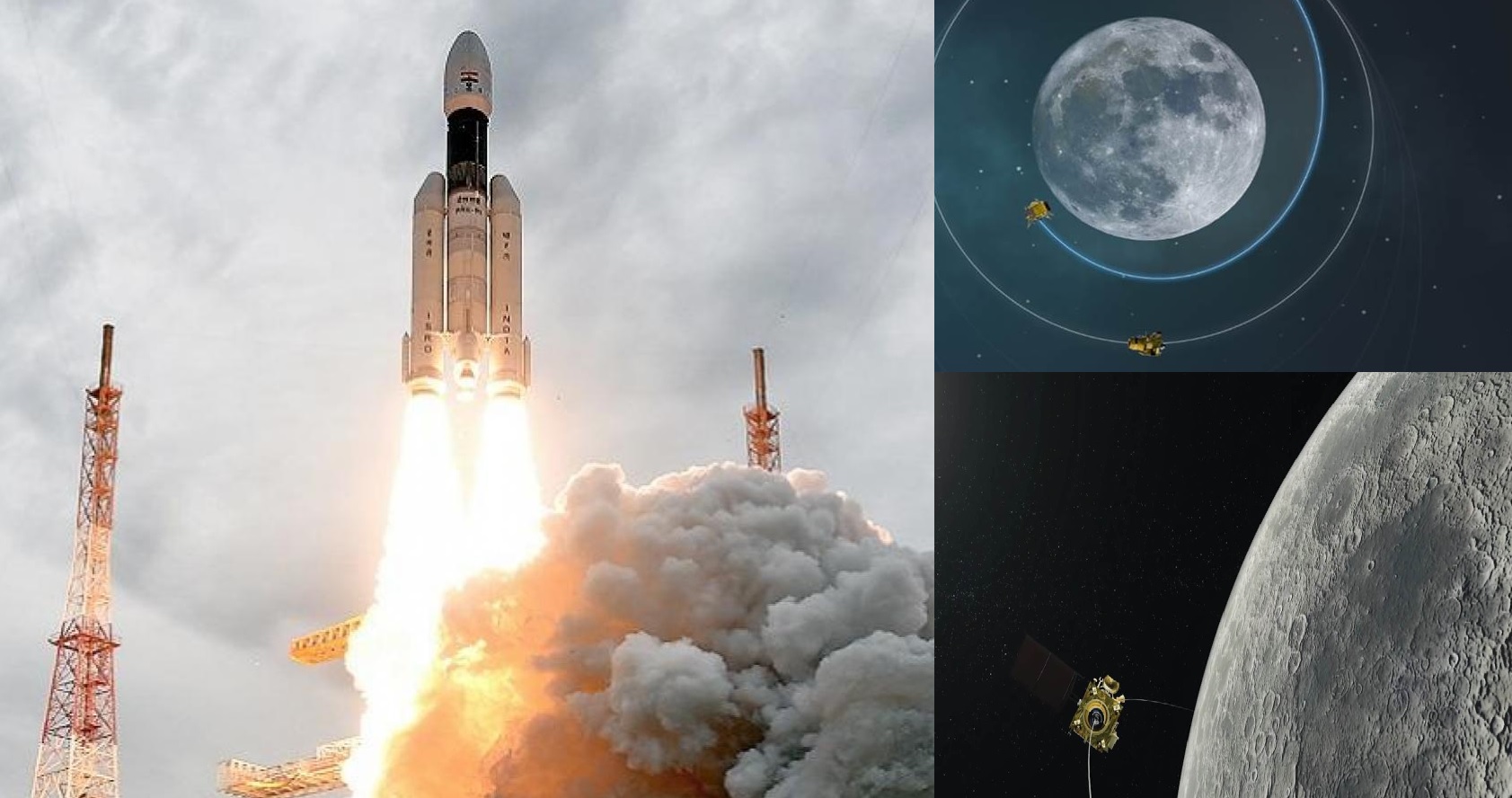
 
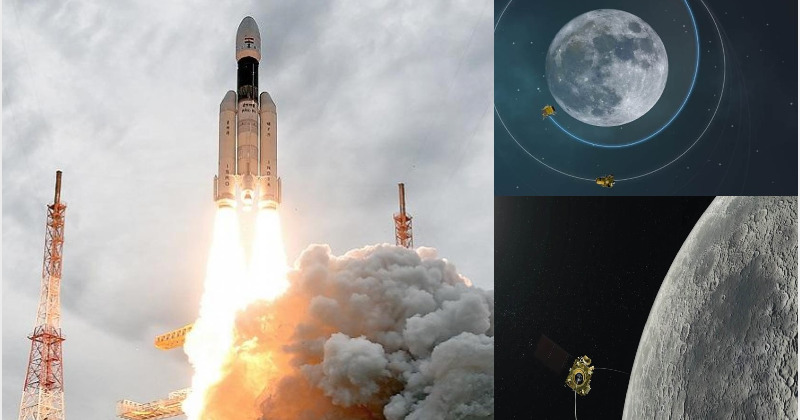
Since the launch of Chandrayaan-2 on July 22, 2019, India and the world watched its progress from one phase to the next with great expectation and excitement. The Chandrayaan-2 mission is very complex, and a significant technological leap from previous missions of ISRO. This brought together an Orbiter, Lander and Rover to explore the unexplored south polar region of the Moon. This unique mission, aimed at studying not just one area of the Moon but also its exosphere, the surface and sub-surface in a single mission.
 
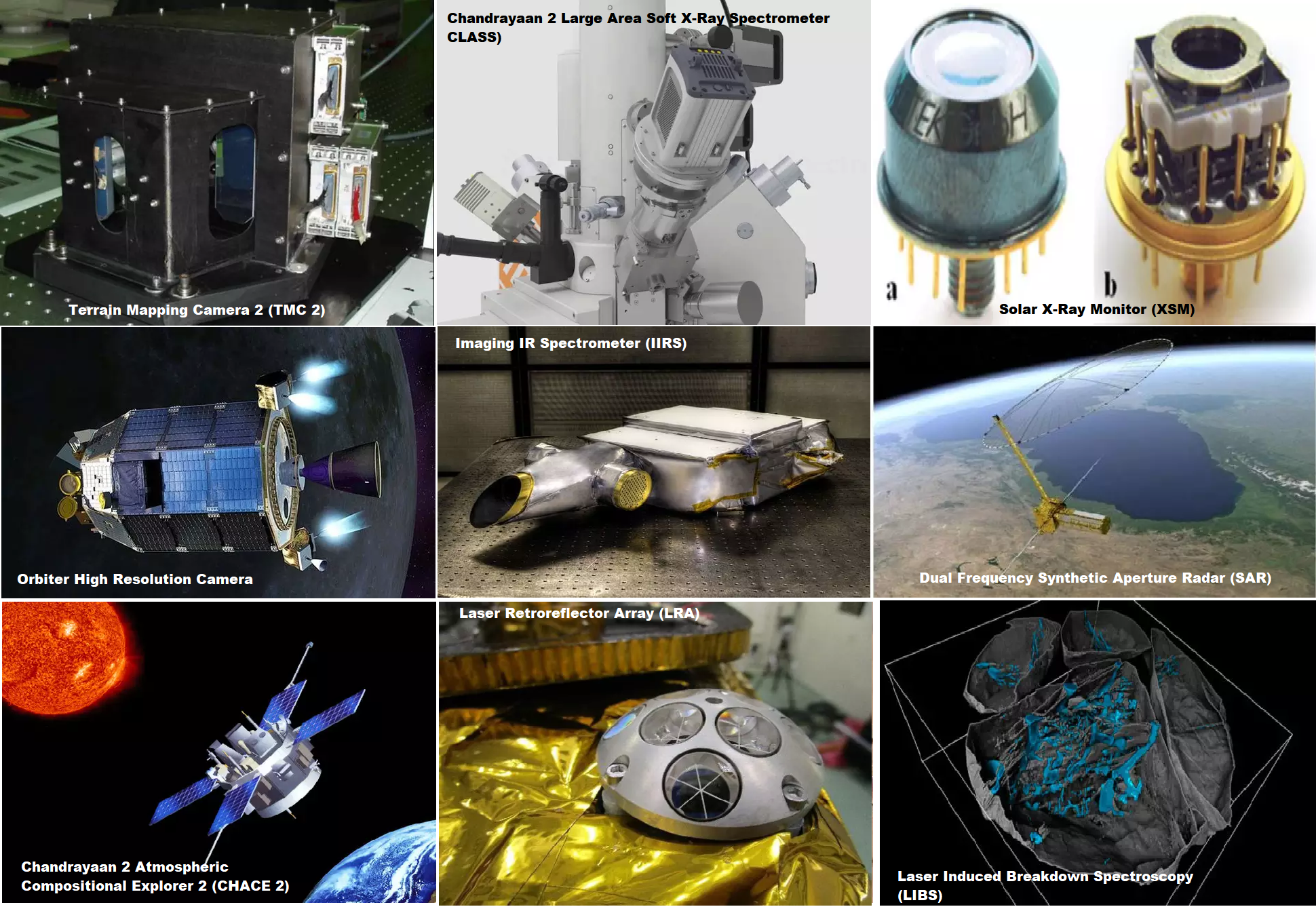
The Orbiter has already been placed in its intended orbit around the Moon and shall enrich our understanding of the moon’s evolution, map minerals, water molecules in the polar regions, using its eight state-of-the-art scientific instruments. The precise launch and mission management has ensured a long life of almost 7 years instead of the planned one year. Here is an list of cutting-edge science that will come from the orbiter.
 
The Orbiter camera is the highest resolution camera (0.3m) in any lunar mission so far and has already started providing high-resolution images which will be immensely useful to the global scientific community. Orbiter camera: The pictures I saw this morning were truly extraordinary. TMC 2 is a miniature version of the Terrain Mapping Camera used onboard the Chandrayaan 1 mission. TMcv2’s primary objective is mapping the lunar surface in the panchromatic spectral band (0.5-0.8 microns), high spatial resolution(5m), swathe(20 km from 100 km lunar polar orbit). Data will give clues about the Moon’s evolution, prepare 3D maps of the lunar surface.
 
CLASS measures X-ray Fluorescence (XRF) spectra to detect elements such as Magnesium, Aluminium, Silicon, Calcium, Titanium, Iron, and Sodium. The XRF technique will detect these elements by measuring the characteristic X-rays they emit when excited by the Sun’s rays. XSM observes the X-rays emitted by the Sun and its corona, measures the intensity of solar radiation in these rays, and supports CLASS. Provides solar X-ray spectrum in the energy range of 1-15 keV. XSM will provide high-energy resolution and high-cadence measurements (full spectrum every second) of solar X-ray spectra as input for analysis of data from CLASS.
 
Imaging Infra-red spectrometer (IIRS) has two primary objectives: i. global mineralogical and volatile mapping of the Moon in the spectral range of ~0.8-5.0 µm for the first time, at the high resolution of ~20 nm. IIRS second objective: Complete characterization of water/hydroxyl feature near 3.0 µm for the first time at high spatial (~80 m) and spectral (~20 nm) resolutions. One more from IIRS: will also measure solar radiation reflected off the Moon’s surface in 256 contiguous spectral bands from 100 km lunar orbit. Dual-frequency (L and S) synthetic aperture radar (SAR) will provide enhanced capabilities compared to Chandrayaan 1’s S-band miniSAR in areas such as: L-band for greater depth of penetration (About 5m — twice that of S-band).
 
SAR: Circular and full polarimetry — with a range of resolution options (2-75 m) and incident angles (9°-35°) — for understanding scattering properties of permanently shadowed regions. SAR: The main scientific objectives of this payload are: High-resolution lunar mapping in the polar regions. Quantitative estimation of water-ice in the polar regions. Estimation of regolith thickness and its distribution.
 
Chandrayaan Atmospheric compositional explorer 2 (CHACE 2) will continue the CHACE experiment carried out by Chandrayaan 1. CHACE 2 is a Quadrupole Mass Spectrometer (QMA) capable of scanning the lunar neutral exosphere in the mass range of 1 to 300 amu with the mass resolution of ~0.5 amu. CHACE 2’s primary objective is to carry out an in-situ study of the composition and distribution of the lunar neutral exosphere and its variability.
 
Dual Frequency Radio Science Experiment (DFRS) To study the temporal evolution of electron density in the Lunar ionosphere. DFRS: Two coherent signals at X (8496 MHz), and S (2240 MHz) band are transmitted simultaneously from satellite, and received at ground-based deep station network receivers. The Vikram Lander followed the planned descent trajectory from its orbit of 35 km to just below 2 km above the surface. 
 
 
All systems and sensors of the Lander functioned excellently until this point. Tested and proved many new technologies such as the variable thrust propulsion technology used in the Lander. Success criteria were defined for each and every phase of the mission and so far 90 to 95% of the mission objectives have been accomplished and will continue to contribute to Lunar science. notwithstanding the loss of communication with the Lander.
 
ISRO project review teams made presentations to mission management, Chaired by Dr. Sivan right through the early hours of today onward. They are already addressing causes and learning from the events. After a moment of despondency, it is back to work!! It is inspirational to see this characteristic of science in collective action. Kudos to ISRO.
 
(Author is the Principal Scientific Adviser to the Government of India. This article is a compilation of his tweets)

 
ShareTweetSendShareSend
✮ Subscribe Organiser YouTube Channel. ✮
✮ Join Organiser's WhatsApp channel for Nationalist views beyond the news. ✮
Previous News

Chandrayaan-2 a highly complex mission which has achieved 90 to 95% of the mission objectives says ISRO’s latest update, as the world congratulates its achievements

Next News

Intelligence agencies warn of a ?Big Action? as Pakistan unleashes the most wanted terrorist Maulana Masood Azhar to carry out terror attacks in India

Related News

UPSC Prelims 2026 result declared

UPSC CSE Prelims Result 2026 Declared: 13,343 candidates qualify for mains exam; Download result PDF here

VHP International Working President Alok Kumar addressing the media

Shree Ram Janmaboomi Teerth Kshetra takes responsibility for every rupee, will fully cooperate with SIT: Alok Kumar

India-Slovakia heralds new era of partnership: Seal MoUs in defence, digital tech, counter-terrorism & labour mobility

Telangana: LRPF Seeks NHRC Probe into Agape Over HIV Orphans’ Privacy, Child Safety and Regulatory Concerns

US protests against India’s FCRA amendments; Transparency norms rattle foreign funded missionary networks

PoJK Protests: 2 JAAC activists killed, 8 injured in Rawalakot; Pakistani security forces crackdown on civilians

Load More

Latest News

UPSC Prelims 2026 result declared

UPSC CSE Prelims Result 2026 Declared: 13,343 candidates qualify for mains exam; Download result PDF here

VHP International Working President Alok Kumar addressing the media

Shree Ram Janmaboomi Teerth Kshetra takes responsibility for every rupee, will fully cooperate with SIT: Alok Kumar

India-Slovakia heralds new era of partnership: Seal MoUs in defence, digital tech, counter-terrorism & labour mobility

Telangana: LRPF Seeks NHRC Probe into Agape Over HIV Orphans’ Privacy, Child Safety and Regulatory Concerns

US protests against India’s FCRA amendments; Transparency norms rattle foreign funded missionary networks

PoJK Protests: 2 JAAC activists killed, 8 injured in Rawalakot; Pakistani security forces crackdown on civilians

Singapen Special Task Force (SSTF) unit in Tamil Nadu

Singapen, all-women police unit, force launched by TVK, but crimes against women remain a growing concern in Tamil Nadu

The National Democratic Alliance (NDA) on June 10 passed a resolution marking 12 years of the Narendra Modi-led Government, describing it as a defining phase of "people-centric development, participative democracy and performance-oriented governance"

12 years of Modi government:  Restoration of self-belief

More than a cultural gathering, the event reflected a collective resolve to protect indigenous traditions, strengthen community bonds and celebrate Bharat's enduring unity in diversity.

Janajati Samagam 2026: The indigenous quest to protect culture, tradition and the soul of Bharat

12 years of Modi government: The scale of endurance

Load More
  • Privacy
  • Terms
  • Cookie Policy
  • Refund and Cancellation
  • Delivery and Shipping

© Bharat Prakashan (Delhi) Limited.
Tech-enabled by Ananthapuri Technologies

  • Home
  • Search Organiser
  • Bharat
    • Assam
    • Bihar
    • Chhattisgarh
    • Jharkhand
    • Maharashtra
    • View All States
  • World
    • Asia
    • Africa
    • North America
    • South America
    • Europe
    • Australia
  • Editorial
  • Operation Sindoor
  • Opinion
  • Analysis
  • Defence
  • Culture
  • Sports
  • Business
  • RSS @ 100
  • Entertainment
  • More ..
    • Sci & Tech
    • Vocal4Local
    • Special Report
    • Education
    • Employment
    • Books
    • Interviews
    • Travel
    • Health
    • Politics
    • Law
    • Economy
    • Obituary
  • Subscribe Magazine
  • Read Ecopy
  • Advertise
  • Circulation
  • Careers
  • About Us
  • Contact Us
  • Policies & Terms
    • Privacy Policy
    • Cookie Policy
    • Refund and Cancellation
    • Terms of Use

© Bharat Prakashan (Delhi) Limited.
Tech-enabled by Ananthapuri Technologies