
The world’s energy resources are fast depleting and a new and ambitious Bharat is no exception to the chronic problem of energy deficiency. As the country’s need for energy exceeds its supply, we are hurtling from one crisis to another. Unless we pull our socks now, we will be staring at a grave scenario
Dr Nandakumar Janardhanan
Being one of the fastest growing economies in the world, India has been witnessing surging energy consumption for the past many years. There would be remarkable increase in the share of fossil fuels as it is critical to the country’s energy mix. This also indicates that the share of imported oil and gas will surge as the demand for the same in the transportation sector and industry are likely to grow. Coal will continue to dominate the energy mix fuelling power generation for the foreseeable future, despite concerns about greenhouse gas emissions. With higher demand for cleaner, efficient fuels to meet growing domestic demand, the government will need to shape policies to strengthen the country’s energy sector.
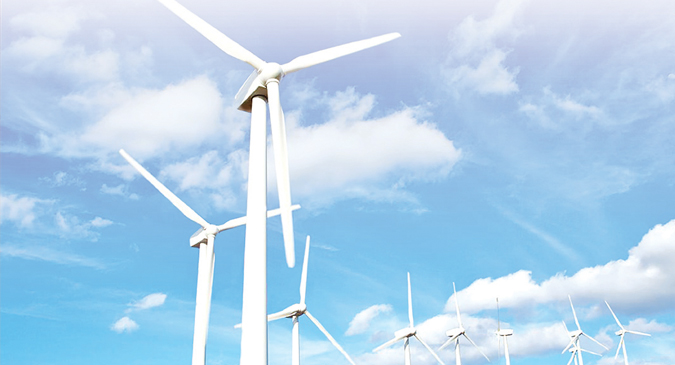
With the ambitious steps to strengthen the renewable energy sector, India targets to enhance the share of renewable energy in its energy mix. After the new government took charge in 2014, the target of 22 GW prescribed as part of the Solar Energy Mission originally proposed under the National Action Plan for Climate Change, was changed to 100 GW with an overall renewable target of 175 GW. While the target proposed by the country is commendable, achieving the same will need concerted efforts by the key stakeholders including government as well as private sectors.
After BJP govt took over in 2014, the target of 22GW prescribed as part of the Solar Energy Mission originally proposed under the National Action Plan for Climate Change, was changed to 100 GW with an overall renewable target of 175 GW Dependence on Imported Equipment It is also important to note that currently for solar power generation, the country depends heavily on imported equipment. Chinese products alone meet roughly 85 per cent of the total solar panels demand in India, which has already spread a fear that the domestic industries will be out of business sooner or later. Moreover, the quality of the Chinese equipment entering into the market vary widely. It is suspected that the sub-quality product being pumped into the Indian market at cheap rates are damaging the solar energy industry in India. However, due to the cost-effectiveness of the products, the imported goods continue to get space in the domestic market. In order to address this critical issue of ensuring quality as well as encouraging domestic players into the solar module manufacturing the government should promote opportunities for co-innovation. Under co-innovation technology players from overseas can jointly work with the domestic market players in designing and developing solar energy equipment suitable for the domestic market. This not only protects the interests of external as well as domestic players to a great extent, but also ensures that the modules developed are in tune with the domestic demand.
Second, the imported oil and gas continue to play a key role in the domestic energy sector. Transportation sector, residential sector, fertilizer industry and electricity generation sector are major consumers of imported petroleum sources. The changing geopolitical scenario in the global market due to the ongoing concerns about US sanctions on Iran and the restrictions on petroleum import, are critical challenges for India. Without supplies from Iran, India will need to look for alternative supply sources and markets which may potentially influence the oil and gas price trends, impacting India’s energy bills adversely. Two questions are critical to policymakers in this regard. What could be the potential challenges India may face if access to supplies from Iran is stopped? Is India ready to snap ties with Iran under the US pressure?
India has stopped buying oil from Iran after the US waiver given to eight countries was ended in early May. However, attempts are in progress to resume supplies. If the supplies from Iran completely stopped for a longer period, India will have to get additional supplies from other regions. This could not only raise fuel price but also lead to frequent competitions from other major importers to secure petroleum supplies. On the other hand, it will also be important for India to ensure that its ties with the Persian Gulf regions, especially its historic ties with Iran is unaffected due to the ongoing oil geopolitics. Here, the government will need to play this delicate balance of not snapping ties with Iran while ensuring that its oil import from the latter do not challenge its ties with US.
Third, nuclear energy forms a critical part of the domestic energy mix, despite contributing only a smaller share currently. Though the sector has been facing a multitude of challenges in the post-Fukushima period, it enjoys great relevance in India as the power demand is set to grow. Despite the nuclear facilities accounting for high capacity factor and low emissions, the fear psychosis created by the certain sections of media, vested interest groups together with the vacuum created by the lack of adequate communication from government, nuclear continues to face challenges. The importance of nuclear in India is two-fold. First, to meet the surging demand for power in the years ahead and second, the public can be addressed by strengthening communication on the real cost and benefits of nuclear to the society. On the other hand, India has the potential to be one of the largest market for Small and Medium Reactors (SMRs) which can significantly bring down costs and investments, thereby addressing the concerns about the facilities being capital intensive. In addition, SMRs will also provide greater control over the facility which is critical from safety and security perspective.
Fourth, the electrification programmes have witnessed tremendous progress in providing last-mile connectivity and electricity connections to 99.99 per cent households in the country. However, a significant share of the recently electrified households are provided only with a single point wiring with bare minimum access. In the coming years as the demand increases, there needs to be adequate provisions to meet increasing need for power supply in all households, which will be a huge supply responsibility to the government. It is important that adequate plans are made to meet this potential demand surge in the years ahead.
These are some of the challenges in energy sector to address. In order to ensure energy security at national level greater policy steps are in need that can bring together all stakeholders including central govt, state govt, utilities and other private sector players.
(The writer teaches in the Energy Studies Programme at the School of International Studies of Jawaharlal Nehru University, New Delhi. Views expressed in this article are those of the writer)