
Report : War On Dengue
June 6, 2026
  • Read Ecopy
  • Circulation
  • Advertise
  • Careers
  • About Us
  • Contact Us
Android AppiPhone AppArattai
Organiser
  • ‌
  • Bharat
    • Assam
    • Bihar
    • Chhattisgarh
    • Jharkhand
    • Maharashtra
    • View All States
  • World
    • Asia
    • Europe
    • North America
    • South America
    • Africa
    • Australia
  • Editorial
  • International
  • Opinion
  • RSS @ 100
  • More
    • Op Sindoor
    • Analysis
    • Sports
    • Defence
    • Politics
    • Business
    • Economy
    • Culture
    • Special Report
    • Sci & Tech
    • Entertainment
    • G20
    • Azadi Ka Amrit Mahotsav
    • Vocal4Local
    • Web Stories
    • Education
    • Employment
    • Books
    • Interviews
    • Travel
    • Law
    • Health
    • Obituary
  • Subscribe
    • Subscribe Print Edition
    • Subscribe Ecopy
    • Read Ecopy
  • ‌
  • Bharat
    • Assam
    • Bihar
    • Chhattisgarh
    • Jharkhand
    • Maharashtra
    • View All States
  • World
    • Asia
    • Europe
    • North America
    • South America
    • Africa
    • Australia
  • Editorial
  • International
  • Opinion
  • RSS @ 100
  • More
    • Op Sindoor
    • Analysis
    • Sports
    • Defence
    • Politics
    • Business
    • Economy
    • Culture
    • Special Report
    • Sci & Tech
    • Entertainment
    • G20
    • Azadi Ka Amrit Mahotsav
    • Vocal4Local
    • Web Stories
    • Education
    • Employment
    • Books
    • Interviews
    • Travel
    • Law
    • Health
    • Obituary
  • Subscribe
    • Subscribe Print Edition
    • Subscribe Ecopy
    • Read Ecopy
Organiser
  • Home
  • Bharat
  • World
  • Operation Sindoor
  • Editorial
  • Analysis
  • Opinion
  • Culture
  • Defence
  • International Edition
  • RSS @ 100
  • Magazine
  • Read Ecopy
Home Bharat

Report : War On Dengue

It may sound strange but scientists have got an evidence to show that the solution to eliminating dengue lies in breeding mosquitoes that are incapable of transmitting dengue and possibly chikungunya and even zika.

Archive ManagerArchive Manager
Aug 8, 2017, 03:34 pm IST
in Bharat
Follow on Google News
FacebookTwitterWhatsAppTelegramEmail


Novel research holds promise to check dengue as India prepares to begin trials for evolving dengue-killing bacteria

Dinesh C Sharma
It may sound strange but scientists  have got an evidence to show that the solution to eliminating dengue lies in breeding mosquitoes that are incapable of transmitting dengue and possibly chikungunya and even zika.
Several research groups are engaged in developing new drug and are even breeding genetically modified (GM) mosquitoes to combat dengue, but with little success. The approach developed by scientists at Monash University in Melbourne is radically different. It involves using a
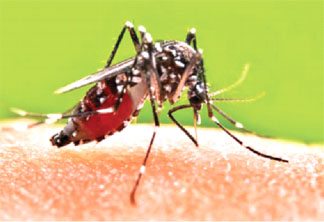
naturally occurring bacteria called Wolbachia, which when present in Aedes aegypti mosquito, reduces its ability to transmit dengue.
Wolbachia is rather ubiquitous bacteria – present in 60 per cent of 5 million insect species, but strangely not in Aedes aegypti mosquito which harbours and transmits dengue virus. Scientists have transferred Wolbachia (extracted from fruit flies) into Aedes aegypti – not by any genetic engineering but by injecting it into mosquito eggs and then breeding such mosquito lines. They have shown that Wolbachia-carrying mosquitoes don’t transmit dengue because the dengue virus can’t replicate itself due to Wolbachia. And if  sufficient number of such mosquitoes multiply in the environment, dengue transmission in a given area can possibly be halted.
The approach has generated huge interest in  dengue-endemic countries, including India. Earlier this year, the Indian Council of Medical Research (ICMR) signed an agreement with Monash University to work on the new approach in India. Research is on at the Pondicherry-based Vector Control Research Centre (VCRC) and if it proceeds as planned, the first trial of Wolbachia-carrying mosquitoes could begin in India as early as 2018. Field trials have been on since 2011 in Australia, Vietnam, Indonesia, Brazil and Colombia.  
“We seed wild mosquito population with Wolbachia in areas where dengue is endemic. This is done through controlled releases of Wolbachia carrying mosquitoes that then breed with wild mosquitoes. Our prediction is that if Wolbachia – which is passed on from one generation to another through insect’s eggs can establish in wild mosquito population in an area then it reduces transmission of dengue among humans,” Prof Scott O’Neill, director of the Institute of Vector-borne Diseases at Monash University.
The studies so far have shown that the method can be deployed successfully and that Wolbachia can sustain itself in mosquito population without any need for continued replenishment. “We are now developing methods for  low-cost, large-scale application across urban areas. Our first city-wide trial began in 2014 in northern Australia and we hope to undertake further large-scale trials in Indonesia and Brazil,” said Prof O’Neill.
Wolbachia is safe to humans, animals and the  environment, scientists say. “It is safe to humans because Wolbachia is already in our food chain and it is commonly found in fruit flies, butterflies, moths and species of mosquitoes other than Aedes aegypti,”  he added.
At VCRC in Pondicherry, research is focused on developing a local Aedes aegypti strain carrying Wolbachia by a series of backcrossing experiments involving Australian strain, wMel Aedes aegypti and local wild Aedes aegypti strain. “Laboratory experiments will be carried out to confirm that our strain  carries all the properties (with respect to maternal inheritance, incompatibility and resistance to local dengue and chikungunya viral strains) of the Australian strain,” explained Dr Jambulingam Purushothaman,  director, VCRC.
Once this is done, a laboratory cage experiment will be carried out to test the ability of resultant strain to replace local Aedes aegypti mosquito. “This is a proof-of concept experiment and by the end of the study we would have characterized local strain of Aedes aegypti carrying Wolbachia and standardized methods for its mass rearing,” he added.
The Wolbachia approach is different in many ways from GM mosquito approach – which is also being experimented in India. GM mosquitoes are supposed to suppress Aedes aegypti populations as genetically engineered male mosquitoes could render wild female mosquitoes unable to reproduce, and thus eliminate wild population. It requires release of huge numbers of GM mosquitoes and needs
replication over time. On the other hand, Wolbachia approach does not tinker with population dynamics of wild mosquitoes and needs release of smaller number of male and female mosquitoes with Wolbachia.
(Courtesy: India Science Wire (ISW))


ShareTweetSendShareSend
✮ Subscribe Organiser YouTube Channel. ✮
✮ Join Organiser's WhatsApp channel for Nationalist views beyond the news. ✮
Previous News

News Round-UP : Sangh Sewa

Next News

Editorial : Quit Colonial Mindset

Related News

Police in AAP-Ruled state of Punjab lathi charge sit-in protesters

Punjab: ITI candidates seeking jobs lathi-charged outside PSPCL HQ; opposition slams AAP Govt over police action

From constables to DGP, India's police system follows a structured chain of command that governs law enforcement across the country

From Constable to DGP: Understanding India’s police hierarchy, powers & recruitment system

The terracotta dice that challenges historical assumptions and highlights India's millennia-old civilisational heritage

How a 4,500-year-old terracotta dice is reviving the debate on India’s civilisational continuity & Vedic heritage

The Porumamilla inscription and the ancient science behind a reservoir that survived 650 years

India’s 655-Year-Old Water Policy: The Porumamilla inscription that turned stone into a manual of hydrology

India’s Permanent Representative to the United Nations Ambassador Harish Parvathaneni

India slams Pakistan at UNSC for peddling false narratives on Jammu & Kashmir

Keralam: Pathanamthitta temple property occupied beyond lease period reclaimed by devotees

Load More

Latest News

Police in AAP-Ruled state of Punjab lathi charge sit-in protesters

Punjab: ITI candidates seeking jobs lathi-charged outside PSPCL HQ; opposition slams AAP Govt over police action

From constables to DGP, India's police system follows a structured chain of command that governs law enforcement across the country

From Constable to DGP: Understanding India’s police hierarchy, powers & recruitment system

The terracotta dice that challenges historical assumptions and highlights India's millennia-old civilisational heritage

How a 4,500-year-old terracotta dice is reviving the debate on India’s civilisational continuity & Vedic heritage

The Porumamilla inscription and the ancient science behind a reservoir that survived 650 years

India’s 655-Year-Old Water Policy: The Porumamilla inscription that turned stone into a manual of hydrology

India’s Permanent Representative to the United Nations Ambassador Harish Parvathaneni

India slams Pakistan at UNSC for peddling false narratives on Jammu & Kashmir

Keralam: Pathanamthitta temple property occupied beyond lease period reclaimed by devotees

A series of high-level engagements signals New Delhi's growing focus on building interoperable security networks across the Indo-Pacific

India strengthens Indo-Pacific security architecture with new defence and maritime partnerships

Prime Minister Narendra Modi

“Makes every Indian proud”: PM Modi hails India’s 7.7 per cent GDP growth in FY 2025-26

Once known for maoist violence, Minpa now leads healthcare revolution with telemedicine services in Sukma

From Maoist Stronghold to Healthcare Hub: How Chhattisgarh’s Minpa is transforming through telemedicine & development

Dr Surendra Jain, Joint General secretary, VHP

VHP Demands Audit of Waqf Properties Amid Encroachment Claims: “Land should go to rightful owner,” says Surendra Jain

Load More
  • Privacy
  • Terms
  • Cookie Policy
  • Refund and Cancellation
  • Delivery and Shipping

© Bharat Prakashan (Delhi) Limited.
Tech-enabled by Ananthapuri Technologies

  • Home
  • Search Organiser
  • Bharat
    • Assam
    • Bihar
    • Chhattisgarh
    • Jharkhand
    • Maharashtra
    • View All States
  • World
    • Asia
    • Africa
    • North America
    • South America
    • Europe
    • Australia
  • Editorial
  • Operation Sindoor
  • Opinion
  • Analysis
  • Defence
  • Culture
  • Sports
  • Business
  • RSS @ 100
  • Entertainment
  • More ..
    • Sci & Tech
    • Vocal4Local
    • Special Report
    • Education
    • Employment
    • Books
    • Interviews
    • Travel
    • Health
    • Politics
    • Law
    • Economy
    • Obituary
  • Subscribe Magazine
  • Read Ecopy
  • Advertise
  • Circulation
  • Careers
  • About Us
  • Contact Us
  • Policies & Terms
    • Privacy Policy
    • Cookie Policy
    • Refund and Cancellation
    • Terms of Use

© Bharat Prakashan (Delhi) Limited.
Tech-enabled by Ananthapuri Technologies