Indus Water Treaty : Exploring the Potential
December 7, 2025
  • Read Ecopy
  • Circulation
  • Advertise
  • Careers
  • About Us
  • Contact Us
Android AppiPhone AppArattai
Organiser
  • ‌
  • Bharat
    • Assam
    • Bihar
    • Chhattisgarh
    • Jharkhand
    • Maharashtra
    • View All States
  • World
    • Asia
    • Europe
    • North America
    • South America
    • Africa
    • Australia
  • Editorial
  • International
  • Opinion
  • RSS @ 100
  • More
    • Op Sindoor
    • Analysis
    • Sports
    • Defence
    • Politics
    • Business
    • Economy
    • Culture
    • Special Report
    • Sci & Tech
    • Entertainment
    • G20
    • Azadi Ka Amrit Mahotsav
    • Vocal4Local
    • Web Stories
    • Education
    • Employment
    • Books
    • Interviews
    • Travel
    • Law
    • Health
    • Obituary
  • Subscribe
    • Subscribe Print Edition
    • Subscribe Ecopy
    • Read Ecopy
  • ‌
  • Bharat
    • Assam
    • Bihar
    • Chhattisgarh
    • Jharkhand
    • Maharashtra
    • View All States
  • World
    • Asia
    • Europe
    • North America
    • South America
    • Africa
    • Australia
  • Editorial
  • International
  • Opinion
  • RSS @ 100
  • More
    • Op Sindoor
    • Analysis
    • Sports
    • Defence
    • Politics
    • Business
    • Economy
    • Culture
    • Special Report
    • Sci & Tech
    • Entertainment
    • G20
    • Azadi Ka Amrit Mahotsav
    • Vocal4Local
    • Web Stories
    • Education
    • Employment
    • Books
    • Interviews
    • Travel
    • Law
    • Health
    • Obituary
  • Subscribe
    • Subscribe Print Edition
    • Subscribe Ecopy
    • Read Ecopy
Organiser
  • Home
  • Bharat
  • World
  • Operation Sindoor
  • Editorial
  • Analysis
  • Opinion
  • Culture
  • Defence
  • International Edition
  • RSS @ 100
  • Magazine
  • Read Ecopy
Home Bharat

Indus Water Treaty : Exploring the Potential

?Blood and water cannot flow together?, proclaimed prime minister Narendra Modi last year in September after the Pakistan-based terrorists killed 17 soldiers in an attack on the Uri army base in J&K.

Archive ManagerArchive Manager
Mar 14, 2017, 03:25 pm IST
in Bharat
Follow on Google News
FacebookTwitterWhatsAppTelegramEmail


Indus Water Treaty, considered to be a model example of water sharing at international level, needs to be explored to the full for maximum exploitation of waters

Ajay Bhardwaj
“Blood and water cannot flow together”, proclaimed prime minister Narendra Modi last year in September after the Pakistan-based terrorists killed 17 soldiers in an attack on the Uri army base in J&K.
Building a counter offensive India suspended the Indus Water treaty talks, while the Prime Minister constituted a task force headed by his principal Secretary Nripendra Mishra to review the construction  of the Kishanganga and the Ratle hydropower projects and  explore India’s options to put pressure on Islamabad within the framework of the World Bank-brokered pact on sharing water of six rivers between the two neighbours.
The treaty signed between India and Pakistan in 1960 stipulates all the waters of the Eastern Rivers (Ravi, Sutlej and Beas)  shall be available for the
unrestricted use of India. (Article II), whereas  India, under Article III,  shall be under an obligation to let flow all the waters of the Western Rivers, (Indus, Chenab and Jhelum)  but it allowed
utilisation of water of three rivers in a limited manner for following purposes;
i.     Domestic Use;
ii.    Non-Consumptive Use;
iii.    Agricultural Use, as set out in Annexure C; and
iv.    Generation of hydro-electric power, as set out in Annexure  D
A Permanent Indus Commission was set up as a bilateral commission to implement and manage the Treaty. The Commission has since been holding regular meetings twice a year, once in India and then in Pakistan to deliberate on technical matters concerning flow of river waters.
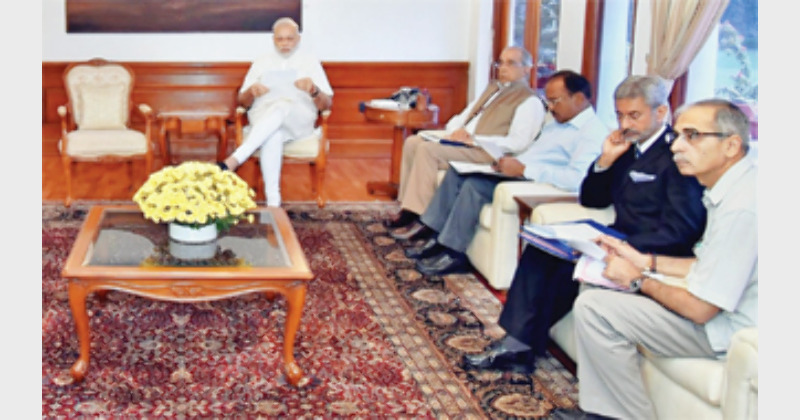
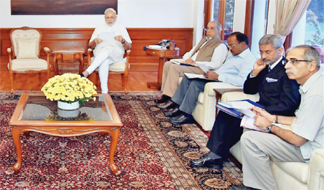
 Soon after the Uri attack, The Prime
Minister  had chaired a review meeting of
56-year-old Indus Water Treaty during which it was decided that India will “exploit to the
maximum” the water of Pakistan-controlled rivers, including Jhelum, as per the water-sharing pact.
India’s strong stance over the matter apparently rattled Pakistan which also made a vain attempt to involve the World Bank to ease the tension between the two countries.
After Pakistan’s renewed invitation for talks,  India, however, relented in a small measure and decided to take part in the next round of talks of the Permanent Indus Commission
scheduled to take place this month in Lahore.
The regular meetings of the Commission deal with technical matters concerning implementation of the treaty and do not
tantamount to “talks” between the two governments in any way.
So far,  the Commission has met 112 times ever since 1960 when the Indus Water Treaty was signed between the two countries. Under the pact, New Delhi can use up to 20 per cent of the water of the Indus, Jhelum and Chenab that first flows through its territory for agriculture, transport and power generation. But India uses a very small proportion of this entitlement.
The treaty also lets India construct water storage facilities on the three western rivers that can hold 3.6 MAF (million acre feet) water. But no storage has been developed so far. India may withdraw from the Chenab Main such waters as India may need for Agricultural Use on the following canals limited to the maximum withdrawals noted against each.
India may make additional withdrawals through the Ranbir Canal up to 250 cusecs for hydro-electric generation on condition that the waters so withdrawn are returned to The Chenab.
India has made it clear that it was exploring ways to fully use its rights under the treaty including improving storage capacity on this side of the border.
Pakistan last year made a vain attempt to drag the World Bank into the matter. The Bank initially started the process to appoint a neutral expert to look into the dispute but later halted the process after India’s objections.  
ShareTweetSendShareSend
✮ Subscribe Organiser YouTube Channel. ✮
✮ Join Organiser's WhatsApp channel for Nationalist views beyond the news. ✮
Previous News

Ex-Comrade : Hatemongers, you have nothing to lose

Next News

Opinion : IWT: Time to Review

Related News

West Bengal: Sanatan Sanskriti Sansad’s Gita Path Sees 6.5 Lakh Hindus Recite the Gita in Kolkata

(L) Panakkad Munavarali Shihab Thangal (R) Fathima Nargese

Kerala: Muslim League leader’s 16 years old daughter Fathima Nargese backs women entry into Mosques, father disputes

Pakistani traders protest mounting losses as prolonged border closures disrupt regional commerce and strain ties with Kabul

Taliban strike back as Pakistan border shutdown with Kabul choke trade routes and trigger protest at home

The doctrine of Geeta diplomacy

The Doctrine of Gita Diplomacy: Culture, strategy and the evolving global connect of India

Defence Minister Rajnath Singh speaks post inaugurating the infrastructure projects of BRO in Leh

Defence Minister Rajnath Singh hails the role of BRO in revolutionising communication & connectivity in border regions

Dismantling the threat of white-collar terrorism

The white terror module and the need for de-radicalisation of campuses

Load More

Comments

The comments posted here/below/in the given space are not on behalf of Organiser. The person posting the comment will be in sole ownership of its responsibility. According to the central government's IT rules, obscene or offensive statement made against a person, religion, community or nation is a punishable offense, and legal action would be taken against people who indulge in such activities.

Latest News

West Bengal: Sanatan Sanskriti Sansad’s Gita Path Sees 6.5 Lakh Hindus Recite the Gita in Kolkata

(L) Panakkad Munavarali Shihab Thangal (R) Fathima Nargese

Kerala: Muslim League leader’s 16 years old daughter Fathima Nargese backs women entry into Mosques, father disputes

Pakistani traders protest mounting losses as prolonged border closures disrupt regional commerce and strain ties with Kabul

Taliban strike back as Pakistan border shutdown with Kabul choke trade routes and trigger protest at home

The doctrine of Geeta diplomacy

The Doctrine of Gita Diplomacy: Culture, strategy and the evolving global connect of India

Defence Minister Rajnath Singh speaks post inaugurating the infrastructure projects of BRO in Leh

Defence Minister Rajnath Singh hails the role of BRO in revolutionising communication & connectivity in border regions

Dismantling the threat of white-collar terrorism

The white terror module and the need for de-radicalisation of campuses

Lok Sabha to hold special discussion on 150 years of Vande Mataram

150 years of Vande Mataram: Winter session of Lok Sabha to hold special discussion on Dec. 8; PM Modi to address

India is marching towards Atmanirbharta in defence

Atmanirbharta in Defence: India’s defence manufacturing takes off

Defence Minister Rajnath Singh extends greetings on the occasion of Armed Forces Flag Day

Defence Minister Rajnath Singh extends greetings on Armed Forces Flag Day; Urges people to donate to AFFD Fund

Representative Image

SIR for protecting the health of democracy

Load More
  • Privacy
  • Terms
  • Cookie Policy
  • Refund and Cancellation
  • Delivery and Shipping

© Bharat Prakashan (Delhi) Limited.
Tech-enabled by Ananthapuri Technologies

  • Home
  • Search Organiser
  • Bharat
    • Assam
    • Bihar
    • Chhattisgarh
    • Jharkhand
    • Maharashtra
    • View All States
  • World
    • Asia
    • Africa
    • North America
    • South America
    • Europe
    • Australia
  • Editorial
  • Operation Sindoor
  • Opinion
  • Analysis
  • Defence
  • Culture
  • Sports
  • Business
  • RSS @ 100
  • Entertainment
  • More ..
    • Sci & Tech
    • Vocal4Local
    • Special Report
    • Education
    • Employment
    • Books
    • Interviews
    • Travel
    • Health
    • Politics
    • Law
    • Economy
    • Obituary
  • Subscribe Magazine
  • Read Ecopy
  • Advertise
  • Circulation
  • Careers
  • About Us
  • Contact Us
  • Policies & Terms
    • Privacy Policy
    • Cookie Policy
    • Refund and Cancellation
    • Terms of Use

© Bharat Prakashan (Delhi) Limited.
Tech-enabled by Ananthapuri Technologies