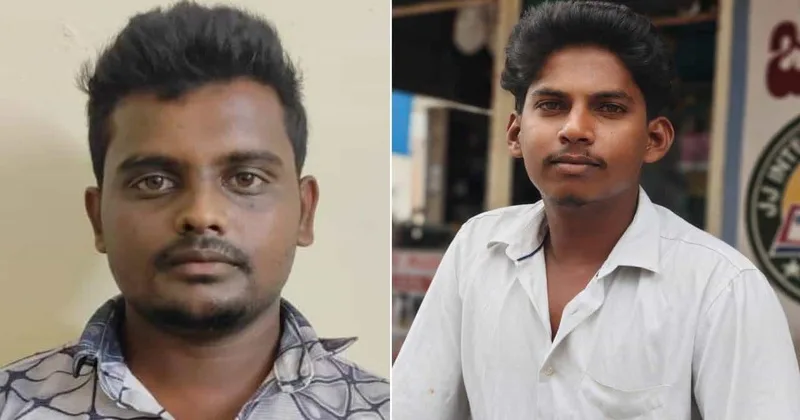
Digital jihad trail exposed: Jameer Khan and Alla Bhakshu arrested
June 7, 2026
  • Read Ecopy
  • Circulation
  • Advertise
  • Careers
  • About Us
  • Contact Us
Android AppiPhone AppArattai
Organiser
  • ‌
  • Bharat
    • Assam
    • Bihar
    • Chhattisgarh
    • Jharkhand
    • Maharashtra
    • View All States
  • World
    • Asia
    • Europe
    • North America
    • South America
    • Africa
    • Australia
  • Editorial
  • International
  • Opinion
  • RSS @ 100
  • More
    • Op Sindoor
    • Analysis
    • Sports
    • Defence
    • Politics
    • Business
    • Economy
    • Culture
    • Special Report
    • Sci & Tech
    • Entertainment
    • G20
    • Azadi Ka Amrit Mahotsav
    • Vocal4Local
    • Web Stories
    • Education
    • Employment
    • Books
    • Interviews
    • Travel
    • Law
    • Health
    • Obituary
  • Subscribe
    • Subscribe Print Edition
    • Subscribe Ecopy
    • Read Ecopy
  • ‌
  • Bharat
    • Assam
    • Bihar
    • Chhattisgarh
    • Jharkhand
    • Maharashtra
    • View All States
  • World
    • Asia
    • Europe
    • North America
    • South America
    • Africa
    • Australia
  • Editorial
  • International
  • Opinion
  • RSS @ 100
  • More
    • Op Sindoor
    • Analysis
    • Sports
    • Defence
    • Politics
    • Business
    • Economy
    • Culture
    • Special Report
    • Sci & Tech
    • Entertainment
    • G20
    • Azadi Ka Amrit Mahotsav
    • Vocal4Local
    • Web Stories
    • Education
    • Employment
    • Books
    • Interviews
    • Travel
    • Law
    • Health
    • Obituary
  • Subscribe
    • Subscribe Print Edition
    • Subscribe Ecopy
    • Read Ecopy
Organiser
  • Home
  • Bharat
  • World
  • Operation Sindoor
  • Editorial
  • Analysis
  • Opinion
  • Culture
  • Defence
  • International Edition
  • RSS @ 100
  • Magazine
  • Read Ecopy
Home Bharat

Karnataka: Digital jihad trail exposed: Jameer Khan and Alla Bhakshu arrested, links traced to Pakistan

Tumakuru police, acting on intelligence inputs, arrested two Karnataka youths for allegedly maintaining contact with Pakistan-based wanted terror suspect Rana Uneen. Investigators say the suspect used Instagram, X and WhatsApp groups to gradually build trust, spread grievance-based narratives and allegedly radicalise recruits, exposing a sophisticated online recruitment and indoctrination network.

IndreshIndresh
Jun 6, 2026, 07:07 am IST
in Bharat, World, Asia, Karnataka
Follow on Google News
Jameer Khan and Alla Bhakshu arrested in Pakistan-linked terror probe

Jameer Khan and Alla Bhakshu arrested in Pakistan-linked terror probe

FacebookTwitterWhatsAppTelegramEmail

Tumakuru : The arrest of two Karnataka youths for their alleged links with Pakistan-based wanted terror suspect Rana Uneen has brought to light a disturbing pattern of online radicalisation and recruitment that security agencies believe is increasingly being used to target vulnerable young Indians.

While the investigation is still in its preliminary stages, officials say the case reveals a carefully designed modus operandi in which social media platforms are allegedly used to identify, engage and gradually influence individuals before introducing extremist narratives. The Tumakuru case has now become a major focus for intelligence agencies attempting to understand the scale of such online networks.

According to investigators, the process did not begin with direct discussions about violence or anti-national activities. Instead, the alleged recruitment strategy relied on patience, trust-building and emotional engagement.

First contact through social media

Police sources indicate that the two arrested youths — Allabaksh from Tumakuru and Zameer Khan from Davanagere — were first approached through Instagram. What appeared to be ordinary online interactions slowly evolved into regular conversations.

Security officials believe that social media platforms have become a preferred tool for such operations because they allow recruiters to identify potential targets, study their interests and initiate conversations without attracting immediate suspicion.

Read More: India reiterates strong resolve to deport illegal Bangladeshis; Flags delay of bilateral procedures from Dhaka

Investigators say the suspect allegedly used multiple online platforms to maintain communication. After the initial contact on Instagram, conversations reportedly shifted to X and later to private WhatsApp groups where discussions became more frequent and organised.

Building trust before pushing ideology

According to preliminary findings, the WhatsApp groups did not initially focus on controversial or extremist content. Instead, discussions allegedly revolved around religion, social issues, community welfare and messages promoting unity among members of the community.

Investigators believe this phase was designed to establish credibility and gain the trust of participants. By presenting himself as someone concerned about religious and social issues, the suspect allegedly attempted to create a sense of belonging among group members.

Security experts often describe such tactics as “gradual indoctrination,” where individuals are first drawn into seemingly harmless discussions before being exposed to more radical viewpoints.

Officials involved in the investigation say the conversations reportedly became more emotionally charged over time. Discussions allegedly began highlighting incidents involving members of the Muslim community and emphasising perceived injustices.

Shift towards grievance-based narratives

Investigators claim that once trust had been established, the nature of the discussions changed significantly.

The suspect allegedly began encouraging participants to view certain incidents through a lens of victimhood and collective grievance. Authorities believe this was intended to create emotional reactions and strengthen group identity.

One of the topics reportedly discussed was the killing of a religious leader in Pune. According to police sources, conversations allegedly included references to revenge and retaliation.

Officials say such narratives are commonly used in online radicalisation efforts because they seek to transform personal emotions into collective anger. The objective, investigators believe, is to create an environment in which extreme ideas gradually appear acceptable to participants.

Creation of a closed digital ecosystem

Another aspect that has attracted the attention of investigators is the use of private messaging groups.

Unlike public social media posts, encrypted messaging platforms provide a relatively secure environment for prolonged discussions. Authorities suspect the WhatsApp group functioned as a controlled digital space where members could be influenced without outside scrutiny.

Investigators are now examining whether similar groups exist elsewhere and whether individuals from other states may have been connected to the same network.

The probe is also focused on identifying administrators, active participants and individuals who may have played a role in circulating content within the group.

Intelligence agencies detect suspicious activity

The alleged network came under scrutiny after central intelligence agencies detected suspicious communications and alerted Tumakuru police.

Based on specific intelligence inputs, police launched a coordinated operation that resulted in the arrest of the two youths. Investigators subsequently began analysing digital evidence, including mobile phones, chat histories and social media records.

Officials are attempting to determine whether the accused were merely participants in online discussions or whether they were being prepared for a larger role within the network.

Emerging threat of online radicalisation

Security agencies view the case as a reminder of how recruitment methods have evolved in the digital age.

Unlike traditional extremist networks that relied on physical meetings and personal introductions, modern recruiters can reach potential targets from across international borders using smartphones and social media applications.

Experts note that such operations often follow a predictable pattern: identify potential recruits, establish trust, reinforce a shared identity, amplify grievances, isolate participants within closed online communities and gradually introduce radical narratives.

Investigators believe the Tumakuru case may fit several elements of this pattern, though the full extent of the alleged conspiracy will become clear only after detailed forensic examination of digital evidence.

As the investigation continues, authorities are working to uncover Rana Uneen’s broader network, his alleged organisational links and the number of individuals who may have come into contact with him through various online platforms. The case has once again highlighted the growing challenge faced by security agencies in combating digital radicalisation and preventing hostile actors from exploiting social media to influence young minds.


 

Topics: Digital JihadTumakuru policeRana UneenPakistan
ShareTweetSendShareSend
✮ Subscribe Organiser YouTube Channel. ✮
✮ Join Organiser's WhatsApp channel for Nationalist views beyond the news. ✮
Previous News

Amit Shah at Bangladesh Border: “India will have an impregnable security grid soon”

Next News

Punjab Hostel Terror Module Busted: NIA Court Sentences Zahid, Yasir, and Mohammad Idris sentenced to jail

Related News

India’s Permanent Representative to the United Nations Ambassador Harish Parvathaneni

India slams Pakistan at UNSC for peddling false narratives on Jammu & Kashmir

India slams Pakistan’s bid to hold elections in Gilgit-Baltistan, demands end to illegal occupation

As Khalistani networks seek new platforms beyond the West, Azerbaijan has emerged as a key venue for conferences, campaigns and narratives aligned with the Pakistan-Turkey axis against India.

Khalistan’s New Grazing Ground: Azerbaijan emerges as new hub for Turkey-Pakistan backed anti-India networks

Bangladesh’s reported JF-17 push has triggered fresh scrutiny after India’s Ops Sindoor exposed the vulnerabilities of Pakistani-Chinese defence systems and precision strike capabilities

Shadows of Operation Sindoor: Questions loom over Bangladesh’s JF-17 ambitions amid Sino-Pakistani tech vulnerabilities

Kawagoe Mosque Row: Pakistan faces embarrassment as Japan orders demolition of illegally built mosque

Representative Image

Britain’s Grooming Gangs: Survivors demand justice as chilling testimonies shake UK’s Parliament

Load More

Latest News

Beneath the Minaret: The Hindu and Jain legacy burried under Qutub Minar

How Ramrajya and Kautilya’s Saptang model can build a prospering civilisation

Why invading empires hated them?

A representative image generated using AI

Hindu Hate Watch-A Weekly Tracker: 46 Incidents of violence, religious persecution, conversion recorded this week

Beyond NEET & CUET: The growing crisis of trust in India’s entrance tests; Decoding lasting solutions

West Bengal Set for Bullet Train Project, Says Railways Minister

Massive Rail Boost for West Bengal: Bullet train, 60 new metro rakes and Rs 14,205 crore allocation announced

Uttar Pradesh Chief Minister Yogi Adityanath reviewing meeting for upcoming Tourist Circuit

UP Charts New Tourism Vision: From Chhatrapati Shivaji Maharaj Museum to Vindhyachal Circuit

Visuals from the site of protest in Jantar Mantar

From ‘Azadi’ slogans to disrespect of national flag: Inside the Cockroach Janta Party protest at Jantar Mantar

Chairman of the Rastriya Swatantra Party of Nepal Rabi Lamichhane meets PM Modi in New Delhi

From the China Card to Development Diplomacy: Nepal opens a new chapter in its political reset with India

'Stand Up for Abhishek': Expelled TMC MLA Claims Party Was Asked to Applaud Mamata's Nephew After Crushing Election Defeat

West Bengal: Expelled TMC MLA Ritabrata claims party was asked to applaud Mamata’s nephew after crushing defeat

Load More
  • Privacy
  • Terms
  • Cookie Policy
  • Refund and Cancellation
  • Delivery and Shipping

© Bharat Prakashan (Delhi) Limited.
Tech-enabled by Ananthapuri Technologies

  • Home
  • Search Organiser
  • Bharat
    • Assam
    • Bihar
    • Chhattisgarh
    • Jharkhand
    • Maharashtra
    • View All States
  • World
    • Asia
    • Africa
    • North America
    • South America
    • Europe
    • Australia
  • Editorial
  • Operation Sindoor
  • Opinion
  • Analysis
  • Defence
  • Culture
  • Sports
  • Business
  • RSS @ 100
  • Entertainment
  • More ..
    • Sci & Tech
    • Vocal4Local
    • Special Report
    • Education
    • Employment
    • Books
    • Interviews
    • Travel
    • Health
    • Politics
    • Law
    • Economy
    • Obituary
  • Subscribe Magazine
  • Read Ecopy
  • Advertise
  • Circulation
  • Careers
  • About Us
  • Contact Us
  • Policies & Terms
    • Privacy Policy
    • Cookie Policy
    • Refund and Cancellation
    • Terms of Use

© Bharat Prakashan (Delhi) Limited.
Tech-enabled by Ananthapuri Technologies