Ajay Bhardwaj
The cacophony in the Parliament which invariably sees seriousness of matter being drowned in the din of shouting, or the chaotic and confusing shrillness one sees when a public debates erupts on contentious matters like reservation or nationalism just reminds one of the culture of dialogue and discussion that Bharat used to have long time ago.
In our culture there has been a cherished tradition of “vaad” and “samvaad”, to engage in debate and discussion, of intellectual pluralism and generosity that informed Bharat”s ancient past and allowed churning of thought.
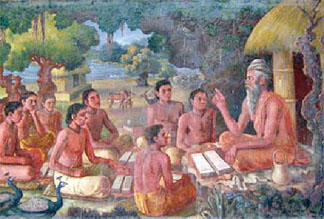
How throbbing and mentally nourishing it might have been in the Vedic and post-Vedic period when sages and seers , huddled under a banyan tree, would deliberate on matters that touch on human and cosmic life. Discussing them thread-bare, and arriving at conclusions that would essentially be in consonance with their respective convictions.
A natural outcome of it were the Upanishads, which recorded a series of dialogue between a guru and his disciple. There is a touch of curiosity and aspiration to seek Truth through dialogue.
Undoubedtly the core of it all has been, “Vaade vaade jayete satya bodh” (through dialogue one realises the truth).
How else could we have “Prashanopnishad”, an Upanishad that commences with questions ?
The tradition of “samvaad” did not essentially mean consensus on any viewpoint. It simply implied a debate, a discussion in all earnestness. It meant that before arriving at any conclusion, be it about the cosmos, God, or matters of life, the subject must have an honest and intense discussion with honest argumentative reasoning, bereft of shrill and loud aggression.
No wonder we have divergent schools of philosophy which tend to define life and universe in their respective ways. Be it the school of Dvaita, Advaita or Vishishta Advaita or even Samkhaya.
In the same breath, if we had Charvak, propounding an Epicurean philosophy of eat, drink and be merry, we also had another school of philosophy that harps in long details and enunciates complete renunciation.
It all sprung from the tradition of seeking the truth one’s own way. The curiosity to realise the truth on your own, and not as told by someone else.
In this tradition, if we had Gargi in her argumentative best engaged with Rishi Yajnavalkya, we also had Arjun locked in a prolonged dialogue with Lord Krishna before he takes a plunge into the Kurukshetra battle.
The Bhagwadgita dialogue between Lord Krishna and Arjun marks, perhaps, an epitome in this culture. The guru (Lord Krishna) does not treat Arjun with contempt. He does not just order him to jump into the battle. He takes a fairly good comprehension of the dilemma that seizes Arjun and takes him along on a spiritual sojourn, makes him wade through various streams of philosophy that should have, in a normal course, dispelled his scepticism
And delivers a succinct discourse in the fourth chapter saying “Tadvidhhi pranipaten pariprshnen sevaya, updekshyante te gyanam gyaninastatvadarshinah” (Understand the true nature of that Knowledge by approaching seers of Truth. If you prostrate at their feet, render them service, and
question them with an open and guileless heart, those wise seers of Truth will instruct you in that Knowledge)
(Bhagavadgita 34-4)
‘Question with a guileless heart’ is the bottom line. But question you must.
Something that Swami Vivekananda did in his times. Something that all those who wrote their commentaries on Shrimad Bhagavadgita tried to do. Be it Bal Gangadhar Tilak or Shri Aurbindo or even Vinobha Bhave.
Isn’t it time we revive our “vaad” “samvaad” tradition that has been core of the Bharatiya ethos?