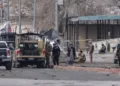
District and Sessions Judge Abdul Hakeem Kakar and his guard were gunned down on Thursday, while another judge was among two injured when they came under attack while heading to Mastung in Balochistan. Judge Kakar and Additional Sessions Judge Tariq Lashari were on their way to Mastung from Quetta when unknown armed men attacked the vehicles they were in, Balochistan Home Department’s aide Babar Yousafzai has said.
The armed men targeted Kakar and others at Wali Khan crossing, killing him and his guard on the spot, Yousafzai said. He added that the two injured, including Lashari, were taken to a hospital in Mastung, according to a report in Dawn newspaper.
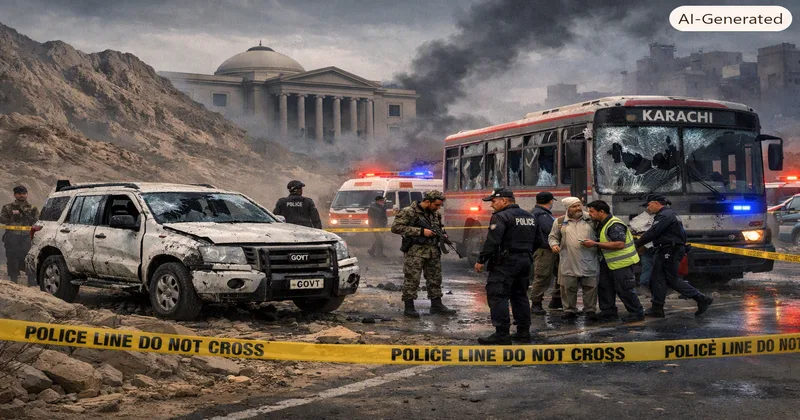
The incident comes a day after three people were killed and five others were injured in a gun attack on a Karachi-bound passenger bus and a bridge on the national highway was blown up in Mastung’s Khud Kocha area. Subsequently, authorities imposed an indefinite curfew in the Khud Kocha sub-tehsil from 9 pm on Wednesday.
Thursday’s attack also follows security forces killing three Baloch armed rebels this week in Mastung, where the Inter-Services Public Relations (ISPR) has claimed that two suicide bombers and their facilitator were also apprehended. Another seven armed rebels fighting for Balochistan’s independence from Pakistan were eliminated in Surab district.
Baloch rebels target transport vehicles, infrastructure
Security concerns have heightened in Balochistan after a spate of major attacks took place earlier this month, which have led to security forces launching operations across the province.
Among the operations was Operation Shaban, in which 91 armed rebels were killed between July 5 and July 16, according to security sources cited by state media. This took the tally of the rebels eliminated in operations across the province since July 5 to 129.
Earlier, three excise officials were abducted at gunpoint following an attack on their department’s check-post on the Dalbandin–Taftan Highway in Balochistan’s Chagai district, the police has said. According to the sources, the attack was carried out by unidentified men on a couple of days ago.
They said around 30 armed men surrounded the check-post that was set up temporarily for routine checking, held the officials on duty at gunpoint and later abducted them. The sources added that the attackers also took away two official vehicles and weapons.
3 Excise officials kidnapped, remain missing
So far, till the afternoon of July 23, there was no information available with the officials about the fate of these abducted men. It is a new trend witnessed in the past few months that the government officials are kidnapped, warned and then let off. In some cases, particularly those suspected by armed Baloch rebels to be working for intelligence or security agencies, have been executed.
Police and other law enforcement personnel rushed to the site after being informed of the incident and cordoned off the area, the sources said, adding that a search operation has been launched to trace the attackers and ensure the safe recovery of the abducted officials.
They said an investigation was under way to ascertain the identity of the assailants and determine the route they used to flee.
The incident takes place as Balochistan continues to face security challenges.
Transport sector has been particularly hit as it has drawn the ire of the Baloch Liberation Army (BLA) in recent months. The BLA has repeatedly issued warnings to Punjab transporters against plying their vehicles in Balochistan, particularly for transporting minerals to outside destinations, some reports in The Balochistan Post.
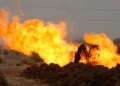
Many times, the BLA has set up temporary check posts in remote areas, stopping heavy vehicles and burnt down several of them. In recent months, highways stretching across Balochistan have witnessed a series of attacks on trucks transporting minerals and commercial cargo. From Noshki and Chagai to Panjgur and Mastung, dozens of vehicles have reportedly been damaged, seized or set ablaze, causing millions of rupees in losses and prompting transporters to stage strikes across the province.
Transport sector representatives say the attacks have reached an unprecedented scale. Noor Muhammad Shahwani, a transporter leader, stated that in one week alone 12 trucks were attacked, eight of which were completely destroyed. According to him, transporters suffered losses amounting to approximately Rs180 million from those vehicles alone. Similar incidents have continued to be reported along the Quetta-Taftan Highway and other routes linking western Balochistan to Karachi.
Minerals remain focus of various groups
The attacks have largely targeted vehicles involved in transporting minerals and natural resources from Balochistan, according to claims made by pro-independence Baloch armed groups, particularly the BLA. Pakistani authorities reject these claims and maintain that a range of commercial vehicles, including those carrying food and agricultural products, have also been affected.
The incidents have occurred as Islamabad seeks to accelerate investment in Balochistan’s mineral sector. The federal government has announced additional security measures, including the establishment of a new Frontier Corps West headquarters tasked with protecting strategic projects and transportation routes. Prime Minister Shehbaz Sharif has described the initiative as part of efforts to create a secure corridor for investment linked to Balochistan’s mineral wealth.
The increasing attacks on transport vehicles have generated concern not only because of the immediate losses incurred by transporters but also because they are taking place at a time when Pakistan’s trade geography is undergoing a significant transformation.
Overland corridors that kept economy ticking
For decades, Pakistan relied on three major overland corridors to connect with neighbouring markets and regional trade networks. The eastern corridor linked Pakistan to India, one of the largest consumer markets in the world. The north-western corridor through Afghanistan provided access to Afghan markets and served as Pakistan’s gateway to the five Central Asian republics. The western corridor through Balochistan connected Pakistan with Iran but traditionally played a secondary role compared to the other two routes.
Pakistan’s total international trade is estimated at approximately $133 billion annually. Exports account for roughly $32 billion to $36 billion, while imports range between $56 billion and $78 billion. Sustaining this trade requires access to reliable transit routes connecting Pakistan with regional and global markets. However, developments over the last several years have significantly narrowed Islamabad’s options.