Taking a thread from Reformation Movement in christianity, Tufail Ahmad suggests practical vision for reforming Islam in india
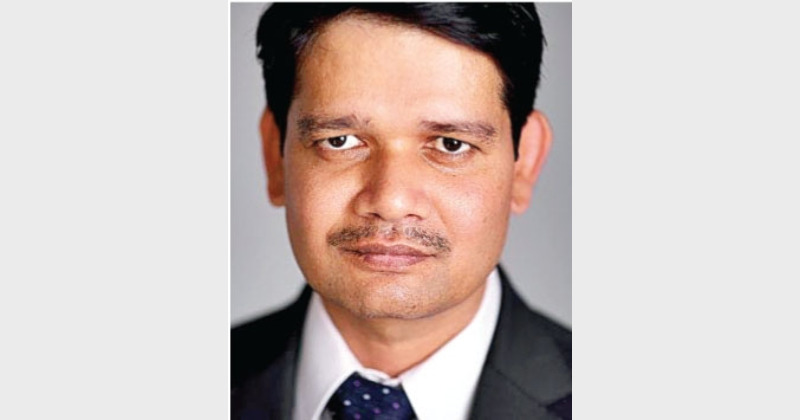
Tufail Ahmad
The term “Reformation” is generally understood in the context of the Reformation movement launched by Martin Luther (1481–1546) – a German theologian, teacher and monk. In 1517, Luther wrote “Disputation on the Power of Indulgences” – also known as 95 Theses – in which he questioned many practices of the Christian clergy. Although the 95 Theses were seen by the church as a challenge to the Pope's authority, they led to the birth of the Reformation movement in Christianity. Luther was later excommunicated by the Pope, a fate met by most reformers.
For Islamic reformation, a similar attempt must be made by Islamic clerics, especially those who live and breathe in vibrant democracies like India. There are two terms in popular use such as maulvi (Islamic cleric who is slightly less educated) and ulema (Islamic scholars who are better
educated) to identify a class of practitioners who exercise total control on the worldview of Muslims. It is
primarily their duty to re-examine original Islamic texts and begin a process of rejection of those Islamic teachings which are no longer compatible with democratic tenets.
Such an original work cannot be done without inviting the wrath of the ulema. Such work can also not be done anywhere in the Islamic world, if it cannot be done in a free society like India. It is also possible that much like Luther; such a serious Islamic researcher will be excommunicated by the Muslim clergy.
At present, it does not appear that there is any scholar, other than Sultan Shahin of NewageIslam.com, who is doing any significant intellectual work the corpus of which could birth Islamic Reformation in India. Here, the first premise is that re-interpreting religious texts can unleash change among Muslims.
However, India does have legacy of reform. A serious effort was made by Sir Syed Ahmad Khan (1817-1898) who founded the Mohammedan Anglo-Oriental College, now known as the Aligarh Muslim University (AMU). After the fall of Delhi in 1857, Sir Syed took a serious look of the educational backwardness among Indian Muslims and called for inculcating a rational attitude of mind among them. For this purpose, he established the Scientific Society and also launched a magazine called Tahzib-ul-Akhlaq, which is
published even now. But insofar as Sir Syed's original message of inculcating a scientific temper among Muslims is concerned, the AMU as well as Tahzib-ul-Akhlaq have been a complete failure. In fact, the AMU has failed to
create freethinkers.
However, Martin Luther and Sir Syed lived in pre-democracy times in which their minds could apparently think within the limits of the intellectual context of their era. It will be unreasonable to expect them to grasp the tenets of modern democracy, which began flourishing after the Second World War and entered a serious intellectual competition against other forms of government after the Islamic Revolution of Iran in 1979. The Iranian Revolution, led by the theocrat Ayatollah Khomeini, perhaps for the first time created in the popular
imagination a conflict between democratic values and theological roadblocks involving free speech and gender equality.
The only person who fully grasped the norms and values of the modern democratic age was Hamid Dalwai (1932–1977), a reformer from Maharashtra. Hamid Dalwai's was an activist, writer and a thinker whose writings interpret current events in terms of individual rights and democratic tenets. Unfortunately, most of his writings are in Marathi and therefore inaccessible to a wider audience. All other so-called reformist writers in India continue to be limited in their thinking by Marxism and the Quran. Their writings do not indicate that human liberty is the cornerstone of their thought.
Another premise for Islamic reformation is this: The Quran and Hadiths are not going to change. So, is there a way to introduce change among Muslims? Based on this, advocates for reform need to look into non-Islamic subjects such as democracy, education and sports to develop options for the government to ensure that the progress of Muslims can be ensured. However, India's Hindu leaders are surrounded by Islamists, who pose themselves as moderate Muslims and Islamic clerics, are least honest about their understanding of Islam. They
successfully convince the policymakers that organising a Sufi conference can herald reform among Muslims.
So, one of the proposals nowadays being mooted by a hereditary trustee of the Ajmer Sharif shrine is that the government should run a countrywide train on Sufism. There cannot be a bigger joke on Indian Muslims that running a Sufi train can usher in an era of reform, especially since suicide bombers are known to have also come from the Sufi school of Islam. Sufism prepares the ground in which the seeds of extremism are rooted. However, if the government wants to send a symbolic message to Muslims, it should better choose to run a Sania Mirza Express train from Hyderabad to Ajmer Sharif.
So what should be done?
First, instead of spending crores of rupees of Indian taxpayers' money on organising a Sufi conference and
hosting Islamic clerics at the Prime Minister's office, the government should organise a series of cycling competitions for Muslim girls in pre-dominantly Muslim regions. The Change can come through promoting totally non-Islamic subjects and activities such as cycling, boxing and wrestling.
Second, the government should cut off funding to the Faculty of Theology (which runs the department of Sunni theology and the department of Shia theology) at the AMU and divert it to the Rashtriya Muslim Manch to
organise a mathematics Olympiad for Muslim youths in predominantly Muslim towns. Similarly, the governments should stop funding Islamic
studies departments at all universities, though sociological studies of the Muslim situation in India should indeed be taught in the existing departments of sociology and political science. It is not the duty of the secular Indian republic to teach theology.
Third, most Muslim children are being taught Islamic literature such as the Quran, Hadiths as well as Arabic language from the very early age of around three. In India, the right to education is a fundamental right, which does not mean the teaching of theology. A fundamental right to education means that Muslim children, aged 6-14 under the Right to Education Act (RTE), must be in proper schools, not in madrassas.
Kapil Sibbal, as the human resource development minister, granted an exemption to madrassas under the RTE. This exemption must be eliminated. All madrassas should be classified as non-schools and children should be sent to government schools. The right to education is a fundamental right; the RTE itself is not a fundamental right and can be re-written on priority. A secular state like India cannot fund religious education at madrassas simply because these institutions add the teaching of computer science to their syllabi.
Four, there is an urgent need to introduce a two-year military service for all Indian citizens above the age of 18 years of age, including for Muslim women. A military service not only inculcates a sense of national integration, it also empowers an individual to claim and exercise their liberty in daily life. Such a service will promote gender equality in our national life. However, before the government can introduce such a national service, there is a need for discussing on this subject in the media with other stakeholders. Only popular opinion can create support for politicians to boldly advocate and legislate in favour of military service.
Five, the government must introduce three sets of books from Grade I to XII. One set of books for I to XII should be called “Who We Are” or “We the People of India” – these should teach about our civilisational history, Indian classics and classical thinkers, including key Muslim thinkers of the Muslim era, right through to the present age. A second set of books could combine existing books about social ethics and religion. Children should be introduced to the idea of god as believed by Zoroastrians, Jews, atheists, Hindus, Muslims, Buddhists, Jains and others. A Muslim child especially needs to learn what atheists and others make of god. A third set of books should introduce basic concepts from mathematics, physics and economics.
Although education is a state subject, this task can surely be accomplished. If Lord Macaulay could do it, Indian democracy is placed well to do it much better.
(The writer is former BBC journalist and presently the Executive Director of the Open Source Institute, New Delhi)