Saurabh Chaudhary
The decisive majority in Britain, that voted to leave the European Union in the recently concluded referendum has caused a major political and economic earthquake, the reverberations of which have been felt around the world. The decision has cost Britain particularly dearly, the Prime Minister, David Cameron, who put his political career on the line and staunchly supported Britain staying within the EU, has announced his resignation. Nicola Sturgeon, the Scottish First Minister, is considering calling a second referendum on Scottish independence, after the Scots overwhelmingly voted to remain in the EU. The stock markets, which rest at the nerve centre of the British economy, the City of London are in free fall and the pound has plummeted to 31 year lows vis a vis the dollar. Furthermore, as the long process of exiting the EU begins, the one thing that made Britain a safe haven for many of the world’s richest citizens, and the nerve centre for the operations of many of the world’s largest financial institutions, political and legal certainty, has been chucked out the window.
The dream of European Unity emerged as a consequence of the devastating effects that the two world wars had on that continent. In 1946, the former British Prime Minister and Nobel Laureate, Sir Winston Churchill outlined the hope for the emergence of a ‘United States of Europe’. This gave birth to the Western European project to create a continent, based on liberal cooperative ideals, free from the scourge of war, which allowed for the free movement of goods, capital, services and people. In 1957, the Schuman plan culminated in the emergence of the European Economic Community, which eventually evolved, in 1992, to become the super state today known as the European Union. The EU was in its initial stages a purely Western European organisation whose members included the prosperous nations that were also by and largely members of NATO, the military bloc composed of America and its allies. Between 2004 and 2013, its membership expanded to include a number of post-Soviet former Warsaw Pact states that included notably, Romania, the Baltic States, Poland and Bulgaria. These countries, it is important to note, were considerably poorer than the Western European nations that have long formed the core of the EU and in the decade or so since, there has been a great deal of migration from these countries, particularly to Britain, France and Germany. Britain alone has about 3 million EU migrants of which nearly 1 million come from a single country; Poland.
This mass migration from the poorer parts of the European Union, coupled with the entry into Europe, of thousands of refugees from the Middle East fleeing the war in Syria are today, presenting credible challenges to the Western liberal ideal as Euroscepticism and ultra-nationalist forces gain traction throughout Europe. Amongst the major proponents of Britain leaving the EU, the leader of the ultranationalist UK Independence Party, Nigel Farage is ironically himself not completely British, being of remote French Huguenot descent with a German wife. The rise of UK Independence Party (UKIP), which until about 10 years ago no one spoke of, is symptomatic of the threat liberal values face throughout Europe as discontent and disquiet threaten to tear the continent apart.
Over the last decade, a number of ultra-nationalist political forces have gained prominence and support throughout the continent. The two common themes that pervade the politics of all these parties are hatred for the ‘other’, the political alien that does not fit into the cultural stream they claim to represent, that of the white Christian native and “Euroscepticism”, i.e., a deep mistrust of the European Union, its policies and its perceived all-powerful bureaucracy. Prominent proponents of this sort of political populism, cast in the same mould as Nigel Farage include Geert Wilders in the Netherlands and Marine Le Pen in France. Regionalism is also gaining traction with calls for independence growing in Catalonia in Spain amongst other places within Europe.
At the other end of the spectrum are the leftist nationalist parties, most of which are pro-EU, but they too inadvertently may prove to be important in hastening its demise and the marginalisation of the liberal internationalist values it has come to represent. A case in point is the Scottish National Party, which has long campaigned for Scottish independence but has only recently become politically relevant, winning both most of the seats that Scotland has in the British National Parliament and forming the devolved Scottish government, which has significant powers. It would not be an unreasonable extrapolation to suggest that should the SNP, which today could very easily be called the most prominent political party in Scotland, perceive that Scotland’s interests were somehow being hurt within the EU that it could turn against that very organisation that it is today fighting to keep Scotland within.
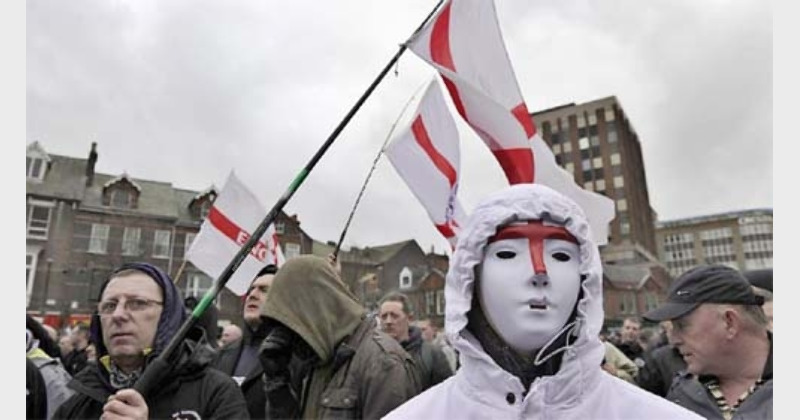
The last decade has also seen the rise of a number of hate crimes and demonstrations against immigrant communities, with a number of rallies being held across Europe, and prominently in Germany against immigration from the Middle East. The Brexit vote has also led to a wave of attacks on immigrants from both within and outside the EU, across the UK, which the Prime Minister has condemned. Cases in point include the recent attack on a BBC reporter of Indian origin and the beating up of two Polish men in East London, barely a day after the results of the referendum were announced.
All of these developments are worrying signs that demonstrate that the liberal internationalist agenda that emphasised regional cooperation and interdependence on which the European Union was founded is losing sway in the European heartland. This is not to say that a death knell sounds on the political forces that keep Europe together and the European Union politically and economically relevant, it is to emphasise that that the Brexit vote is merely a symptom, that popular political forces, at both the right and left of the spectrum are gaining power that may credibly undermine it and as calls for a Dexit (Denmark’s proposed exit from the European Union) and Frexit (the proposed exit of France from the EU) grow, a domino effect could ensue that may eventually threaten the very existence of the European Union itself.
(The writer is a London-based Law student)
After the #Brexit
– Scotland has threatened to block Brexit
– Spate of racial attacks against immigrants
– Rating agencies downgraded the economy
– The Labour party is in turmoil
– Domino Effect is likely to happen in other EU countries