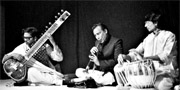
AIR?s Raagam Channel : AIR Opens the Treasure Box
July 5, 2026
  • Read Ecopy
  • Circulation
  • Advertise
  • Careers
  • About Us
  • Contact Us
Android AppiPhone AppArattai
Organiser
  • ‌
  • Bharat
    • Assam
    • Bihar
    • Chhattisgarh
    • Jharkhand
    • Maharashtra
    • View All States
  • World
    • Asia
    • Europe
    • North America
    • South America
    • Africa
    • Australia
  • Editorial
  • International
  • Opinion
  • RSS @ 100
  • More
    • Op Sindoor
    • Analysis
    • Sports
    • Defence
    • Politics
    • Business
    • Economy
    • Culture
    • Special Report
    • Sci & Tech
    • Entertainment
    • G20
    • Azadi Ka Amrit Mahotsav
    • Vocal4Local
    • Web Stories
    • Education
    • Employment
    • Books
    • Interviews
    • Travel
    • Law
    • Health
    • Obituary
  • Subscribe
    • Subscribe Print Edition
    • Subscribe Ecopy
    • Read Ecopy
  • ‌
  • Bharat
    • Assam
    • Bihar
    • Chhattisgarh
    • Jharkhand
    • Maharashtra
    • View All States
  • World
    • Asia
    • Europe
    • North America
    • South America
    • Africa
    • Australia
  • Editorial
  • International
  • Opinion
  • RSS @ 100
  • More
    • Op Sindoor
    • Analysis
    • Sports
    • Defence
    • Politics
    • Business
    • Economy
    • Culture
    • Special Report
    • Sci & Tech
    • Entertainment
    • G20
    • Azadi Ka Amrit Mahotsav
    • Vocal4Local
    • Web Stories
    • Education
    • Employment
    • Books
    • Interviews
    • Travel
    • Law
    • Health
    • Obituary
  • Subscribe
    • Subscribe Print Edition
    • Subscribe Ecopy
    • Read Ecopy
Organiser
  • Home
  • Bharat
  • World
  • Operation Sindoor
  • Editorial
  • Analysis
  • Opinion
  • Culture
  • Defence
  • International Edition
  • RSS @ 100
  • Magazine
  • Read Ecopy
Home Bharat

AIR?s Raagam Channel : AIR Opens the Treasure Box

Our Constitution was made effective on January 26, 1950 so that the tyranny of the majority may not overpower freedoms of the individual. Exactly 65 years later, the tyranny in the name of popular appeal has ended, thanks to the creation of the Raagam channel dedicated to raga music within the All India Radio (AIR)

Archive ManagerArchive Manager
Feb 8, 2016, 01:58 pm IST
in Bharat
Follow on Google News
FacebookTwitterWhatsAppTelegramEmail

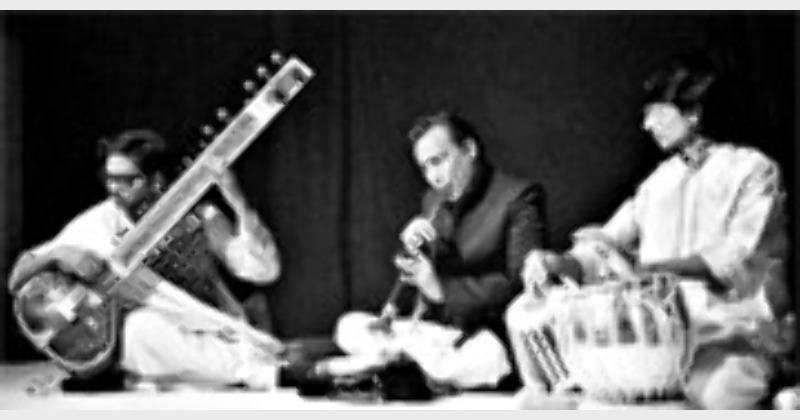
The days are gone when Bharateeya classical music aficionados had to wait until late nights of Saturdays to catch some melodious ragas. All India Radio launched ‘Raagam’, its first 24/7 classical music station on January 26, 2016

Our Constitution was made effective on January 26, 1950 so that the tyranny of the majority may not overpower freedoms of the individual. Exactly 65 years later, the tyranny in the name of popular appeal has ended, thanks to the creation of the Raagam channel dedicated to raga music within the All India Radio (AIR) gamut of music satellite channels.  Yet the ‘Bahujan Hitaya Bahujan Sukhaya’ motto of AIR has been enhanced; Raagam is now available 24×7 on DTH, live streaming on Akashvani website, and the mobile for Windows, Android and iPhone (iOS) application. Now the number of radio channels available to listeners all over has gone up from 12 to 13.
Although AIR boasts of its great reach to ‘99.18 per cent of the population spread over about 91.85 per cent of Bharat through 415 broadcasting stations’ originating programmes in 23 languages and 146 dialects, yet it had rather limited time for classical music until now. The high arts are, after all, tools of our most effective soft power internationally. Thanks to satellite technology it is only now that we can say that a greater completeness has been achieved through Raagam offering greater choice to consumers of music.
This is indeed a shift from a majoritarian approach to a true republican approach. ‘Thanks’ is mainly due to the present government of Bharat for bolstering this initiative; the Raagam satellite radio channel that is already airing quality classical Bharateeya music which a section of the media has termed as “The dream of Prasar Bharati”.
The content is rich but affordable and readily available due to low technology and recurring costs. AIR  is today offering 13 channels to chose music from; regional, Hindi pop, or in AIR’s own words ‘Hindustani Music/Uttaradi Sangeet/North Indian Music and Karnatic Music/ Dakshinaadi Sangeetha/South Indian Music’. Now, one can listen to Bharateeya classical music.  It is also available through AIR’s mobile apps.  
This, represents a new direction in data dissemination; high culture available on one’s palm. The hegemony of the so-called popular music on radio has ultimately ended. Conversely, this is also a true democratisation of classical Bharateeya, a long cherished dream of AIR. In either case, the listener is definitely supposed to be the beneficiary.
The republican approach is not new to Bharat; we see clear evidence that individual land ownership had become a regular practice in the Gupta period which stretched across northern, central and parts of southern Bharat between 320 and 550 CE which is the hallmark of republican approach. It is not a coincidence that the same period is noted for its achievements in the arts, architecture, sciences, religion, and philosophy.
We can hope now only that with Raagam’s introduction signals the end of a 65-year old vanavaas of ancient Bharateeya core cultural values, inflicted by misguided people with a warped idea of culture and civilisation.
I say this with conviction because music has been considered the most divine arts of all.
Classical Music Listeners’ Sigh of Relief
The days are gone when Bharateeya classical music aficionados had to wait until late nights of Saturdays to listen to the coveted national programmes of music to catch some melodious ragas. This was on the presumption that fewer people loved Bharateeya classical music so why cater to their needs.
AIR traces its origins to pre-Independence time when the Telegraph Act was enforced on October 1, 1885. We can understand that the colonial rule may not have encouraged our high arts as much the erstwhile princely states did. But it is strange that for the last 65 plus years of our existence as a free republic, past governments have sidelined our high culture of classical arts and replaced aesthetics with a misplaced sense of utilitarianism. That which is not good for the masses was always out of their agenda. But inclusion of classical music to this easy access mode is significant because it signals as shift from a populist approach to one which has the potential to raise the aesthetic standards of the masses. If they choose to listen to it, they have it right in their palms.
This channel offers classical music renditions from AIR’s gigantic archive; ones which we cannot get in the market. More is literally merrier in this case since this music was relegated to a rarity. Now, firstly, this rarity is a great value listeners will cherish. Secondly, they will agree that a radio transmission of newly recorded material (popular or not, but of some acceptable standards) possesses the freshness value not readily present in recordings available in the marketplace. Thirdly, this is putting to constructive use the largest artiste pool and archival material on Bharateeya classical music that is with AIR.
What Kind of Music
We keep quoting Ludwig van Beethoven as proclaiming, “Music is a higher revelation than all wisdom and philosophy. Music is the electrical soil in which the spirit lives, thinks and invents.” But the question arises what kind of music must humans, plants, and animals be exposed to?
Director of Music Psychology Warren Brodsky Ben-Gurion University of the Negev while summing up his new study of driving music says, “The car is the only place in the world you can die just because you’re listening to the wrong kind of music.” In his new textbook Driving with Music: Cognitive-Behavioral Implications, he writes that we rather choose music/songs with “moderate emotional energy”; that are not too intense.
In their research paper published in International Journal of Modern Engineering Research paper, computer scientists Ram K Nawasalkar and Pradeep K Butey have shown that there is a higher positive effect on human brain after hearing of Bharateeya classical music as compared with other music. Soothing alaaps of ragas are fine even while you drive. I feel this is Raagam’s usp.
Suvratadev Sharmana  V (The writer is a Dhrupad vocalist of the Dagar tradition, senior researcher in music & Sama Veda, music journalist, and an academic)

ShareTweetSendShareSend
✮ Subscribe Organiser YouTube Channel. ✮
✮ Join Organiser's WhatsApp channel for Nationalist views beyond the news. ✮
Previous News

Cover Story : Restrictions in the name of Religion Intolerable

Next News

Special Report/Smart Cities : Reshaping Urban Life

Related News

The book that has triggered controversy

J&K Govt school textbook under Samagra Shiksha triggers row over ‘Indian occupied Kashmir’ references

Zeeshan Mir, a resident of Muzaffarabad district in PoK, is said to have fallen in love with Iram Majeed, a resident of Uri in Jammu and Kashmir

PoK man illegally crosses LoC after contacting Uri woman on Snapchat, repatriated after security probe

A representative image

VB-G RAM G in UP: How new rural employment scheme replaces MGNREGA with 125 days of guaranteed work

Representative Image

Karnataka: BJP submits complaint to state election commission over alleged SIR irregularities

Rashtriya Swayamsevak Sangh (RSS) Sarkaryavah Dattatreya Hosabale addressing the gathering on the occasion of 80 years of Organiser's Foundation Day

Organiser @ 80 | Organiser is a sentinel of national interest and a vanguard of national security: Dattatreya Hosabale

(Left) SJTA Chief Administrator Dr. Arvind Kumar Padhee reviews works at Shri Gundicha Temple in preparation for Rath Yatra 2026 (Right) Construction of the three sacred chariots for Mahaprabhu Jagannath, Balabhadra and Devi Subhadra is progressing steadily ahead of the Holy Shree Gundicha Yatra (Rath Yatra) 2026 in Puri

Odisha: Rath Yatra preparations gain momentum; Gundicha Mandir repairs to finish before festival

Load More

Latest News

The book that has triggered controversy

J&K Govt school textbook under Samagra Shiksha triggers row over ‘Indian occupied Kashmir’ references

Zeeshan Mir, a resident of Muzaffarabad district in PoK, is said to have fallen in love with Iram Majeed, a resident of Uri in Jammu and Kashmir

PoK man illegally crosses LoC after contacting Uri woman on Snapchat, repatriated after security probe

A representative image

VB-G RAM G in UP: How new rural employment scheme replaces MGNREGA with 125 days of guaranteed work

Representative Image

Karnataka: BJP submits complaint to state election commission over alleged SIR irregularities

Rashtriya Swayamsevak Sangh (RSS) Sarkaryavah Dattatreya Hosabale addressing the gathering on the occasion of 80 years of Organiser's Foundation Day

Organiser @ 80 | Organiser is a sentinel of national interest and a vanguard of national security: Dattatreya Hosabale

(Left) SJTA Chief Administrator Dr. Arvind Kumar Padhee reviews works at Shri Gundicha Temple in preparation for Rath Yatra 2026 (Right) Construction of the three sacred chariots for Mahaprabhu Jagannath, Balabhadra and Devi Subhadra is progressing steadily ahead of the Holy Shree Gundicha Yatra (Rath Yatra) 2026 in Puri

Odisha: Rath Yatra preparations gain momentum; Gundicha Mandir repairs to finish before festival

Nagpur, Jul 03 (ANI): Rashtriya Swayamsevak Sangh (RSS) chief Mohan Bhagwat speaks during the conclusion of a series of 100 videos based on the lives of Sangh pracharaks and the release of the 101st episode of the audio-visual series "Asu Ame Sukhane, Patthar Payaatil" to mark the centenary of the Rashtriya Swayamsevak Sangh, in Nagpur on Friday. (ANI Photo)

RSS focuses on character building, not controlling organisations by remote control: Dr Mohan Bhagwat in Nagpur

RSS Sarkaryavah Dattatreya Hosabale

“Unfortunate and painful, true Dharmikta must be restored”: Dattatreya Hosabale

Eleven Years of Digital Innovation Transforming everyday life across India

A Decade of Digital India: Revolutionising payment & healthcare ecosystem; Making everyday life easier for Indians

EPF gets its biggest overhaul in 74 years: What the new rules mean for salaried employees

Load More
  • Privacy
  • Terms
  • Cookie Policy
  • Refund and Cancellation
  • Delivery and Shipping

© Bharat Prakashan (Delhi) Limited.
Tech-enabled by Ananthapuri Technologies

  • Home
  • Search Organiser
  • Bharat
    • Assam
    • Bihar
    • Chhattisgarh
    • Jharkhand
    • Maharashtra
    • View All States
  • World
    • Asia
    • Africa
    • North America
    • South America
    • Europe
    • Australia
  • Editorial
  • Operation Sindoor
  • Opinion
  • Analysis
  • Defence
  • Culture
  • Sports
  • Business
  • RSS @ 100
  • Entertainment
  • More ..
    • Sci & Tech
    • Vocal4Local
    • Special Report
    • Education
    • Employment
    • Books
    • Interviews
    • Travel
    • Health
    • Politics
    • Law
    • Economy
    • Obituary
  • Subscribe Magazine
  • Read Ecopy
  • Advertise
  • Circulation
  • Careers
  • About Us
  • Contact Us
  • Policies & Terms
    • Privacy Policy
    • Cookie Policy
    • Refund and Cancellation
    • Terms of Use

© Bharat Prakashan (Delhi) Limited.
Tech-enabled by Ananthapuri Technologies