Report : Every university should adopt 10 villages for total development—Prof RC Bharadwaj
July 18, 2026
  • Read Ecopy
  • Circulation
  • Advertise
  • Careers
  • About Us
  • Contact Us
Android AppiPhone AppArattai
Organiser
  • ‌
  • Bharat
    • Assam
    • Bihar
    • Chhattisgarh
    • Jharkhand
    • Maharashtra
    • View All States
  • World
    • Asia
    • Europe
    • North America
    • South America
    • Africa
    • Australia
  • Editorial
  • International
  • Opinion
  • RSS @ 100
  • More
    • Op Sindoor
    • Analysis
    • Sports
    • Defence
    • Politics
    • Business
    • Economy
    • Culture
    • Special Report
    • Sci & Tech
    • Entertainment
    • G20
    • Azadi Ka Amrit Mahotsav
    • Vocal4Local
    • Web Stories
    • Education
    • Employment
    • Books
    • Interviews
    • Travel
    • Law
    • Health
    • Obituary
  • Subscribe
    • Subscribe Print Edition
    • Subscribe Ecopy
    • Read Ecopy
  • ‌
  • Bharat
    • Assam
    • Bihar
    • Chhattisgarh
    • Jharkhand
    • Maharashtra
    • View All States
  • World
    • Asia
    • Europe
    • North America
    • South America
    • Africa
    • Australia
  • Editorial
  • International
  • Opinion
  • RSS @ 100
  • More
    • Op Sindoor
    • Analysis
    • Sports
    • Defence
    • Politics
    • Business
    • Economy
    • Culture
    • Special Report
    • Sci & Tech
    • Entertainment
    • G20
    • Azadi Ka Amrit Mahotsav
    • Vocal4Local
    • Web Stories
    • Education
    • Employment
    • Books
    • Interviews
    • Travel
    • Law
    • Health
    • Obituary
  • Subscribe
    • Subscribe Print Edition
    • Subscribe Ecopy
    • Read Ecopy
Organiser
  • Home
  • Bharat
  • World
  • Operation Sindoor
  • Editorial
  • Analysis
  • Opinion
  • Culture
  • Defence
  • International Edition
  • RSS @ 100
  • Magazine
  • Read Ecopy
Home General

Report : Every university should adopt 10 villages for total development—Prof RC Bharadwaj

Archive ManagerArchive Manager
Dec 1, 2015, 12:00 am IST
in General
Follow on Google News
FacebookTwitterWhatsAppTelegramEmail

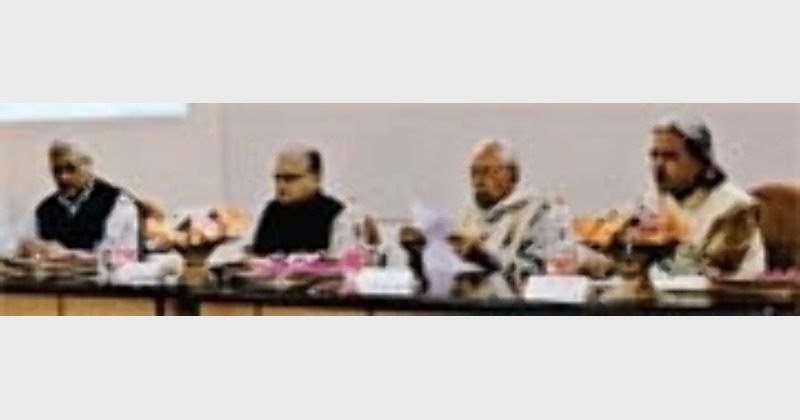
“The objective of education should be overall development of the students. Apart from making them self-reliant through skill development, it should infuse in them the ethical values, that the existing education policy severely lacks,” said Prof Ramesh Chandra Bharadwaj, head of Sanskrit Department in Delhi University, while speaking at a seminar organised to discuss the proposed Education Policy—2015 especially in the context of higher education. The day-long discussion was jointly organised by Sanskrit Department and Shiksha Sanskriti Utthan Nyas on November 24. Around 250 educationists, research scholars and students joined the discussion and shared their views on the proposed education policy.
Introducing the topic, Prof Bharadwaj stressed that every university must adopt at least 10 villages for total development. The universities in urban areas can adopt slums. He also suggested to connect medical colleges with the villages. He said the country’s education system must be rooted to the age old traditions, but it does not mean that it should ignore the modern needs. He also stressed on having exclusive translation sections in every university so that any good book published anywhere in the world can be made available to the students of any language.
Convener of Shiksha Sanskriti Utthan Nyas Shri Dina Nath Batra said education should be autonomous like the Supreme Court and Election Commission. “There should be education in politics but no politics in education so that books are not changed with the change of government. Equally, education should be in the hands of committed educationists and not in the hands of bureaucrats,” he said adding that the objective of education should be social service and not the individual gain. It has been stressed by various Commissions and Committees in the past. “Majority of the graduates which we are producing today are self-centric and are not bothered about social responsibility. This situation must change. Beginning from ‘I’ (self), the education should groom them to ‘we’ (society),” he added.  He said if the University students are connected to villages, there will be no problem of illiteracy, health and cleanliness in the country.
Co-convener of Shiksha Sanskriti Utthan Nyas Shri Atul Kothari stressed on the need to impart education in mother tongue, as one is found more creative in mother tongue than in the alien language. He also suggested that instead of translating books from other languages, we should promote original writing on different subjects. He also said to shun the mentality to leave everything on the part of the government.
Former Pro Vice Chancellor of JNU Prof Kapil Kapur presided over a session. Prominent among those who attended the discussion included noted Hindi writer Shri Apoorvananda, Dean, Faculty of Management in DU Prof ML Singla, Prof Chandrasekhar Dube from SOL, Prof Ramesh Gautam from Hindi Department, Dean, Faculty of Arts Prof. Minni Sawhney, Prof GN Jha from JNU, Dr Ranjeet Thakur from Bhaskaracharya College, etc.
According to Shri Atul Kothari the Shiksha Sanskriti Utthan Nyas has so far organised around 40 discussions all over the country and 10 more are to be conducted before presenting the final report to the government in December end. He pointed out that the Nyas has conducted a survey inviting suggestions from the students and general public. Till now about 4,500 forms have been received and more will be received in coming days.
Talking to Organiser, Prof Ramesh Bharadwaj stressed that education must be liberated from political interference; appointments from vice chancellors to the lecturers should be done through a separate body like the UPSC or a committee headed by judges. The education policy should be students centric. Today it is bureaucracy centred, VC centred, teachers centred and system centred. Students are nowhere in the system. He further emphasised that our education should move forward on the strength of our own Bharateeya languages. Everything should not be imposed through foreign languages.    
— Pramod Kumar
ShareTweetSendShareSend
✮ Subscribe Organiser YouTube Channel. ✮
✮ Join Organiser's WhatsApp channel for Nationalist views beyond the news. ✮
Previous News

Tribute : The Carrier of multi-dimensional Ayodhya Movement

Next News

News Round-up : Protect the indigenous breeds of cows: Shankarlal

Related News

India's Swachh Sagar, Surakshit Sagar 2026 campaign will unite science & public participation to combat marine pollution & protect coastline

Swachh Sagar, Surakshit Sagar: How India’s coastal cleanliness campaign is transforming ocean conservation

Tamil Nadu: TVK govt informs Madras HC of Tiruvannamalai temple commercial complex plan cancellation

Guru Matsyendra Nath: The Mahasiddha who learned Yoga from Bhagwan Shiva and founded the Nath sampradaya

Assam Police becomes Northeast’s first UIDAI verification entity to crack down on fake Aadhaar used by infiltrators

Naxal Arms Dump Recovered in Narayanpur, Chhattisgarh

Massive Maoist Arms dump recovered in Chhattisgarh’s Narayanpur during BSF-police joint operation

LokOS and SHE-LEAPS are digitally empowering rural women and transforming livelihoods under the Deendayal Antyodaya Yojana

LokOS to SHE-LEAPS: The digital governance revolution empowering 10 crore rural women under Deendayal Antyodaya Yojana

Load More

Latest News

India's Swachh Sagar, Surakshit Sagar 2026 campaign will unite science & public participation to combat marine pollution & protect coastline

Swachh Sagar, Surakshit Sagar: How India’s coastal cleanliness campaign is transforming ocean conservation

Tamil Nadu: TVK govt informs Madras HC of Tiruvannamalai temple commercial complex plan cancellation

Guru Matsyendra Nath: The Mahasiddha who learned Yoga from Bhagwan Shiva and founded the Nath sampradaya

Assam Police becomes Northeast’s first UIDAI verification entity to crack down on fake Aadhaar used by infiltrators

Naxal Arms Dump Recovered in Narayanpur, Chhattisgarh

Massive Maoist Arms dump recovered in Chhattisgarh’s Narayanpur during BSF-police joint operation

LokOS and SHE-LEAPS are digitally empowering rural women and transforming livelihoods under the Deendayal Antyodaya Yojana

LokOS to SHE-LEAPS: The digital governance revolution empowering 10 crore rural women under Deendayal Antyodaya Yojana

(L) Sadarul Anam (R) Savaria Besenth

Keralam: UDF, LDF leaders’ absence at Savaria’s final journey after Uzbekistan murder fuels religious identity politics

Assam: CM Himanta Biswa Sarma announces Hindi film on Ahom Hero Bir Lachit Barphukan, Aditya Dhar in talks to direct

Andhra Pradesh-based pastor Chinthada Anand (Left)

Supreme Court dismisses Pastor Anand’s review petition; setback for crypto-Christian SC status claims

'Cockroach' Drama at Jantar Mantar: SFI-AISF Rats, Foreign Funds, Beijing's 'Gifts'– Behind Chinese Embassy Episode

‘Cockroach’ Drama at Jantar Mantar: SFI-AISF-AISA Rats, Foreign Funds, Beijing’s ‘Gifts’–Behind Chinese Embassy Episode

Load More
  • Privacy
  • Terms
  • Cookie Policy
  • Refund and Cancellation
  • Delivery and Shipping

© Bharat Prakashan (Delhi) Limited.
Tech-enabled by Ananthapuri Technologies

  • Home
  • Search Organiser
  • Bharat
    • Assam
    • Bihar
    • Chhattisgarh
    • Jharkhand
    • Maharashtra
    • View All States
  • World
    • Asia
    • Africa
    • North America
    • South America
    • Europe
    • Australia
  • Editorial
  • Operation Sindoor
  • Opinion
  • Analysis
  • Defence
  • Culture
  • Sports
  • Business
  • RSS @ 100
  • Entertainment
  • More ..
    • Sci & Tech
    • Vocal4Local
    • Special Report
    • Education
    • Employment
    • Books
    • Interviews
    • Travel
    • Health
    • Politics
    • Law
    • Economy
    • Obituary
  • Subscribe Magazine
  • Read Ecopy
  • Advertise
  • Circulation
  • Careers
  • About Us
  • Contact Us
  • Policies & Terms
    • Privacy Policy
    • Cookie Policy
    • Refund and Cancellation
    • Terms of Use

© Bharat Prakashan (Delhi) Limited.
Tech-enabled by Ananthapuri Technologies