The Dissenting Voice
July 24, 2026
  • Read Ecopy
  • Circulation
  • Advertise
  • Careers
  • About Us
  • Contact Us
Android AppiPhone AppArattai
Organiser
  • ‌
  • Bharat
    • Assam
    • Bihar
    • Chhattisgarh
    • Jharkhand
    • Maharashtra
    • View All States
  • World
    • Asia
    • Europe
    • North America
    • South America
    • Africa
    • Australia
  • Editorial
  • International
  • Opinion
  • RSS @ 100
  • More
    • Op Sindoor
    • Analysis
    • Sports
    • Defence
    • Politics
    • Business
    • Economy
    • Culture
    • Special Report
    • Sci & Tech
    • Entertainment
    • G20
    • Azadi Ka Amrit Mahotsav
    • Vocal4Local
    • Web Stories
    • Education
    • Employment
    • Books
    • Interviews
    • Travel
    • Law
    • Health
    • Obituary
  • Subscribe
    • Subscribe Print Edition
    • Subscribe Ecopy
    • Read Ecopy
  • ‌
  • Bharat
    • Assam
    • Bihar
    • Chhattisgarh
    • Jharkhand
    • Maharashtra
    • View All States
  • World
    • Asia
    • Europe
    • North America
    • South America
    • Africa
    • Australia
  • Editorial
  • International
  • Opinion
  • RSS @ 100
  • More
    • Op Sindoor
    • Analysis
    • Sports
    • Defence
    • Politics
    • Business
    • Economy
    • Culture
    • Special Report
    • Sci & Tech
    • Entertainment
    • G20
    • Azadi Ka Amrit Mahotsav
    • Vocal4Local
    • Web Stories
    • Education
    • Employment
    • Books
    • Interviews
    • Travel
    • Law
    • Health
    • Obituary
  • Subscribe
    • Subscribe Print Edition
    • Subscribe Ecopy
    • Read Ecopy
Organiser
  • Home
  • Bharat
  • World
  • Operation Sindoor
  • Editorial
  • Analysis
  • Opinion
  • Culture
  • Defence
  • International Edition
  • RSS @ 100
  • Magazine
  • Read Ecopy
Home General

The Dissenting Voice

Archive ManagerArchive Manager
Sep 6, 2014, 12:00 am IST
in General
Follow on Google News
FacebookTwitterWhatsAppTelegramEmail

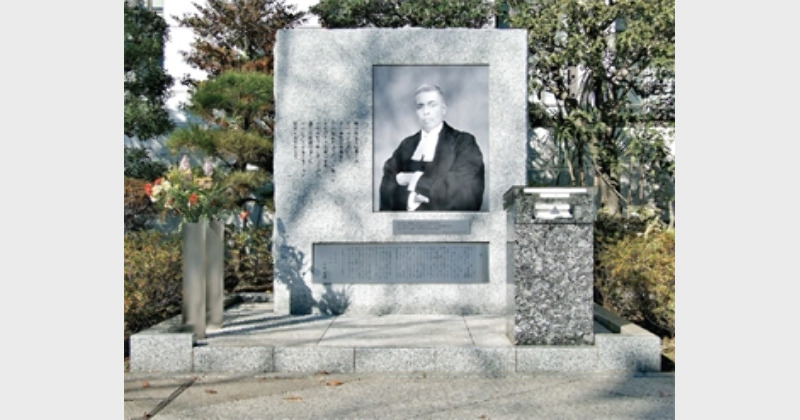
Intro: Japanese Prime Minister Shinzo Abe told Narendra Modi that late Justice Radhabinod Pal is a known figure in the country. In 1966, the emperor of Japan awarded him the Order of the Sacred Treasure, First Class.


Let us walk you through history to let you know who the Indian Judge is and why he is so respected in Japan?
The Tokyo Trials
After the World War II, allied forces enforced various war crime related cases against the axes powers, including Japan. The International Military Tribunal for the Far East, popularly known as the “Tokyo Trials” was convened on April 29, 1946, to try the leaders of the Empire of Japan for three types of war crimes—“Class A” crimes were reserved for those who participated in a joint conspiracy to start and wage war, and were brought against those in the highest decision-making bodies; “Class B” crimes were reserved for those who committed “conventional” atrocities or crimes against humanity; and, “Class C” crimes were reserved for those in “the planning, ordering, authorisation, or failure to prevent such transgressions at higher levels in the command structure”.
Twenty-eight Japanese military and political leaders were charged with Class A crimes. First time in history, the victors carried out trials and punishment of thousands of persons in the defeated nations for 'crimes against peace' and 'crimes against humanity'. This was a fascinating and a controversial set of trials that occurred in Tokyo, under the watchful eye of Supreme Commander Douglas MacArthur, which became landmark in the history of human rights discourse. Judge Radhabinod Pal was one among the 11 Allied justices during the trial.
The Sole Dissenting Voice
Most of the judges, though supposed to be impartial, were affiliated to the allied forces and were convinced about the legitimacy of the trial. Pal, unlike his colleagues on the bench, was a specialist in international law— and his views on the accused, the charges, the prosecution, and the trial itself, were marked by his unique specialisation. Pal questioned the very legitimacy of the trial itself, and found himself forced to conclude, “I would hold that each and everyone of the accused must be found not guilty of each and everyone of the charges in the indictment and should be acquitted of all those charges.”
Pal wrote his own dissentient verdict wherein he explained his position, meticulously documenting each and every point of disagreement and providing a detailed history of the War back through Japan’s involvement in China in the 1920s. For his pains and efforts, after the trial his views were censored by (Security Content Automation Protocol ) SCAP, his verdict lay unpublished, and his arguments went unheard.
In this book, The Truth of “Radhabinod Pal’s Judgment,” author Watanabe Shôichi condensed Pal’s lengthy and occasionally complex arguments down to an easily digested and quick read. Prof. Watanabe explains Pal’s points and explains how the prevalent viewpoint today—a “Tokyo Trials viewpoint”—came to be the accepted and dominant school of thought. He suggested that Japan’s postwar history has been one that developed in the shadow of the Tokyo Trials, with an acceptance even by the Japanese themselves that everything that had been said in them was true. Through reading The Truth of “Radhabinod Pal’s Judgment,” another side of Japan’s history may be seen, and then much of the accepted conventional wisdom becomes suddenly suspect. Even Japan’s postwar relations with her neighbours have been colored by the acceptance.
No wonder then that Judge Radhavinod Pal is a hero for Japanese nationalists and has occupied significant place in Japanese textbooks.
It is still a mystery how Justice Pal was named to the tribunal as there was protest from the Governor General's secretariat against the appointment of Pal. Legal department cleared his name despite the same. It is said, Pal had close links with Subhash Chandra Bose and the Hindu Mahasabha, which legal department could not discover at that point.


ShareTweetSendShareSend
✮ Subscribe Organiser YouTube Channel. ✮
✮ Join Organiser's WhatsApp channel for Nationalist views beyond the news. ✮
Previous News

A Page From History: India's Foreign Policy

Next News

Let us take the Lead: Be Agents of Positive Change

Related News

Nihang Sikhs Demand Apology from Abhijeet Dipke for insulting them

Clashes erupt at Jantar Mantar as Nihang Sikhs confront CJP, demands apology from Abhijeet Dipke for demeaning them

Dr Vrushali Joshi, All India Organising Secretary of Vishvamangalya Sabha

Interview| ‘Motherhood is central to nation-building’: Dr Vrushali Joshi explains Yuganukul Matrutva

Representative Image

Zohran Mamdani and the Politics of the Ummah: From Anti-India rhetoric to the demand for Netanyahu’s arrest

Representative Image

Why loan planning should be part of your annual financial goals

India has risen from a negligible solar player to the world's third-largest solar market, driven by rapid clean energy growth

From Zero to Third: How India emerged as the world’s third-largest solar power nation in just two decades

India diversifies its rare earth sourcing through deeper cooperation with Myanmar

India–Myanmar bilateral collaboration on rare earth gains momentum amid China’s export controls

Load More

Latest News

Nihang Sikhs Demand Apology from Abhijeet Dipke for insulting them

Clashes erupt at Jantar Mantar as Nihang Sikhs confront CJP, demands apology from Abhijeet Dipke for demeaning them

Dr Vrushali Joshi, All India Organising Secretary of Vishvamangalya Sabha

Interview| ‘Motherhood is central to nation-building’: Dr Vrushali Joshi explains Yuganukul Matrutva

Representative Image

Zohran Mamdani and the Politics of the Ummah: From Anti-India rhetoric to the demand for Netanyahu’s arrest

Representative Image

Why loan planning should be part of your annual financial goals

India has risen from a negligible solar player to the world's third-largest solar market, driven by rapid clean energy growth

From Zero to Third: How India emerged as the world’s third-largest solar power nation in just two decades

India diversifies its rare earth sourcing through deeper cooperation with Myanmar

India–Myanmar bilateral collaboration on rare earth gains momentum amid China’s export controls

Tarun Vijay presents copy of his book 'Saffron Surge' to RSS Sarsanghchalak Dr Mohan Bhagwat

Tarun Vijay Presents his Book ‘Saffron Surge’ to RSS Sarsanghchalak Dr Mohan Bhagwat in Delhi

Prajna Pravah Akhil Bharatiya Sah Sanyojak Chandrakant Ji at a lecture at Mohanlal Sukhadia University

“Bharatiya perspective is essential in research for Bharat’s resurgence”: Chandrakant Ji, Prajna Pravah Sah Sanyojak

Free Wi-Fi is being set up at Delhi’s Jantar Mantar protest site, allowing protesters to stay connected amid mobile internet restrictions

CJP Protest Gets ‘VIP’ Internet? Free Wi-Fi at Jantar Mantar as Delhi mobile services stay suspended amid violence

Ashok Gehlot (Left), CPI(M)) leader, Balwan Poonia (Right)

CPIM leader’s shameless flip-flop: Defended Congress Ministers on paper leaks then, now attacks Dharmendra Pradhan

Load More
  • Privacy
  • Terms
  • Cookie Policy
  • Refund and Cancellation
  • Delivery and Shipping

© Bharat Prakashan (Delhi) Limited.
Tech-enabled by Ananthapuri Technologies

  • Home
  • Search Organiser
  • Bharat
    • Assam
    • Bihar
    • Chhattisgarh
    • Jharkhand
    • Maharashtra
    • View All States
  • World
    • Asia
    • Africa
    • North America
    • South America
    • Europe
    • Australia
  • Editorial
  • Operation Sindoor
  • Opinion
  • Analysis
  • Defence
  • Culture
  • Sports
  • Business
  • RSS @ 100
  • Entertainment
  • More ..
    • Sci & Tech
    • Vocal4Local
    • Special Report
    • Education
    • Employment
    • Books
    • Interviews
    • Travel
    • Health
    • Politics
    • Law
    • Economy
    • Obituary
  • Subscribe Magazine
  • Read Ecopy
  • Advertise
  • Circulation
  • Careers
  • About Us
  • Contact Us
  • Policies & Terms
    • Privacy Policy
    • Cookie Policy
    • Refund and Cancellation
    • Terms of Use

© Bharat Prakashan (Delhi) Limited.
Tech-enabled by Ananthapuri Technologies