Column: Himalayan Misadventure XVIII
June 11, 2026
  • Read Ecopy
  • Circulation
  • Advertise
  • Careers
  • About Us
  • Contact Us
Android AppiPhone AppArattai
Organiser
  • ‌
  • Bharat
    • Assam
    • Bihar
    • Chhattisgarh
    • Jharkhand
    • Maharashtra
    • View All States
  • World
    • Asia
    • Europe
    • North America
    • South America
    • Africa
    • Australia
  • Editorial
  • International
  • Opinion
  • RSS @ 100
  • More
    • Op Sindoor
    • Analysis
    • Sports
    • Defence
    • Politics
    • Business
    • Economy
    • Culture
    • Special Report
    • Sci & Tech
    • Entertainment
    • G20
    • Azadi Ka Amrit Mahotsav
    • Vocal4Local
    • Web Stories
    • Education
    • Employment
    • Books
    • Interviews
    • Travel
    • Law
    • Health
    • Obituary
  • Subscribe
    • Subscribe Print Edition
    • Subscribe Ecopy
    • Read Ecopy
  • ‌
  • Bharat
    • Assam
    • Bihar
    • Chhattisgarh
    • Jharkhand
    • Maharashtra
    • View All States
  • World
    • Asia
    • Europe
    • North America
    • South America
    • Africa
    • Australia
  • Editorial
  • International
  • Opinion
  • RSS @ 100
  • More
    • Op Sindoor
    • Analysis
    • Sports
    • Defence
    • Politics
    • Business
    • Economy
    • Culture
    • Special Report
    • Sci & Tech
    • Entertainment
    • G20
    • Azadi Ka Amrit Mahotsav
    • Vocal4Local
    • Web Stories
    • Education
    • Employment
    • Books
    • Interviews
    • Travel
    • Law
    • Health
    • Obituary
  • Subscribe
    • Subscribe Print Edition
    • Subscribe Ecopy
    • Read Ecopy
Organiser
  • Home
  • Bharat
  • World
  • Operation Sindoor
  • Editorial
  • Analysis
  • Opinion
  • Culture
  • Defence
  • International Edition
  • RSS @ 100
  • Magazine
  • Read Ecopy
Home General

Column: Himalayan Misadventure XVIII

Archive ManagerArchive Manager
Aug 23, 2014, 12:00 am IST
in General
Follow on Google News
FacebookTwitterWhatsAppTelegramEmail


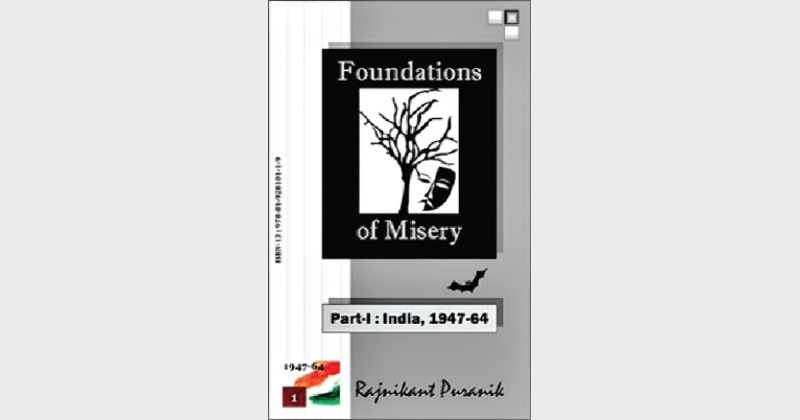
There is much that is not commonly known about the shocking aspects of the 1962 India-China War, so shocking indeed that S Gopal, Nehru's official biographer, was constrained to comment: “Things went so wrong that had they not happened it would have been difficult to believe them.” The Henderson-Brooks report covered only the limited aspects their authors were tasked with. The book “Foundations of Misery” by Rajnikant Puranik in its chapter “Himalayan Misadventure” details all the aspects of that avoidable war. We are serialising that chapter.

What was the main motivation of Nehru in so fixing the borders?
Nehru and his colleagues thought they were very wise and clever: if they presented clear borders to China, as unilaterally determined by them, it would work as a fait accompli, and China would acquiesce to them; and in case China suggested some minor corrections, they might consider the same. Unfortunately for them, the new China under Mao-Zhou was too smart and too strong and ambitious and self-respecting to be brow-beaten by mere cartographic claims.
Nehru and group had also tried to claim that with the signing of the Panchsheel, which contained the clause of respecting each other’s territory, China had implicitly agreed to the borders that India had shown in its maps. But, there was a catch there. Panchsheel was signed in April 1954 when the Indian maps brought out after independence were in vogue—that showed the Ladakh and certain other boundaries as undefined—the new, revised maps having been brought out only after July 1954!
Why the Intransigence?
What would beat anyone is this: Even if India had fixed the borders unilaterally, why was Nehru so adamant on that position? Why couldn’t he have been reasonably flexible and negotiated it in a spirit of give and take? There might have been several reasons for it.
Reason One: If we remained firm, China would finally come round to accepting our position.
Reason Two: Once we physically occupy the positions as per our map, China would have no choice.
Reason Three: There may be minor skirmishes here and there, but China would not attack.
But, how reasonable were these assumptions?
If wishful thinking substitutes hard reality, and if one wishes to make convenient assumptions that would fit-in with one’s pipedream-like strategy, anything is possible.
Nehru, the historian and an international-affairs expert, should have known that with the ascendency of Peoples Republic of China (PRC) in 1949, which in the very next year annexed Tibet despite the global uproar, the power balance across the Himalayas had reversed—the powerful British to the south of the Himalayas were replaced the newly independent fledgling India, while the weak China to the north of the Himalayas was replaced by the ambitious and determined PRC. Further, when even a very weak China during its lean period in history refused to be bullied into acceptance of unilaterally-drawn borders by the then super-power Britain, why would a strong, determined China meekly accept unilaterally-fixed borders by a weak India!
Reason Four: Nehru felt he couldn’t go back on the maps, altered at his instance. It would mean retracting from repeatedly stated position and published maps, resulting in loss of face. So, a single, special individual could not lose face even if ultimately the country and crores of Indians lost face!
The original sin was changing the maps unilaterally in 1954. Once the new maps were published and made public, the government bound itself to those positions, undermining its own flexibility in border negotiations. Legally also, no territory could then have been ceded through negotiations by a government without going through the complex constitutional and legal process. Nehru would have undermined his own position if he had later stated that the borders were actually not well-defined in certain sectors, even though the new Indian maps published during his time showed them as clear and well-demarcated.
If I go back on our position, I may even have to give up power and resign—thought Nehru. That’s the problem with many self-proclaimed democrats. They do not wish to give up power. Nehru had ruled for long. Why keep sticking to one’s post. Give others a chance if you are a genuine democrat. But, no. Not only do you yourself wish to continue, you want to relinquish power only to your descendents. You couldn’t risk your power by stating the honest position publicly. Nation can take risks, but not the individual.
Incidentally, this is what Nehru himself admitted in the Parliament later, “I saw no reason to discuss the frontier with the Chinese Government because, foolishly if you like, I thought there was nothing to discuss.”

(www.rkpbooks.com, www.facebook.com/fom.p1, rajnikantp.blogspot.in, twitter.com/Rajnikant_rkp, [email protected])

ShareTweetSendShareSend
✮ Subscribe Organiser YouTube Channel. ✮
✮ Join Organiser's WhatsApp channel for Nationalist views beyond the news. ✮
Previous News

Let us take the Lead: PM’s cue on Social Reform

Next News

e-Governance: A Different Speech

Related News

(Left) Six Naga Civilians who were killed (Right)Hundreds of grief-stricken people at the Jawaharlal Institute of Medical Sciences (JNIMS) in Imphal East, where the mortal remains were taken to the mortuary

Tension Grips Manipur: Police recover mortal remains of 6 abducted Nagas killed by Kukis; UNC calls for shutdown

PM Narendra Modi addressing the NDA meeting

‘The problem was Congress, not Hindus’: PM Modi’s blistering attack, lists India’s milestones in last 12 years

Leader of Opposition R. Ashoka files complaint with Karnataka governor over scam in awarding tender for waste management

Karnataka Garbage Scam: BJP alleges Rs 36,000-crore of scandal, seeks CBI probe; Files complaint to governor

Assam: Auto driver Monowar Hussain arrested for molesting, attempting to rape tribal woman passenger in Guwahati

The world recognises unprecedented growth in digital infrastructure during the 12 years of Modi's government

12 Years of Modi Government: How India built one of the world’s largest digital public infrastructure ecosystems

The image of alleged "Kolkotta Bayee" Jewel King living at Pathanamthitta

Keralam: WhatsApp status reveals illegal Bangladeshi who lived in Pathanamthitta for five years as ‘Kolkotta Bayee’

Load More

Latest News

(Left) Six Naga Civilians who were killed (Right)Hundreds of grief-stricken people at the Jawaharlal Institute of Medical Sciences (JNIMS) in Imphal East, where the mortal remains were taken to the mortuary

Tension Grips Manipur: Police recover mortal remains of 6 abducted Nagas killed by Kukis; UNC calls for shutdown

PM Narendra Modi addressing the NDA meeting

‘The problem was Congress, not Hindus’: PM Modi’s blistering attack, lists India’s milestones in last 12 years

Leader of Opposition R. Ashoka files complaint with Karnataka governor over scam in awarding tender for waste management

Karnataka Garbage Scam: BJP alleges Rs 36,000-crore of scandal, seeks CBI probe; Files complaint to governor

Assam: Auto driver Monowar Hussain arrested for molesting, attempting to rape tribal woman passenger in Guwahati

The world recognises unprecedented growth in digital infrastructure during the 12 years of Modi's government

12 Years of Modi Government: How India built one of the world’s largest digital public infrastructure ecosystems

The image of alleged "Kolkotta Bayee" Jewel King living at Pathanamthitta

Keralam: WhatsApp status reveals illegal Bangladeshi who lived in Pathanamthitta for five years as ‘Kolkotta Bayee’

Following TMC’s defeat in 2026 West Bengal Assembly election, speculation grew that its MPs were moving towards the NDA under BJP pressure

Why TMC MPs are looking towards the NDA: Examining the electoral arithmetic behind the political shift

Father dies on the day of daughter's Nikah over dispute over Mehar amount in Uttarakhand

Uttarakhand: Bride’s father dies of heart attack amid pressure and dispute over mehar amount in nikah

India has been transformed by major advances in digital governance, financial inclusion, and global influence under Modi govt

India After 12 Years of Modi: A record, revolution and remaining challenges

Will CM Joseph Vijay preserve Tamil Nadu’s priceless temple heritage as artefacts decay in Egmore museum

Load More
  • Privacy
  • Terms
  • Cookie Policy
  • Refund and Cancellation
  • Delivery and Shipping

© Bharat Prakashan (Delhi) Limited.
Tech-enabled by Ananthapuri Technologies

  • Home
  • Search Organiser
  • Bharat
    • Assam
    • Bihar
    • Chhattisgarh
    • Jharkhand
    • Maharashtra
    • View All States
  • World
    • Asia
    • Africa
    • North America
    • South America
    • Europe
    • Australia
  • Editorial
  • Operation Sindoor
  • Opinion
  • Analysis
  • Defence
  • Culture
  • Sports
  • Business
  • RSS @ 100
  • Entertainment
  • More ..
    • Sci & Tech
    • Vocal4Local
    • Special Report
    • Education
    • Employment
    • Books
    • Interviews
    • Travel
    • Health
    • Politics
    • Law
    • Economy
    • Obituary
  • Subscribe Magazine
  • Read Ecopy
  • Advertise
  • Circulation
  • Careers
  • About Us
  • Contact Us
  • Policies & Terms
    • Privacy Policy
    • Cookie Policy
    • Refund and Cancellation
    • Terms of Use

© Bharat Prakashan (Delhi) Limited.
Tech-enabled by Ananthapuri Technologies