The wonders of ideal media-audience relationship
June 11, 2026
  • Read Ecopy
  • Circulation
  • Advertise
  • Careers
  • About Us
  • Contact Us
Android AppiPhone AppArattai
Organiser
  • ‌
  • Bharat
    • Assam
    • Bihar
    • Chhattisgarh
    • Jharkhand
    • Maharashtra
    • View All States
  • World
    • Asia
    • Europe
    • North America
    • South America
    • Africa
    • Australia
  • Editorial
  • International
  • Opinion
  • RSS @ 100
  • More
    • Op Sindoor
    • Analysis
    • Sports
    • Defence
    • Politics
    • Business
    • Economy
    • Culture
    • Special Report
    • Sci & Tech
    • Entertainment
    • G20
    • Azadi Ka Amrit Mahotsav
    • Vocal4Local
    • Web Stories
    • Education
    • Employment
    • Books
    • Interviews
    • Travel
    • Law
    • Health
    • Obituary
  • Subscribe
    • Subscribe Print Edition
    • Subscribe Ecopy
    • Read Ecopy
  • ‌
  • Bharat
    • Assam
    • Bihar
    • Chhattisgarh
    • Jharkhand
    • Maharashtra
    • View All States
  • World
    • Asia
    • Europe
    • North America
    • South America
    • Africa
    • Australia
  • Editorial
  • International
  • Opinion
  • RSS @ 100
  • More
    • Op Sindoor
    • Analysis
    • Sports
    • Defence
    • Politics
    • Business
    • Economy
    • Culture
    • Special Report
    • Sci & Tech
    • Entertainment
    • G20
    • Azadi Ka Amrit Mahotsav
    • Vocal4Local
    • Web Stories
    • Education
    • Employment
    • Books
    • Interviews
    • Travel
    • Law
    • Health
    • Obituary
  • Subscribe
    • Subscribe Print Edition
    • Subscribe Ecopy
    • Read Ecopy
Organiser
  • Home
  • Bharat
  • World
  • Operation Sindoor
  • Editorial
  • Analysis
  • Opinion
  • Culture
  • Defence
  • International Edition
  • RSS @ 100
  • Magazine
  • Read Ecopy
Home General

The wonders of ideal media-audience relationship

Archive ManagerArchive Manager
Jun 1, 2013, 12:00 am IST
in General
Follow on Google News
FacebookTwitterWhatsAppTelegramEmail

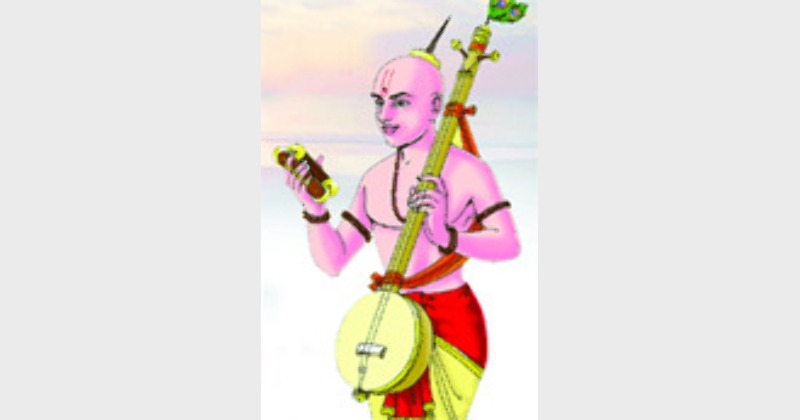
Today when the integration of various technologies of communication has redefined the role of media, it is worthwhile to look into Narada’s life and works for framing the basic principles and code of ethics for various media.

Prof BK Kuthiala

Journalism is a noble profession of communication to the masses. It connects various sections of the society together by narrating the important events. Journalism also provides analysis and comments to help the society understand the importance of whatever is happening around. Editorially, journalism also provides wisdom and guidance about what should be the course of action. Thus journalism informs, connects, comments and advises.

Going through the ancient Indian literature of more than 1500 years old, one finds a character, almost in every narration, which functions as a crucial communicator, connector, analyser and advisor. Narada is the most potent and omnipresent communicator in almost all Indian scriptures. If one accepts the ancient Indian scriptures as the narration of reality, Narada emerges as a key figure giving shape to the events of the future. Even if one is not able to believe in the reality of the ancient Indian civilization, the existence of ancient literature is an indisputable factor. Even if this literature is fiction, it is a wonderful collection of innovation and functional creativity where Narada is a major player.

Since the span of the scriptures in which Narada is personified is too large, it may be considered that he was not one person, but every person who performed the tasks of communicating, analysing and advising was labeled as Narada. A superficial reading of the scriptures brings out Narada as a person who is more of a jester and makes important persons quarrel with each other. All Europeans who studied one or a few scriptures in isolation could not comprehend the real character of Narada and those of us who followed Europeans interpretations also projected him as a person who creates tensions and differences between different kings and kingdoms. But, later, scholars who studied Narada in totality find him not only a great communicator but also a person totally committed to the welfare of entire humanity.

Three traits of Narada are worth appreciating. One, he had access to every god, king, official, rishi, muni and warrior. He appeared in front of devatas unannounced and with the same ease he went to the durbar of the asuras.  It would not be wrong to say that Narada even had the access to the bedrooms of important personalities. Many of the reputed media persons of today also can claim the same privilege.

Second, the information given by Narada had never been questioned. He had created a reputation for himself of providing totally credible news. There were innumerable occasions when very important policy decisions and actions have been taken on the bases of facts provided by Narada. Narayana decides to take the risk of breaking Mahadev’s samadhi when Narada appeared before him and inform the abduction of Parvati by Jallundhar.

Third, Narada was always without any bias. He didn’t have any particular likes or dislikes. Analysis of many of his communication actions brings out an important fact that his only concern was larger public good. When devas defeated the asuras and the civilians, including the women, were being killed, Narada pleaded with Indra to spare the pregnant wife of the king of Asuras .Indra could not refuse. Narada then took care of the widow and the child was born who later rose to the level of an ideal proponent of truth and also exemplar of good governance.  

Dispassionate selection and narration of events, an image of full trustworthiness and commitment to overall societal welfare are the three traits that any journalist today would aspire to acquire and Narada can be an ideal role model. It would be appropriate to dismantle the distorted image built around Narada, being perpetuator of quarrels and dissent, and give adequate place to him according to his deeds and intentions.

Another important source for media ethics is the ancient book, where Narada has been credited as its author, Narada’s Bhakti Sutras. Eighty four principles of worship enunciated in this book apparently appear to be describing the duties and obligations of the worshiped and the worshiper. But a deep scrutiny of these 84 sutras brings out the wonders of ideal relationships between the media and the audiences. All over the world today, integration of various technologies of communication has redefined the role of media. Therefore, it would be worthwhile to look into Narada’s life and works for framing the basic principles and code of ethics for various media.

(The writer is Vice Chancellor of Makhanlal Rashtriya Patrakarita Vishwavidyalaya)
ShareTweetSendShareSend
✮ Subscribe Organiser YouTube Channel. ✮
✮ Join Organiser's WhatsApp channel for Nationalist views beyond the news. ✮
Previous News

Visually impaired girl tops MP Board Exams

Next News

Open discussion was the strength of ancient Bharat—P Rajan

Related News

US: Anshul Kuncha’s death exposes anti-India racist racket; Assaulting the community that powers American economy!

Security forces undertake anti-Maoist campaign in Odisha in Kandhamal and Malkangiri and seize huge cache of arms

Odisha: Security forces recover caches of weapons of Maoists in Kandhamal and Malkangiri in last three days

Kashmiri Pandits at Kheer Bhawani Temple(File Photo)

J&K: Exiled Kashmiri Pandits throng temples amid enhanced security; Crowd peaks on Jyestha Ashtami at Kheer Bhawani

Global Peace Index Farce: Does the GPI penalise democracies fighting terrorism? India’s case explained

Five Ayush hospitals cum medical colleges to come up in Uttar Pradesh (This is an AI generated image)

Uttar Pradesh plans five integrated AYUSH Colleges and Hospitals to expand traditional healthcare and medical education

(Left) Site of the protest (Right) NIA team in JNIMS hospital

Manipur: NIA starts forensic probe of abduction and killings of 6 Naga civilians by Kuki militants

Load More

Latest News

US: Anshul Kuncha’s death exposes anti-India racist racket; Assaulting the community that powers American economy!

Security forces undertake anti-Maoist campaign in Odisha in Kandhamal and Malkangiri and seize huge cache of arms

Odisha: Security forces recover caches of weapons of Maoists in Kandhamal and Malkangiri in last three days

Kashmiri Pandits at Kheer Bhawani Temple(File Photo)

J&K: Exiled Kashmiri Pandits throng temples amid enhanced security; Crowd peaks on Jyestha Ashtami at Kheer Bhawani

Global Peace Index Farce: Does the GPI penalise democracies fighting terrorism? India’s case explained

Five Ayush hospitals cum medical colleges to come up in Uttar Pradesh (This is an AI generated image)

Uttar Pradesh plans five integrated AYUSH Colleges and Hospitals to expand traditional healthcare and medical education

(Left) Site of the protest (Right) NIA team in JNIMS hospital

Manipur: NIA starts forensic probe of abduction and killings of 6 Naga civilians by Kuki militants

Prime Minister Narendra Modi

The MODI Era: Legacy of 4399 days of Transformation

Late Laxmananda Saraswati (File Photo)

Missing Swami Laxmananda murder judicial inquiry report triggers FIR in Odisha; BJP targets Naveen Patnaik

4,399 days of Prime Minister Narendra Modi

The Meaning of 4,399 Days: Why Even the Opposition Must Now Play by the New Rules Set in the Modi Era

Keralam: Audit finds gold and silver ornaments missing from nearly 20 temples under Neyyattinkara Devaswom sub group

Load More
  • Privacy
  • Terms
  • Cookie Policy
  • Refund and Cancellation
  • Delivery and Shipping

© Bharat Prakashan (Delhi) Limited.
Tech-enabled by Ananthapuri Technologies

  • Home
  • Search Organiser
  • Bharat
    • Assam
    • Bihar
    • Chhattisgarh
    • Jharkhand
    • Maharashtra
    • View All States
  • World
    • Asia
    • Africa
    • North America
    • South America
    • Europe
    • Australia
  • Editorial
  • Operation Sindoor
  • Opinion
  • Analysis
  • Defence
  • Culture
  • Sports
  • Business
  • RSS @ 100
  • Entertainment
  • More ..
    • Sci & Tech
    • Vocal4Local
    • Special Report
    • Education
    • Employment
    • Books
    • Interviews
    • Travel
    • Health
    • Politics
    • Law
    • Economy
    • Obituary
  • Subscribe Magazine
  • Read Ecopy
  • Advertise
  • Circulation
  • Careers
  • About Us
  • Contact Us
  • Policies & Terms
    • Privacy Policy
    • Cookie Policy
    • Refund and Cancellation
    • Terms of Use

© Bharat Prakashan (Delhi) Limited.
Tech-enabled by Ananthapuri Technologies