A brilliant account on Hindu Gods
August 27, 2026
  • Read Ecopy
  • Circulation
  • Advertise
  • Careers
  • About Us
  • Contact Us
Android AppiPhone AppArattai
Organiser
  • ‌
  • Bharat
    • Assam
    • Bihar
    • Chhattisgarh
    • Jharkhand
    • Maharashtra
    • View All States
  • World
    • Asia
    • Europe
    • North America
    • South America
    • Africa
    • Australia
  • Editorial
  • International
  • Opinion
  • RSS @ 100
  • More
    • Op Sindoor
    • Analysis
    • Sports
    • Defence
    • Politics
    • Business
    • Economy
    • Culture
    • Special Report
    • Sci & Tech
    • Entertainment
    • G20
    • Azadi Ka Amrit Mahotsav
    • Vocal4Local
    • Web Stories
    • Education
    • Employment
    • Books
    • Interviews
    • Travel
    • Law
    • Health
    • Obituary
  • Subscribe
    • Subscribe Print Edition
    • Subscribe Ecopy
    • Read Ecopy
  • ‌
  • Bharat
    • Assam
    • Bihar
    • Chhattisgarh
    • Jharkhand
    • Maharashtra
    • View All States
  • World
    • Asia
    • Europe
    • North America
    • South America
    • Africa
    • Australia
  • Editorial
  • International
  • Opinion
  • RSS @ 100
  • More
    • Op Sindoor
    • Analysis
    • Sports
    • Defence
    • Politics
    • Business
    • Economy
    • Culture
    • Special Report
    • Sci & Tech
    • Entertainment
    • G20
    • Azadi Ka Amrit Mahotsav
    • Vocal4Local
    • Web Stories
    • Education
    • Employment
    • Books
    • Interviews
    • Travel
    • Law
    • Health
    • Obituary
  • Subscribe
    • Subscribe Print Edition
    • Subscribe Ecopy
    • Read Ecopy
Organiser
  • Home
  • Bharat
  • World
  • Operation Sindoor
  • Editorial
  • Analysis
  • Opinion
  • Culture
  • Defence
  • International Edition
  • RSS @ 100
  • Magazine
  • Read Ecopy
Home Bharat

A brilliant account on Hindu Gods

In the first title on gods and goddesses, the author says that Hinduism is all-pervasive, all-inclusive and penetrative. Hinduism is ?apauruseya?, that is, of impersonal origin and therefore it is devoid of errors of instrument and cognition. Similarly the Hindu gods are eternal

Archive ManagerArchive Manager
May 27, 2013, 02:52 pm IST
inBharat
Follow on Google News
Facebook
Twitter
WhatsAppTelegramEmail

-Manju Gupta

Set of six books written by Swami Harshananda

Hindu Gods and Goddesses, Pp 177,   Rs 40.00

The Caste System: A Monograph,  Pp 48, Rs 6.00

The Ramayana of Valmiki: An Appraisal,                     Pp 90, Rs 25.00

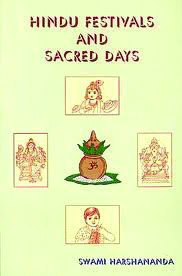
Hindu Festivals and Sacred Days, Pp 12, Rs 25.00

In the first title on gods and goddesses, the author says that Hinduism is all-pervasive, all-inclusive and penetrative. Hinduism is ‘apauruseya’, that is, of impersonal origin and therefore it is devoid of errors of instrument and cognition. Similarly the Hindu gods are eternal, un-decaying and undying. Some gods occupy eminent space in the Vedas and some in the subsequent Vedic literature, like the Itihasas and Puranas.

Belief in God has sustained mankind for millennia. The Hindu concept of god has two features. Depending upon the needs and tastes of his votaries, God appears to them in any form they like to worship to and responds through that form. He can incarnate himself among human beings to lead them to his own kingdom. The other aspect is that God is the absolute to whom the name given is Brahma. The Hindus have three main cult deities – the Trinity comprising Brahma, Visnu and Siva along with their consorts. The minor deities like Ganesa and Kumara form the second aspect. The author describes the Vedic gods like Indra, Agni, Varuna, Surya and others, apart from several female deities, who are the presiding deities over Nature.

The book contradicts the Western belief that polytheism exists in Hinduism.

The second book on the caste system says that though human beings came alone in the world, they create a family or a group to live with. Various factors contribute to the divisions or groups essentially due to their professions, racial features, beliefs and customs carried down over the generations. The division of the Hindu society into four broad varnas came about because the society grew in size and division of labour took place. Some, whose occupation was accumulation of knowledge, wisdom and culture, are called Brahmanas, while those who were physically strong and took to arms, are known as Kshattriyas. A majority, who took to taking care of wealth or looked after agriculture or trade or commerce, are called Vaisyas. Those who did manual labour and service to others are called Sudras. The Hindu caste system is a natural growth and evolution from the varna system as mentioned in the Vedic culture; it has imparted stability to the Hindu society; its decadence started due to renunciation of spiritual beliefs by the Brahmanas for pelf and power; and as such “need not be and should not be given up. Right attitudes must be created for the uplift of the Hindu society,” adds the author.

The Ramayana of Valmiki is one holy book that has influenced the life, thoughts and culture of millions of Hindus over the millennia. No aspect of Hindu religion or culture, be it literature, drama, music or sculpture, remains unaffected by many significant aspects of the Ramayana and what is more, it was Sage Valmiki, author of the Ramayana, who provided shelter to Sita when Rama banished her. He gave her shelter when she was busy bringing up her two sons, Luv and Kush. It is said that he was a Brahmana by birth but was brought up by a family of robbers. He repeatedly meditated on Lord Rama for days such that ants collected on his body during his penance and he came to be known as Valmiki. The book also narrates the story of Rama and how his reign came to be called Ramrajya. 

The book on Hindu festivals presents a brief history, meaning and symbolism of each festival like Holi, Diwali, Rama Navami, Janmashtami, etc. along with its significance. An added attraction is the detailed account of all vratas (fasts) observed to celebrate festivals with greater devotion.

Pilgrimage or tirthayatra to holy places is an integral part of a Hindu’s life. These centres of pilgrimage are spread all over India though the four major centres or dhams are Amarnath in the north, Somnath in the west, Puri in the east and Ramesvaram in the south. The purpose of pilgrimage is to atone for one’s sins and attain purity of mind. It is said that a bath in the waters of River Yamuna and Ganges takes you to heaven. The author describes the places of pilgrimage, their flora and fauna, their significance and the best seasons to visit them.

(Ramakrishna Math, Bull Temple Road,Bangalore-560019 and Ramakrishna Math, Mylapore, Chennai-4; [email protected] and [email protected])

Share
Tweet
SendShareSend
✮ Subscribe Organiser YouTube Channel. ✮
✮ Join Organiser's WhatsApp channel for Nationalist views beyond the news. ✮
Previous News

The Many Facets of a Diplomat?s life

Next News

Rejuvenating the foundation of clean enviromnent

Related News

Nepal Floods: Sewa International and Hindu Swayamsevak Sangh launch relief operations

Amrita Devi: Protector of Sacred Khejri Trees

Amrita Devi Balidan Diwas: Protector of sacred Khejri trees

Book Review | Finding Zero: A Mathematician’s Odyssey to Uncover the Origins of Numbers

Raksha Bandhan and Anti-Partition Movement: Bond of Fraternity

US religious freedom panel, headed by a Pakistani, peddles lies about RSS ahead of Sarsanghachalak’s US visit

Tradition Meets Technology: Adani Computer Lab Opens at Ayodhya Gurukul

Ayodhya Gurukul’s Digital Leap: Adani Foundation sets up modern computer lab

Load More

Latest News

Nepal Floods: Sewa International and Hindu Swayamsevak Sangh launch relief operations

Amrita Devi: Protector of Sacred Khejri Trees

Amrita Devi Balidan Diwas: Protector of sacred Khejri trees

Book Review | Finding Zero: A Mathematician’s Odyssey to Uncover the Origins of Numbers

Raksha Bandhan and Anti-Partition Movement: Bond of Fraternity

US religious freedom panel, headed by a Pakistani, peddles lies about RSS ahead of Sarsanghachalak’s US visit

Tradition Meets Technology: Adani Computer Lab Opens at Ayodhya Gurukul

Ayodhya Gurukul’s Digital Leap: Adani Foundation sets up modern computer lab

National Sports Day (This image is generated by AI)

National Sports Day 2026: UGC asks HEIs to join celebrations from August 28-30; check theme, history and significance

Union Home Minister Amit Shah meets the delegation of Vanvasi Kalyan Ashram

Vanvasi Kalyan Ashram delegation meets Amit Shah in Siliguri, Raises key Janjati issues

Dr Kinare (File Image)

Dr Kinare: The unsung RSS karyakarta who helped save The Indian Express from Datta Samant

A. Balakrishnan, President of the Vivekananda Kendra (File Image)

Obituary: RSS condoles passing of A Balakrishnan, hails his lifelong service

Load More
  • Privacy
  • Terms
  • Cookie Policy
  • Refund and Cancellation
  • Delivery and Shipping

© Bharat Prakashan (Delhi) Limited.
Tech-enabled by Ananthapuri Technologies

  • Home
  • Search Organiser
  • Bharat
    • Assam
    • Bihar
    • Chhattisgarh
    • Jharkhand
    • Maharashtra
    • View All States
  • World
    • Asia
    • Africa
    • North America
    • South America
    • Europe
    • Australia
  • Editorial
  • Operation Sindoor
  • Opinion
  • Analysis
  • Defence
  • Culture
  • Sports
  • Business
  • RSS @ 100
  • Entertainment
  • More ..
    • Sci & Tech
    • Vocal4Local
    • Special Report
    • Education
    • Employment
    • Books
    • Interviews
    • Travel
    • Health
    • Politics
    • Law
    • Economy
    • Obituary
  • Subscribe Magazine
  • Read Ecopy
  • Advertise
  • Circulation
  • Careers
  • About Us
  • Contact Us
  • Policies & Terms
    • Privacy Policy
    • Cookie Policy
    • Refund and Cancellation
    • Terms of Use

© Bharat Prakashan (Delhi) Limited.
Tech-enabled by Ananthapuri Technologies