Constitutionally flawed, usurpation of powers of elected government
September 8, 2026
  • Read Ecopy
  • Circulation
  • Advertise
  • Careers
  • About Us
  • Contact Us
Android AppiPhone AppArattai
Organiser
  • ‌
  • Bharat
    • Assam
    • Bihar
    • Chhattisgarh
    • Jharkhand
    • Maharashtra
    • View All States
  • World
    • Asia
    • Europe
    • North America
    • South America
    • Africa
    • Australia
  • Editorial
  • International
  • Opinion
  • RSS @ 100
  • More
    • World Hindu Congress 2026
    • Op Sindoor
    • Analysis
    • Sports
    • Defence
    • Politics
    • Business
    • Economy
    • Culture
    • Special Report
    • Sci & Tech
    • Entertainment
    • G20
    • Azadi Ka Amrit Mahotsav
    • Vocal4Local
    • Web Stories
    • Education
    • Employment
    • Books
    • Interviews
    • Travel
    • Law
    • Health
    • Obituary
  • Subscribe
    • Subscribe Print Edition
    • Subscribe Ecopy
    • Read Ecopy
  • ‌
  • Bharat
    • Assam
    • Bihar
    • Chhattisgarh
    • Jharkhand
    • Maharashtra
    • View All States
  • World
    • Asia
    • Europe
    • North America
    • South America
    • Africa
    • Australia
  • Editorial
  • International
  • Opinion
  • RSS @ 100
  • More
    • World Hindu Congress 2026
    • Op Sindoor
    • Analysis
    • Sports
    • Defence
    • Politics
    • Business
    • Economy
    • Culture
    • Special Report
    • Sci & Tech
    • Entertainment
    • G20
    • Azadi Ka Amrit Mahotsav
    • Vocal4Local
    • Web Stories
    • Education
    • Employment
    • Books
    • Interviews
    • Travel
    • Law
    • Health
    • Obituary
  • Subscribe
    • Subscribe Print Edition
    • Subscribe Ecopy
    • Read Ecopy
Organiser
  • Home
  • Bharat
  • World
  • Operation Sindoor
  • Editorial
  • Analysis
  • Opinion
  • Culture
  • Defence
  • International Edition
  • RSS @ 100
  • Magazine
  • Read Ecopy
Home General

Constitutionally flawed, usurpation of powers of elected government

Archive ManagerArchive Manager
Jan 8, 2013, 12:00 am IST
inGeneral
Follow on Google News
Facebook
Twitter
WhatsAppTelegramEmail

The Supreme Court judgement in Gujarat Lokayakuta case

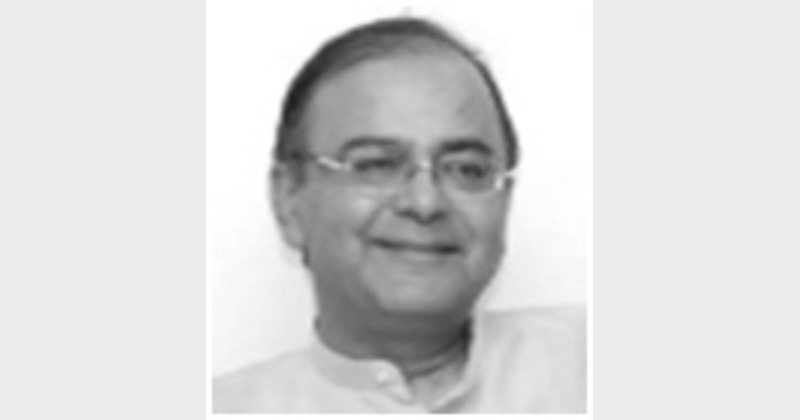
Arun Jaitley


THE Judgement of the Supreme Court in the case relating to the appointment of Lokayukta in Gujarat has thrown up two issues; one relating to the primacy of the Chief Justice of the High Court in the matter of  appointment of the Lokayukta virtually rendering all other constitutional authorities  otiose,  and the second relating to the role of the Governor in the matter of appointment of the Lokayukta.  As a member of India’s legislature I offer this comment to protest against the usurpation of executive powers of an elected government.

Several States enacted the Lokayukta laws in 1986.  The State legislations were based on a draft law circulated by the Centre.  The language of the provisions relating to the appointment of Lokayukta is identical in most States.  Section 3(1) of the Gujarat Act reads as under:

“For the purpose of conducting investigations in accordance with provisions of this Act, the Governor shall, by warrant under his hand and seal, appoint a person to be known as the Lokayukta.
Provided that the Lokayukta shall be appointed  after consultation  with the Chief Justice of the High Court and except where such appointment is to be made at a time when the Legislative Assembly of the State of Gujarat has been dissolved or a Proclamation under Article 356 of the Constitution is in operation in the State of Gujarat, after consultation also with the Leader of Opposition in the Legislative Assembly, or if there be no such Leader, a person elected in this behalf by the members of the Opposition in that House in such manner as the Speaker may direct.” 

The language of the Section is clear.  There is no ambiguity.  When the language is clear,  the rule of strict interpretation must apply.  The section envisages the appointment to be made by the Governor.  Under our constitutional scheme the governor acts on the aid and advice of the Council of Ministers.  The role of the Governor is  a non-activist one.  The consultation, therefore, in the name of the Governor has to be made  by the Council of Ministers through the Chief minister.  It is the Chief Minister who has to consult the Chief Justice of the High Court and the Leader of
Opposition in the Legislative Assembly. 

There are four constitutional authorities involved in the process.  The Chief Minister must consult the Chief Justice; he must consult the Leader of Opposition.  He must then forward the recommendation to the Governor who must act on the aid and advice of the Council of Ministers.  The role of the Governor is minimal.  The Chief Justice and the Leader of Opposition  are a part of the consultation process with the Chief Minister. 

This scheme was enacted as a part of the constitutional  mechanism where the Governor, the Opposition and the Chief Justice are a part of the consultation process.  The key instrumentality in the consultation is the Chief Minister.  He has to engage in the consultation.  The Governor is the fourth agency who must grant approval on the aid and advice of the Council of Ministers.  The constitutional mandate of separation of powers  is intrinsically a part of the constitutional balance which is maintained between the different organs of the State.  The interpretation given by the Supreme Court to the  “consultation” with the Chief Justice now implies that there is a primacy of the opinion of the Chief Justice. 

A reading of the judgement of Supreme Court not only gives to the Chief Justice’s opinion a primacy, it gives it an ‘exclusivity’ thereby rendering the role of the Chief Minister and the Leader of Opposition  completely redundant and otiose.  The Supreme Court has observed that “the purpose of giving primacy to the opinion of the Chief Justice is for the reasons that he enjoys an independent status and also because the person eligible to be the Lokayukta is from the retired judges of the High Court, the Chief Justice is therefore the best person to judge suitability for the post. The Chief Justice has primacy of the opinion in the said matter.  The non acceptance of such recommendation by the Chief Minister remains ‘insignificant’.  Thus it clearly emerges that the Governor under section 3 of the Act, 1986 has acted upon the aid and advice of the Council of Ministers.  Such a view is taken considering the fact that section 3 of the Act 1986 does not envisage unanimity in the consultative process.”

As a part of India’s legislative and political process I seriously disagree with the observations of the Supreme Court.  The Act framed by the Legislature does not give any primacy to the opinion of the Chief Justice.  The fact that the Chief Justice is an independent constitutional authority does not imply that the Chief Minister  or the Leader of “Opposition  have no constitutional  or statutory role particularly when the power to be exercised is an Executive function and not a Judicial one.  There is no presumption that the Chief Justice alone is the best judge with regard to the performance of retired judges.  Quite to the contrary, the system of judges alone appointing judges and the judges alone judging judges has not worked satisfactorily in India.  Many regard it as a failed system. The demand for a broad based National Judicial Commission is legitimate and logical.  It is based on the experience of the system that the existing system of judges appointing judges and judges alone judging judges is not the best system available.

 There are other relevant inputs which can be made by the other constitutional authorities.  The Legislature envisages that these constitutional authorities are to be a part of the consultation process.  Their role is of an equal participant and not ‘insignificant’.  The Judgement has evolved the role of the Chief Justice from being privy to the consultation process to one of ‘primacy’ and eventually to ‘exclusivity’ thus rendering role of the other constitutional authorities as ‘insignificant’.  The judgement does not stop at that.  The direct letter of the Chief Justice to the Governor without an accompanying aid and advice of the Council of Ministers is now treated as the aid and advice of the council of ministers since the consultation process does not envisage a unanimity.  So insignificant is the role of Council of Ministers that its’ dissent is treated as an aid and advice to the Governor.

Share
Tweet
SendShareSend
✮ Subscribe Organiser YouTube Channel. ✮
✮ Join Organiser's WhatsApp channel for Nationalist views beyond the news. ✮
Previous News

Missing Congress scion

Next News

World’s first Kamdhenu Cow Sanctuary to come up in Madhya Pradesh

Related News

An ancient well found beneath the demolished Saharanpur mosque has revived questions over whether a Hindu temple once stood at the site

Was a Hindu Mandir once standing here? ASI probes ancient well beneath demolished Saharanpur mosque

Manipuri music teacher Chongtham Vikram was beaten to death in Delhi’s Ashram area, sparking outrage among the Northeastern community

Manipuri Music Teacher Murder: Chongtham Vikram killed in Delhi; ABVP meets DCP, Northeast groups demand justice

PFI’s ‘Reporter Wing’, Arms Training and Targeting of Hindu Leaders: Kerala HC Denies Bail to Three in Sreenivasan Murder Case

Sreenivasan Murder Case: Kerala HC denies bail to 3 PFI accused over ‘Reporter Wing’, arms training

Gangster-Turned-Politician Gurpreet Sekhon Joins AAP: Nabha Jailbreak Conviction, Murder Acquittal and Dozens of Cases Resurface

Punjab: Gangster-turned politician Gurpreet Sekhon joins AAP despite 47 criminal cases, Nabha jailbreak conviction

Chief Minister of West Bengal Suvendu Adhikari

No DJs, liquor sale ban on Ashtami in West Bengal: CM Suvendu Adhikari announces new rules for Durga Puja

: Eminent author and speaker Ratan Sharda addresses a special session on youth empowerment and nationalism at Centurion University, Bhubaneswar.

Odisha: “Youth must combine national pride, skills & responsibility to build Viksit Bharat by 2047,” says Ratan Sharda

Load More

Latest News

An ancient well found beneath the demolished Saharanpur mosque has revived questions over whether a Hindu temple once stood at the site

Was a Hindu Mandir once standing here? ASI probes ancient well beneath demolished Saharanpur mosque

Manipuri music teacher Chongtham Vikram was beaten to death in Delhi’s Ashram area, sparking outrage among the Northeastern community

Manipuri Music Teacher Murder: Chongtham Vikram killed in Delhi; ABVP meets DCP, Northeast groups demand justice

PFI’s ‘Reporter Wing’, Arms Training and Targeting of Hindu Leaders: Kerala HC Denies Bail to Three in Sreenivasan Murder Case

Sreenivasan Murder Case: Kerala HC denies bail to 3 PFI accused over ‘Reporter Wing’, arms training

Gangster-Turned-Politician Gurpreet Sekhon Joins AAP: Nabha Jailbreak Conviction, Murder Acquittal and Dozens of Cases Resurface

Punjab: Gangster-turned politician Gurpreet Sekhon joins AAP despite 47 criminal cases, Nabha jailbreak conviction

Chief Minister of West Bengal Suvendu Adhikari

No DJs, liquor sale ban on Ashtami in West Bengal: CM Suvendu Adhikari announces new rules for Durga Puja

: Eminent author and speaker Ratan Sharda addresses a special session on youth empowerment and nationalism at Centurion University, Bhubaneswar.

Odisha: “Youth must combine national pride, skills & responsibility to build Viksit Bharat by 2047,” says Ratan Sharda

Madras HC: Christian Woman Cannot Invoke Hindu Marriage Act Against Hindu Husband

Madras HC: Christian woman cannot invoke Hindu Marriage Act against Hindu husband

Paradip Port makes deep-water leap, berths first-ever capesize vessel with 16.5 metre draft

Dr BR Ambedkar Residential School, in Hassan, Karnataka

Karnataka: No space, few toilets; 172 children in shed for 5 years? Hassan Ambedkar School faces outrage

Ram Mandir CEO Air Marshal (Retd.) Jitendra Mishra (left), Another Fake person (Right) (Image Source: X)

Fact Check: Pakistan-originated fake video on Ram Mandir CEO Jitendra Mishra amplified by Congress & CJP debunked

Load More
  • Privacy
  • Terms
  • Cookie Policy
  • Refund and Cancellation
  • Delivery and Shipping

© Bharat Prakashan (Delhi) Limited.
Tech-enabled by Ananthapuri Technologies

  • Home
  • Search Organiser
  • Bharat
    • Assam
    • Bihar
    • Chhattisgarh
    • Jharkhand
    • Maharashtra
    • View All States
  • World
    • Asia
    • Africa
    • North America
    • South America
    • Europe
    • Australia
  • Editorial
  • Operation Sindoor
  • Opinion
  • Analysis
  • Defence
  • Culture
  • Sports
  • Business
  • RSS @ 100
  • Entertainment
  • More ..
    • Sci & Tech
    • Vocal4Local
    • Special Report
    • Education
    • Employment
    • Books
    • Interviews
    • Travel
    • Health
    • Politics
    • Law
    • Economy
    • Obituary
  • Subscribe Magazine
  • Read Ecopy
  • Advertise
  • Circulation
  • Careers
  • About Us
  • Contact Us
  • Policies & Terms
    • Privacy Policy
    • Cookie Policy
    • Refund and Cancellation
    • Terms of Use

© Bharat Prakashan (Delhi) Limited.
Tech-enabled by Ananthapuri Technologies