
A peep into regulatory capitalist systems
July 1, 2026
  • Read Ecopy
  • Circulation
  • Advertise
  • Careers
  • About Us
  • Contact Us
Android AppiPhone AppArattai
Organiser
  • ‌
  • Bharat
    • Assam
    • Bihar
    • Chhattisgarh
    • Jharkhand
    • Maharashtra
    • View All States
  • World
    • Asia
    • Europe
    • North America
    • South America
    • Africa
    • Australia
  • Editorial
  • International
  • Opinion
  • RSS @ 100
  • More
    • Op Sindoor
    • Analysis
    • Sports
    • Defence
    • Politics
    • Business
    • Economy
    • Culture
    • Special Report
    • Sci & Tech
    • Entertainment
    • G20
    • Azadi Ka Amrit Mahotsav
    • Vocal4Local
    • Web Stories
    • Education
    • Employment
    • Books
    • Interviews
    • Travel
    • Law
    • Health
    • Obituary
  • Subscribe
    • Subscribe Print Edition
    • Subscribe Ecopy
    • Read Ecopy
  • ‌
  • Bharat
    • Assam
    • Bihar
    • Chhattisgarh
    • Jharkhand
    • Maharashtra
    • View All States
  • World
    • Asia
    • Europe
    • North America
    • South America
    • Africa
    • Australia
  • Editorial
  • International
  • Opinion
  • RSS @ 100
  • More
    • Op Sindoor
    • Analysis
    • Sports
    • Defence
    • Politics
    • Business
    • Economy
    • Culture
    • Special Report
    • Sci & Tech
    • Entertainment
    • G20
    • Azadi Ka Amrit Mahotsav
    • Vocal4Local
    • Web Stories
    • Education
    • Employment
    • Books
    • Interviews
    • Travel
    • Law
    • Health
    • Obituary
  • Subscribe
    • Subscribe Print Edition
    • Subscribe Ecopy
    • Read Ecopy
Organiser
  • Home
  • Bharat
  • World
  • Operation Sindoor
  • Editorial
  • Analysis
  • Opinion
  • Culture
  • Defence
  • International Edition
  • RSS @ 100
  • Magazine
  • Read Ecopy
Home Bharat

A peep into regulatory capitalist systems

THE present age has been described as one of ?regulatory capitalism? and its manifestation is the expansion in the number and range of regulatory agencies.

Archive ManagerArchive Manager
Dec 8, 2012, 03:00 pm IST
in Bharat
Follow on Google News
FacebookTwitterWhatsAppTelegramEmail

Jayant Patel

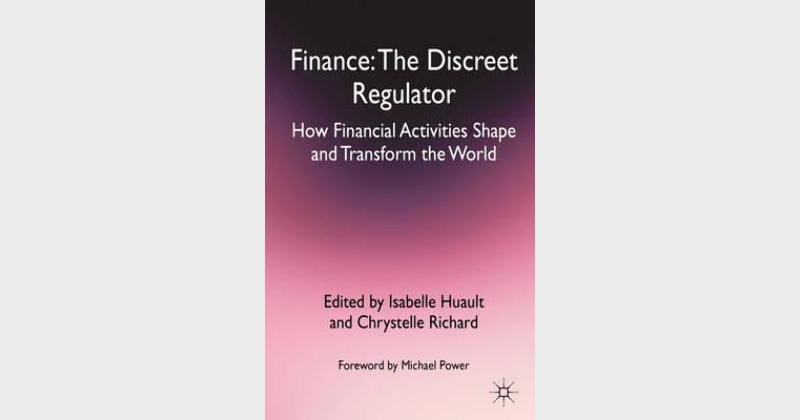
$img_titleFinance:
The Discreet Regulator: How Financial Activities Shape and Transform the World, Isabella Huault & Chrystelle Richard, Palgrave Macmillan, Pp 288, $ 100


THE present age has been described as one of “regulatory capitalism” and its manifestation is the expansion in the number and range of regulatory agencies. This has been a direct offshoot of the global financial crisis that began in 2007 and accelerated in September 2008 by the collapse of Lehman Brothers, making one question on the damaging role of large banks with no geographical limits. The prime objective of the book is to show how financial activities shape and transform the world. 

At a time when regulation of the financial sector is the talk of the global village, this volume argues that organisations in the financial industry are a powerful “rule-making engine” (as stated by Zald and Lounsbury in their paper) and are themselves discreet regulators of the markets in which they function. Based on a series of case studies related to the construction and structure of financial markets or the emergence of new arrangements, the book shows that financial markets are the seat of regulatory processes initiated and developed by core-capitalist financial institutions, such as banks and audit firms. It emphasises the growing role of finance, financial markets and shareholder-concepts of value as “key drivers of capitalism”. It brings out the fact that actors that appear to be the objects of regulation, or at least do intervene only at its fringes, are in fact “discreet regulators”, supplying the institutional framework that fosters market creation and globalisation.

The concept of “discreet regulation” forms the backbone around which the chapters of this volume are organised.
Part I focuses on the actors themselves acting as networks of influence and their characteristics. Part II highlights the tension between the state and the market and the different kinds of joint regulation empirically identified. Finally, Part III examines the concrete processes of rule-making.

To discuss the chapters threadbare, one finds that Chapters 1 to 4 of Part I present the four types of actors that relay the power of finance in addition to the major investment banks. In Chapter 1, Morales and Pezet seek to advance the understanding of how the notion of financialisation materialises and operates in a concrete organisation. Rather than focusing on the role of financial markets, they analyse how financial rationales are mobilised, enacted and appropriated in a firm. In Chapter 2, Ramirez studies the role played by the group of multinational audit firms, known as the Big Four (Deloitte, KPMG, PricewaterhouseCoopers and Ernst & Young) in the implementation of an international system of standards for accounting and auditing. In Chapter 3, Leuglet analyses the daily routines unfolding in financial firms and markets besides documenting how compliance officers interpret regulatory texts, how they manage ambiguities and how they use written devices to spread regulation through practices, thus contributing to the actual design of markets. In Chapter 4, Taupin examines perpetuation of the regulatory order by the stakeholders of the credit rating industry by analysing various comments collected during the public consultations held by the Securities and Exchange Commission (SEC) in the 2000s to describe the proposed regulation of the credit rating industry. 

The other chapters turn to the relationship between the state and the market regarding financial regulation.   In Part III, the various papers explore the process of rule-making, arguing that financial actors produce rules, standards and norms with reference to the production of ideas and the construction of legitimacy and to the way the main players tackle ambiguities.
In short, the objective of the book is to explain how society is in fact jointly regulated by public authorities and private actors and to explore how the joint regulation is dominated by financial actors.
(Palgrave Macmillan, Basingstoke, Hampshire, RG21 6XS; www.palgrave.com)




ShareTweetSendShareSend
✮ Subscribe Organiser YouTube Channel. ✮
✮ Join Organiser's WhatsApp channel for Nationalist views beyond the news. ✮
Previous News

Inspiring tales of women achievers

Next News

A good selection of contemprory Indian writing

Related News

Alang's Comeback: How Modi Government Strengthened India's Maritime Economy

Congress’ assault on Alang China sponsored? How Modi’s vision saved India’s maritime lifeline

Ancient Hindu temples break through watery graves to reclaim Sanatan Dharma’s indestructible legacy

Representative Image

Radical Islamist drivers weaponise public transit to target and exploit Hindu women

Central Sanskrit University launches India's First AI engineering Programme

Central Sanskrit University launches India’s 1st AICTE-approved AI engineering programme with Indian knowledge systems

General Dhiraj Seth assumes charge as the 31st Chief of the Indian Army; Succeeds General Upendra Dwivedi

Representative Image

From Aadhaar to UPI: How Digital India’s 11 year journey rewired governance, welfare and economy

Load More

Latest News

Alang's Comeback: How Modi Government Strengthened India's Maritime Economy

Congress’ assault on Alang China sponsored? How Modi’s vision saved India’s maritime lifeline

Ancient Hindu temples break through watery graves to reclaim Sanatan Dharma’s indestructible legacy

Representative Image

Radical Islamist drivers weaponise public transit to target and exploit Hindu women

Central Sanskrit University launches India's First AI engineering Programme

Central Sanskrit University launches India’s 1st AICTE-approved AI engineering programme with Indian knowledge systems

General Dhiraj Seth assumes charge as the 31st Chief of the Indian Army; Succeeds General Upendra Dwivedi

Representative Image

From Aadhaar to UPI: How Digital India’s 11 year journey rewired governance, welfare and economy

Delhi-NCR Fight Against Vehicular Pollution: How Rs. 9,585cr central govt. scheme aims to improve city’s air quality

US President Trump signs the US–Iran Peace Agreement at Versailles, France

West Asia Conflict: The deal out of exhaustion

FCRA: Enforcement, not harassment

Born on July 6, 1901, in Kolkata, Dr Syama Prasad Mookerjee is remembered as a visionary leader, an educationist, and the founder of the Bharatiya Jana Sangh, who sacrificed his life for the unity & integrity of the nation

Dr Syama Prasad Mookerjee: Symbol of conviction, courage and commitment

Load More
  • Privacy
  • Terms
  • Cookie Policy
  • Refund and Cancellation
  • Delivery and Shipping

© Bharat Prakashan (Delhi) Limited.
Tech-enabled by Ananthapuri Technologies

  • Home
  • Search Organiser
  • Bharat
    • Assam
    • Bihar
    • Chhattisgarh
    • Jharkhand
    • Maharashtra
    • View All States
  • World
    • Asia
    • Africa
    • North America
    • South America
    • Europe
    • Australia
  • Editorial
  • Operation Sindoor
  • Opinion
  • Analysis
  • Defence
  • Culture
  • Sports
  • Business
  • RSS @ 100
  • Entertainment
  • More ..
    • Sci & Tech
    • Vocal4Local
    • Special Report
    • Education
    • Employment
    • Books
    • Interviews
    • Travel
    • Health
    • Politics
    • Law
    • Economy
    • Obituary
  • Subscribe Magazine
  • Read Ecopy
  • Advertise
  • Circulation
  • Careers
  • About Us
  • Contact Us
  • Policies & Terms
    • Privacy Policy
    • Cookie Policy
    • Refund and Cancellation
    • Terms of Use

© Bharat Prakashan (Delhi) Limited.
Tech-enabled by Ananthapuri Technologies