The first Indian scientist to receive the Nobel Prize
September 16, 2026
  • Read Ecopy
  • Circulation
  • Advertise
  • Careers
  • About Us
  • Contact Us
Android AppiPhone AppArattai
Organiser
  • ‌
  • Bharat
    • Assam
    • Bihar
    • Chhattisgarh
    • Jharkhand
    • Maharashtra
    • View All States
  • World
    • Asia
    • Europe
    • North America
    • South America
    • Africa
    • Australia
  • Editorial
  • International
  • Opinion
  • RSS @ 100
  • More
    • World Hindu Congress 2026
    • Op Sindoor
    • Analysis
    • Sports
    • Defence
    • Politics
    • Business
    • Economy
    • Culture
    • Special Report
    • Sci & Tech
    • Entertainment
    • G20
    • Azadi Ka Amrit Mahotsav
    • Vocal4Local
    • Web Stories
    • Education
    • Employment
    • Books
    • Interviews
    • Travel
    • Law
    • Health
    • Obituary
  • Subscribe
    • Subscribe Print Edition
    • Subscribe Ecopy
    • Read Ecopy
  • ‌
  • Bharat
    • Assam
    • Bihar
    • Chhattisgarh
    • Jharkhand
    • Maharashtra
    • View All States
  • World
    • Asia
    • Europe
    • North America
    • South America
    • Africa
    • Australia
  • Editorial
  • International
  • Opinion
  • RSS @ 100
  • More
    • World Hindu Congress 2026
    • Op Sindoor
    • Analysis
    • Sports
    • Defence
    • Politics
    • Business
    • Economy
    • Culture
    • Special Report
    • Sci & Tech
    • Entertainment
    • G20
    • Azadi Ka Amrit Mahotsav
    • Vocal4Local
    • Web Stories
    • Education
    • Employment
    • Books
    • Interviews
    • Travel
    • Law
    • Health
    • Obituary
  • Subscribe
    • Subscribe Print Edition
    • Subscribe Ecopy
    • Read Ecopy
Organiser
  • Home
  • Bharat
  • World
  • Operation Sindoor
  • Editorial
  • Analysis
  • Opinion
  • Culture
  • Defence
  • International Edition
  • RSS @ 100
  • Magazine
  • Read Ecopy
Home Bharat

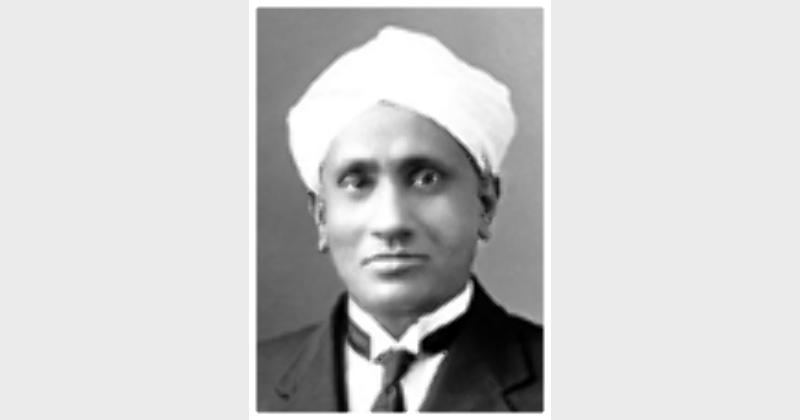
The first Indian scientist to receive the Nobel Prize

CHANDRASEKHARA Venkata Raman was born on November 7, 1888 at Tiruchirappalli, Tamil Nadu. His father, Chandrasekhara Iyer, was a lecturer in physics, in a local college.

Archive ManagerArchive Manager
Nov 24, 2012, 04:29 pm IST
inBharat
Follow on Google News
Facebook
Twitter
WhatsAppTelegramEmail

$img_titleCHANDRASEKHARA Venkata Raman was born on November 7, 1888 at Tiruchirappalli, Tamil Nadu. His father, Chandrasekhara Iyer, was a lecturer in physics, in a local college. His mother Parvathi was a housewife. He passed his matriculation when he was twelve years of age. He later joined Presidency College, Madras. He passed his BA and MA examinations with high distinction. He had a deep interest in physics.
While doing his MA, Raman wrote an article on the subject of physics and he sent it to the Philosophical Magazine and Nature, the science magazine of England. On reading this article, many eminent scientists in London noted the talent of this young Indian. Raman wanted to compete for the ICS examination. But to write that examination, one had to go to London. As he was poor and could not afford it, he took the Indian Financial Service examination, conducted in India. He was selected and posted to Rangoon, Burma (now Myanmar), which was then a part of British India.
Later, while working in Calcutta, he associated himself with an Institute called ‘Indian Association for the Cultivation of Science’, which was the only research institution in those days. While working there, his research work came to the notice of the Vice Chancellor of Calcutta University. The Vice Chancellor appointed him as a Professor of Physics in Calcutta University. Sir Raman was in a good position in the financial service. He sacrificed his profession and joined an academic career. When he was working as a Professor he got an invitation from England to attend a science conference. As the ship was sailing through the Mediterranean Sea, Raman got a doubt, as to why the waters of the sea are looking blue. This doubt initiated his research on light. He found out by experiment that the sea looks blue because of the ‘Scattering Effect of the Sunlight’. This discovery is called “The Raman Effect”. A question that was puzzling to so many other scientists was easily solved by him. His pioneering work helped him become a member of Royal Society of London in 1924. He was awarded with a Knighthood by the British Empire in 1929. This discovery also got Sir Raman the Nobel Prize for Physics for the year 1930. He became the first Indian scientist to receive the Nobel Prize.
Raman discovered “The Raman Effect” on February 28, 1928 and this day is observed as the ‘National Science Day’ in India. In 1933, he joined the Indian Institute of Science, Bangalore, as Director. Later he quit the post of Director and continued to work only in the Physics Department. The University of Cambridge offered him a Professor’s job, which Raman declined stating that he is an Indian and wants to serve in his own country. Dr Homi Bhaba and Dr Vikram Sarabhai were students of Raman.
Sir CV Raman breathed his last on November 21, 1970.

Share
Tweet
SendShareSend
✮ Subscribe Organiser YouTube Channel. ✮
✮ Join Organiser's WhatsApp channel for Nationalist views beyond the news. ✮
Previous News

Pen Drive for Better Computing Experience

Next News

Congress Cash Transfer HoaxWalmartism gone berserk. Congress goes all out to facilitate market for foreign monopoly

Related News

Representative Image

India crossed 80 Lakh HPV vaccine doses despite a sustained misinformation campaign

Riyadh’s search for Israeli intelligence and Islamabad’s refusal to deploy forces to Yemen expose growing cracks in the regional security equation

Saudi turns to Israel for intelligence as Houthis escalate; Sunni NATO ally Pakistan refuses troops for Yemen war

Bihar Temple Vandalism: Police detain 3 minor Muslim boys for stone-throwing, urination at Hanuman murti in Nalanda

IIT Madras hosts first universal brotherhood day celebration, highlights Swami Vivekananda’s legacy and vision for youth

Universal Brotherhood Day: IIT Madras hosts first celebration honouring Swami Vivekananda’s historic Chicago speech

SECL is powering India’s energy security today while advancing responsible mining, greener operations and a sustainable path towards Net Zero

Powering the present, building the future: How SECL is delivering energy security and a net-zero pathway together

Representative Image

Who Owns the Blueprint Inside Your Chip? How India is Moving from Chip Imports to Home-Grown Silicon

Load More

Latest News

Representative Image

India crossed 80 Lakh HPV vaccine doses despite a sustained misinformation campaign

Riyadh’s search for Israeli intelligence and Islamabad’s refusal to deploy forces to Yemen expose growing cracks in the regional security equation

Saudi turns to Israel for intelligence as Houthis escalate; Sunni NATO ally Pakistan refuses troops for Yemen war

Bihar Temple Vandalism: Police detain 3 minor Muslim boys for stone-throwing, urination at Hanuman murti in Nalanda

IIT Madras hosts first universal brotherhood day celebration, highlights Swami Vivekananda’s legacy and vision for youth

Universal Brotherhood Day: IIT Madras hosts first celebration honouring Swami Vivekananda’s historic Chicago speech

SECL is powering India’s energy security today while advancing responsible mining, greener operations and a sustainable path towards Net Zero

Powering the present, building the future: How SECL is delivering energy security and a net-zero pathway together

Representative Image

Who Owns the Blueprint Inside Your Chip? How India is Moving from Chip Imports to Home-Grown Silicon

From Left to Right: Kamakshi Swaminathan, National Vice President, Saksham; Satish Bansal, National Treasurer, Saksham; Umesh Aandhare, National General Secretary, Saksham; Alok Kumar, Sah Sarkaryavah; Dayal Singh Panwar, National President, Saksham; Gurmeet Singh Mahal, Jodhpur Prant President, Saksham; Dr Jasraj Sharma, Jodhpur Mahanagar President, Saksham; and Dhananjay Kumar Singh, National Krida Ayam Pramukh, Saksham

Saksham’s resolve for inclusion

Kashmiri Pandits perform a ritual on Balidan Diwas of Kashmiri Pandits, organised by Panun Kashmir in Paloura

Panun Kashmir observes Balidan Diwas in Jammu & Bengaluru, pay homage to martyrs

Tamil Nadu: Emerald Murugan murti stolen from Nadu Palani temple recovered from abandoned quarry, three arrested

Vande Mataram Row: Karnataka Congress govt faces HC challenge over two-stanza restriction

Load More
  • Privacy
  • Terms
  • Cookie Policy
  • Refund and Cancellation
  • Delivery and Shipping

© Bharat Prakashan (Delhi) Limited.
Tech-enabled by Ananthapuri Technologies

  • Home
  • Search Organiser
  • Bharat
    • Assam
    • Bihar
    • Chhattisgarh
    • Jharkhand
    • Maharashtra
    • View All States
  • World
    • Asia
    • Africa
    • North America
    • South America
    • Europe
    • Australia
  • Editorial
  • Operation Sindoor
  • Opinion
  • Analysis
  • Defence
  • Culture
  • Sports
  • Business
  • RSS @ 100
  • Entertainment
  • More ..
    • Sci & Tech
    • Vocal4Local
    • Special Report
    • Education
    • Employment
    • Books
    • Interviews
    • Travel
    • Health
    • Politics
    • Law
    • Economy
    • Obituary
  • Subscribe Magazine
  • Read Ecopy
  • Advertise
  • Circulation
  • Careers
  • About Us
  • Contact Us
  • Policies & Terms
    • Privacy Policy
    • Cookie Policy
    • Refund and Cancellation
    • Terms of Use

© Bharat Prakashan (Delhi) Limited.
Tech-enabled by Ananthapuri Technologies