The first Indian scientist to receive the Nobel Prize
July 22, 2026
  • Read Ecopy
  • Circulation
  • Advertise
  • Careers
  • About Us
  • Contact Us
Android AppiPhone AppArattai
Organiser
  • ‌
  • Bharat
    • Assam
    • Bihar
    • Chhattisgarh
    • Jharkhand
    • Maharashtra
    • View All States
  • World
    • Asia
    • Europe
    • North America
    • South America
    • Africa
    • Australia
  • Editorial
  • International
  • Opinion
  • RSS @ 100
  • More
    • Op Sindoor
    • Analysis
    • Sports
    • Defence
    • Politics
    • Business
    • Economy
    • Culture
    • Special Report
    • Sci & Tech
    • Entertainment
    • G20
    • Azadi Ka Amrit Mahotsav
    • Vocal4Local
    • Web Stories
    • Education
    • Employment
    • Books
    • Interviews
    • Travel
    • Law
    • Health
    • Obituary
  • Subscribe
    • Subscribe Print Edition
    • Subscribe Ecopy
    • Read Ecopy
  • ‌
  • Bharat
    • Assam
    • Bihar
    • Chhattisgarh
    • Jharkhand
    • Maharashtra
    • View All States
  • World
    • Asia
    • Europe
    • North America
    • South America
    • Africa
    • Australia
  • Editorial
  • International
  • Opinion
  • RSS @ 100
  • More
    • Op Sindoor
    • Analysis
    • Sports
    • Defence
    • Politics
    • Business
    • Economy
    • Culture
    • Special Report
    • Sci & Tech
    • Entertainment
    • G20
    • Azadi Ka Amrit Mahotsav
    • Vocal4Local
    • Web Stories
    • Education
    • Employment
    • Books
    • Interviews
    • Travel
    • Law
    • Health
    • Obituary
  • Subscribe
    • Subscribe Print Edition
    • Subscribe Ecopy
    • Read Ecopy
Organiser
  • Home
  • Bharat
  • World
  • Operation Sindoor
  • Editorial
  • Analysis
  • Opinion
  • Culture
  • Defence
  • International Edition
  • RSS @ 100
  • Magazine
  • Read Ecopy
Home Bharat

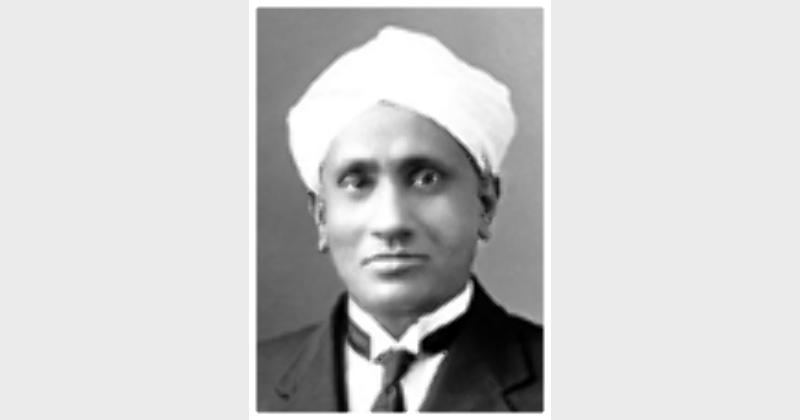
The first Indian scientist to receive the Nobel Prize

CHANDRASEKHARA Venkata Raman was born on November 7, 1888 at Tiruchirappalli, Tamil Nadu. His father, Chandrasekhara Iyer, was a lecturer in physics, in a local college.

Archive ManagerArchive Manager
Nov 24, 2012, 04:29 pm IST
in Bharat
Follow on Google News
FacebookTwitterWhatsAppTelegramEmail

$img_titleCHANDRASEKHARA Venkata Raman was born on November 7, 1888 at Tiruchirappalli, Tamil Nadu. His father, Chandrasekhara Iyer, was a lecturer in physics, in a local college. His mother Parvathi was a housewife. He passed his matriculation when he was twelve years of age. He later joined Presidency College, Madras. He passed his BA and MA examinations with high distinction. He had a deep interest in physics.
While doing his MA, Raman wrote an article on the subject of physics and he sent it to the Philosophical Magazine and Nature, the science magazine of England. On reading this article, many eminent scientists in London noted the talent of this young Indian. Raman wanted to compete for the ICS examination. But to write that examination, one had to go to London. As he was poor and could not afford it, he took the Indian Financial Service examination, conducted in India. He was selected and posted to Rangoon, Burma (now Myanmar), which was then a part of British India.
Later, while working in Calcutta, he associated himself with an Institute called ‘Indian Association for the Cultivation of Science’, which was the only research institution in those days. While working there, his research work came to the notice of the Vice Chancellor of Calcutta University. The Vice Chancellor appointed him as a Professor of Physics in Calcutta University. Sir Raman was in a good position in the financial service. He sacrificed his profession and joined an academic career. When he was working as a Professor he got an invitation from England to attend a science conference. As the ship was sailing through the Mediterranean Sea, Raman got a doubt, as to why the waters of the sea are looking blue. This doubt initiated his research on light. He found out by experiment that the sea looks blue because of the ‘Scattering Effect of the Sunlight’. This discovery is called “The Raman Effect”. A question that was puzzling to so many other scientists was easily solved by him. His pioneering work helped him become a member of Royal Society of London in 1924. He was awarded with a Knighthood by the British Empire in 1929. This discovery also got Sir Raman the Nobel Prize for Physics for the year 1930. He became the first Indian scientist to receive the Nobel Prize.
Raman discovered “The Raman Effect” on February 28, 1928 and this day is observed as the ‘National Science Day’ in India. In 1933, he joined the Indian Institute of Science, Bangalore, as Director. Later he quit the post of Director and continued to work only in the Physics Department. The University of Cambridge offered him a Professor’s job, which Raman declined stating that he is an Indian and wants to serve in his own country. Dr Homi Bhaba and Dr Vikram Sarabhai were students of Raman.
Sir CV Raman breathed his last on November 21, 1970.

ShareTweetSendShareSend
✮ Subscribe Organiser YouTube Channel. ✮
✮ Join Organiser's WhatsApp channel for Nationalist views beyond the news. ✮
Previous News

Pen Drive for Better Computing Experience

Next News

Congress Cash Transfer HoaxWalmartism gone berserk. Congress goes all out to facilitate market for foreign monopoly

Related News

Telangana BJP president N. Ramchander Rao and party workers detained by Hyderabad Police

Telangana: BJP leaders detained for protesting against demonstration by Rahul Gandhi near PM Modi’s residence

Khalistan terror group enters CJP protests: SFJ’s Pannun offers $1 million, threatens India’s disintegration

Ayurveda is rapidly emerging as one of India's strongest tools of global health diplomacy and soft power

From Jamnagar to the World: How Ayurveda is transforming India’s global health diplomacy and soft power

BJP Keralam vice president Adv. Shon George (Left)

Keralam: BJP’s Shon George says Supreme Court order vindicates party’s stand on Kerala Waqf Board

Writer Taslima Nasrin

Taslima Nasrin: A voice under attack from fundamentalism and leftist groups

Government of India Must Constitute a High-Level Committee to Ensure Transparency and Institutional Reforms in Competitive Examinations: ABVP

Students will not become instruments for narrow political interests and anti-national conspiracies: ABVP

Load More

Latest News

Telangana BJP president N. Ramchander Rao and party workers detained by Hyderabad Police

Telangana: BJP leaders detained for protesting against demonstration by Rahul Gandhi near PM Modi’s residence

Khalistan terror group enters CJP protests: SFJ’s Pannun offers $1 million, threatens India’s disintegration

Ayurveda is rapidly emerging as one of India's strongest tools of global health diplomacy and soft power

From Jamnagar to the World: How Ayurveda is transforming India’s global health diplomacy and soft power

BJP Keralam vice president Adv. Shon George (Left)

Keralam: BJP’s Shon George says Supreme Court order vindicates party’s stand on Kerala Waqf Board

Writer Taslima Nasrin

Taslima Nasrin: A voice under attack from fundamentalism and leftist groups

Government of India Must Constitute a High-Level Committee to Ensure Transparency and Institutional Reforms in Competitive Examinations: ABVP

Students will not become instruments for narrow political interests and anti-national conspiracies: ABVP

Tamil Nadu: TVK Minister attends CJP protest over NEET; BJP questions the government’s stand

Odisha CM Mohan Charan Majhi

NITI Aayog’s IFI 2026: Odisha emerges as a leading investment destination, ranks among India’s top five states

(Left) Accused Noor Hussain arrested by police (Right) House of accused Noor set ablaze by angry locals

Assam Love Jihad: Noor posed as Rahul trapped and abducted minor Hindu girl; Raped and tortured her for 4 days

Lieutenant Governor Manoj Sinha addresses 'Shakti Mimansa' symposium

J&K: LG Manoj Sinha urges Sanskrit scholars to dwell deep during ‘Shakti Mimansa’ symposium

Load More
  • Privacy
  • Terms
  • Cookie Policy
  • Refund and Cancellation
  • Delivery and Shipping

© Bharat Prakashan (Delhi) Limited.
Tech-enabled by Ananthapuri Technologies

  • Home
  • Search Organiser
  • Bharat
    • Assam
    • Bihar
    • Chhattisgarh
    • Jharkhand
    • Maharashtra
    • View All States
  • World
    • Asia
    • Africa
    • North America
    • South America
    • Europe
    • Australia
  • Editorial
  • Operation Sindoor
  • Opinion
  • Analysis
  • Defence
  • Culture
  • Sports
  • Business
  • RSS @ 100
  • Entertainment
  • More ..
    • Sci & Tech
    • Vocal4Local
    • Special Report
    • Education
    • Employment
    • Books
    • Interviews
    • Travel
    • Health
    • Politics
    • Law
    • Economy
    • Obituary
  • Subscribe Magazine
  • Read Ecopy
  • Advertise
  • Circulation
  • Careers
  • About Us
  • Contact Us
  • Policies & Terms
    • Privacy Policy
    • Cookie Policy
    • Refund and Cancellation
    • Terms of Use

© Bharat Prakashan (Delhi) Limited.
Tech-enabled by Ananthapuri Technologies