Vivekananda still reviving Hinduism
September 20, 2026
  • Read Ecopy
  • Circulation
  • Advertise
  • Careers
  • About Us
  • Contact Us
Android AppiPhone AppArattai
Organiser
  • ‌
  • Bharat
    • Assam
    • Bihar
    • Chhattisgarh
    • Jharkhand
    • Maharashtra
    • View All States
  • World
    • Asia
    • Europe
    • North America
    • South America
    • Africa
    • Australia
  • Editorial
  • International
  • Opinion
  • RSS @ 100
  • More
    • World Hindu Congress 2026
    • Op Sindoor
    • Analysis
    • Sports
    • Defence
    • Politics
    • Business
    • Economy
    • Culture
    • Special Report
    • Sci & Tech
    • Entertainment
    • G20
    • Azadi Ka Amrit Mahotsav
    • Vocal4Local
    • Web Stories
    • Education
    • Employment
    • Books
    • Interviews
    • Travel
    • Law
    • Health
    • Obituary
  • Subscribe
    • Subscribe Print Edition
    • Subscribe Ecopy
    • Read Ecopy
  • ‌
  • Bharat
    • Assam
    • Bihar
    • Chhattisgarh
    • Jharkhand
    • Maharashtra
    • View All States
  • World
    • Asia
    • Europe
    • North America
    • South America
    • Africa
    • Australia
  • Editorial
  • International
  • Opinion
  • RSS @ 100
  • More
    • World Hindu Congress 2026
    • Op Sindoor
    • Analysis
    • Sports
    • Defence
    • Politics
    • Business
    • Economy
    • Culture
    • Special Report
    • Sci & Tech
    • Entertainment
    • G20
    • Azadi Ka Amrit Mahotsav
    • Vocal4Local
    • Web Stories
    • Education
    • Employment
    • Books
    • Interviews
    • Travel
    • Law
    • Health
    • Obituary
  • Subscribe
    • Subscribe Print Edition
    • Subscribe Ecopy
    • Read Ecopy
Organiser
  • Home
  • Bharat
  • World
  • Operation Sindoor
  • Editorial
  • Analysis
  • Opinion
  • Culture
  • Defence
  • International Edition
  • RSS @ 100
  • Magazine
  • Read Ecopy
Home Bharat

Vivekananda still reviving Hinduism

REGARDED as one of the original preachers of Vedanta and Yoga, Vivekananda showed an inclination towards God from his childhood. He was born on January 12, 1863, in Shimla Pally, in north Calcutta, to the Datta family. His mother, Bhuvaneshwari Devi, who was extremely pious, gave him the name of Vireshwar. She had two daughters and she used to long for a son. To have the boon of a son, she worshipped Lord Vireswara every Monday, which is popularly believed to be an auspicious day for the devotees of Lord Sh

Archive ManagerArchive Manager
Oct 1, 2012, 12:41 pm IST
inBharat
Follow on Google News
Facebook
Twitter
WhatsAppTelegramEmail

$img_titleAnoop Verma
 REGARDED as one of the original preachers of Vedanta and Yoga, Vivekananda showed an inclination towards God from his childhood. He was born on January 12, 1863, in Shimla Pally, in north Calcutta, to the Datta family. His mother, Bhuvaneshwari Devi, who was extremely pious, gave him the name of Vireshwar. She had two daughters and she used to long for a son. To have the boon of a son, she worshipped Lord Vireswara every Monday, which is popularly believed to be an auspicious day for the devotees of Lord Shiva.
When Vivekananda was born to her, she saw him as a boon from Lord Shiva. So she decided to name the boy Vireshwar, who is an incarnation of Lord Shiva. Six months after the birth, the annaprasana ceremony was held and the boy was given the name of Narendranath. Vivekananda grew up into a sweet, sunny-tempered boy. The family kept a large retinue of pets. There was a cow, a monkey, a goat, a peacock, and several pigeons and guinea pigs. Interactions with all these creatures filled Vivekananda with a sense of respect for all forms of life.
There was a school in the village, but Vishwanath Dutta was worried that at this school his son might fall into bad company, so he hired a private tutor and started a new school in his own house. Soon other small boys of the family and from other families in the neighbourhood joined, thus giving the private school strength of more than sixty students. Even though Vivekananda was the youngest student, he picked up reading and writing skills very fast, and was amongst the best performers.
While recounting his childhood, Vivekananda has claimed that he began meditating when he was only seven years old; by the time he was eight he had experienced samadhi. At times, his meditation as a child would become so intense that he would remain calm even when he was in close proximity of a cobra.
When he was eight years old, he joined the Metropolitan Institution of Ishwar Chandra Vidyasagar. Here he endeared himself to the teachers and students due to his gregarious nature. He was good not only in studies, but also in all kinds of games. In 1879, he passed the entrance examination for Presidency College, Calcutta, with first division. He studied literature, rhetoric, as well some logic and philosophy.
Vivekananda’s was first introduced to Ramakrishna during the college’s literature class, when Principal Reverend W. Hastie, was lecturing on William Wordsworth’s poem. While trying to explain the Wordsworth’s usage of the word trance, the Principal said that if his students wanted to understand the real meaning, then they should go to Ramakrishna of Dakshineswar. This prompted many students, including Vivekananda, to visit Ramakrishna.
For Vivekananda, the meeting with Ramakrishna Paramahamsa in November 1881 was a major turning point. But he was attracted by Ramakrishna’s personality and he started visiting the ashram frequently. After each meeting the young boy’s faith in God became stronger. Some biographers have given details of how Ramakrishna made it possible for Vivekananda to have divine visions. For almost a period of five years Vivekananda remained in regular contact with Ramakrishna.
When Ramakrishna passed away, many of his disciples, under the leadership of Vivekananda, formed a fellowship at a half-ruined house at Baranagar, close to Ganga River. In 1888, Vivekananda left the monastery to lead the life of a wandering monk, whose life is free from material encumbrances like relationships or even a permanent abode. The sole possessions that he took with him were a kamandalu (water pot), staff, and his favourite book – Bhagavad Gita. For five years, he travelled through the length and breadth of India.
Vivekananda departed for Chicago on May 31, 1893 from Bombay with the aid of funds collected by his disciples. A contact in USA suggested that he should go directly to the Parliament of Religions, which would give him an introduction. That is how Vivekananda came to represent India and Hinduism. The Parliament of Religions opened on September 11, 1893 at the Art Institute of Chicago, and on the same day Vivekananda gave his first brief address. The words that he spoke elicited standing ovation from a crowd of almost seven thousand.
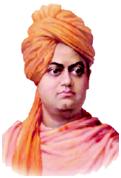
He left for India on December 16, 1896 and founded the Ramakrishna Math on 1 May 1897 at Calcutta. This organisation soon gained a reputation for spiritual activity as well as for social service. Six years later in 1902, he attained maha-samadhi. Till this day, Vivekananda commands reverence from pupils, pundits and politicians; his portrait, of a handsome and gorgeously attired upright monk, adorns the walls of homes and is looked upon as a symbol of the revival of Hinduism in modern era.

Share
Tweet
SendShareSend
✮ Subscribe Organiser YouTube Channel. ✮
✮ Join Organiser's WhatsApp channel for Nationalist views beyond the news. ✮
Previous News

Infrastructural needs and environmental impact

Next News

Social transformation often the work of ordinary people?Mohan Bhagwat

Related News

Rejinagar Candidate Saiful Islam Arrested in 2021 Clash Case

Bengal Bypolls: Rejinagar independent candidate Saiful Islam arrested in 2021 clash case

Congress Nandigram face arrested on murder charges, while party politicises the arrest

West Bengal: Congress Nandigram candidate Milan Pradhan arrested over murder cases; Party does usual political drama

An AI Generated Image

Fact Check: Indian Army did not shoot two women or burn houses in Manipur, claim is false

Operation Sindoor: Pakistan Repairs Sargodha Runway Again After 16 Months

Sixteen months after Operation Sindoor, Pakistan still repairs Sargodha Airbase runway: Reports

Chinese President Xi Jinping and his South African counterpart Cyril Ramaphosa are allegedly sick according to a widespread social media campaign. The MEA has now debunked these claims.

Fact Check: MEA flags false claims that Xi Jinping, Ramaphosa fell ill after BRICS summit

What Rahul Gandhi’s ‘Chhatron Ki Goonj’ and CJP Protests Meant for Campus Politics?

Three posts for ABVP, zero for NSUI: DUSU verdict puts Rahul Gandhi’s ‘Chhatron Ki Goonj’ & CJP impact under scanner

Load More

Latest News

Rejinagar Candidate Saiful Islam Arrested in 2021 Clash Case

Bengal Bypolls: Rejinagar independent candidate Saiful Islam arrested in 2021 clash case

Congress Nandigram face arrested on murder charges, while party politicises the arrest

West Bengal: Congress Nandigram candidate Milan Pradhan arrested over murder cases; Party does usual political drama

An AI Generated Image

Fact Check: Indian Army did not shoot two women or burn houses in Manipur, claim is false

Operation Sindoor: Pakistan Repairs Sargodha Runway Again After 16 Months

Sixteen months after Operation Sindoor, Pakistan still repairs Sargodha Airbase runway: Reports

Chinese President Xi Jinping and his South African counterpart Cyril Ramaphosa are allegedly sick according to a widespread social media campaign. The MEA has now debunked these claims.

Fact Check: MEA flags false claims that Xi Jinping, Ramaphosa fell ill after BRICS summit

What Rahul Gandhi’s ‘Chhatron Ki Goonj’ and CJP Protests Meant for Campus Politics?

Three posts for ABVP, zero for NSUI: DUSU verdict puts Rahul Gandhi’s ‘Chhatron Ki Goonj’ & CJP impact under scanner

A representative image

LPG subsidy rule change from October 1: Aadhaar biometric authentication mandatory

NITI Aayog Focuses over the Strategies for Empowering Caregivers in the path of Viksit Bharat@2047

Reimagining Caregiving: Bharat’s action for empowering the hands that hold us

BMS launches National Organisation for Digital Employees (NODE) for IT workforce; aims to strengthen employee welfare

GalaxEye’s US patent for OptoSAR marks a major boost for India’s private space sector, advancing its global Earth-observation ambitions

GalaxEye secures US patent for OptoSAR technology, boosting India’s private space and deep-tech ambitions

Load More
  • Privacy
  • Terms
  • Cookie Policy
  • Refund and Cancellation
  • Delivery and Shipping

© Bharat Prakashan (Delhi) Limited.
Tech-enabled by Ananthapuri Technologies

  • Home
  • Search Organiser
  • Bharat
    • Assam
    • Bihar
    • Chhattisgarh
    • Jharkhand
    • Maharashtra
    • View All States
  • World
    • Asia
    • Africa
    • North America
    • South America
    • Europe
    • Australia
  • Editorial
  • Operation Sindoor
  • Opinion
  • Analysis
  • Defence
  • Culture
  • Sports
  • Business
  • RSS @ 100
  • Entertainment
  • More ..
    • Sci & Tech
    • Vocal4Local
    • Special Report
    • Education
    • Employment
    • Books
    • Interviews
    • Travel
    • Health
    • Politics
    • Law
    • Economy
    • Obituary
  • Subscribe Magazine
  • Read Ecopy
  • Advertise
  • Circulation
  • Careers
  • About Us
  • Contact Us
  • Policies & Terms
    • Privacy Policy
    • Cookie Policy
    • Refund and Cancellation
    • Terms of Use

© Bharat Prakashan (Delhi) Limited.
Tech-enabled by Ananthapuri Technologies