Its ancient political treatises a guide or missing link?
September 1, 2026
  • Read Ecopy
  • Circulation
  • Advertise
  • Careers
  • About Us
  • Contact Us
Android AppiPhone AppArattai
Organiser
  • ‌
  • Bharat
    • Assam
    • Bihar
    • Chhattisgarh
    • Jharkhand
    • Maharashtra
    • View All States
  • World
    • Asia
    • Europe
    • North America
    • South America
    • Africa
    • Australia
  • Editorial
  • International
  • Opinion
  • RSS @ 100
  • More
    • Op Sindoor
    • Analysis
    • Sports
    • Defence
    • Politics
    • Business
    • Economy
    • Culture
    • Special Report
    • Sci & Tech
    • Entertainment
    • G20
    • Azadi Ka Amrit Mahotsav
    • Vocal4Local
    • Web Stories
    • Education
    • Employment
    • Books
    • Interviews
    • Travel
    • Law
    • Health
    • Obituary
  • Subscribe
    • Subscribe Print Edition
    • Subscribe Ecopy
    • Read Ecopy
  • ‌
  • Bharat
    • Assam
    • Bihar
    • Chhattisgarh
    • Jharkhand
    • Maharashtra
    • View All States
  • World
    • Asia
    • Europe
    • North America
    • South America
    • Africa
    • Australia
  • Editorial
  • International
  • Opinion
  • RSS @ 100
  • More
    • Op Sindoor
    • Analysis
    • Sports
    • Defence
    • Politics
    • Business
    • Economy
    • Culture
    • Special Report
    • Sci & Tech
    • Entertainment
    • G20
    • Azadi Ka Amrit Mahotsav
    • Vocal4Local
    • Web Stories
    • Education
    • Employment
    • Books
    • Interviews
    • Travel
    • Law
    • Health
    • Obituary
  • Subscribe
    • Subscribe Print Edition
    • Subscribe Ecopy
    • Read Ecopy
Organiser
  • Home
  • Bharat
  • World
  • Operation Sindoor
  • Editorial
  • Analysis
  • Opinion
  • Culture
  • Defence
  • International Edition
  • RSS @ 100
  • Magazine
  • Read Ecopy
Home General

Its ancient political treatises a guide or missing link?

Archive ManagerArchive Manager
Jan 1, 2012, 12:00 am IST
inGeneral
Follow on Google News
Facebook
Twitter
WhatsAppTelegramEmail

BOOKMARK-2

West seeks to understand new China

By Dr Vaidehi Nathan

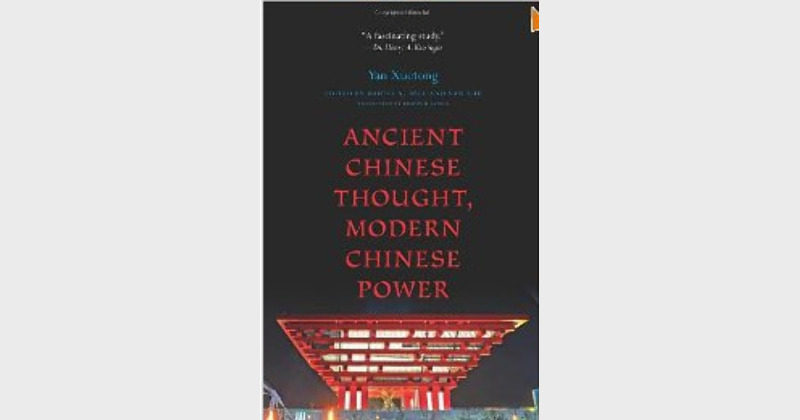
Ancient Chinese Thought, Modern Chinese Power, Yan Xuetong, translated by Edmund Ryden,  Princeton University Press, Pp 300 (HB),  $29.95.

The West is yet again on a rediscovering mission to China. It is publishing book after book on Chinese economy, history, politics and philosophy. The ancient wisdom of the Chinese philosophers is being academically revived to be trimmed and tailored to fit the 21st century China. The book Ancient Chinese Thought, Modern Chinese Power has to be read in this context. Resurrecting the theories of seven pre-Qin masters, (Qin was the first imperial dynasty of China, dated 221 to 207 B.C.) the book, through essays translated from the Chinese writings, connects them to the present-day wisdom of China. 

The essays have been written originally in Chinese by Yan Xuetong, till now widely perceived as hawkish policy advisor and a staunch enemy of liberal internationalism. The new translations reveal Yan to be neither a communist (or Marxist) nor a neocon. On the other hand, Yan’s political theory “was shaped by his groundbreaking academic research on ancient Chinese thinkers who wrote about governance and interstate relations during a period of incessant warfare between fragmented states, before China was unified by the first emperor of Qin in 221 BC” says Daniel A. Bell in the introduction to the book.  According to Yan, political leadership is the key to national power and that morality is an essential part of political leadership. Military and economic supremacy might matter as components of national power, but are secondary to political leadership.

The seven pre-Qin masters discussed in the book are: Guanzi, Loazi, Confucius, Mencius, Mozi, Xunzi and Hanfeizi. Xunzi distinguishes between three kinds of leadership: humane authority, hegemony and tyranny. Humane authority is described as a state that wins the hearts of the people at home and abroad. Yan draws a comparison to drive home this point. “…if one compares FD Roosevelt as President of the United States during World War II and George W Bush, we can see what Xunzi means about moral power of the leader…. Roosevelt’s belief in world peace was the impetus for the foundation of the United Nations after World War II, whereas Bush’s Christian fundamentalist beliefs led to the United States continually flouting international norms…”

Reading the book, one cannot help mention that there is an abundance of treatise on politics, governance, statecraft and diplomacy in Indian literature — be it the epics, the puranas or the folklore. Chanakya’s Arthshastra is considered one of the most brilliant works on statecraft and politics. The epics and such writings as these are more ancient than the Chinese masters quoted in the book.

In all ancient wisdom the moral authority of the ruler has been emphasized upon. Yan in his essay on the contemporary China notes: “The Chinese government has not yet been able consciously to make building a humane authority the goal of its strategy for scent.” Daniel adds “Like contemporary international relations theorists, the Chinese government seems to over-estimate the political importance of economic power. In this case, the government may still be under the sway of Marxist economic determinism.”

Yan Xuetong says that there are two criticisms on the pre-Qin philosophies: one, that the dates of these are not authenticated and the other, that they were mainly written for inter-state politics (between dynasties or kingdoms within China) and not international (read inter-cultural) dealings. He clarifies that the precise date of the works is not important, except that they are ancient and second the wisdom in them can be applied to today’s situation for deeper understanding. “As a political scientist, my purpose in studying pre-Qin interstate political though is not to understand the past so much as to draw lessons for the present, especially for the great task of China’s rise.”

He goes on to add in another essay that the goal of national resurgence  lies in China being “more advanced, more civilized, stronger, and richer, but not more crafty, devious, or smug.” China is all these at least vis-à-vis India. It is helping Pakistan to spite India, quarrelling on the Indian projects over Vietnam sea space, and stymieing India’s claim to permanent position in the UN. Yan advises China to formulate a foreign policy that is “distinct” from that of the US in three areas. It should take as its principle a balance between responsibilities and rights, it should reflect the “principle of reversed double standards, namely that more developed countries should observe international norms more strictly” and China should promote the “open principle of the traditional idea of all under heaven as one.” Yan Xuetong’s political philosophy, drawn from the ancient wisdom is suggesting all that China is not today. Interestingly, while Japan has got several references, India is not mentioned at all. Yan is professor of political science and director of the Institute of International Studies at Tsinghua University in Beijing. Daniel A Bell editor of this volume is the Series Editor of the Prince-China Series.

(Princeton University Press, 41 William Street, Princeton, New Jersey 08540)
Share
Tweet
SendShareSend
✮ Subscribe Organiser YouTube Channel. ✮
✮ Join Organiser's WhatsApp channel for Nationalist views beyond the news. ✮
Previous News

9/11 Plot: An insightful leap into the heart of subversion and terror

Next News

A short history of Dictionaries

Related News

(Left) PM Narendra Modi (Right) Russian President Vladimir Putin

“Time to move away from endless war to end of war”: PM Modi tells Russian Prez Putin on sidelines of SCO summit

ABVP secures a historic, back-to-back victory in the Punjab University Campus Student's election.

ABVP emerges victorious in Punjab University’s student election; Gen Z reaffirms faith in nationalism

Pakistan Human Rights Commission questions credibility of PoJK elections

Pakistan Human Rights Commission questions credibility of PoJK elections; Exposes lethal force used against protestors

Bengaluru police send Bangladeshi nationals to Malda for deportation

Karnataka | Operation Muktha: 31 Bangladesh nationals sent to Malda from Bengaluru for deportation

Chandrababu dressed as Mahabali (Image Courtesy- Manoramanews

Keralam: Chandrababu, dressed as “Mahabali”, attacked by Ashraf with boiling oil after wishing ‘Happy Onam’

Prime Minister Narendra Modi addressing public in Jalandhar, Punjab in July 2026

Punjab Assembly Polls: Gearing up for the bordering state

Load More

Latest News

(Left) PM Narendra Modi (Right) Russian President Vladimir Putin

“Time to move away from endless war to end of war”: PM Modi tells Russian Prez Putin on sidelines of SCO summit

ABVP secures a historic, back-to-back victory in the Punjab University Campus Student's election.

ABVP emerges victorious in Punjab University’s student election; Gen Z reaffirms faith in nationalism

Pakistan Human Rights Commission questions credibility of PoJK elections

Pakistan Human Rights Commission questions credibility of PoJK elections; Exposes lethal force used against protestors

Bengaluru police send Bangladeshi nationals to Malda for deportation

Karnataka | Operation Muktha: 31 Bangladesh nationals sent to Malda from Bengaluru for deportation

Chandrababu dressed as Mahabali (Image Courtesy- Manoramanews

Keralam: Chandrababu, dressed as “Mahabali”, attacked by Ashraf with boiling oil after wishing ‘Happy Onam’

Prime Minister Narendra Modi addressing public in Jalandhar, Punjab in July 2026

Punjab Assembly Polls: Gearing up for the bordering state

“India’s spiritual values and unity in diversity show the way to the world”: Jason Kenney at Hindu Vishwa Bandhu Event

PM Modi held bilateral discussions with Iran President Masoud Pezeshkian on the sidelines of the SCO Summit

SCO Summit: PM Modi meets Iran President; Reaffirms regional stability & freedom of navigation for global security

PM addressing the gathering at the Economic Times World Leaders Forum – 2026 held, in New Delhi on August 21, 2026.

PLP to PLI: From restrictive quota to proactive incentives

Drug supply chain must be dismantled; AAP has failed in delivering the promise in Punjab: Dr Vikramjit Singh Sahney

Load More
  • Privacy
  • Terms
  • Cookie Policy
  • Refund and Cancellation
  • Delivery and Shipping

© Bharat Prakashan (Delhi) Limited.
Tech-enabled by Ananthapuri Technologies

  • Home
  • Search Organiser
  • Bharat
    • Assam
    • Bihar
    • Chhattisgarh
    • Jharkhand
    • Maharashtra
    • View All States
  • World
    • Asia
    • Africa
    • North America
    • South America
    • Europe
    • Australia
  • Editorial
  • Operation Sindoor
  • Opinion
  • Analysis
  • Defence
  • Culture
  • Sports
  • Business
  • RSS @ 100
  • Entertainment
  • More ..
    • Sci & Tech
    • Vocal4Local
    • Special Report
    • Education
    • Employment
    • Books
    • Interviews
    • Travel
    • Health
    • Politics
    • Law
    • Economy
    • Obituary
  • Subscribe Magazine
  • Read Ecopy
  • Advertise
  • Circulation
  • Careers
  • About Us
  • Contact Us
  • Policies & Terms
    • Privacy Policy
    • Cookie Policy
    • Refund and Cancellation
    • Terms of Use

© Bharat Prakashan (Delhi) Limited.
Tech-enabled by Ananthapuri Technologies