AGENDA
Ten Reasons why FDI in Retail is disastrous
By Sanjay Kaul
Nobody in urban India is suffering for lack of ‘access’ to food or grocery items. If at all it is the public distribution system that is diseased with corruption and needs to be replaced or removed. Access to food is an issue in the remote and rural impoverished areas of the country, where as the fine print tells you, FDI in retail will not be implemented. Comparative examples
FDI in retail is a non-critical area of intervention
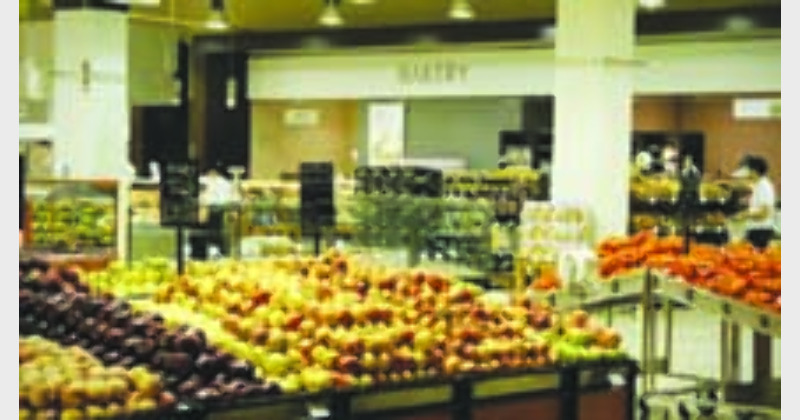
that try and portray an opposition to FDI in retail as regressive are not only misplaced, they are patently suspect. (Montek Singh Ahluwalia of the Planning Commission included, who suggested that arguing against FDI in retail was like complaining that the taxis would dislodge the Tonga). To imagine that FDI in retail exemplifies a progressive mindset shames us into thinking that an ability to buy in the comfort of a twenty thousand square feet air conditioned space is more indicative of progress than providing similar quality housing for its citizen or schools for our children. The taxi took over the Tonga for reasons of speed and protection from the elements. FDI in retail projects no such benefit. We already get what we need for our daily needs through local general stores and local big format stores. The gloss of a shiny international brand name atop a store is not enough of a differential.
Middlemen are key to distribution
The myth about ‘farm-to-store’ supply chain should end with the simple fact that middlemen will not be removed from the operation but that existing middle men will be replaced by bigger, more organised, more prosperous middlemen. Anyone who knows the business of distribution knows that there is nothing called a direct sale from farmer to retail, unless it is self-owned farm by the retailer. The process requires a minimum of three transactions. From the farmer to the transporter, to the distributor and to the end supplier. There are middlemen even if you make a direct purchase and underwrite the farmer’s produce and each point of contact costs something to keep his or her services going. The middleman is not an enemy of the state. The middleman is being paid for services rendered, his is not a free lunch. He is the conduit that makes delivery possible. Removing middle men, as is being claimed by votaries of FDI in Retail does nothing for the families of those who will be obliterated by the new model that will take over: the retailer will have his own middle men in the system, and that is all the difference there will be. The argument advanced by many including some farmer lobby groups that there are 4 to 10 layers of middle men between producer and retail are not only humbugging they are undermining free market movements where nobody can get in line unless he performs a function. The other charge, that a policy failure produced such layers of middlemen can be countered with a simple answer – FDI in Retail cannot remedy a policy failure. It is the government’s job to fix that, not Walmart’s.
Farmers will not get better prices
The idea that the farmer will get a better price for his produce if FDI in Retail is allowed is a baseless suggestion. The open market does not work on altruism and social service. It negotiates the best for itself so it can corner the most for itself. Farmer suicides are not because they cannot sell, as is being written about by irresponsible columnists and business leaders but because they are unable to get remunerative prices for their produce owing to poor quality produce due to lack of proper crop management or crop failure, an inability to pay back their loans or make ends meet and lose their land. To suggest that foreign retailers would be so teary eyed at the plight of farmers that they would offer a premium on produce which is available at less is plain childish. Fact is that the markets, if allowed to function without control, will take their own route to price discovery. And remember, the more clout a buyer has, the lesser the seller gets per capita. That is a law of the free market. FDI in retail cannot do any more than local big format retailers are already doing. Those that argue that FDI in retail will bring succor to farmers and reduce prices for consumers need to explain why, when there are home grown large format retailers, that is not already the case. How can you expand on a theme when you admit that it is not working? The farmer is only an emotional hook in the pro FDI lobbyist’s scheme. The truth is that more than 70 per cent of revenues of large format stores come from non-food items where the farmer does not even figure. All the stories in media about farmer unions supporting the move are motivated through two straight facts: lobbying with a generous dose of cash infusion into these unions by food majors and retail chains and the other more important fact – they are right about some farmers in their areas, specially Punjab getting a better deal. But the cost of that is this: big retail and food processors alter crop selection to have farmers produce to order. So, because Pepsi needs potatoes for their chips, farmers skip the Dal season and other such produce in favour of extensive cultivation and specialisation towards potato cultivation. Now they are right – that particular farmer is doing well – contract farming is profitable, but in effect an entire range of products are now in short supply. Precisely why Dal and cereals and vegetables are becoming costlier by the day. This is apart from the other real problem— corporates do not like dealing with a dozen small producers. So they focus on one or two large producers and create conditions for the rest to either submit to a larger contractor or just sell the land and move out of business.
Brands compete to secure market share. Market share can only be secured at the cost of another existing competitor
It is equally naive to imagine that the anomalies of predatory pricing will be taken care of once the sector is open to competition. Let us understand the idea of competition. All competition starts from a baseline price point. The base line price already exists with the current prices the farmer gets. All competition is normally over and above that base line. Nobody sells below his purchase price. But what is being debated here is the ability of the big retailer to sustain losses for a long period of time by selling under cost to dismantle competition owing to deep pockets. Brands will go on a losing spree to corner market share. That is an old principle. Walmart will sustain losses to counter Carrefour and a Carrefour will do the same to contain another competitor. In a fight of such giants, the small retailer and the kirana shop owner of today stand no chance. As a caveat, one should be wondering what the local large format stores would face and why they are supporting a policy shift that could hurt them. After all, Spencer and a number of smaller retailers hardly stand a chance in the face of a Walmart. Well the reason is simple: The only reason you hear some of them support the idea is because [a] some want to raise money from markets abroad to run their unprofitable enterprises for a little longer until they hope to break even [b] access cheaper funds which the Government and its fiscal laws have made almost non remunerative or [c] hope to be taken over and bought out. Note that the retail business is cut throat and many large-format or branded stores have already folded. Subhiksha in South India and Vishal and Sabka Bazaar in the North come to mind immediately. Most of the existing local large format retailers who support the idea are folks who are looking for a bail out or hoping to sell their operations on the back of valuations.
Big Retail cannot co-exist with small retail
That big retail can co-exist with kirana is a flat impossibility. It can’t, because big retail alters the playing field permanently. The instruments of small retail are redundant in the schema of big retail. The grammar of big format selling influences the buying habits of people. The kirana sells on the basis of daily consumables of a middle class. The big-format pushes for bulk sales, weekly big purchases where you buy four when you need one simply because it is priced in an attractive deal for the day. The kirana and the small retailer cannot bundle promo packs because it can’t deal directly with producers. Big retail is habit altering. It is not an alternate, not an expansion of choice but a modification of the manner of consumption and sale. Big retail does not encourage balanced consumption but exists on the principle of overuse, and excess. Big retail altered the psyche of an entire generation of Americans – consumers, producers and manufacturers alike. The idea that shopping can be a weekend activity, where you load up on supplies for a week comes from a country where joint families are not known, buying fresh vegetables daily is unknown, where women don’t cook and burgers are staple diet. Weekend buying leads to storage. Which leads to oversized freezers; which leads to more frozen food, and to more heat-and-eat dishes, and the spiral of the other problems of plenty. Indians don’t consume like that and there is much to be said about buying fresh and local, as the world is now discovering.
(To be concluded)