BOOKMARK-6
June 6, 2026
  • Read Ecopy
  • Circulation
  • Advertise
  • Careers
  • About Us
  • Contact Us
Android AppiPhone AppArattai
Organiser
  • ‌
  • Bharat
    • Assam
    • Bihar
    • Chhattisgarh
    • Jharkhand
    • Maharashtra
    • View All States
  • World
    • Asia
    • Europe
    • North America
    • South America
    • Africa
    • Australia
  • Editorial
  • International
  • Opinion
  • RSS @ 100
  • More
    • Op Sindoor
    • Analysis
    • Sports
    • Defence
    • Politics
    • Business
    • Economy
    • Culture
    • Special Report
    • Sci & Tech
    • Entertainment
    • G20
    • Azadi Ka Amrit Mahotsav
    • Vocal4Local
    • Web Stories
    • Education
    • Employment
    • Books
    • Interviews
    • Travel
    • Law
    • Health
    • Obituary
  • Subscribe
    • Subscribe Print Edition
    • Subscribe Ecopy
    • Read Ecopy
  • ‌
  • Bharat
    • Assam
    • Bihar
    • Chhattisgarh
    • Jharkhand
    • Maharashtra
    • View All States
  • World
    • Asia
    • Europe
    • North America
    • South America
    • Africa
    • Australia
  • Editorial
  • International
  • Opinion
  • RSS @ 100
  • More
    • Op Sindoor
    • Analysis
    • Sports
    • Defence
    • Politics
    • Business
    • Economy
    • Culture
    • Special Report
    • Sci & Tech
    • Entertainment
    • G20
    • Azadi Ka Amrit Mahotsav
    • Vocal4Local
    • Web Stories
    • Education
    • Employment
    • Books
    • Interviews
    • Travel
    • Law
    • Health
    • Obituary
  • Subscribe
    • Subscribe Print Edition
    • Subscribe Ecopy
    • Read Ecopy
Organiser
  • Home
  • Bharat
  • World
  • Operation Sindoor
  • Editorial
  • Analysis
  • Opinion
  • Culture
  • Defence
  • International Edition
  • RSS @ 100
  • Magazine
  • Read Ecopy
Home Bharat

BOOKMARK-6

A narrative of unbelievable human tragedy?

Archive ManagerArchive Manager
Oct 24, 2011, 11:18 am IST
in Bharat
Follow on Google News
FacebookTwitterWhatsAppTelegramEmail

A narrative of unbelievable human tragedy?

Sieged Leningrad starved to death ?

By Dr R Balashankar?

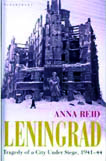
Leningrad: Tragedy of a City Under Siege, 1941-44, Anna Reid, Bloomsbury Publishing Plc.,   Pp 492(HB), £ 25.00.?

Unknown to the world, unmourned by even their fellow countrymen and uncared for by their political rulers, seven and a half lakh people died in nine hundred days, thirsting and starving. Death took even their dignity away, they were buried in unmarked graves, without coffins. That is the tragic story of Leningrad, a once resplendent city. It was under siege by the Hitler’s army from September 1941 to January 1944. Their own government, Stalin’s Soviet Union abandoned them to their fate. And the story is only unfolding with several archival material as yet not accessed. Anna Reid, a Russian history scholar, has told the poignant account of the unfortunate city in Leningrad: Tragedy of a City Under Siege, 1941-44.
In sheer number, this was one of the biggest tragedies, considering it took four times more civilian lives than the combined toll of the bombings of Hiroshima and Nagasaki. But it has not been written about essentially because the Soviets made it impossible. Even at the Nuremberg trial, the Soviet government gave a “spuriously precise death toll of 632,252.” Several sources of information were destroyed during post-war purges. What has been accessed by Reid are mainly personal diaries and notes written by some of the people in intermediary positions of power. That is what makes the book all the more touching, one almost choking with pathos thinking of all the lives lost for no apparent cause or fault of theirs.
The siege started in October, quiet unexpectedly, catching the government and the citizens unprepared. Hunger set in almost immediately. And 1941 saw one of the harshest winters ever with day temperatures dropping to -30 degrees C. Reid concentrates on these three-four months of the toughest existence when mass deaths took place. Russian historians have called it the ‘historic period’ of the siege. If Leningrad had to fall, it would have, then. But the people of the city did not seek surrender or refuge. The Germans kept waiting, outside the city for the citizens to come begging. They did not. By next winter, there were fewer mouths to feed and a thin line of supply had been established and forced evacuations were done to a small extent.
One dairy entry by Dmitri Likhachev says, “In winter, lying in bed, I thought of one thing until my head hurt: there, on the shelves in the shops, there had been canned fish. Why I hadn’t bought it? Why I had bought only eleven jars of cod-liver oil…. These ‘whys’ were terrible tormenting. I thought of every uneaten bowl of soup, every crust of bread thrown away, every potato peeling, with as much remorse and despair as if I’d been the murderer of my own children.”
Evacuation separated families. Children were taken away by force from mothers to ‘safe destinations.’ Only, this gave rise to rumour and panic, with parents refusing to part with kids, choosing to let them die with them, here, amid sufferings. Germans pounded the city with shelling and bombs, reducing the city to rubbles. They targeted buildings — factories and warehouses where food was stored and burnt them up. The evacuation lorries were attacked. The objective was to stop any movement to and from the city, to bring it to the knees. In one of the worst daylight raids, 280 planes dropped 528 high-explosive bombs and about 2000 incendiaries.
The food scarcity was unbearable. From infant to 12 years of age, the ration was 250 grams of bread. The civilian population got 125 grams. People ‘improvised,‘ converting husks of linseed, cotton, hemp or sunflower seeds into ‘pancakes,’ eating joiner’s glue, made from the bones and hooves of slaughtered animals. “Substitutes were often dangerous. Even if not poisonous in themselves, they could cause diarrhoea and vomitting, or damage thinned stomach linings. Anything, though was better than nothing.” There were reports of cannibalism, with parents eating the corpse of their children.
Death was a common sight. A manager of the Lenenergo power station wrote “the director’s father died. He’s still lying on a daybed in Chistyakov’s (director) office. Next to him Chistyakov carries on working and eating, and then takes rests on the same bed. Colleagues and visitors come and go — the dead man disturbs no-one.”
So who is to be blamed? Says Reid, “Nazi Germany initiated the siege, with purposive and inhuman deliberation, but it was the Soviet regime that failed to evacuate the civilian population in time, to lay in food stocks, to stamp out food theft or to organise the Ice Road properly. It was also the Soviet regime that threw away thousands of young lives in the People’s Levy, and continued to imprison and execute its own humblest and most patriotic citizens even as they died of hunger.”
What is worse is that the successive governments, till Gorbachev, denied information and sought to underplay the horror under such terms as ‘patriotism’ and ‘bravery.’ The book written with utmost sensitivity brings out not just the human tragedy of wars but the way governments often treat their citizens, orphaning them when they need protection the most. Anna Reid has read law at Oxford and Russian History at UCL’s School of Slavonic and East European Studies and has authored other books.
(Bloomsbury Publishing Plc49-51 Bedford Square, London WC1B 3DP)?


ShareTweetSendShareSend
✮ Subscribe Organiser YouTube Channel. ✮
✮ Join Organiser's WhatsApp channel for Nationalist views beyond the news. ✮
Previous News

BOOKMARK-4

Next News

BOOKMARK-5

Related News

Union Home Minister Amit Shah addressing BSF personnel at the Lankamura Border Outpost along the India-Bangladesh border in West Tripura district on June 5, 2026

Amit Shah at Bangladesh Border: “India will have an impregnable security grid soon”

India slams Pakistan’s bid to hold elections in Gilgit-Baltistan, demands end to illegal occupation

Maharashtra government approves central wage structure for Pune Metro Contract Workers; Major victory for BMS

India seals robust 7.7% GDP Growth in FY26: Reflects economic resilience amid West Asia crisis & other global headwinds

A representative image

After TCS, Corporate Jihad allegations reach SBI: Married Hindu employee conversion claims trigger FIR in Mumbai

MEA spokesperson Randhir Jaiswal highlights India's resolve to deport illegal Bangladeshi migrants via bilateral mechanisms

India reiterates strong resolve to deport illegal Bangladeshis; Flags delay of bilateral procedures from Dhaka

Load More

Latest News

Union Home Minister Amit Shah addressing BSF personnel at the Lankamura Border Outpost along the India-Bangladesh border in West Tripura district on June 5, 2026

Amit Shah at Bangladesh Border: “India will have an impregnable security grid soon”

India slams Pakistan’s bid to hold elections in Gilgit-Baltistan, demands end to illegal occupation

Maharashtra government approves central wage structure for Pune Metro Contract Workers; Major victory for BMS

India seals robust 7.7% GDP Growth in FY26: Reflects economic resilience amid West Asia crisis & other global headwinds

A representative image

After TCS, Corporate Jihad allegations reach SBI: Married Hindu employee conversion claims trigger FIR in Mumbai

MEA spokesperson Randhir Jaiswal highlights India's resolve to deport illegal Bangladeshi migrants via bilateral mechanisms

India reiterates strong resolve to deport illegal Bangladeshis; Flags delay of bilateral procedures from Dhaka

Kerala HC rejects CMRL appeal, clears way for ED probe against Pinarayi Vijayan’s daughter in money laundering case

Uttar Pradesh leads in Bharat's green transformation

World Environment Day 2026: On his birthday, Yogi Adityanath’s green vision powers Uttar Pradesh’s transformation

As Khalistani networks seek new platforms beyond the West, Azerbaijan has emerged as a key venue for conferences, campaigns and narratives aligned with the Pakistan-Turkey axis against India.

Khalistan’s New Grazing Ground: Azerbaijan emerges as new hub for Turkey-Pakistan backed anti-India networks

Kochi IPL Mystery: Why Did Sunanda Pushkar Surrender Stake Amid Benami Claims Tied to Shashi Tharoor, Sonia Gandhi?

Kochi IPL Mystery: Why Did Sunanda Pushkar Surrender Stake Amid Benami Claims Tied to Shashi Tharoor, Sonia Gandhi?

Load More
  • Privacy
  • Terms
  • Cookie Policy
  • Refund and Cancellation
  • Delivery and Shipping

© Bharat Prakashan (Delhi) Limited.
Tech-enabled by Ananthapuri Technologies

  • Home
  • Search Organiser
  • Bharat
    • Assam
    • Bihar
    • Chhattisgarh
    • Jharkhand
    • Maharashtra
    • View All States
  • World
    • Asia
    • Africa
    • North America
    • South America
    • Europe
    • Australia
  • Editorial
  • Operation Sindoor
  • Opinion
  • Analysis
  • Defence
  • Culture
  • Sports
  • Business
  • RSS @ 100
  • Entertainment
  • More ..
    • Sci & Tech
    • Vocal4Local
    • Special Report
    • Education
    • Employment
    • Books
    • Interviews
    • Travel
    • Health
    • Politics
    • Law
    • Economy
    • Obituary
  • Subscribe Magazine
  • Read Ecopy
  • Advertise
  • Circulation
  • Careers
  • About Us
  • Contact Us
  • Policies & Terms
    • Privacy Policy
    • Cookie Policy
    • Refund and Cancellation
    • Terms of Use

© Bharat Prakashan (Delhi) Limited.
Tech-enabled by Ananthapuri Technologies