M
NARAD
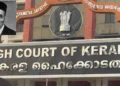
HIGH Courts have recently been in the news, not to speak of the Supreme Court itself. The judges of two High Courts, for instance, have drawn attention to themselves by allegedly going on mass leave?something unheard of before. No matter what the internal differences between the Chief Justice of a High Court and his colleagues, they are expected to be settled behind the scenes without drawing public attention.
But times are changing. Worse, the judiciary seems to be using the Law of Contempt as a shield against public scrutiny and criticism which are essential for its own health. This has upset the media in Punjab to the point that the editor of The Tribune felt it necessary to write a front-page editorial condemning recent developments. Some time in the first half of April, several responsible newspapers in the Punjab-Haryana region received identical letters from an officer of the Punjab and Haryana High Court, which seemed uncalled for.
No matter what the internal differences between the Chief Justice of a High Court and his colleagues, they are expected to be settled behind the scenes without drawing public attention. But times are changing. Worse, the judiciary seems to be using the Law of Contempt as a shield against public scrutiny and criticism which are essential for its own health.
The letter, written by one M.M. Singh Bedi, Registrar (Judicial)-cum-Public Relations Officer of the Punjab and Haryana High Court was received by The Tribune on April 7. Described as the High Court'spress communique, it said: ?It is understood that some news is going to be published in relation to the affairs of the High Court in the media. I am directed to issue a press communique to the Press (sic) that no news pertaining to the administrative affairs of the High Court should be published unless correctness of it is cross-checked from me.? In his letter?or communique? Bedi did not say under whose authority he had sent it to the newspaper, and what did he have in mind when he spoke about ?the administrative affairs?. All that he said was that he had been ?directed?, giving the impression that the directions had come from the High Court itself, meaning the Chief Justice of the Punjab and Haryana High Court.
The Tribune promptly made inquiries into the matter which showed that several judges of the Court were not even aware of the despatch of the communique or its contents. Ordinarily the Registrar (Judicial) functions under the authority of the Chief Justice of the High Court. The Tribune wondered what could have been the intention of the Court in issuing the communique.
In his editorial, H.K. Dua drew attention to the communique'sorder that ?no news pertaining to the administrative affairs of the High Court should be published?, unless its correctness was cross-checked with the Registrar.
Wrote Dua: ?We, in The Tribune and other newspapers, are perhaps more concerned about accuracy of our news than Mr Bedi. Most newspapers strive hard daily to check and counter-check facts before publishing news for the benefit of the public. If it was just an advisory from Mr Bedi, we might have taken it as a new-found keenness of the High Court'sfirst-ever Public Relations Officer to show efficiency. But it is not so apparently. What the High Court'sill-advised communique is trying to ensure is that the press cannot publish a news about what is happening in the administrative side unless it is cleared by Mr Bedi… It is fear of facts that seems to be the cause of the communique. Essentially, a PRO is supposed to be of help to the people and the press but the High Court'snew officer has clearly been directed to assume the role of an authority, which would have the power to pre-censor the reports and information, which the newspapers are duty-bound to share with the readers on matters of public interest.? Some-what irked, if not angered, Dua pointed out that what the Punjab and Haryana High Court is trying to do is to impose ?a kind of censorship?or a news-clearing authority?for which it has no power under the Constitution.? And quite rightly he added: ?We in the press will strive for accuracy and professional values despite the High Court'sdirective and, if necessary, without the help of its Registrar (Judicial)-cum-Public Relations Officer.?
Well said. What is intriguing is the fact that a High Court thinks it necessary to have a Public Relations Officer. Why does a High Court need one? The deliberations of a High Court should be an open book. Courts don'tneed public relations officers. And certainly to expect a newspaper to have court reportage pre-censored by a PRO is the limit. Dua, as editor, has rightly raised the matter and one can only hope that the Registrar-cum-PRO will know the limits of his powers.
Courts don'tneed public relations officers. And certainly to expect a newspaper to have court reportage pre-censored by a PRO is the limit.
Dua'sdefence of the rights of the media remind us of another great stalwart of the media, Ramnath Goenka, founder of the Indian Express, which was in the forefront of the fight for freedom during the Emergency imposed by Indira Gandhi in 1975. The year 2004 happens to be the year of Goenka'sbirth centenary, but hardly any newspaper has taken note of the fact. Goenka passed away thirteen years ago and that is a long time for the media to remember even its own stalwarts. It is a pity though.
Goenka was an Indian original, like an earlier contemporary of his, S. Sadanand, founder editor of the Free Press Journal. Both were fierce fighters for the freedom of the press. Understandably, the Express noted the birth centenary of its founder-editor in an editorial (April 22). As an active participant in the Independence movement, Goenka could have settled down to enjoy the fruits of that freedom as a great many ?freedom fighers? did. But that he didn?t. Said the editorial: ?He preferred, instead, to patrol the corridors of power. By the late sixties, he discerned that the Congress leadership was betraying the vision of the nation'sfounders. From then on it was, for him, a relentless campaign against corruption in public life. The persecution, he suffered in the process, has since become the stuff of legend. But by emerging from that trial by fire with his integrity and courage intact, he has set an example for the rest of us.? Unfortunately there are very few journalists who knew Ramnath Goenka personally.
One of them still alive, who worked for the Express is S.Y. Sharada Prasad, a former Press Advisor to Prime Minister Indira Gandhi. Sharada Prasad wrote a piece on Goenka for The Asian Age, that is not exactly flattering, but is nevertheless accurate. Goenka had many shortcomings, not the least a foul temper. His staff was not often paid in time and the turnover in the editorial staff was somewhat large. Sharada Prasad has drawn a pretty accurate picture of his one-time boss which cannot be questioned. For the Indian media, the thirties and forties were an exciting period and it understandably produced veterans like Goenka himself, S. Sadanand, Stalin Srinivasan, Kasturi Srinivasan, Tushar Kanti Ghosh, Durga Das, Devdas Gandhi, B.G. Horniman, Syed Abdullah Brelvi and many others. The birth centenaries of practically all of them have been ignored. The present-day media has no use for them. That, one believes, is what is meant by the Latin saying: Sic transit gloria mundis. All earthly glory is but passing.