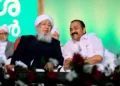

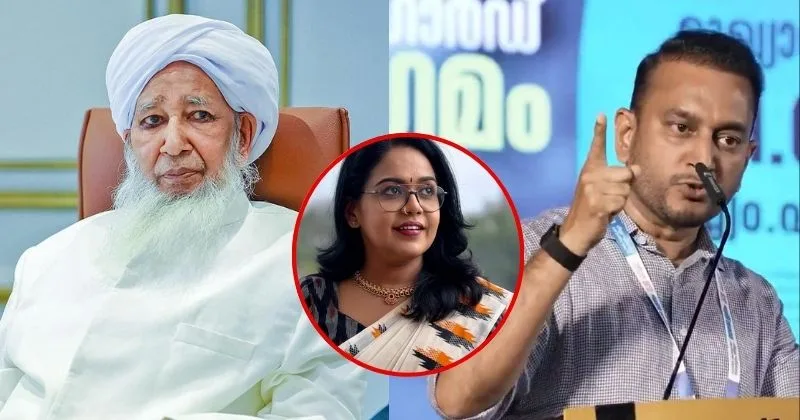
Before the dust had even settled on his earlier comment about ‘women should sit at home’, the 95-year-old Grand Mufti, Kanthapuram A. P. Aboobacker Musliyar, was already out with an even more substantial proposal. At an International Milad Conference in Kozhikode on Saturday night, the leader of the Samastha Kerala Jamiyyathul Ulama announced a new campaign: holding Shariat conferences in all 14 districts of Kerala. This means there is little possibility of interpreting the previous remark as a mere one-off; on the contrary, it seems to have been a trial version.
The message from the Kozhikode stage was unambiguous. Kanthapuram called on Islamic organisations and Muslim communities across the state to unite behind the campaign, and said discussions on Shariat would proceed “regardless of opposition.” On the controversy over his remarks about women, he has not shifted position, saying he will continue to defend Shariat law as he understands it.
Islamic Law – Larger Plot
The episode, marks an escalation rather than a course correction. It has also revived a pointed question: where are the activists, columnists and progressive commentators who routinely describe patriarchy as endemic to Hindu society, now that a prominent religious authority stands accused of the same charge?
The original controversy briefly suggested Kerala’s political class might hold its ground. Keralam CM V. D. Satheesan posted a public rebuke of Kanthapuram’s remarks — an unusual instance of a mainstream leader challenging a senior religious figure. It did not last. Representatives of Sunni organisations aligned with Samastha are met Satheesan to register their displeasure, and within 24 hours the post had disappeared from his Facebook page.
What prompted the removal remains unclear — whether Satheesan reconsidered independently or came under pressure is not known outside the room. But the sequence set a pattern that has since held: journalists and commentators who criticised Kanthapuram’s remarks faced online attacks and ridicule, reinforcing an implicit rule that scrutiny of politicians is fair game, while scrutiny of religious authority carries a cost.
“Women Should Confine to Home” – The Campaign Widens
That pattern may explain why the controversy receded from public debate almost as quickly as it arose. Kanthapuram, for his part, has not receded. He has returned with a statewide plan: Shariat conferences in every district, an open call for Muslim organisations to participate, and a declaration that the discussions will continue irrespective of objections.
Ponmala Abdul Khader, general secretary of Samastha, has backed him fully, arguing that critics are attempting to isolate the Grand Mufti and noting that scholars and muftis internationally share his position on women. His message, too, was unequivocal: the Shariat will be proclaimed, opposition notwithstanding.
The Muslim League’s response has been telling in what it omits. MLA Fathima Thahliya defended Kanthapuram as a respected scholar and said she would not permit attacks on him — but offered no comment on the substance of his remarks about women. That silence carries weight: the League is a significant partner in the Congress-led coalition government, maintains close ties to the Congress leadership, including the Gandhi family, and has a long-standing relationship with the Sunni establishment.
Muscle Power of Muslim League – What PK Firoz said is the Truth of Keralam
In another incident, IUML MLA and Muslim League leader P.K. Firoz publicly asserted the party’s political influence while speaking about an FIR registered against Wisdom Islamic Students Organisation state vice-president Abdulla Basil. The case was registered following a complaint by a news anchor over a video Basil posted in connection with a discussion on Sunni scholar Kanthapuram A.P. Aboobacker Musliyar’s controversial remarks about women. Firoz claimed that after the DGP informed him about the FIR, he contacted then Home Minister Ramesh Chennithala and demanded that the case be withdrawn. He went further, saying that “the Muslim League is in power” and has the authority to demand the withdrawal of such cases. While insisting that the League would not protect anyone promoting communalism, Firoz also declared that as long as the League remains in power, it would not allow cases to be filed against those merely for “calling out the truth” about people who preach communalism. His remarks raise a larger question: where does political intervention end and the independence of the police and legal process begin?
A Test for the Congress
That is what draws the Congress party directly into the controversy. Rahul Gandhi has invested considerable political capital in positioning himself as an advocate for women’s empowerment, with the party’s own messaging built around a pledge to “smash patriarchy.” Critics are now asking whether that commitment extends to a politically influential religious body allied with the Congress — or whether it applies only where there is no political cost.
Congress’s own record in government adds to the scrutiny. The party currently governs three states, yet neither the Himachal Pradesh nor the Karnataka cabinets include a woman minister, and female representation in Telangana — already limited — has narrowed further. In Telangana, women legislators protesting in black sarees were reportedly manhandled by police, an incident that raised questions about how the party treats women once they are political opponents rather than a talking point.
Kerala sharpens that contradiction. A senior religious authority makes remarks about women that critics call patriarchal, doubles down, retains the backing of his organisation, and keeps the support of a major political ally — yet no sustained campaign has emerged calling for reversal or reconsideration, more than two days after the district-wide conferences were announced.
What the Conferences Propose
The Shariat conferences, as announced, are intended to teach and reassert traditional Islamic law as interpreted by Kanthapuram’s establishment across all 14 districts. Critics argue this raises a direct question: if the goal is to entrench these interpretations, does it risk reinforcing norms that constrain women’s freedom, equality and participation in public life — and, if so, where do constitutional guarantees for women fit into that picture?
Suprabhatham, the official publication of Samastha’s EK faction, has meanwhile criticised Satheesan’s initial dissent in an editorial titled “Speak with Decency,” comparing his reading of Kanthapuram’s remarks to a blind man describing an elephant from a single touch. The piece also invoked the Sabarimala temple-entry dispute for comparison — a parallel critics call imprecise, since Sabarimala turned on temple custom and a Supreme Court ruling, while the present controversy concerns the broader social role of women.
A Question for the Political Class
The debate unfolds against a Kerala that continues to change: women studying, working, entering politics and rising to positions of authority across sectors. Commentators argue that any religious voice instructing women on their conduct deserves scrutiny on that basis alone — not because of the faith involved, but because women’s freedom should not depend on who is issuing the instruction.
The episode is being framed by critics as a test of consistency for Kerala’s political establishment. If patriarchy is objectionable, they argue, it should be objectionable regardless of who practises it; if commitments to women’s empowerment are genuine rather than rhetorical, they cannot be enforced against one community and overlooked when another pushes back. Applying the standard selectively, in this view, is not equality but selective outrage.
Political courage, the argument goes, is measured not by criticism that costs nothing but by willingness to speak when allies, coalition partners and political interests are on the line. That is the choice now facing the Congress-Muslim League alliance and Kerala’s broader political class: whether commitments to women’s rights hold firm when religion and political convenience intersect, or whether they prove negotiable.