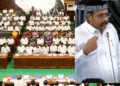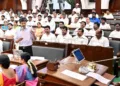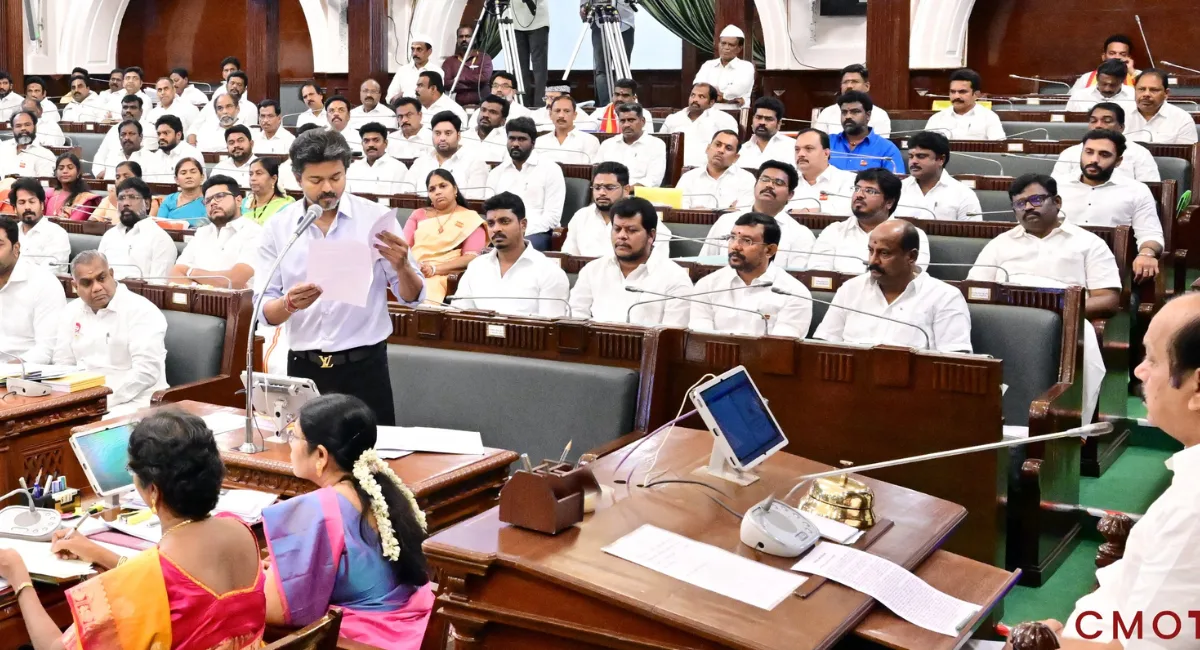
Tamil Nadu Assembly on September 3 unanimously adopted a resolution urging the Central government to recognise Tamil as the principal language of the Madras High Court and take immediate steps to allow Tamil in court proceedings.
After Question Hour, Chief Minister C Joseph Vijay, while moving the resolution in the State Assembly, said that the Constitution provides legal avenues for states to use their official languages. Tamil has been the official language of Tamil Nadu under the Tamil Nadu Official Language Act, 1956.
மாண்புமிகு தமிழ்நாடு முதலமைச்சர் திரு.ச.ஜோசப் விஜய் அவர்கள் இன்று (3.9.2026) தமிழ்நாடு சட்டமன்றப் பேரவையில், தமிழை மெட்ராஸ் உயர்நீதிமன்றத்தின் முதன்மையான நீதிமன்ற மொழியாக அங்கீகரிக்க வேண்டுமென்றும், உயர்நீதிமன்றத்தில் வழங்கப்படும் தீர்ப்புரைகள், தீர்ப்பாணைகள் மற்றும் நீதிமன்ற… pic.twitter.com/os2kQVWf0n
— CMOTamilNadu (@CMOTamilnadu) September 3, 2026
He stated that Sections 4-A and 4-B of the Act already provide for recording evidence in Tamil and issuing judgments, decrees and orders in Tamil in civil and criminal courts, tribunals, rent courts and revenue courts functioning under the High Court.
The resolution also referred to Article 348(2) of the Constitution, under which the Governor of a state, with the prior consent of the President, can authorise the use of the state’s official language in High Court proceedings. Section 7 of the Official Languages Act, 1963, also provides for the use of a state’s official language, in addition to English, in High Court judgments, decrees and orders.
CM Vijay said, “Tamil, the official language of the state under the Tamil Nadu Official Languages Act, 1956, is used for recording evidence and issuing judgments, decrees and orders in subordinate courts, tribunals and other courts under the High Court. Section 7 of the Official Languages Act also enables the use of the state’s official language along with English in High Court judgments, decrees and orders, with an English translation.”
The resolution recalled that the Assembly had unanimously passed a similar resolution on December 6, 2006, seeking the use of Tamil in the Madras HC. However, the proposal did not receive the approval of the SC’s full court. The proposal was forwarded to the Centre, which informed Parliament in 2018 that the Supreme Court’s full court had not accepted it in 2012.
The TVK government said developments in legal Tamil, translation, e-Courts, technology-enabled translation and legal databases have created better conditions for the use of Tamil in the HC.
The resolution noted that advances in AI now make simultaneous translation of Tamil speech into English possible.
CM Vijay said the demand to make Tamil the principal language of the High Court was not intended to replace English but to give Tamil equal procedural standing and enable citizens to understand and take part in judicial proceedings in their own language, ie, their mother tongue, Tamil.
The resolution urged the Centre to establish procedures for filing petitions and presenting arguments in Tamil, ensure that all judgments, decrees and orders are made available in Tamil, and provide training in legal Tamil and translation for judges, advocates and court staff. It urged the Centre to take measures based on proposals to be forwarded by the Governor under Article 348(2) and Section 7 of the Official Languages Act.
Members of the DMK, AIADMK, PMK, CPI, CPM, BJP and DMDK supported the resolution. Speaker JCD Prabhakar announced that it had been passed unanimously.
It is pertinent to note that this is the 7th resolution the TVK has passed in the State Assembly after coming to power in May this year. Ruling parties have repeatedly passed resolutions on issues concerning both the State and the Centre at large, buckling under political pressure or having no legal sanction. It may appease the so-called Tamil lovers.
Critics point out that none of the Dravidian and political parties in Tamil Nadu that claim to be saviours of Tamil have done very little for its development. In schools and colleges, many fail in Tamil language subjects in public examinations. Many cannot read and write in Tamil without errors. Such is the scenario. In the Assembly, the language spoken by MLAs also needs to improve.
CBSE schools give importance to the two-language formula, and Tamil Nadu is opposing the NEP, which gives importance to the mother tongue. Politicians’ children either study English, Hindi or foreign languages, or study abroad. Between courts and litigants, it is advocates who act as a bridge and can explain the case to poor or illiterate litigants if they are not profit-oriented. It may help lawyers who are poor English speakers to use Tamil as the court language.