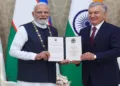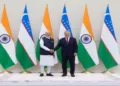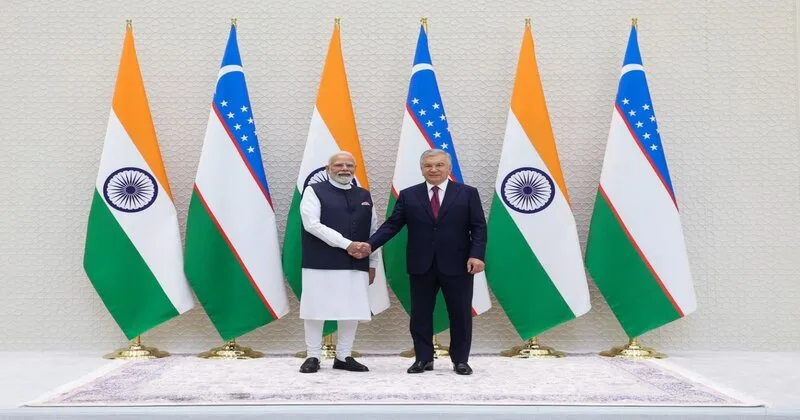
Tashkent: India and Uzbekistan on August 30, Sunday elevated their bilateral relationship to a Comprehensive Strategic Partnership, marking a major upgrade in ties. Prime Minister Narendra Modi and Uzbek President Shavkat Mirziyoyev unveiled an ambitious roadmap covering trade, energy, critical minerals, defence, technology, healthcare, agriculture and cultural cooperation.
The two leaders held bilateral and delegation-level talks in Tashkent during PM Modi’s two-day state visit. New Delhi and Tashkent also agreed to strengthen institutional mechanisms for implementing bilateral decisions. Both countries also targeted to raise bilateral trade from more than USD 1 billion currently to USD 5 billion by 2030. Uzbekistan also announced a 30-day visa-free regime for Indian citizens, aimed at boosting tourism, business and people-to-people exchanges.
List of outcomes (16 in total) : PM @narendramodi’s State Visit to Uzbekistan ⬇️
🇮🇳 🇺🇿 pic.twitter.com/spN96sEHEy
— Randhir Jaiswal (@MEAIndia) August 30, 2026
India-Uzbekistan ties elevated to Comprehensive Strategic Partnership
President Mirziyoyev described PM Modi’s visit as “historic”, saying the elevation of ties would open “new horizons” for cooperation. The Uzbek President said that the two countries had established a dedicated mechanism and teams for trade and economic cooperation to ensure that agreements reached during high-level talks are implemented effectively.
The partnership will focus on emerging areas such as digital public infrastructure, Artificial Intelligence, space, critical minerals, clean energy and nuclear energy, alongside traditional sectors including agriculture, pharmaceuticals and healthcare. PM Modi said that the two countries had prepared an “ambitious agenda” to move forward with speed, market access, connectivity and banking systems identified as key drivers of trade expansion.
PM Modi, Mirziyoyev target $5 billion trade by 2030
India and Uzbekistan have set an ambitious target of taking bilateral trade to more than USD 5 billion by 2030, nearly five times the current level. President Mirziyoyev said that bilateral trade crossed USD 1 billion for the first time last year but stressed that the figure was “not the limit”. He expressed confidence that the two countries could eventually achieve USD 10 billion in trade.
To facilitate this growth, both sides agreed to work on improving market access, connectivity and banking and payment systems. The Uzbek President also noted that the number of joint ventures between the two countries had increased sevenfold in recent years, while 14 direct flights operate between India and Uzbekistan every week.
Key outcomes from today’s talks with President Shavkat Mirziyoyev in Tashkent include:
Elevation of India-Uzbekistan relations to a Comprehensive Strategic Partnership.
Boost trade to over 5 billion dollars by 2030.
Increase cooperation in infrastructure, DPI, AI, critical… pic.twitter.com/aSpqLm7iNt
— Narendra Modi (@narendramodi) August 30, 2026
Uranium, critical minerals and energy take centre stage
Strategic economic and energy cooperation emerged as a key component of the new partnership. PM Modi announced that India and Uzbekistan would establish a long-term arrangement for uranium supply, adding a strategic dimension to bilateral energy cooperation.
The two sides also identified critical minerals and energy as new areas of cooperation, alongside mining, infrastructure and emerging technologies. The leaders discussed collaboration in nuclear energy, clean energy and space, while also highlighting the potential for Uzbekistan’s natural resources and India’s technological and industrial capabilities to complement each other.
30-day visa-free entry for Indians
In a major people-to-people initiative, Uzbekistan announced a 30-day visa-free regime for Indian citizens. President Mirziyoyev said the move would significantly contribute to tourism, business exchanges and greater contact between the peoples of the two countries.
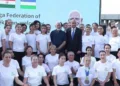
The Uzbek President also highlighted the growing popularity of Indian culture and yoga in Uzbekistan. A dedicated Yoga Federation has operated in the country since 2018, while a nationwide Yoga Festival was held in June. The two countries also agreed to expand youth, educational and professional exchanges.
From Ayurveda to agriculture: New cooperation avenues
PM Modi highlighted the complementary strengths of India and Uzbekistan in agriculture and healthcare.
He said that Uzbekistan’s expertise in horticulture and India’s modern agricultural practices could be combined to contribute to food security. The two sides also agreed to deepen cooperation in traditional medicine. PM Modi described Uzbekistan’s medicinal herbs and India’s Ayurveda expertise as a “natural combination”.
New cooperation areas identified during the talks include pharmaceuticals, jewellery, agriculture, healthcare and traditional medicine. The leaders also formalised three sister-city and sister-state arrangements, with PM Modi calling for a roadmap to fully realise their potential.
India and Uzbekistan will:
Cooperate in agriculture and healthcare.
Scale up working in traditional medicines.
Encourage educational and cultural exchanges.
Work together for the conservation of Uzbekistan’s Buddhist heritage sites.
Have more youth exchange programmes. pic.twitter.com/vgPlfitUxX
— Narendra Modi (@narendramodi) August 30, 2026
Buddhist heritage, culture and city partnerships
India and Uzbekistan agreed to work together on the restoration and conservation of Buddhist heritage sites at Fayaz Tepa and Kara Tepa in Uzbekistan. The two sides also agreed to strengthen educational and cultural exchanges, including scholarships to promote the Hindi language in Uzbekistan.
PM Modi said partnerships between Indian and Uzbek cities and states would encourage sustained cooperation in urban management, industry, education, tourism and culture. He cited Uzbekistan’s New Tashkent and India’s GIFT City in Gujarat as examples where the two countries could exchange expertise and best practices.
Green partnership and shared global outlook
The two leaders jointly planted a tree at the Presidential Palace garden under India’s ‘Ek Ped Maa Ke Naam’ initiative and Uzbekistan’s ‘Yashil Makon’ green initiative, underscoring their shared commitment to environmental sustainability.
Both sides also said their positions on several global issues were closely aligned and pledged continued mutual support at international forums, including the United Nations, BRICS and the Non-Aligned Movement. PM Modi said a stronger India-Uzbekistan partnership would become a powerful force for peace, progress and prosperity in Central Asia.
Following his Uzbekistan visit, PM Modi is scheduled to travel to Bishkek, Kyrgyzstan, at the invitation of President Sadyr Zhaparov to attend the 26th Shanghai Cooperation Organisation (SCO) Summit, marking 25 years of the grouping.