The Ministry of Rural Development on August 21, launched the second phase of the National Campaign on Entrepreneurship under the Deendayal Antyodaya Yojana–National Rural Livelihoods Mission (DAY-NRLM), with a focus on accelerating entrepreneurship among rural women and expanding both farm and non-farm enterprises.
The three-month campaign will run from August 21 to November 21, 2026, and will place greater emphasis on enterprise development, intensive handholding, formalisation and market access for products and businesses operated by Self-Help Group (SHG) members.
The launch coincided with World Entrepreneurs Day, observed globally on August 21.
The campaign is part of the government’s broader effort to strengthen rural livelihoods and support its objective of creating six crore Lakhpati Didis by enabling rural women to move beyond livelihood activities towards sustainable and scalable enterprises.
‘Sankalp Shakti’ rural enterprise bulletin launched
During the launch, the Secretary, Department of Rural Development, also released Sankalp Shakti, described as the first Rural Enterprise Technical Bulletin.
The bulletin will be published monthly and is expected to serve as a technical resource for stakeholders working on rural enterprise promotion.
The second phase of the entrepreneurship campaign builds on the experience of the first phase, but places greater emphasis on intensive enterprise handholding, formalisation, strengthening producer institutions and simplifying implementation processes.
Focus on moving women from livelihoods to enterprises
A key focus of the campaign is to create an ecosystem in which viable livelihood activities can develop into sustainable women-led businesses.
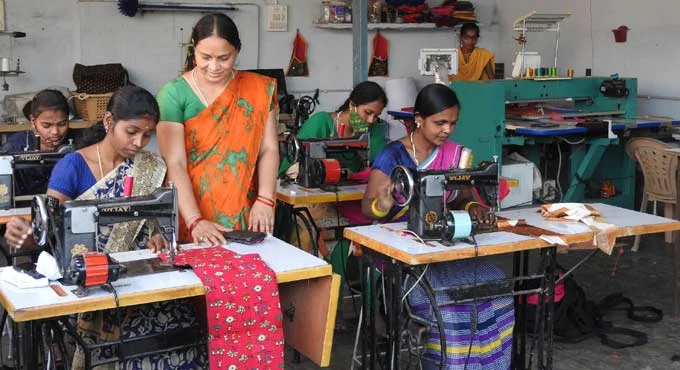
The programme will support entrepreneurship among SHG women across farm and non-farm livelihoods, while strengthening the community-level workforce involved in enterprise promotion.
Its focus areas include:
1. Promoting women-led farm and non-farm enterprises
2. Strengthening community enterprise promotion cadres
3. Supporting formalisation of rural enterprises
4. Expanding digital and e-commerce adoption
5. Strengthening Producer Groups and Producer Enterprises
6. Improving access to buyers and markets
7. Supporting business planning and financial literacy
8. Promoting product development, branding and digital marketing
The approach is intended to shift the focus from providing training alone to helping women establish, formalise and grow viable enterprises.
CRP-EPs and BDSPs to be recognised as ‘Udyam Sakhis’
Community-level enterprise support will be a major component of the campaign.
Community Resource Persons for Enterprise Promotion (CRP-EPs) and Business Development Service Providers (BDSPs) will be recognised as ‘Udyam Sakhis’.
The move is aimed at giving greater visibility and recognition to community-level cadres who provide support to rural women entrepreneurs.
These cadres are expected to play a role in areas such as business planning, enterprise development, market linkages, financial awareness and continued handholding.
The government sees this community-based support structure as important because many rural entrepreneurs require assistance not only at the time of starting a business but also during the stages of formalisation, marketing and expansion.
Push for e-commerce and digital markets
Expanding access to digital marketplaces will be another important component of the campaign.
The initiative will facilitate e-commerce opportunities for SHG products through platforms such as the Open Network for Digital Commerce (ONDC) and the Government e-Marketplace (GeM), along with other digital marketplaces.
The campaign will also support buyer-seller meets and strengthen connections between rural producers and buyers, aggregators, retailers and institutional purchasers.
The objective is to help SHG enterprises move beyond local markets and gain access to larger and potentially more consistent customer bases.
Digital marketing, branding and product development will also form part of the support provided to participating entrepreneurs.
Training, exposure visits and business support
States will organise orientation programmes for Cluster Level Federation (CLF) leadership, along with exposure visits and entrepreneurship development training.
Women and community cadres will receive support in areas including:
1. Business planning
2. Financial literacy
3. Product development
4. Branding
5. Digital marketing
6. Enterprise management
7. Market linkages
The campaign will therefore combine capacity building with practical enterprise support and market access.
Campaign sets targets for five lakh SHG women
The second phase has set several measurable targets for the three-month period.
The campaign aims to:
1. Orient 50,000 community cadres
2. Provide entrepreneurship and livelihood training to five lakh SHG women
3. Create a database of five lakh adolescent girls from SHG households
4. Provide formalisation support to 50,000 enterprises
5. Increase Producer Group and Producer Enterprise membership by two lakh members
6. Promote agro-ecological practices among 20 lakh women
7. Onboard 25,000 SHG members onto e-commerce platforms
The targets are intended to expand the enterprise ecosystem around rural SHGs and improve the ability of women-led businesses to access formal markets and institutional support.
Focus on both farm and non-farm enterprises
The campaign will address both agricultural and non-agricultural livelihood activities.
On the farm side, the focus will include strengthening viable livelihood activities and promoting agro-ecological practices. The programme will also seek to connect farm-based enterprises with producer institutions and larger markets.
For non-farm enterprises, the emphasis will be on entrepreneurship development, product improvement, formalisation, branding, digital marketing and access to buyers.
The government’s approach is to identify livelihood activities with commercial potential and help convert them into sustainable enterprises rather than treating them primarily as training programmes.
Building on existing rural entrepreneurship programmes
The National Campaign on Entrepreneurship-II will complement existing enterprise and livelihood programmes under DAY-NRLM.
These include the Community Resource Person for Enterprise Promotion (CRP-EP) framework, Entrepreneurship Development Programme (EDP) and the Start-up Village Entrepreneurship Programme (SVEP), along with other livelihood support initiatives.
The combined architecture is intended to help rural women progress through different stages — from livelihood activity and skills development to enterprise creation, formalisation, market access and business growth.
Centre, states and rural missions to coordinate implementation
The launch brought together representatives from the Centre and states.
Secretaries and Principal Secretaries of Rural Development Departments from Bihar, Uttar Pradesh, Jammu and Kashmir, West Bengal and Goa attended the event in person.
State Mission Directors and Chief Executive Officers of 34 State Rural Livelihoods Missions (SRLMs) also participated virtually.
The involvement of state rural livelihood missions is expected to be central to implementing the campaign on the ground, particularly in identifying SHG women, organising training, deploying community cadres and facilitating market and institutional linkages.
A push towards sustainable women-led rural enterprises
The second phase of the National Campaign on Entrepreneurship represents a broader shift in the rural livelihood approach towards enterprise creation and business growth.
By combining community-level handholding with formalisation, digital commerce, producer institutions, financial literacy and market access, the campaign seeks to address several of the challenges faced by small rural enterprises.
The larger objective is to enable more SHG women to move from small-scale livelihood activities to sustainable enterprises capable of generating higher and more consistent incomes.
The campaign will run until November 21, 2026, with its implementation centred on strengthening the rural enterprise ecosystem and expanding opportunities for women entrepreneurs across farm and non-farm sectors.