
Onam is an annual harvest and Hindu cultural festival celebrated primarily in Kerala and by Malayali communities across the world. Traditionally associated with the annual return of the benevolent King Mahabali, Onam combines belief, religious traditions, seasonal festivities, community celebrations, food, music, dance and Kerala’s distinctive cultural heritage. It is also officially recognised as Kerala’s state festival and has developed into one of the region’s most prominent public celebrations.
The central narrative of Onam revolves around King Mahabali, a powerful king whose reign is remembered in Kerala through the festival. According to Hindu tradition, Mahabali defeated Indra, the king of the devas, prompting the devas to seek the intervention of Vishnu. Vishnu appeared before Mahabali in the form of Vamana and asked the king for three paces of land. Despite being warned about Vamana’s divine identity, Mahabali honoured his promise. Vamana then expanded to cosmic proportions and covered the universe in three strides, restoring the three worlds to Indra. Mahabali was consequently sent to Patala. However, impressed by Mahabali’s devotion and affection for his subjects, Vamana granted him a special wish: he could return to his kingdom once every year. Onam commemorates this annual homecoming of Mahabali. The legend gives Onam a distinctive cultural character. Mahabali’s return is associated with prosperity, generosity, equality and the emotional bond between a ruler and his people, while Vamana represents the divine intervention through which cosmic order is restored.
Onam is observed during the month of Chingam, the first month of the Malayalam calendar. Its principal day is Thiruvonam, corresponding to the 22nd nakshatra, and it generally falls during August or September. The celebrations traditionally extend across ten days: Atham, Chithira, Chodhi, Vishakam, Anizham, Thriketa, Moolam, Pooradam, Uthradam, Thiruvonam. Atham marks the beginning of the festivities, while Thiruvonam is the principal day of celebration.
Thrikkakara: A Major Spiritual Centre
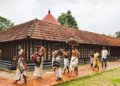
The beginning of Onam festivities is traditionally associated with the Thrikkakara Vamanamoorthy Mandir near Kochi. The Mandir is regarded as an important focal point of Onam and is associated with the Vamana tradition and the legend of Mahabali. On Atham, festivities begin with the raising of the festival flag, while processions and cultural programmes showcase Kerala’s traditional arts and heritage. The Thrikkakara tradition reinforces the festival’s connection with the Vamana-Mahabali narrative and gives the celebrations an important temple-centred dimension.
Athachamayam: The Grand Opening Procession
One of the best-known public traditions associated with Onam is Athachamayam, a colourful procession held at Thrippunithura near Kochi. The procession features decorated elephants, percussion music, folk performances, floats, tableaux, masks and participants dressed in colourful traditional attire. Historically, the procession had a connection with the royal traditions of the erstwhile Kingdom of Cochin, where the Kochi ruler participated in a ceremonial procession towards the Thrikkakara temple. In contemporary times, Athachamayam is conducted as a state-supported cultural event.
The tableaux traditionally depict episodes from the Ramayana and Mahabharata, while some contemporary floats incorporate other religious and social themes. This demonstrates how Onam’s public celebrations have evolved while retaining their connection with Kerala’s cultural traditions.
Pookkalam: The Floral Symbol of Onam
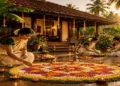
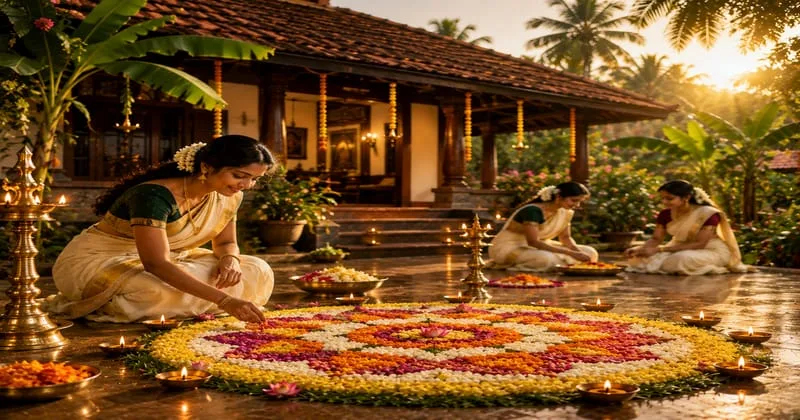
The pookkalam, or floral carpet, is one of the most recognisable visual traditions of Onam. Families and communities arrange flowers in intricate circular patterns, generally at the entrance of homes and in temple premises. The tradition begins on Atham with a relatively small floral arrangement and becomes progressively larger and more elaborate as the ten-day festival advances.
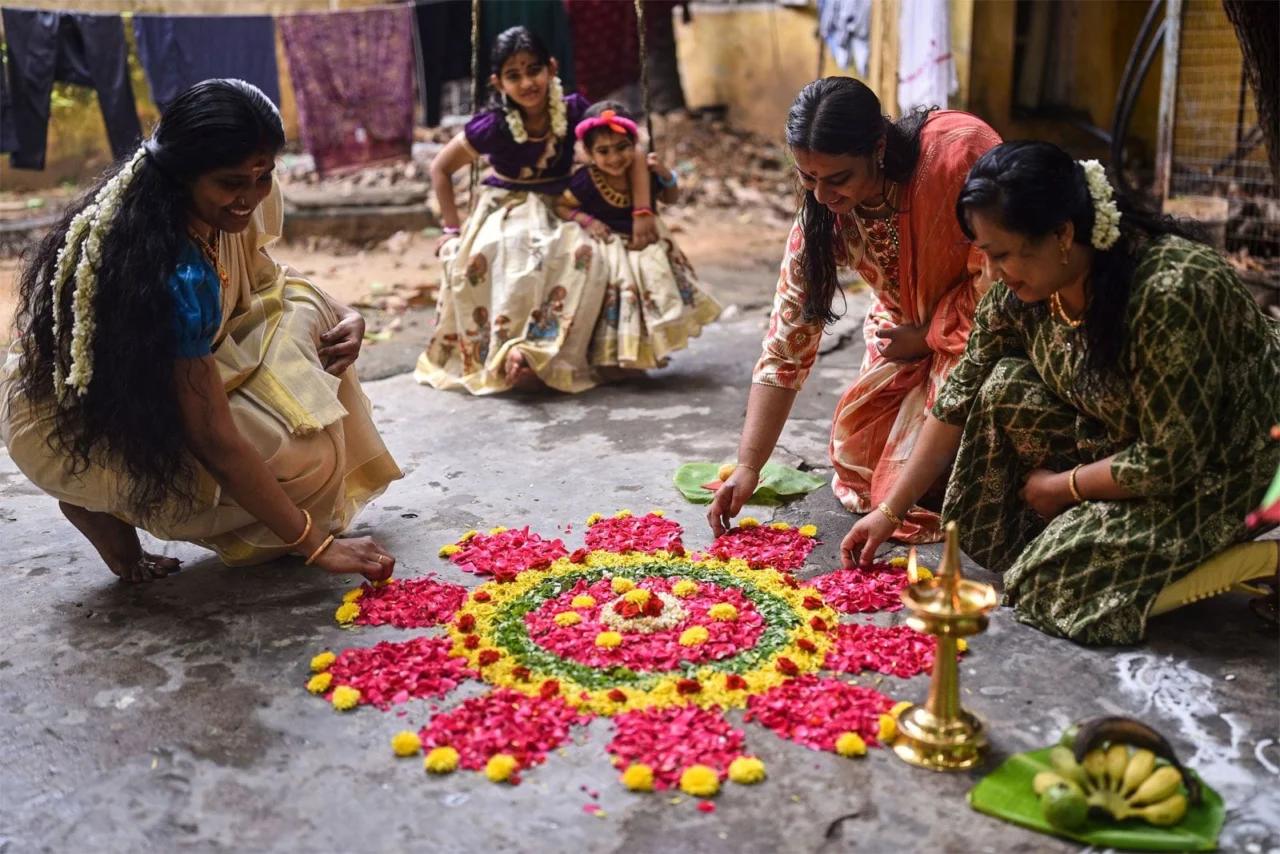
Traditionally, flowers native to Kerala and the Dashapushpam, or ten sacred flowers, were used. Over time, the practice has expanded to include a wider variety of flowers. Images or representations associated with Mahabali and Vamana may also be placed alongside the pookkalam. Pookkalam competitions have consequently become a major community feature of Onam, bringing together artistic expression, teamwork and local participation.
Music, Dance and Folk Arts
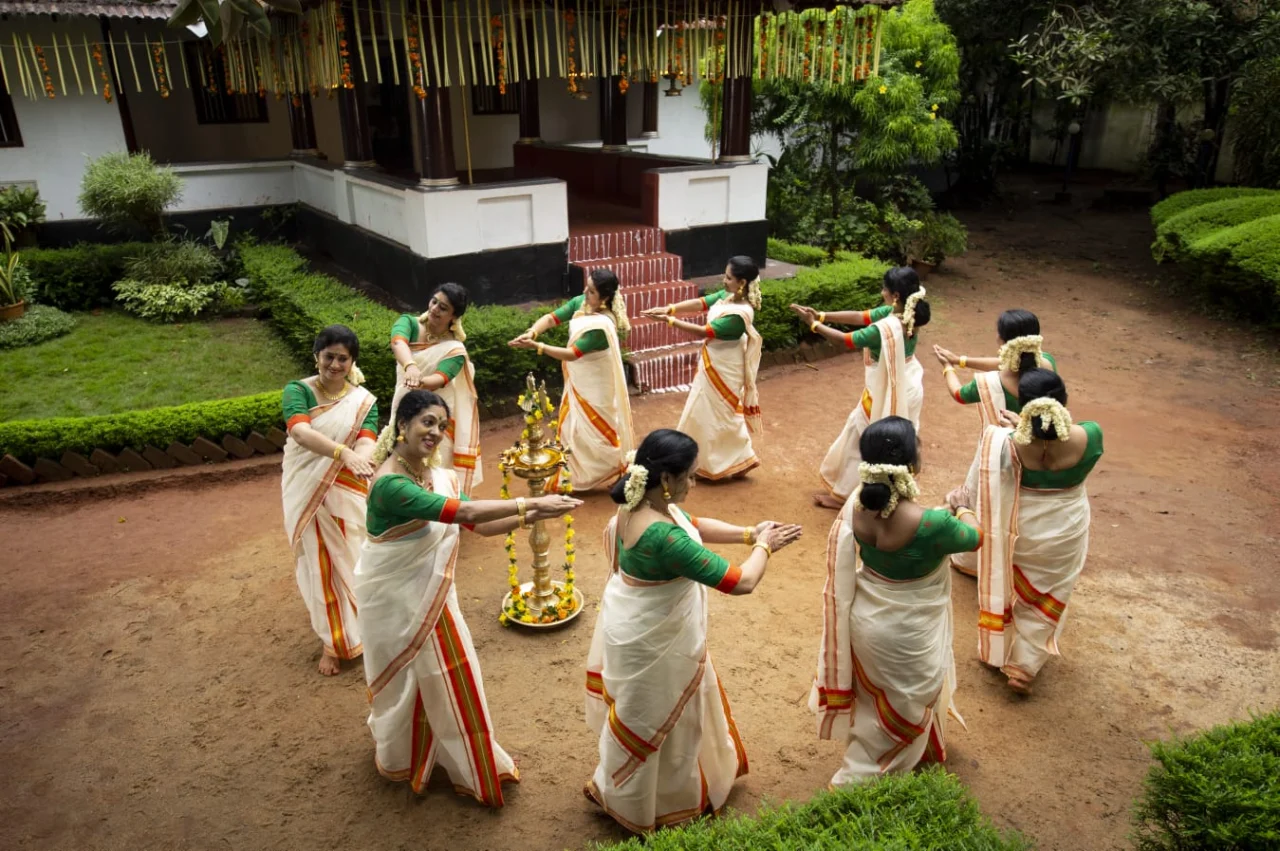
Onam provides a platform for numerous traditional art forms. Thiruvathira Kali, Kummattikali, Pulikali, Thumbi Thullal, Onam Kali and Kathakali are among the performances associated with the festival. Thiruvathira Kali is traditionally performed by women in a circle around a lamp, while Kummattikali is distinguished by colourful masks and folk performances. Kathakali performances during the season bring episodes from Indian legends and traditional narratives to audiences.
Pulikali, particularly associated with Thrissur, is another major attraction. Performers paint their bodies in tiger-like patterns and dance to the rhythms of traditional percussion instruments such as the chenda and thakil. The spectacle attracts large crowds and has become closely associated with the cultural identity of Onam in central Kerala.
Vallamkali: The Boat-Race Tradition
Vallamkali, or the traditional snake-boat race, is another defining feature of the Onam season. Large snake-shaped boats are rowed by teams of oarsmen before enthusiastic crowds. Major races include the Aranmula Uthrattadhi Boat Race and the Nehru Trophy Boat Race. The Pampa River, regarded as sacred, is an important setting for these traditions.
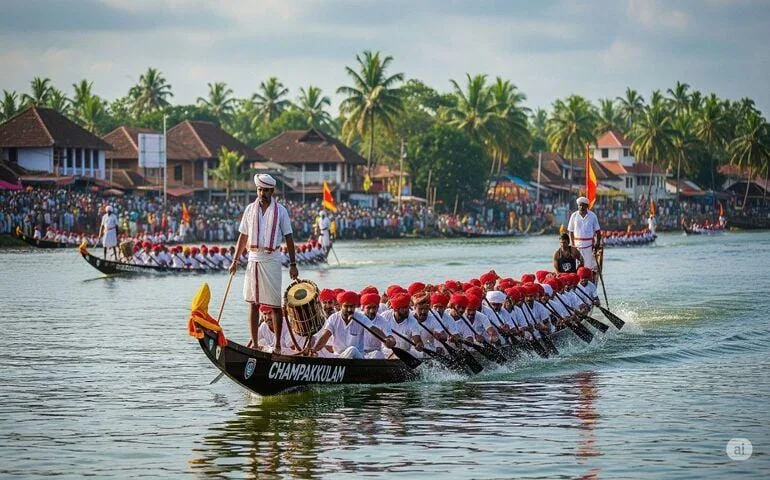
The popularity of Vallamkali has also extended beyond Kerala. Malayali communities abroad have organised similar snake-boat races, including celebrations in Singapore, demonstrating how traditional Onam practices have travelled with the Malayali diaspora.
Onam Sadhya: Food as a Cultural Tradition
No discussion of Onam is complete without the Onam Sadhya, the traditional vegetarian feast served on a banana leaf. The meal typically includes rice, vegetables, curries, pickles, savoury accompaniments and desserts. Depending on the setting, a Sadhya can include a large number of dishes, with temple and hotel celebrations sometimes offering dozens of preparations.
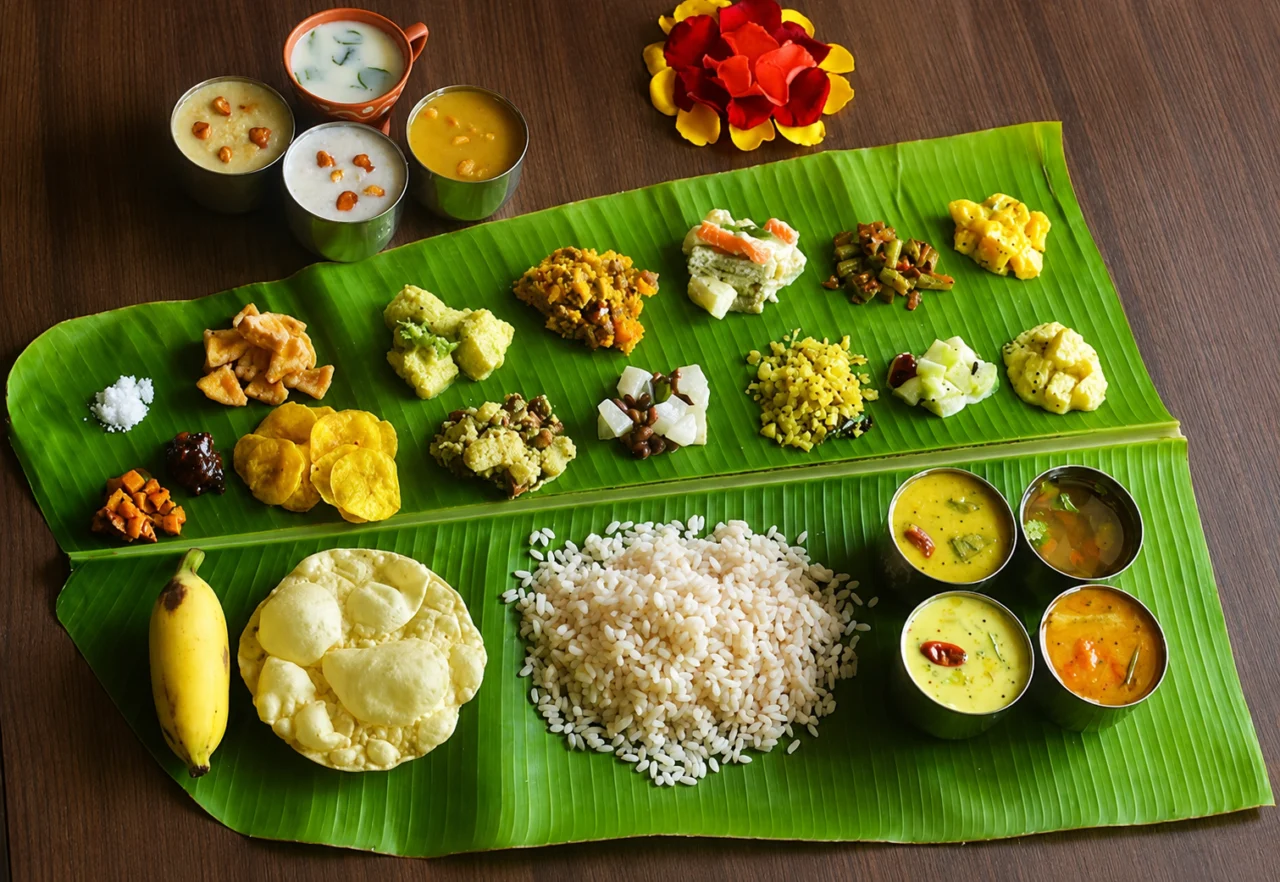
Among the traditional preparations are avial, olan, kaalan, thoran, pachadi, kichadi, sambar, rasam, injipuli, mezhukkupuratti, pappadam and banana chips. The meal traditionally concludes with payasam. Beyond its culinary importance, Sadhya represents the communal character of Onam. Families gather together for the feast, while temples and community institutions organise large-scale meals for the public.
Onam as a Community Festival
Onam’s celebrations extend beyond individual religious observance. Families spend time together, wear traditional clothing, participate in cultural programmes and prepare festive meals. Public celebrations include sporting competitions, dances, boat races, cultural events, shopping and charitable activities. The festival therefore functions simultaneously as a religious tradition, harvest celebration, cultural festival and occasion for community interaction.
The association with Mahabali also gives the festival a powerful social narrative. The king’s annual return is traditionally understood as a moment when he sees his people living in prosperity, reflecting the idealised memory of a benevolent ruler and a harmonious society.
Although Thiruvonam marks the principal day of the festival, celebrations traditionally continue for two more days. The third day, Avvittom, is associated with preparations for Mahabali’s return to the heavens. A traditional ritual involves removing and immersing the Onathappan figure that has occupied the centre of the pookkalam during the preceding days. The pookkalam is then cleared. These post-Onam rituals symbolically bring the festival cycle to a close.
Onam Beyond Kerala
The cultural reach of Onam extends far beyond the geographical boundaries of Kerala. Malayali communities across the world celebrate the festival, with notable celebrations taking place in countries including Oman, Malaysia, Switzerland, the United States, the United Arab Emirates, Singapore, the United Kingdom, New Zealand, Australia and France.
The global celebrations demonstrate the role of Onam in preserving Malayali cultural identity among diaspora communities. Traditional food, clothing, floral decorations, performances and community gatherings allow people living outside Kerala to maintain connections with their cultural heritage.
Onam represents a layered tradition in which Hindu belief, harvest customs, temple traditions, regional arts, food, family life and community celebrations converge. At its spiritual centre is the story of Vamana and Mahabali and the latter’s annual return to his people. Its historical references, temple inscriptions, rituals and cultural practices point to a long-standing tradition in Kerala.
From the floral patterns of the pookkalam and the rhythms of Pulikali to the grandeur of Vallamkali and the communal Onam Sadhya, the festival brings together diverse aspects of Kerala’s cultural heritage. Its celebration by Malayalis across the world further demonstrates its continuing importance as a marker of cultural continuity and identity.
Ultimately, Onam is more than a seasonal celebration. It is a living cultural tradition through which Kerala’s people remember a deeply rooted mythological heritage, celebrate prosperity and community, and pass regional customs from one generation to the next.