PoJK: Call for unfinished justice and India's resolve for sovereignty
August 9, 2026
  • Read Ecopy
  • Circulation
  • Advertise
  • Careers
  • About Us
  • Contact Us
Android AppiPhone AppArattai
Organiser
  • ‌
  • Bharat
    • Assam
    • Bihar
    • Chhattisgarh
    • Jharkhand
    • Maharashtra
    • View All States
  • World
    • Asia
    • Europe
    • North America
    • South America
    • Africa
    • Australia
  • Editorial
  • International
  • Opinion
  • RSS @ 100
  • More
    • Op Sindoor
    • Analysis
    • Sports
    • Defence
    • Politics
    • Business
    • Economy
    • Culture
    • Special Report
    • Sci & Tech
    • Entertainment
    • G20
    • Azadi Ka Amrit Mahotsav
    • Vocal4Local
    • Web Stories
    • Education
    • Employment
    • Books
    • Interviews
    • Travel
    • Law
    • Health
    • Obituary
  • Subscribe
    • Subscribe Print Edition
    • Subscribe Ecopy
    • Read Ecopy
  • ‌
  • Bharat
    • Assam
    • Bihar
    • Chhattisgarh
    • Jharkhand
    • Maharashtra
    • View All States
  • World
    • Asia
    • Europe
    • North America
    • South America
    • Africa
    • Australia
  • Editorial
  • International
  • Opinion
  • RSS @ 100
  • More
    • Op Sindoor
    • Analysis
    • Sports
    • Defence
    • Politics
    • Business
    • Economy
    • Culture
    • Special Report
    • Sci & Tech
    • Entertainment
    • G20
    • Azadi Ka Amrit Mahotsav
    • Vocal4Local
    • Web Stories
    • Education
    • Employment
    • Books
    • Interviews
    • Travel
    • Law
    • Health
    • Obituary
  • Subscribe
    • Subscribe Print Edition
    • Subscribe Ecopy
    • Read Ecopy
Organiser
  • Home
  • Bharat
  • World
  • Operation Sindoor
  • Editorial
  • Analysis
  • Opinion
  • Culture
  • Defence
  • International Edition
  • RSS @ 100
  • Magazine
  • Read Ecopy
Home World

PoJK: The call for unfinished justice and India’s unwavering resolve to secure sovereignty

India's position with respect to PoJK remains unequivocal, national sovereignty is non-negotiable. At the same time, India believes that the future of South Asia lies not in conflict but in peace, development and cooperation. If terrorism is completely eradicated, cross-border violence ceases and an atmosphere of trust is established, the region can embark on a new chapter of shared prosperity

Lalit KaushikLalit Kaushik
Aug 9, 2026, 01:30 pm IST
inWorld, South Asia, Analysis, Asia, International Edition
Follow on Google News
Facebook
Twitter
WhatsAppTelegramEmail

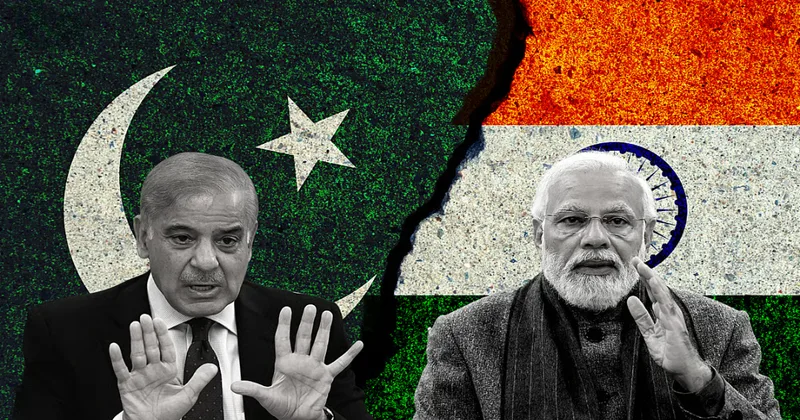
Nearly eight decades after India’s independence, one national issue continues to occupy a central place in the country’s political, diplomatic and security discourse—the question of Pakistan-occupied Jammu and Kashmir (PoJK). For India, this is not merely a territorial dispute; it is a matter of national identity, constitutional legitimacy and historical justice. Consequently, India has consistently maintained on every international platform that the entire region of Jammu and Kashmir is an integral part of India, including the territory currently under Pakistan’s control.

When India gained independence in 1947, Jammu and Kashmir was a princely state. Following an invasion by Pakistan-backed tribal forces, Maharaja Hari Singh signed the Instrument of Accession, legally acceding the state to India. The Indian Army subsequently pushed back the invading forces. However, before the military campaign could be completed, a ceasefire came into effect, leaving a portion of the state under Pakistan’s control. This territory is today referred to as Pakistan-occupied Jammu and Kashmir (PoJK). India’s position has consistently been that Pakistan’s control over this region is not legally valid but rather the outcome of wartime circumstances.

A significant milestone in this regard was the unanimous resolution adopted by the Indian Parliament on 22 February 1994, which declared that the entire territory of Jammu and Kashmir is an integral part of India and called upon Pakistan to vacate the areas under its occupation. This resolution is not merely a political statement but forms a cornerstone of India’s long-standing national policy.

The significance of PoJK extends far beyond history. The region holds immense strategic importance. India has long alleged that areas under Pakistan’s control have been used to facilitate cross-border terrorism, infiltration, and the operation of terrorist infrastructure. According to India’s perspective, lasting peace in the region cannot be achieved unless terrorism is decisively eliminated.

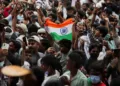
In recent years, PoJK has also witnessed public protests over economic hardships, inflation, electricity shortages, unemployment, and administrative challenges. Various reports have highlighted local demands for better governance, employment opportunities, and improved public services. These developments indicate that the aspirations of ordinary people on both sides of the Line of Control remain fundamentally similar: peace, dignity, quality education, healthcare and a better future.

India’s foreign policy has consistently emphasized the importance of maintaining peaceful relations with neighboring countries. At the same time, it has maintained that peace cannot coexist with terrorism. As long as cross-border violence continues, confidence-building measures remain fragile. Therefore, India’s position has been that meaningful dialogue and terrorism cannot proceed simultaneously.

Also Read: From Shovel to Streams: Why ‘Water Baba’ Rajendra Singh’s work still matters in an age of crisis

Following the constitutional changes relating to Jammu and Kashmir in 2019, India stated that its focus would be on development, good governance, and investment in the region. Simultaneously, it reiterated that its legal claim over PoJK remains unchanged. India’s official position on this issue has remained consistent.

South Asia today stands at a crucial juncture where economic cooperation, trade and regional stability have become more important than ever. In such a context, it is essential that disputes are addressed through dialogue, adherence to international law, and mutual respect rather than violence. At the same time, any form of support or tolerance for terrorism continues to pose a serious challenge to regional peace and stability.

The issue of PoJK is not merely a legacy of the past; it is also a question that will shape the future of the region. For India, it represents a matter of national resolve. For the people living there, it represents aspirations for better governance, greater rights and sustainable development. Therefore, any long-term resolution should place the welfare of ordinary citizens and lasting regional peace at its core.

India’s position remains unequivocal: national sovereignty is non-negotiable. At the same time, India believes that the future of South Asia lies not in conflict but in peace, development and cooperation. If terrorism is completely eradicated, cross-border violence ceases and an atmosphere of trust is established, the region can embark on a new chapter of shared prosperity.

India’s claim over PoJK is not merely a political assertion; it is rooted in its historical interpretation, constitutional position and enduring national commitment. In the years ahead, the issue is expected to remain a key element of India’s foreign policy, national security and diplomatic priorities. The aspiration is that, while safeguarding national interests, an environment can be fostered in which justice, peace and development advance together.
Topics: sovereigntyPakistanIndiaPoJKterrorismNational SecurityPakistan occupied Jammu & Kashmir
Share
Tweet
SendShareSend
✮ Subscribe Organiser YouTube Channel. ✮
✮ Join Organiser's WhatsApp channel for Nationalist views beyond the news. ✮
Previous News

VP Radhakrishnan launches Har Ghar Tiranga in Andaman & Nicobar; Recalls how Netaji liberated island from British rule

Next News

Utah wildfire kills 2 firefighters in helicopter crash; Catastrophic firestorm ravages 8,000sq miles across US

Related News

Why are young people forced to protest? A question that demands reflection!

Prime Minister Narendra Modi and Chinese President Xi Jinping(File Photo)

India-China Boundary Talks: New Delhi pushes for peace across the LAC; Seeks transparency over upstream hydro projects

Prime Minister Narendra Modi and Meta CEO Mark Zuckerberg

India Pushes Meta for Algorithm Overhaul; Asks to act fast on deepfakes, illegal and manipulated content

MEA slams US lawmakers for criticising FCRA amendments

MEA slams foreign criticism on FCRA amendments; Dismisses interference in India’s legislative affairs

27 Arunachal Landmarks Added to India’s Official Maps Amid China Row

India strikes back at China’s ‘Map Politics’: 27 Arunachal landmarks officially recorded on national maps

Israel PM Netanyahu Dials PM Modi: Leaders discuss comprehensive strategic partnership & West Asia conflict

Load More

Latest News

Helicopter crashes while fighting Utah wildfire; 2 firefighters onboard dead

Utah wildfire kills 2 firefighters in helicopter crash; Catastrophic firestorm ravages 8,000sq miles across US

PoJK: The call for unfinished justice and India’s unwavering resolve to secure sovereignty

Vice President hoisted the National Flag in Andaman & Nicobar and launched the Har Ghar Tiranga campaign

VP Radhakrishnan launches Har Ghar Tiranga in Andaman & Nicobar; Recalls how Netaji liberated island from British rule

Nomadic tribes performance for thanksgiving UP CM Yogi Adityanath

Uttar Pradesh: Nomadic Development Board ends 155 year wait for dignity; Liberates tribal communities from criminal tag

Representative Image

Moksha: A scientific metaphor for ultimate freedom

Karnataka: Drought deepens across the state; Congress govt delays cabinet sub-committee formation as farmers suffer

US President Donald Trump and Fed Governor Lisa Cook

US President Trump Reopens Fed Fight: Governor Lisa Cook faces fresh removal threat over mortgage fraud allegations

Why are young people forced to protest? A question that demands reflection!

Chief Minister Mohan Charan Majhi at Odisha Food Pro 2026 at New Delhi

Odisha Food Pro 2026: CM Majhi unveils ambitious food processing vision, secures Rs 43,437 Crore investment proposals

India’s strong 39-medal performance at the 2026 Commonwealth Games has boosted confidence ahead of the Asian Games in Japan (This image is generated by AI)

From CWG 2026 Glory to Asian Games 2026: India’s Sporting rise creates fresh hopes for greater International success

Load More
  • Privacy
  • Terms
  • Cookie Policy
  • Refund and Cancellation
  • Delivery and Shipping

© Bharat Prakashan (Delhi) Limited.
Tech-enabled by Ananthapuri Technologies

  • Home
  • Search Organiser
  • Bharat
    • Assam
    • Bihar
    • Chhattisgarh
    • Jharkhand
    • Maharashtra
    • View All States
  • World
    • Asia
    • Africa
    • North America
    • South America
    • Europe
    • Australia
  • Editorial
  • Operation Sindoor
  • Opinion
  • Analysis
  • Defence
  • Culture
  • Sports
  • Business
  • RSS @ 100
  • Entertainment
  • More ..
    • Sci & Tech
    • Vocal4Local
    • Special Report
    • Education
    • Employment
    • Books
    • Interviews
    • Travel
    • Health
    • Politics
    • Law
    • Economy
    • Obituary
  • Subscribe Magazine
  • Read Ecopy
  • Advertise
  • Circulation
  • Careers
  • About Us
  • Contact Us
  • Policies & Terms
    • Privacy Policy
    • Cookie Policy
    • Refund and Cancellation
    • Terms of Use

© Bharat Prakashan (Delhi) Limited.
Tech-enabled by Ananthapuri Technologies