Dujail Massacre in Saddam’s Iraq
July 8, 2026
  • Read Ecopy
  • Circulation
  • Advertise
  • Careers
  • About Us
  • Contact Us
Android AppiPhone AppArattai
Organiser
  • ‌
  • Bharat
    • Assam
    • Bihar
    • Chhattisgarh
    • Jharkhand
    • Maharashtra
    • View All States
  • World
    • Asia
    • Europe
    • North America
    • South America
    • Africa
    • Australia
  • Editorial
  • International
  • Opinion
  • RSS @ 100
  • More
    • Op Sindoor
    • Analysis
    • Sports
    • Defence
    • Politics
    • Business
    • Economy
    • Culture
    • Special Report
    • Sci & Tech
    • Entertainment
    • G20
    • Azadi Ka Amrit Mahotsav
    • Vocal4Local
    • Web Stories
    • Education
    • Employment
    • Books
    • Interviews
    • Travel
    • Law
    • Health
    • Obituary
  • Subscribe
    • Subscribe Print Edition
    • Subscribe Ecopy
    • Read Ecopy
  • ‌
  • Bharat
    • Assam
    • Bihar
    • Chhattisgarh
    • Jharkhand
    • Maharashtra
    • View All States
  • World
    • Asia
    • Europe
    • North America
    • South America
    • Africa
    • Australia
  • Editorial
  • International
  • Opinion
  • RSS @ 100
  • More
    • Op Sindoor
    • Analysis
    • Sports
    • Defence
    • Politics
    • Business
    • Economy
    • Culture
    • Special Report
    • Sci & Tech
    • Entertainment
    • G20
    • Azadi Ka Amrit Mahotsav
    • Vocal4Local
    • Web Stories
    • Education
    • Employment
    • Books
    • Interviews
    • Travel
    • Law
    • Health
    • Obituary
  • Subscribe
    • Subscribe Print Edition
    • Subscribe Ecopy
    • Read Ecopy
Organiser
  • Home
  • Bharat
  • World
  • Operation Sindoor
  • Editorial
  • Analysis
  • Opinion
  • Culture
  • Defence
  • International Edition
  • RSS @ 100
  • Magazine
  • Read Ecopy
Home World

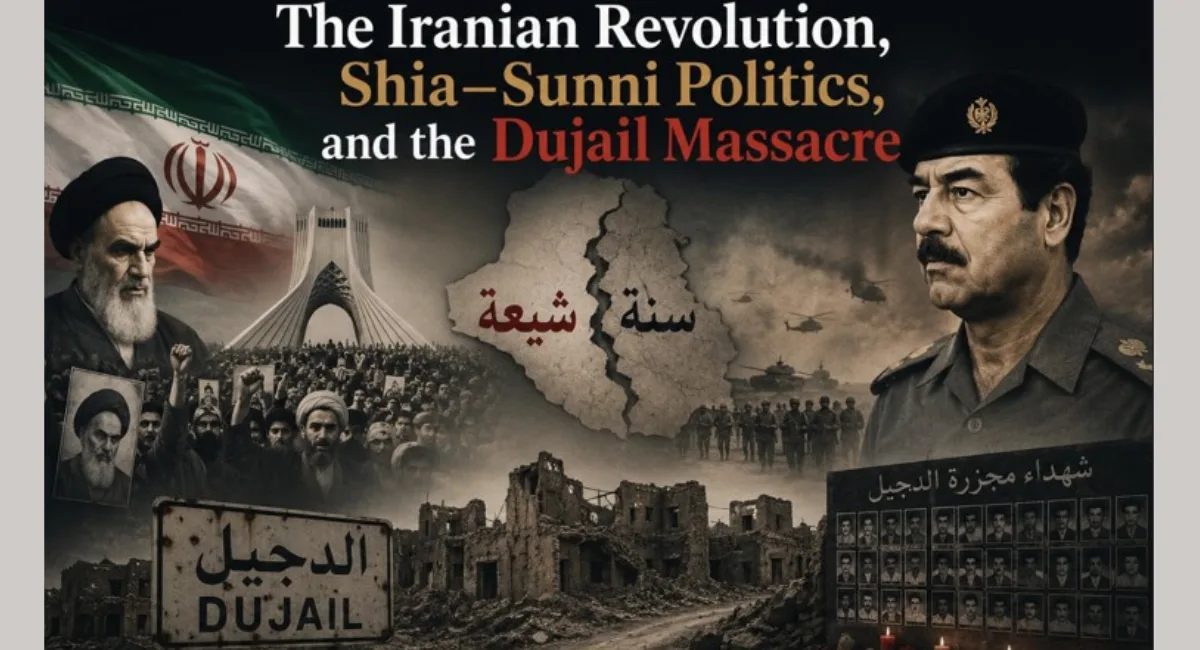
08 July 1982: The Iranian Revolution, Shia–Sunni Politics, and the Dujail Massacre in Saddam’s Iraq

Following an assassination attempt on Saddam Hussein by members of the Shia Islamic Dawa Party, the Sunni Ba'athist regime arrested hundreds of Shias. More than 150 people were executed in what became known as the Dujail Massacre.

Kapil GanjooKapil Ganjoo
Jul 8, 2026, 10:00 pm IST
in World, West Asia
Follow on Google News
FacebookTwitterWhatsAppTelegramEmail

Iraq is the largest Shia majority Arab country, with approximately 62% percent of its population belonging to the Shia sect of Islam. Despite its majority Shia demographic composition, Iraq was ruled by Saddam Hussein from 1979 to 2003, A Sunni Arab leader belonging to the Sunni-dominated Tikrit region of northern Iraq. As a result, Shias in Iraq viewed him with resentment against them.

On the other hand, neighbouring country Iran, in 1979, the Islamic Revolution brought a prominent Shia cleric, Ayatollah Khomeini, to power. Khomeini, being a Shia radical cleric, promoted the expansion of the Shia sect and Iranian revolutionary Shia Islamic ideas by strengthening Shia political and religious influence across the neighbouring countries in the Levant basin till the Mediterranean region.

Saddam Hussein was concerned about this regime change in Iran and its growing influence on the Shia population of Iraq. He consolidated the Iraqi army, and in September 1980, he invaded Iran, which was overwhelmingly Shia, exceeding 90% or above.

Iran Iraq War (September 1980-August 1988)

After one year of assuming power in Iraq, Saddam Hussein launched an invasion of Iran in September 1980, which led to the Iran-Iraq War. The principal factors behind this conflict were the economic importance of the Shatt Al-Arab waterway due to its oil-rich nature. Shatt Al-Arab is situated alongside the borders of Southern Iraq and Southwestern Iran. The neighbouring Iranian province of Khuzestan is an Arab speaking province, unlike the rest of Iran, which has a Persian heritage. Khuzestan contains some of Iran’s largest oil reserves, and it was considered an area of strategic and economic value by Saddam Hussein.

Also Read: Beyond the Siren and the Bait: Understanding the war on Iran through a civilisational lens

Shatt Al-Arab

Alongside the territorial and economic considerations, Saddam Hussein realized the regional impact of the Iranian revolution of 1979. The emergence of the Shia regime led by Ayatollah Khomeini in Iran had fuelled fear in the mind of Saddam Hussein. He realized that the Shias in Iraq, passionate about the Iranian Shia regime, could revolt in Iraq and in the neighbouring countries like Lebanon, Bahrain, Yemen, and Syria, Shias could be inspired by the Iranian influence, which leads to geopolitical, economic, and security concerns in the region.
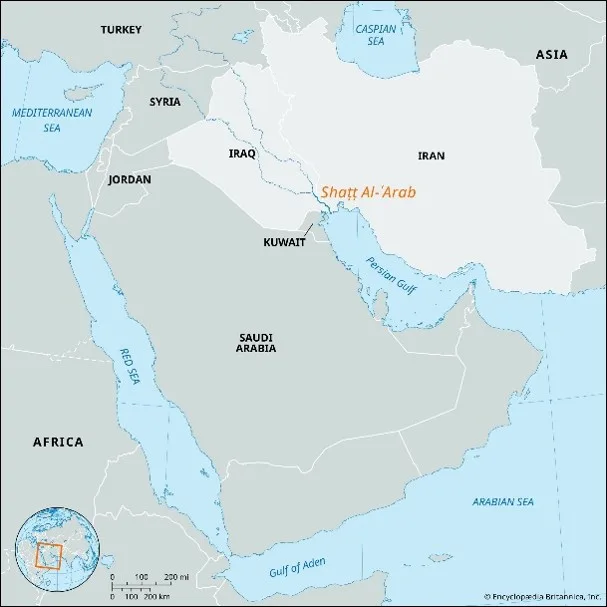
Shatt Al-Arab

Khuzestan Province

In 1980, Saddam invaded Iran for territorial claims over Shatt Al-Arab and the Arab province of Khuzestan, and his effort to weaken the new Iranian Shia regime for Iraq’s regional security.
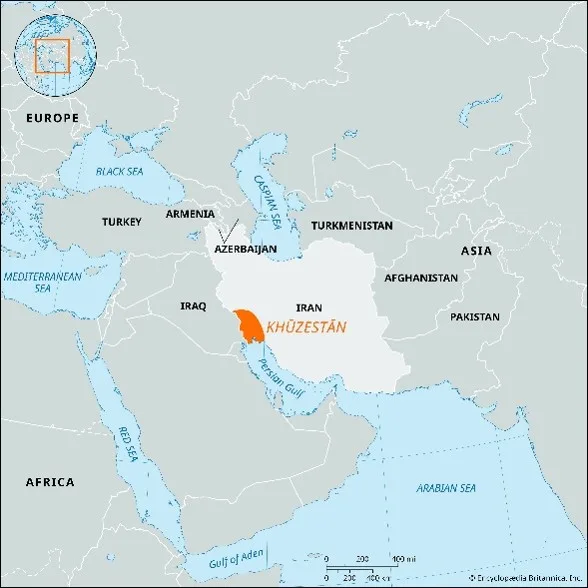
Khuzestan Province

Shia uprising of Iraq (1982)

In Iraq, because of its Shia majority population, it supported the Shia Mullah regime of Iran, and when Saddam Hussein invaded Iran, it fueled anger and unrest among the Iraqi Shia against the Saddam regime. Secondly, Iraqi Shias believed that due to the Shia majority status of Iraq, there is no meaning of a Sunni dictator in Iraq. Even though Saddam was a secular leader in the beginning, due to the Iran-Iraq war, Shia rebels made him a Sunni in nature.

On July 8, 1982, the Islamic Dawa Party, which was backed by Iran, a Shia political and militia group, attempted to assassinate Saddam, then the Iraqi President, in Dujail, a Shia-majority town situated north of Baghdad. Saddam visited Dujail town for his speech with his presidential motorcade. But the Dawa rebels opened fire on Saddam’s motorcade. Even though Saddam survived in this brutal attack, his Ba’ath party triggered a devastating wave of retaliation against the Iraqi Shia, which later led to the massacre of Dujail.

Also Read: US-Iran Conflict: Beyond the battlefield

Dujail Massacre

After the motorcade attack by the Shia militia group Islamic Dawa party, Hundreds of Shias were arrested and detained by the Sunni Ba’athist party, and more than 150 people were executed for their alleged involvement in the conspiracy to kill Saddam. Many of the Shia families, even in the hundreds, were deported to ‘Abu Ghraib’ prison near Baghdad. Meanwhile, their properties, like farms, orchards, homes, and shops, were demolished by the government troops.

In 1984, around 148 people accepted their crime of ‘treason’ for providing arms to Shia Iran during the Iran-Iraq war. Then, in June 1984 the Iraqi court handed down the death sentence, ‘capital punishment,’ for the crime of treason, and on July 23rd, 1984, Saddam himself signed the court documents and authorized the execution of these convicts. He ordered the demolition of homes, farms, dairy, and orchards of the convicted people.

On December 30th, 2006, when Saddam Hussein was hanged in a trial court, he was convicted of crimes against humanity, in which his involvement in the Dujail massacre was also a matter of concern, along with his brother.


Topics: Iran-Iraq WarShia uprising of Iraq (1982)Shatt Al-ArabIslamic Dawa PartyDujail MassacreSaddam Hussein
Kapil Ganjoo
Kapil Ganjoo
Academic and Researcher with a strong foundation in law and history. He completed his B.A. LL.B. graduation, followed by a Master’s degree in History (M.A.). Currently, he is serving as an Assistant Professor at the Center for Indic Studies at Indus University. [Read more]
ShareTweetSendShareSend
✮ Subscribe Organiser YouTube Channel. ✮
✮ Join Organiser's WhatsApp channel for Nationalist views beyond the news. ✮
Previous News

FCRA: Regulating the fraudulent currency

Next News

Karnataka: Priyank Kharge schooled for mocking Hindus and spreading misinformation about kumkum and saffron

Related News

Operation Rising Lions: Israel strikes Iran with US hellfire missiles in a precision masterstroke

Accused Saddam Hussein (Image Source: OpIndia)

Karnataka: Saddam Hussein booked for raping minor Dalit girl for four months and impregnating her

Load More

Latest News

Karnataka Home Minister Priyank Kharge (Left) ; kumkum (Right)

Karnataka: Priyank Kharge schooled for mocking Hindus and spreading misinformation about kumkum and saffron

08 July 1982: The Iranian Revolution, Shia–Sunni Politics, and the Dujail Massacre in Saddam’s Iraq

FCRA: Regulating the fraudulent currency

Allahabad HC Upholds Constitutional Supremacy Over Personal Law in Child Marriage Case

Muslim Personal Law cannot override POCSO or child marriage law: Allahabad High Court

Dharma can neither be changed like one’s parents nor rewritten like scriptures: Jagadguru Shankaracharya Swami Sadanand

Prerna Park in Prayagraj: How Yogi Adityanath’s new memorial celebrates three pillars of India’s nationalist legacy

Champat Rai, former General Secretary of Shri Ram Janmabhoomi Teerth Kshetra Trust

Ram Mandir donation row: ‘Exercise patience in times of crisis,’ says Champat Rai; will wait for final SIT report

Japanese Prime Minister Sanae Takaichi and Prime Minister Narendra Modi

Santoor, Buddhism and Shared Values: The cultural diplomacy of Japanese PM Takaichi’s India tour

Karur Stampede Case: Supreme Court refuses DMK plea, says court not forum for political disputes

Why India needs a dedicated national award system to honour foreign heads of state and global leaders

Load More
  • Privacy
  • Terms
  • Cookie Policy
  • Refund and Cancellation
  • Delivery and Shipping

© Bharat Prakashan (Delhi) Limited.
Tech-enabled by Ananthapuri Technologies

  • Home
  • Search Organiser
  • Bharat
    • Assam
    • Bihar
    • Chhattisgarh
    • Jharkhand
    • Maharashtra
    • View All States
  • World
    • Asia
    • Africa
    • North America
    • South America
    • Europe
    • Australia
  • Editorial
  • Operation Sindoor
  • Opinion
  • Analysis
  • Defence
  • Culture
  • Sports
  • Business
  • RSS @ 100
  • Entertainment
  • More ..
    • Sci & Tech
    • Vocal4Local
    • Special Report
    • Education
    • Employment
    • Books
    • Interviews
    • Travel
    • Health
    • Politics
    • Law
    • Economy
    • Obituary
  • Subscribe Magazine
  • Read Ecopy
  • Advertise
  • Circulation
  • Careers
  • About Us
  • Contact Us
  • Policies & Terms
    • Privacy Policy
    • Cookie Policy
    • Refund and Cancellation
    • Terms of Use

© Bharat Prakashan (Delhi) Limited.
Tech-enabled by Ananthapuri Technologies