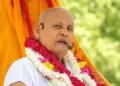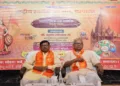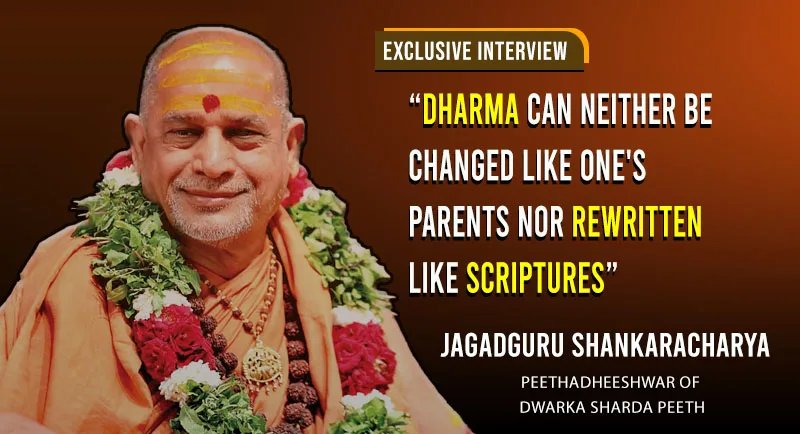
Today, the issue of religious conversion has become a subject of cultural, social and national discourse. On one hand, it is viewed as a matter of an individual’s religious freedom. On the other, it is seen in the context of civilisation, tradition and cultural identity. Indeed, at a time when various debates regarding religion, faith and identity are underway, Jagadguru Shankaracharya Swami Sadanand Saraswati Maharaj, Peethadheeshwar of Dwarka Sharda Peeth, had an exclusive interview with Organiser’s representative Dr Mayank Chaturvedi to explain that his views on conversion are from scriptural and philosophical perspectives as well. He does not limit the question of conversion merely to political or social issues.
A lot of discussion is happening across the country regarding religious conversion. What are your views on this?
First one must understand what Dharma is. Most disputes arise today because people mistake Dharma merely for a mode of worship or an external identity, whereas in the Sanatan tradition, Dharma is the foundation of life. It is not simply about visiting temples, applying a tilak, or wearing specific attire. A person inherits Dharma from their parents, lineage, traditions, samskaras (values) and the scriptures. Dharma elevates a human being above the level of an animal. That is why I say that the term ‘religious conversion’ (Dharmaantaran) is not appropriate from the perspective of the scriptures; it would be more accurate to call it ‘renunciation of faith’ (dharmatyaaga). If a person cannot change their father, their birthplace, or their ancestors, how can they change their Dharma? Dharma is not a garment that one puts on today and casts off tomorrow.
But in modern society, it is argued that religion is a matter of personal choice.
There is a difference between preference and truth. A person might find a particular thought appealing or be drawn to a specific method of worship, but Dharma is not merely a matter of personal choice. Sanatan Dharma imparts knowledge regarding Karma, Punarjanma (rebirth), Paap-Punya (sin and merit), Moksha (emancipation) and the eternal nature of the Atman. Therefore, if someone wishes to change their Dharma, they must first understand what they are forsaking as well as embracing. Do they truly understand the flaws of what they are renouncing and the virtues of the religion they are adopting?
“If a person is coerced into converting through fear, pressure, deceit, inducements, or lured by financial aid, it is improper from both ethical and social standpoints. Laws should exist to prevent such situations”
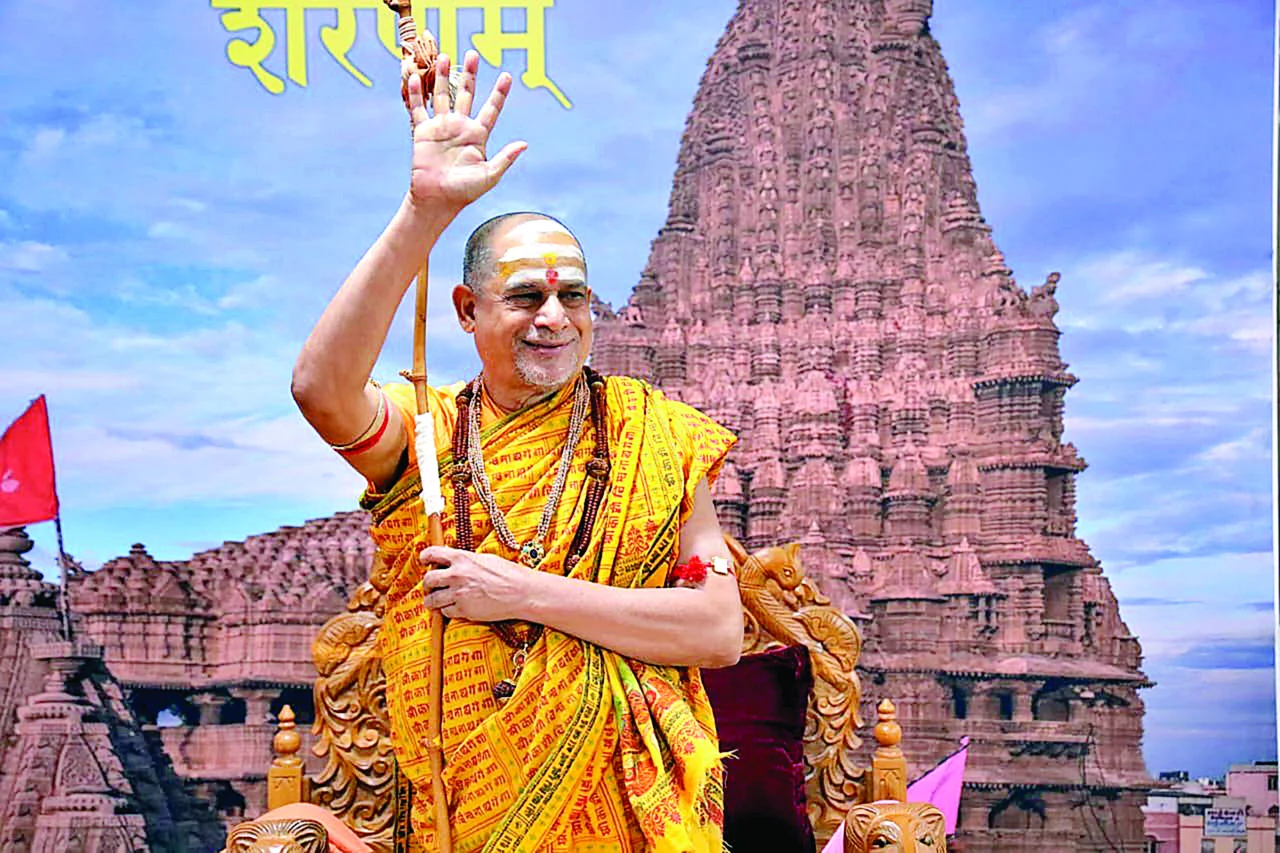
The misfortune today is that many people form opinions about their own religion without actually understanding it. A decision made in the absence of knowledge is not freedom but delusion; a state of delusion is never permanent, yet as long as it persists, the individual acts upon it as if it were the truth. We ask, why should such a delusion exist at all? There should be no room for delusion in life. Therefore, every religious person ought to understand their Sanatan Dharma through the light of knowledge.
Does changing the method of worship alone amount to changing one’s religion?
Certainly not. If a person gives up the Shikha, stops applying the Tilak, ceases visiting temples, or begins praying according to a different method, the fundamental essence of their Dharma does not change. Dharma is connected to a person’s worldview, their inner self and their ancestral lineage.
For instance, Sanatan Dharma accepts the concept of reincarnation and the law of Karma. It regards Moksha as the ultimate goal of life. If a person abandons these fundamental principles and adopts a different concept, the question arises: on what basis did they make this decision? Was it based on study, or due to some external influence? In Sanatan Dharma, the Shastras (scriptures) alone serve as the authority.
What do you see as the reasons behind the rising incidents of religious conversion?
The primary reason is ignorance of Dharma. A society that lacks knowledge of its own scriptures is bound to be influenced by external forces. Today, many people are familiar with the names of the Vedas, Upanishads, the Gita, and Bharatiya philosophy, yet they remain unacquainted with their actual messages.
The second reason is social and economic vulnerability. When a person is influenced by exploiting their desperate circumstances, they may drift away from their original faith and culture. There is a distinction between the propagation of faith and religious conversion. Imparting knowledge is one thing, but inducing a change of faith through inducements is quite another.
Is there a need for legislation regarding this matter?
If a person is coerced into converting through fear, pressure, deceit, inducements, or lured by financial aid, it is improper from both ethical and social standpoints. Laws should exist to prevent such situations. However, the objective of the law should be to protect an individual’s religious freedom, not to curtail it. I believe that punishment should be meted out to the person who orchestrates conversion through deceit, not to the individual who has fallen victim to circumstances.
Some people argue that Hindu Dharma is very old and should undergo changes in keeping
with the times.
There is a fundamental misconception here. People conflate Dharma with Vyavastha (social systems or practices). While social systems may change with the times, the eternal principles of Dharma do not. Can Truth change? Can non-violence change? Can compassion, mercy, self-restraint and devotion to God change? These are the core elements of Dharma and they remain constant across all eras. Truth, non-violence, non-stealing, mercy, compassion, self-restraint and devotion to God, these are the eternal tenets of Dharma. There is no alternative to them, nor can the passage of time diminish their significance. Therefore, just as the Dharmashaastras (scriptures) cannot be altered and one’s parents cannot be changed, how can Dharma itself be changed?
There is a distinction between alteration and refinement. Life’s circumstances change and systems evolve, but the fundamental principles of Dharma remain constant. The Vedas are described as Apaurusheya (not of human authorship). They are grounded not in any individual’s imagination, but in truths realised by the Rishis; thus, the core essence of Dharma cannot be altered by human will. Lawgivers like Manu, Yajnavalkya and Parashara did not change Dharma; rather, they interpreted how Dharma should be practiced under varying circumstances. Therefore, the refinement of Dharma and the alteration of Dharma are two entirely different things.
Can a king or a government alter Dharma if they wish to do so?
In the Bharatiya tradition, Dharma is placed above temporal authority. The scriptures state, politics and leaders must be governed by Dharma. Tadetat kshatrasya kshatram yaddharmah (Brihadaranyaka Upanishad, 1.4.14) – meaning, Dharma is the sovereign even over kings. A king’s duty is to protect Dharma, not to create it. To put it in modern terms: a government can enact laws and administer the state, but it cannot create the eternal principles of Dharma.
How can Dharma be kept alive in this era of modern education and materialism?
There is no need to keep Dharma alive; Dharma is eternal in itself. What is needed is an understanding and observance of Dharma. The sole objective of education today has become securing employment. Children are taught science, technology and economics, but they are not taught the purpose of life. Schools and universities should introduce Bharatiya sanskriti, moral education, the Gita, the Upanishads and philosophy. Until the new generation becomes familiar with its intellectual and spiritual foundations, it cannot free itself from the influence of Western materialism.
Why do you object to the very term ‘religious conversion’ (Dharmaantaran)?
Because it is impossible to transfer religion. You can change your home, country, language, citizenship; but you cannot change your birth, lineage, parents and ancestors. Similarly, religion is acquired through tradition and culture, which is why I repeatedly say that this should not be called conversion, but apostasy (dharmatyaaga).
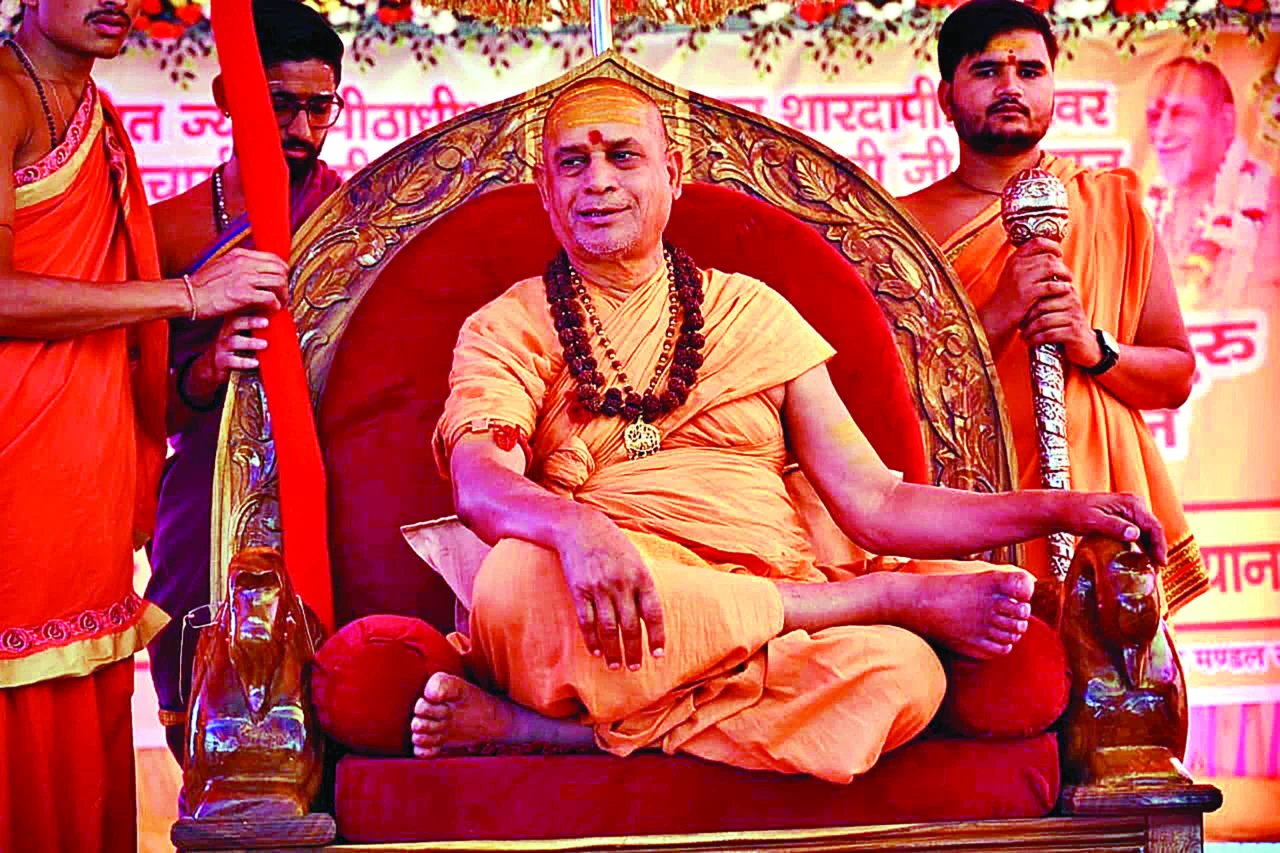
“We must uphold the Dharma with virtuous conduct. The younger generation must receive Dharmik education. It should be compulsory in schools and colleges. Cows must be protected. Hindu temples should not be controlled by the government”
What is your message to society?
I simply want to say that you should understand Sanatan Dharma. Dharma is the science that guides life. It is the foundation of human life. Dharma unites us, gives us direction and shows us the path to self-improvement. It shows humanity the path to well-being not only in this world but also in the next. Read your scriptures. Learn about the traditions of your ancestors. Understand your Dharma. Because a society that forgets its spiritual foundation gradually loses its cultural identity as well.
The message of Sanatan Dharma is not one of opposition to anyone, but of self-realisation, truth, compassion and world welfare. Therefore, I will reiterate that “Dharmik understanding, not conversion, is essential; for Dharma cannot be changed; it must be understood and lived. We must uphold the Dharma with virtuous conduct. The younger generation must receive Dharmik education. It should be compulsory in schools and colleges. Cows must be protected. Hindu temples should not be controlled by the Government.