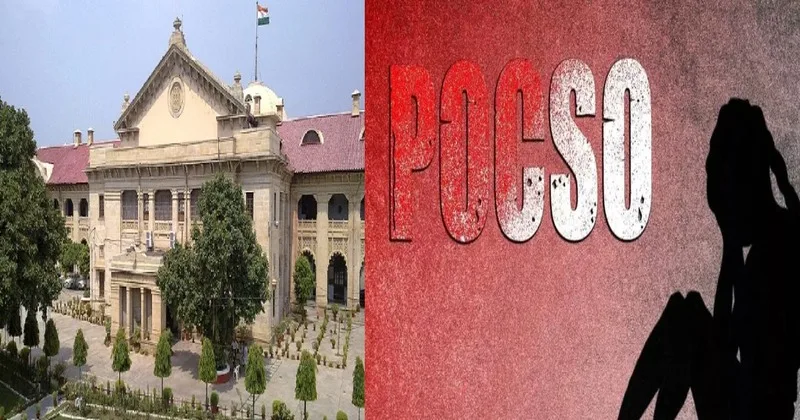
NEW DELHI: “The Constitution does not merely preserve liberty; it protects the vulnerable. Nowhere is this constitutional obligation more compelling than in the protection of children.”
The recent judgment of the Allahabad High Court in Rubi v. State of U.P. also reported as Ruby and Others v. State of UP and Others, 2026 LiveLaw (AB) 361 has once again foregrounded a question of enduring constitutional importance: what is the legal position when a rule asserted under personal law conflicts with a secular statute enacted by Parliament for the protection of children? The Court answered that question in clear terms. It held that no personal law, including Muslim personal law, can override the Prohibition of Child Marriage Act, 2006, or the Protection of Children from Sexual Offences Act, 2012, and that a rule treating puberty as the age of marriage cannot prevail over the statutory age fixed by Parliament. The decision was rendered by a Bench of Justices J.J. Munir and Achal Sachdev.
The decision has generated considerable legal and public discourse. For some, it represents a necessary affirmation of constitutional values and statutory child protection. For others, it raises questions regarding the relationship between personal law and legislative intervention. Whatever one’s perspective, the judgment deserves careful legal analysis rather than ideological interpretation. It must be examined through the lens of constitutional doctrine, statutory interpretation, and established judicial precedent.
The case arose from an incident in District Bulandshahr, Uttar Pradesh, where authorities received information that the marriage of a sixteen-year-old Muslim girl was about to be solemnised. Acting upon the information, officials associated with Child Line, accompanied by police personnel, reached the venue with the objective of preventing what they believed to be a child marriage prohibited by law. According to the prosecution, instead of cooperating with the authorities, several persons present at the venue obstructed the officials, prevented them from performing their statutory duties, and facilitated the completion of the marriage ceremony. An FIR was thereafter registered alleging offences under the Bharatiya Nyaya Sanhita, the Prohibition of Child Marriage Act, and the Protection of Children from Sexual Offences Act. The accused approached the Allahabad High Court seeking quashing of the criminal proceedings on the principal ground that under Muslim personal law a girl who has attained puberty is competent to marry and that the marriage, therefore, could not attract the penal consequences contemplated by the statutory enactments.
The High Court rejected the contention at the threshold. It observed that Parliament, by enacting the Prohibition of Child Marriage Act and the POCSO Act, had created a comprehensive statutory regime intended to protect children from exploitation, abuse, and premature marriage. Such welfare legislation, the Court held, cannot be diluted by reference to personal law. The Bench further observed that any rule recognising puberty as sufficient for marriage stands in direct conflict with the statutory minimum age prescribed by Parliament and cannot prevail over legislation enacted to secure the welfare of children.
Although the controversy arose within the context of Muslim personal law, the broader constitutional principle articulated by the Court transcends the facts of the individual case. The judgment is fundamentally about the relationship between constitutional governance and personal legal systems. India recognises the existence of diverse personal laws governing matters such as marriage, succession, adoption, guardianship, and inheritance. However, these systems do not operate outside the constitutional framework. They remain subject to legislation enacted by Parliament and to the discipline imposed by the Constitution itself.
The Constitution of India begins with a solemn declaration that the people of India have resolved to constitute the nation into a sovereign, socialist, secular, democratic republic and to secure justice, liberty, equality, and fraternity to all citizens. These aspirations are not merely philosophical ideals; they constitute the normative foundation upon which every legal institution in the country rests. Every statute derives its authority from the Constitution, and every legal rule, including those found within personal law, must ultimately conform to constitutional principles.
Article 13 declares that laws inconsistent with or in derogation of the fundamental rights shall be void to the extent of such inconsistency. While the precise constitutional status of uncodified personal law has been debated in judicial decisions beginning with State of Bombay v. Narasu Appa Mali, the contemporary constitutional trend has increasingly recognised that whenever Parliament legislates in a field touching personal law, the statutory enactment assumes primacy. Welfare legislation enacted in the exercise of Parliament’s legislative competence cannot ordinarily be defeated by invoking personal customs or religious practices.
This principle becomes even stronger where the legislation concerns children. The Constitution treats children as a distinct class requiring enhanced protection. Article 15(3) expressly authorises the State to enact special provisions for women and children. This is a constitutional recognition that formal equality alone is insufficient to secure substantive justice for vulnerable groups. Parliament has repeatedly exercised this enabling power through statutes intended to protect children from exploitation, trafficking, abuse, forced labour, child marriage, and sexual offences.
Article 21 has similarly evolved through judicial interpretation into one of the broadest guarantees contained in the Constitution. Originally confined to protection against arbitrary deprivation of life and personal liberty, the provision has gradually expanded to include the right to live with dignity, bodily integrity, education, privacy, health, and developmental opportunities. In a long line of decisions beginning with Maneka Gandhi v. Union of India and continuing through subsequent constitutional jurisprudence, the Supreme Court has recognised that the expression “life” in Article 21 encompasses every condition necessary for the meaningful development of the individual. A child compelled into marriage before attaining legal adulthood is not merely deprived of legal autonomy; such a child is often deprived of education, health, emotional development, economic independence, and the opportunity to exercise meaningful choice regarding the course of life.
The constitutional protection afforded to children is reinforced by Article 39(f), one of the Directive Principles of State Policy, which requires the State to ensure that children develop in conditions of freedom and dignity and that childhood is protected against exploitation and moral and material abandonment. Although Directive Principles are not enforceable in courts, they have repeatedly guided constitutional interpretation and legislative policy. The Prohibition of Child Marriage Act and the POCSO Act are direct legislative manifestations of these constitutional aspirations.
The Prohibition of Child Marriage Act, 2006 was enacted after Parliament concluded that the earlier Child Marriage Restraint Act, 1929 had proved inadequate to eradicate the practice of child marriage. The new enactment not only prescribes eighteen years as the minimum age of marriage for females and twenty-one years for males but also creates mechanisms for prevention, protection, injunctions against proposed child marriages, punishment of those who promote or solemnise such marriages, and rehabilitation of affected children. The Act is remedial and welfare-oriented in character. Its objective extends beyond punishment; it seeks to dismantle a deeply rooted social practice that has historically deprived children, particularly girls of education, health, dignity, and autonomy.
The Protection of Children from Sexual Offences Act, 2012 strengthened this legislative framework by introducing a comprehensive criminal law protecting every person below the age of eighteen years from sexual assault, sexual harassment, and exploitation. The statute deliberately adopts a uniform age of eighteen without recognising exceptions based upon religion, custom, or marital status. Parliament thus expressed a clear legislative policy that childhood deserves equal legal protection across communities and that sexual activity involving a child attracts criminal liability irrespective of personal law.
The significance of these enactments lies not merely in their individual provisions but in the constitutional philosophy they embody. They reflect Parliament’s considered determination that childhood must remain a legally protected stage of human development and that the State bears an affirmative obligation to shield children from practices likely to compromise their physical, emotional, educational, and psychological well-being. It is against this constitutional and statutory background that the Allahabad High Court examined the claim founded upon Muslim personal law.
The Court’s refusal to accept puberty as the governing legal standard does not amount to judicial legislation. Rather, it recognises the constitutional hierarchy of norms. Personal law may regulate certain aspects of family life, but once Parliament occupies the field through valid legislation enacted within its legislative competence, the statutory command must prevail. To hold otherwise would permit the legal rights of children to vary according to religious identity, a result fundamentally inconsistent with Articles 14 and 21 of the Constitution. Every child in India, irrespective of faith, is entitled to equal protection of the laws. The Constitution does not envisage multiple standards of childhood based upon personal law.
The Allahabad High Court’s decision must therefore be understood not as an adjudication upon theological doctrine but as an affirmation of constitutional supremacy. The issue before the Court was not the validity of any religion or the legitimacy of religious belief. The issue was whether Parliament’s child-protection legislation could be displaced by a rule of personal law. The Court answered in the negative, reaffirming that where the rights and welfare of children are concerned, the Constitution and the statutes enacted under its authority constitute the highest expression of the law of the land.
The deeper constitutional point is that childhood is a protected legal status, not a variable condition dependent on religious identity. Puberty may signal biological development, but it does not create the legal, emotional, psychological, or social maturity that modern child-protection law requires. Parliament has chosen 18 as the threshold for marriage and sexual protection because the law is intended to prevent exploitation, coercion, educational deprivation, maternal health risks, and other harms that commonly follow child marriage. The Allahabad High Court’s judgment thus stands as a reaffirmation that the welfare of children cannot be subordinated to personal law, and that the Constitution permits no hierarchy in which a child’s protection depends on the religion into which the child is born.