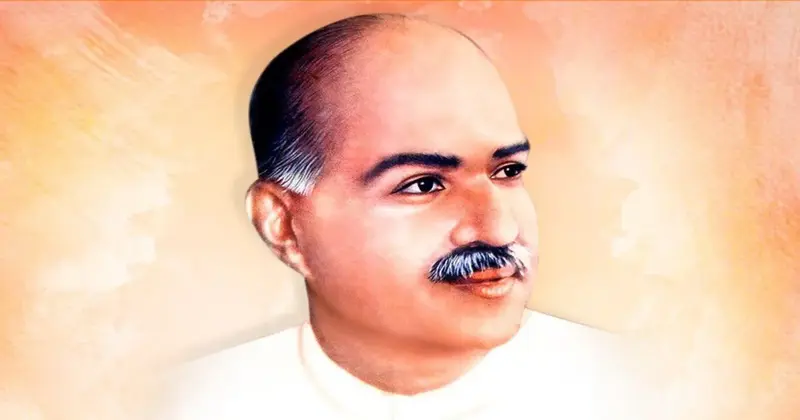
Today, as Bengal marks the birth anniversary of Dr. Syama Prasad Mukherjee, his legacy deserves to be revisited not through the prism of contemporary political contestation, but through the lens of history. Few leaders have generated as much admiration and debate in equal measure. For many, he is remembered as the founder of the Bharatiya Jana Sangh and a staunch advocate of national integration. Yet for countless Bengalis, particularly those whose families were displaced during Partition—his greatest contribution lies elsewhere: in his role during the Partition of Bengal, a role that has led many to describe him as ‘Banglar Paritrata’ (the Saviour of Bengal).
Whether one agrees entirely with this appellation or not, it is difficult to deny that Dr. Mukherjee was one of the principal political figures who argued that, if Partition was to occur, the Hindu-majority districts of western Bengal must remain within India. That intervention shaped the geography of independent India and the destiny of millions. The debate is therefore not whether he mattered, but whether modern India has adequately remembered the extent of his contribution.
Dr. Syama Prasad Mukherjee was born on July 6, 1901 into one of Bengal’s most distinguished intellectual families. His father, Sir Ashutosh Mukherjee, the legendary “Tiger of Bengal”, transformed the University of Calcutta into one of Asia’s premier centres of learning. His mother, Jogmaya Devi, instilled in him a deep sense of discipline, spirituality and service. The combination of intellectual excellence and cultural rootedness became the defining feature of his life. His academic achievements alone would have secured him a place in history. Brilliant in his studies, he became the youngest Vice-Chancellor of the University of Calcutta at the age of thirty-three.
His tenure reflected a commitment to expanding higher education, promoting Indian languages, and encouraging scholarship that was intellectually rigorous yet culturally self-confident. Long before entering national politics, he had established himself as one of Bengal’s foremost educationists. As an educationist, he was a strong advocate of imparting education through the mother tongue and played a significant role in promoting it. In his presidential address at the Cuttack session of the as Nikhil Banga Sahitya Sammelan in the Bengali year 1359 (1952–53), he declared: “If giving the mother tongue precedence over every other language is called provincialism, then I unhesitatingly declare that such provincialism exists within us. Without it, we would become utterly dispossessed.”
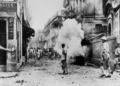
History, however, had assigned him a larger role. The 1940s witnessed one of the most turbulent periods in Bengal’s history. The Muslim League’s demand for Pakistan gathered momentum, communal tensions intensified and the horrors of the Great Calcutta Killings of August 1946 exposed the deepening communal divide. As the British prepared to leave India, the future of Bengal became one of the most contentious questions before the Partition negotiations. Several competing proposals emerged. The Muslim League sought to include the whole of Bengal in Pakistan. Another influential proposal envisioned an undivided, sovereign Bengal independent of both India and Pakistan. Had either of these proposals materialised, the political map of eastern India would have looked radically different.
It was in this context that Dr. Mukherjee emerged as one of the most forceful advocates for partitioning Bengal so that its Hindu-majority western districts would remain within India. He mobilised public opinion, worked with political organisations, and argued that millions of Bengali Hindus would otherwise become a vulnerable minority in a newly created state. His campaign was not conducted in isolation; it formed part of a broader political movement involving several leaders and organisations.
Yet his leadership gave coherence and momentum to the demand for retaining western Bengal within the Indian Union. The eventual creation of West Bengal in August 1947 cannot be attributed to any single individual. Partition was shaped by multiple political actors, demographic realities, British policy, and negotiations at several levels. Nevertheless, historians across ideological perspectives acknowledge that Dr. Mukherjee was among the principal voices advocating for Bengal’s partition. Without that movement, the possibility of an undivided Bengal outside India cannot simply be dismissed.
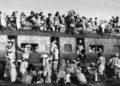
It is this historical context that explains why generations of Bengali Hindus, especially those who rebuilt their lives in post-Partition West Bengal, remember him with profound gratitude. For refugee families who crossed the border from East Bengal carrying little more than memories of their ancestral homes, West Bengal became not merely another Indian state but a refuge where they could preserve their language, traditions, temples, and cultural identity.
Dr. Mukherjee’s contribution did not end with Partition. As India’s first Minister for Industry and Supply in Jawaharlal Nehru’s Cabinet, he played an important role in laying the foundations of India’s industrial development. Yet differences over national policy, particularly concerning refugees from East Pakistan and questions of national integration, prompted his resignation from the Cabinet. In doing so, he demonstrated a willingness to sacrifice political office for principles—a quality that remains rare in public life.
His subsequent founding of the Bharatiya Jana Sangh in 1951 marked another significant chapter in India’s political history. Although few could have foreseen it then, the organisation he founded would eventually evolve into one of the country’s principal political traditions. His advocacy of cultural nationalism, constitutional democracy, and national unity continues to shape political discourse in contemporary India. His untimely death in custody in Jammu and Kashmir in 1953, at the age of fifty-one, transformed him into a symbol of political conviction and sacrifice for many of his followers.
Yet despite these achievements, Dr. Mukherjee’s place in mainstream historical narratives remained relatively limited for decades. Many scholars have long argued that post-Independence academic and political discourse, particularly during periods when Left and Congress-oriented interpretations were more influential in public institutions, devoted comparatively less attention to his role in the Partition of Bengal than to other national leaders. They contend that school textbooks and public memory often highlighted his later political career while paying insufficient attention to his contribution during the decisive years of 1946–47.
This criticism forms part of a broader historiographical debate rather than an uncontested historical fact. Many historians reject the notion of deliberate suppression and argue that the relative prominence of historical figures often reflects broader scholarly priorities rather than coordinated ideological exclusion. Others maintain that Dr. Mukherjee’s contribution deserves greater emphasis than it has traditionally received, particularly in regional histories of Bengal and studies of Partition. Regardless of where one stands in this debate, one conclusion is difficult to escape: public understanding of Dr. Mukherjee’s role in Bengal’s Partition remains incomplete. The increasing scholarly attention to his life in recent years reflects an attempt to revisit this chapter with greater nuance rather than political simplification.
History should never become a battleground where one set of heroes is celebrated only by diminishing another. India’s freedom and nation-building were collective enterprises involving leaders with differing ideologies, methods, and visions. As Bengal reflects upon its past, perhaps the most meaningful tribute to Dr. Syama Prasad Mukherjee is not merely to remember him through slogans or political symbolism, but to engage seriously with the history he helped shape. His life embodied academic excellence, administrative ability, political conviction, and a deep commitment to what he believed was the national interest.
Whether one views him primarily as an educationist, a parliamentarian, the founder of a major political movement, or as the leader many remember as “Banglar Paritrata”, there is little doubt that Dr. Syama Prasad Mukherjee occupies an important place in the making of modern India. The profound place that Shyama Prasad occupied in the hearts of the Bengali people, as well as the people of India, is evident from the newspaper headlines published on the day following his sudden demise, June 24, 1953. The headlines vividly reflected the immense public grief and the nation’s sense of loss. The front-page report of ‘Jugantar’, one of the leading Bengali newspapers of the time, carried the poignant headline: “Millions Waited Through the Night for a Final Glimpse of Their Beloved Leader”.